 Whatcom County
 Fairhaven's Waterfront Climate Is Tougher on Siding Than It Looks
Fairhaven sits close enough to Bellingham Bay that homes here deal with a climate load most inland Whatcom County neighborhoods don't see in the same combination. Salt-laden air moves in off the water and settles on exterior surfaces, driving rain comes in sideways during fall and winter storms instead of falling straight down, and the long stretch of grey, damp months each year gives moss, algae, and mildew months of uninterrupted growing conditions on north-facing and shaded walls. None of these factors alone is unusual for the Pacific Northwest. Together, on a waterfront-adjacent property, they add up faster than most homeowners expect.
Siding that's rated for "typical" Northwest weather can still underperform in Fairhaven specifically because of the salt exposure and wind-driven rain component. Salt air accelerates corrosion of fasteners and metal flashing, and it degrades some paint and coating systems faster than plain moisture does. Wind-driven rain finds gaps in flashing and caulking that would never get wet in a calmer inland yard. That's the practical reason a siding replacement job in this neighborhood isn't just a cosmetic upgrade — it's a decision about what will actually hold up a few blocks from the water, year after year.
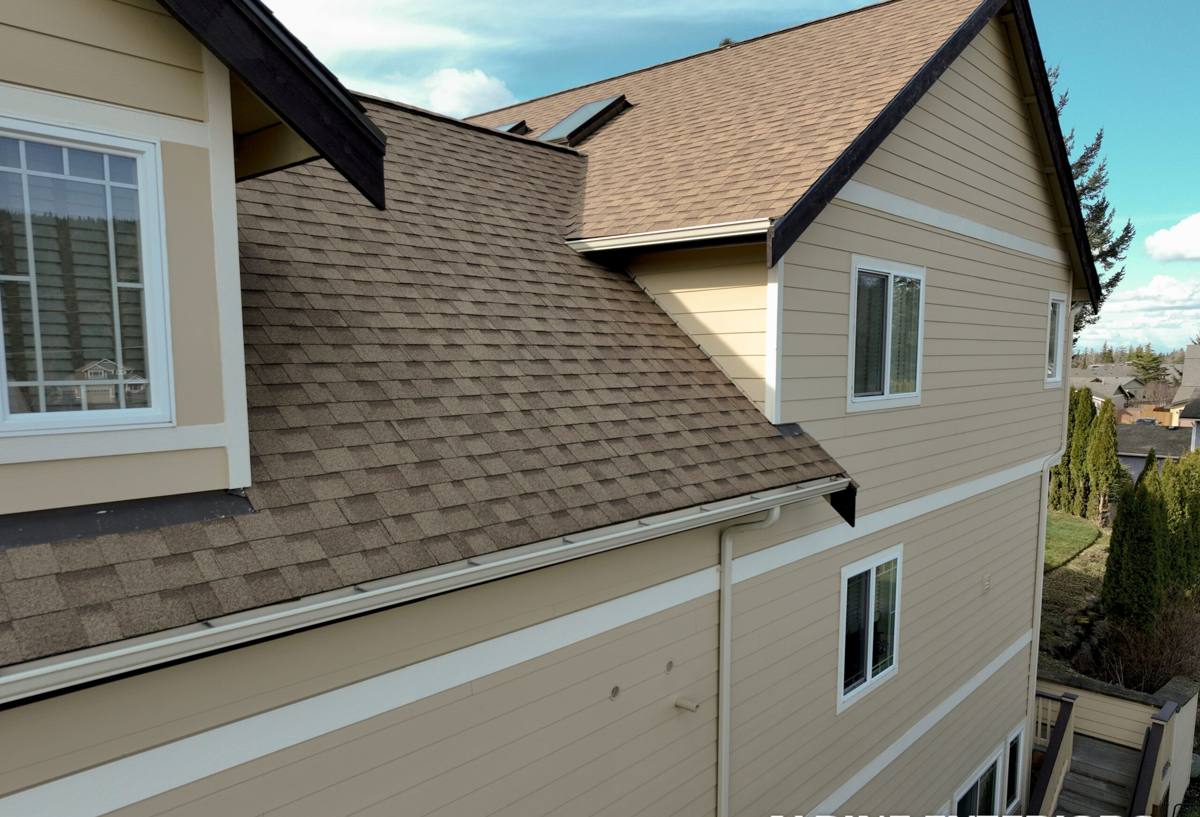
Signs a Fairhaven Home Needs Siding Replacement, Not Just Repair
Some siding problems are patchable. Others mean the whole system — siding, house wrap, flashing — has reached the point where patching just delays a bigger repair bill. A straightforward inspection can usually tell the difference, but here's what we look for and what homeowners can check themselves first:
- Soft or spongy spots when you press on the siding, especially near the bottom courses and around window and door trim
- Visible cracking, warping, or delamination of siding panels or lap boards
- Paint that's failing repeatedly in the same spots even after repainting — often a sign moisture is getting behind the material
- Persistent moss or dark streaking on north- and west-facing walls that comes back within a season of cleaning
- Gaps opening up at seams, corners, or trim where caulking has shrunk or pulled away
- Rot visible at the bottom edge of siding boards or around penetrations like hose bibs and vents
- Rising energy bills with no other explanation, which can point to a failing weather barrier behind the siding
If you're seeing two or more of these at once, that's usually a sign the underlying moisture barrier has been compromised somewhere, not just the visible siding. That distinction matters, because it changes what a proper repair actually needs to include.
What a Correct Siding Replacement Actually Involves
Tear-Off and Inspection
Replacement starts with removing the old siding down to the sheathing, not layering new material over what's failing. This is the point where a lot of hidden problems surface — soft sheathing, rot around window openings, or a house wrap that's degraded and no longer shedding water. In a neighborhood exposed to driving rain the way Fairhaven is, skipping this step is how a homeowner ends up with new siding over old rot, which fails again within a few years.
Weather-Resistive Barrier and Flashing
Once the sheathing is exposed and any damaged sections are repaired, a new weather-resistive barrier goes on, along with properly lapped flashing at every window, door, and penetration. This layer is arguably more important than the siding itself for keeping water out — it's the last line of defense if any water does get past the exterior cladding, which in a wind-driven rain climate, it eventually will. Flashing details at horizontal trim, window heads, and butt joints are where most long-term leaks originate if they're rushed or done out of sequence.
The Siding Installation Itself
Correct installation means following the manufacturer's specified nailing pattern, gap tolerances for expansion, and clearance from grade, decks, and roof lines. It also means factory-cut and factory-primed edges are sealed correctly, since a cut edge left unsealed is one of the fastest ways for moisture to wick into fiber cement or engineered wood siding. None of this is visible once the job is done, which is exactly why it matters who's doing the work and whether they treat it as a checklist or as background noise to rush through.
Comparing Siding Materials for a Fairhaven Property
Homeowners researching siding replacement usually come across the same handful of materials. Here's an honest comparison of how each holds up under salt air, driving rain, and a long moss season specifically — not just in general Pacific Northwest conditions.
| Material | Moisture Behavior | Salt Air / Coastal Exposure | Maintenance Burden |
|---|---|---|---|
| Vinyl siding | Doesn't rot, but seams and J-channels can let water track behind it; traps moisture rather than managing it | Can fade, chalk, and become brittle faster near salt air; expansion/contraction is more pronounced with temperature swings | Low day-to-day, but replacement of cracked or warped panels is common over time |
| LP SmartSide (engineered wood) | Wood-based core is vulnerable if the factory seal is compromised at cuts or joints; edge sealing is critical and easy to get wrong | Moisture-sensitive core makes coastal humidity and salt exposure a bigger long-term risk factor | Moderate — repainting cycles and careful caulk maintenance at every seam |
| Cedar | Natural material that moves with moisture; needs consistent sealing/staining to perform | Salt air accelerates weathering and graying; needs more frequent refinishing near water | High — regular refinishing, more vulnerable to rot without upkeep |
| James Hardie fiber cement | Non-combustible, dimensionally stable, engineered specifically for moisture cycling | ColorPlus factory finish and HZ product lines are engineered for exactly this kind of wet, coastal-adjacent climate | Low — factory finish holds color and resists moss/algae growth better than painted alternatives |
Why We Install Only James Hardie Fiber Cement
We don't install vinyl, LP SmartSide, Cemplank, Allura, primed spruce, or cedar, and that's a deliberate standard, not a lack of options. Each of those products has legitimate strengths — vinyl is inexpensive and low-maintenance in mild climates, engineered wood has a warmer look, cedar is a genuinely beautiful natural material. But in a climate like Fairhaven's, where salt air, driving rain, and a long moss season all stack up against the same walls, the trade-offs on those products show up faster and cost more to fix than they would somewhere drier and calmer.
James Hardie fiber cement is engineered for exactly this kind of exposure. It's non-combustible, which matters increasingly across Washington. It's dimensionally stable, so it doesn't expand and contract with moisture the way wood-based products do, which means fewer opened seams and less caulk failure over time. Hardie's HZ5 product line is specifically engineered for Pacific Northwest wet-freeze conditions, and the ColorPlus factory finish is baked on under controlled conditions rather than field-painted, which gives it better resistance to fading, chalking, and the kind of moss and algae growth that's a year-round concern this close to the water. It also carries a strong transferable warranty, which matters if you sell the home — a real advantage in a market where buyers are increasingly asking about exterior condition and maintenance history.
We standardized on one product line because it lets us install to spec every time, rather than juggling different installation requirements, fastener schedules, and warranty terms across five different materials. That consistency is part of what makes a Hardie installation actually perform the way it's engineered to.
Our Process, Start to Finish
- Free on-site estimate — we walk the exterior with you, check for the warning signs above, and give you an honest read on whether you need full replacement or targeted repair
- Detailed scope and quote — what's being torn off, what the weather barrier and flashing plan looks like, which Hardie profile and color, and a clear cost breakdown
- Tear-off and structural check — old siding comes off, sheathing gets inspected, and any rot or damage gets addressed before anything new goes up
- Weather barrier and flashing installation — done to manufacturer spec at every window, door, and penetration
- Hardie siding installation — correct nailing pattern, gapping, and sealed cut edges throughout
- Final walkthrough — we go over the finished job with you before we consider it done
What Drives the Cost of a Siding Replacement
Every home is different, but the main variables that move the price on a Fairhaven siding replacement are consistent:
| Cost Factor | Why It Matters |
|---|---|
| Home size and wall complexity | More square footage and more corners, gables, and trim details mean more labor and material |
| Extent of hidden damage | Rotted sheathing or framing found during tear-off adds repair scope before new siding can go on |
| Siding profile and color | Hardie offers multiple plank widths, textures, and ColorPlus color options, which affects material cost |
| Trim and accessory work | Window trim, corner boards, fascia, and soffit work done alongside siding affects total scope |
| Access and site conditions | Sloped lots, mature landscaping, or tight setbacks near neighboring homes can affect labor time |
We give real numbers during the on-site estimate rather than guessing over the phone, because the hidden-damage variable in particular is impossible to price accurately without seeing the walls once the old siding is off.
Why Hiring a Crew That Already Works in Fairhaven Matters
Siding installation quality comes down to details that don't show up in a photo — flashing sequencing, fastener depth, cut-edge sealing, clearance at grade. A crew that regularly works Fairhaven and the surrounding Whatcom County waterfront neighborhoods has already seen how those details play out under this specific combination of salt air and driving rain, not just generic Northwest weather. That experience shows up in things like where extra flashing attention goes on a wall facing prevailing storm winds, or which details need tighter tolerances on a home closer to the water versus one further inland.
It also means a contractor who's building a reputation in this specific community, not one passing through. That's worth something when you're trusting someone with the single largest exterior investment most homeowners make in a house.
If your Fairhaven home is showing any of the warning signs above, or you're just planning ahead for a siding project, we're happy to come take a look and give you a straightforward, no-pressure estimate — no obligation, just an honest read on where your home stands.