 Whatcom County
 Why Roofs in Sehome Wear Differently
Sehome sits close enough to Bellingham Bay that salt-laden air is a constant, low-grade stressor on roofing materials, even a few miles inland. Combine that with Whatcom County's long wet season — months of driving rain off the Strait, followed by shaded, damp stretches where moss and moisture just sit — and you get a roofing environment that's tougher on materials than a lot of manufacturer literature accounts for. A roof that performs fine in a dry inland climate can fail early here if it wasn't chosen and installed with these specific conditions in mind.
This isn't about scare tactics. It's about matching the roof system, the underlayment, the flashing details, and the ventilation to what Sehome actually throws at a house year-round. Get those right and a new roof will outlast its warranty. Get them wrong and you'll be dealing with soft decking, moss-driven shingle degradation, or leaks around penetrations well before the roof is "supposed" to fail.
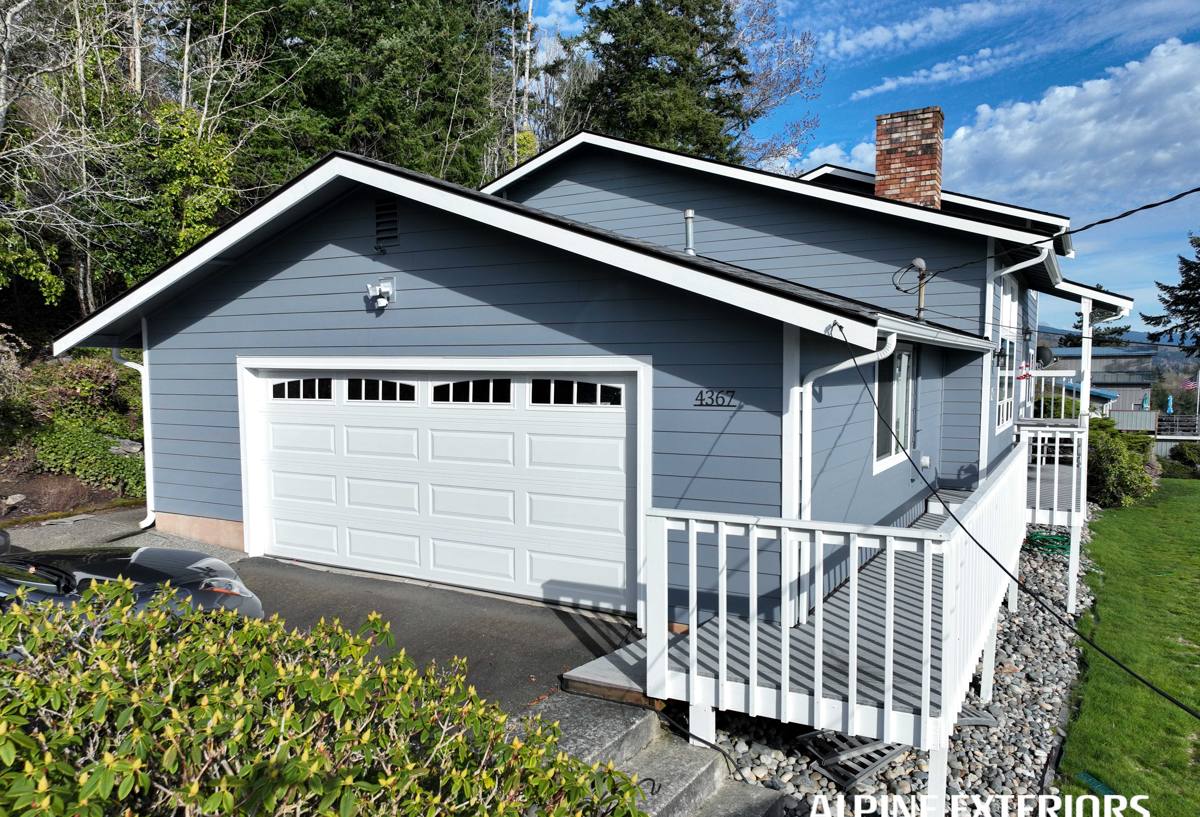
What Sehome's Climate Actually Does to a Roof
Salt Air
Airborne salt accelerates corrosion on exposed metal — flashing, fasteners, vent caps, gutter hardware. Standard galvanized fasteners can start showing rust streaks and pitting well before the roofing material itself is due for replacement. It's a slow process, but it's cumulative, and it's one of the first things we look at when we inspect an older Sehome roof.
Driving Rain
Wind-driven rain doesn't just fall straight down — it gets pushed sideways and upward under shingle edges, around valleys, and into any gap in flashing that a calmer climate might tolerate. This is where underlayment choice and lap direction matter more than most homeowners realize. A roof detailed for a drier, calmer region often isn't sealed well enough for what happens here during a real coastal storm.
Moss and Prolonged Dampness
Shaded roof sections — north-facing slopes, areas under tree cover — stay damp for extended stretches, especially through fall and winter. That's exactly what moss needs to take hold. Moss doesn't just look bad; it lifts shingle edges as it grows, holds moisture directly against the roofing surface, and can work its way into fastener penetrations over time. Left unmanaged for a few seasons, it shortens the practical life of an otherwise sound roof.
Signs a Sehome Home Needs a New Roof, Not Another Repair
- Granule loss heavy enough that you're finding grit in gutters every season, not just after a storm
- Shingles that are curling, cupping, or cracking across multiple sections rather than one isolated spot
- Persistent moss regrowth in the same areas within a year of cleaning
- Soft or spongy decking felt underfoot during inspection — a sign moisture has already reached the sheathing
- Daylight visible through the roof deck from the attic, or damp insulation below specific roof sections
- Flashing that's rusted, separated, or was never properly stepped at walls and chimneys
- The roof is at or past the age where repairs are becoming more frequent and less cost-effective
One or two of these on their own might mean a targeted repair is enough. Several together, especially combined with the roof's age, usually mean repair costs will outpace what a full replacement would have cost within a couple of years.
What a Correct New Roof Installation Involves Here
Tear-Off and Deck Inspection
We don't install over existing layers. A full tear-off lets us actually see the deck, which is the only way to catch soft or rotted sheathing before it's covered up again. In a climate this wet, skipping that inspection is how homeowners end up with hidden rot under a brand-new roof.
Underlayment Built for Wind-Driven Rain
Given how often rain here comes in sideways, we use synthetic underlayment with properly lapped, sealed seams, and we pay close attention to lap direction relative to prevailing wind and water flow. In vulnerable areas — eaves, valleys, low-slope sections — we add ice-and-water shield or equivalent self-adhering membrane as an extra line of defense, not just at the minimum code line.
Flashing and Fastener Choices for Salt Exposure
Around chimneys, skylights, walls, and vents, we use step and counter-flashing detailed to actually shed water rather than rely on sealant alone — sealant is a backup, not a strategy. We favor corrosion-resistant fasteners and flashing metals suited to coastal air, since replacing rusted flashing on a roof that's otherwise still good is a preventable expense.
Ventilation That Discourages Moss and Moisture
Balanced intake and exhaust ventilation keeps the underside of the deck drier and the attic temperature more even, which reduces the damp, stagnant conditions moss and mold both prefer. It also protects the underside of the decking from condensation-driven rot, which is a separate problem from surface moss but just as damaging over time.
Roofing Material Options for Sehome Homes
| Material | How It Handles Salt Air & Moisture | Moss Resistance | Typical Lifespan Here |
|---|---|---|---|
| Architectural asphalt shingle | Good with proper flashing and fasteners; standard choice locally | Moderate — benefits from algae-resistant granules and periodic cleaning | 20–30 years |
| Standing seam metal | Excellent when finished and fastened with coastal-grade hardware | High — smooth surface sheds debris and moss has little to grip | 40–50+ years |
| Synthetic composite (slate/shake look) | Strong moisture resistance, doesn't absorb water like wood | Higher than wood shakes | 30–50 years |
| Wood shake | More maintenance-sensitive in sustained damp conditions | Lower — porous surface holds moisture and encourages growth | Varies widely with upkeep |
We don't push one material on every job. Budget, roof pitch, HOA or design considerations, and how much long-term maintenance a homeowner wants to take on all factor in. What we won't do is install a system without the underlayment and flashing upgrades this climate calls for, regardless of which surface material is chosen — cutting those corners is where premature failures actually come from, not usually the shingle brand itself.
Our Installation Process
- On-site inspection and estimate — we walk the roof, check the attic where accessible, and note existing problem areas like moss buildup or flashing wear
- Material and system selection — we go over options with honest trade-offs, not upsells
- Scheduling around weather windows — we plan installs to avoid exposing an open deck to a stretch of rain wherever possible
- Tear-off and deck repair — old roofing removed, deck inspected, any soft or damaged sheathing replaced before anything new goes down
- Underlayment, flashing, and ventilation installation — detailed for coastal wind-driven rain, not just minimum code
- Roofing material installation — installed to manufacturer spec plus our own detailing standards for this climate
- Final walk-through — cleanup, inspection, and a review of what was done and what to expect going forward
Cost Factors for a Sehome Roof Replacement
Every roof is different, so we won't quote a number without seeing the house, but the factors that move the price here are fairly consistent:
- Roof size and number of facets, valleys, and penetrations (chimneys, skylights, vents)
- Pitch and accessibility — steep or hard-to-reach roofs take longer and require more safety setup
- Material choice, from standard architectural shingle up through metal or composite systems
- Deck condition — hidden rot found during tear-off adds material and labor to repair before the new roof goes on
- Extent of underlayment and flashing upgrades needed for the home's specific exposure to wind and salt air
- Ventilation work required to bring an older attic system up to a standard that actually protects the new roof
Why a Crew That Already Works in Sehome Matters
Roofing crews that mostly work drier, inland climates sometimes install roofs to a generic spec — one that meets code but doesn't account for what a coastal Whatcom County winter does to flashing seams, fastener heads, and shaded north slopes. A crew that regularly works Sehome and the surrounding Bellingham area already knows which details need the extra attention: where moss tends to reestablish, which flashing details fail first under driving rain, and which fastener and metal choices actually hold up against salt exposure over years, not just through the warranty inspection.
That local pattern recognition is the difference between a roof that needs attention again in eight years and one that goes the full distance of its expected lifespan.
Get a Straightforward Estimate
If your roof is showing wear, or you just want an honest read on whether repair or replacement makes more sense for your home, we're happy to take a look. The estimate is free, there's no pressure, and you'll get a clear explanation of what we find and why we'd recommend it — just fill out the form below to get started.