 Whatcom County
 Siding Repair in Lynden Is Its Own Kind of Job
Repair work gets treated as the small, quick cousin of a full siding replacement, and sometimes it is. But a repair done wrong — a patched board that doesn't match, a fastener pattern that doesn't hold, a fix that covers water damage instead of drying it out — costs a homeowner more in the long run than doing it right the first time. On a Lynden home, that risk is higher than it looks, because Whatcom County's climate doesn't give a bad repair much time to fail. Salt-laden air, wind-driven rain, and a moss season that runs most of the year all work on a wall continuously, and a repair that isn't detailed correctly usually shows its weakness again within a season or two.
This page is about one thing specifically: siding repair for Lynden homes, not a full re-side and not a different trade. We install and repair James Hardie fiber cement exclusively, and that standard shapes how we approach repair work too — what we'll patch, what we'll recommend replacing outright, and how we handle homes where the existing siding is a different product altogether.
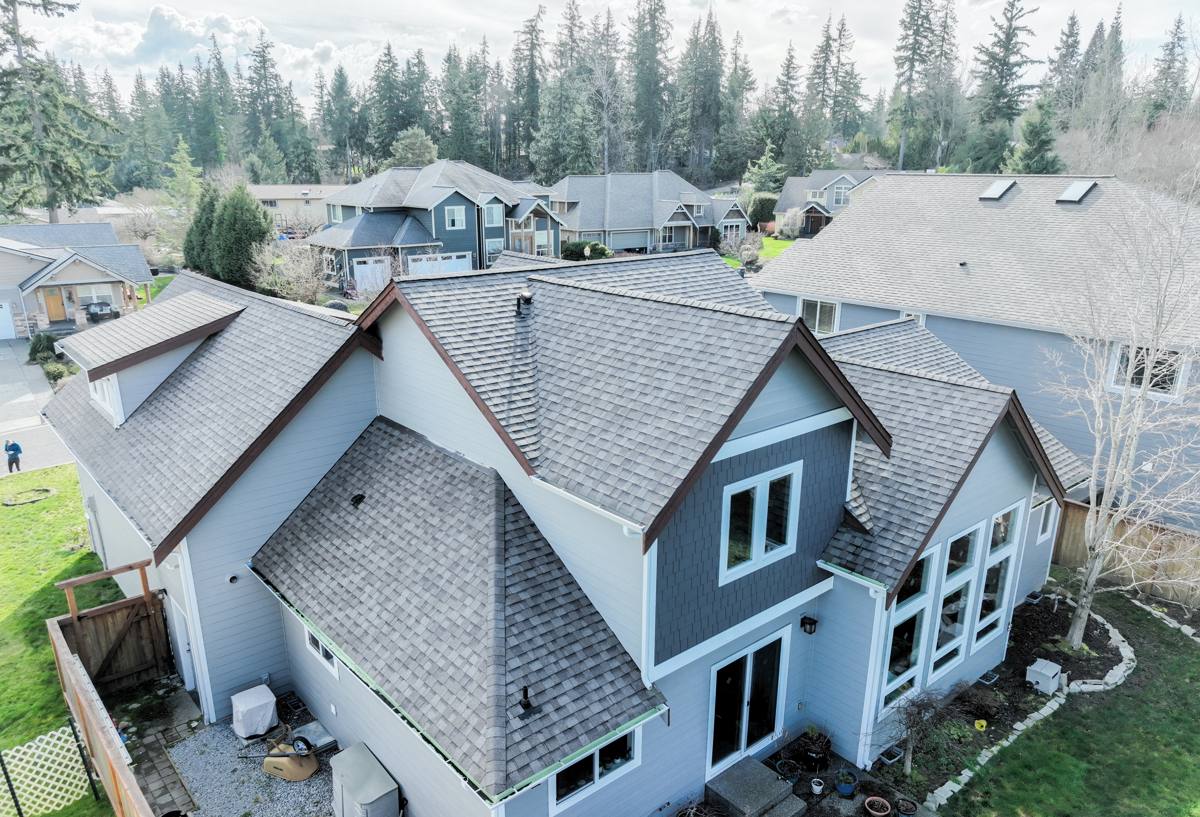
What Whatcom County's Climate Does to Siding Over Time
Salt Air Working on Fasteners and Trim
Lynden sits inland from the immediate coastline, but marine air still moves across this part of Whatcom County and works on exterior hardware over years. The siding material itself might be fine while the fasteners, trim caps, and flashing holding it in place corrode and loosen. A repair that swaps damaged siding but reuses corroded fasteners or leaves compromised flashing in place is a repair that's already halfway to failing again.
Driving Rain That Finds the Weak Points
Rain in this region rarely falls straight down through fall and winter — wind pushes it sideways into seams, trim joints, and anywhere the weather barrier has a gap. Repair work almost always happens at exactly these vulnerable points, because that's where the original damage occurred in the first place. Patching the visible siding without correcting what let water in behind it just resets the clock on the same failure.
A Moss Season That Runs Most of the Year
Mild temperatures and near-constant moisture keep moss and mildew active on shaded walls for most of the year in this part of the county. Lynden's mix of open farmland and tree-lined residential lots means this varies a lot from wall to wall on the same house — a south-facing wall in the open dries out fast, while a shaded wall against tree cover can stay damp for weeks. Any repair on a chronically damp wall needs to account for that ongoing moisture exposure, not just the damage that's visible today.
Signs a Lynden Home Needs Siding Repair, Not Just Cleaning
Some siding problems are cosmetic and some are structural, and telling the difference early keeps a repair small instead of letting it grow into something bigger. Watch for:
- Soft or spongy siding when pressed, especially low on the wall or around window and door trim
- Cracked, buckled, or missing panels after a windstorm
- Rust streaking running down from fastener heads or trim hardware
- Gaps opening up at seams, corners, or where siding meets trim, roofline, or foundation
- Moss or dark staining that comes back quickly after cleaning, particularly on shaded or north-facing walls
- Peeling paint, warping, or delamination on older wood-based or engineered wood siding
- Musty smells or staining on an interior wall that backs up to exterior siding
Any one of these on its own might be a small, contained repair. Several of them together, or damage that keeps returning to the same section of wall, usually means the underlying cause hasn't been addressed yet.
Repair or Replace? How We Make That Call
Homeowners understandably want the cheaper answer, and often repair is the right one — a section of damaged siding on an otherwise sound wall doesn't need a full tear-off. But repair only makes sense where the sheathing behind the siding is dry and sound and the damage is limited in scope. We walk through these factors on every inspection rather than defaulting to either answer:
| Factor | Favors repair | Favors replacement |
|---|---|---|
| Extent of damage | Limited to a few boards or one wall section | Spread across multiple walls or the whole house |
| Sheathing condition | Dry, solid when probed | Soft, rotted, or showing water staining behind the siding |
| Age of existing siding | Still within its expected service life | Near or past end of life, with repairs becoming frequent |
| Material match availability | Matching profile and color can be sourced | Discontinued product or faded finish that won't match |
| Root cause | Isolated event (impact damage, one failed flashing detail) | Systemic moisture or installation issue affecting the whole assembly |
Where the sheathing has taken on water, patching the surface siding without opening the wall up first just hides a problem that's still active. We'd rather tell a homeowner honestly that a section needs to come off and be rebuilt than install a patch that looks fine for a season and fails again.
What a Correct Siding Repair Actually Involves
Diagnosing the Cause, Not Just the Symptom
Before any siding comes off, we trace the damage back to its source — a failed flashing detail, a gap in the weather barrier, a fastener that backed out, or simple age and weathering. Repairing the visible board without correcting the cause means the same spot fails again, often within a wet season or two.
Matching Material, Profile, and Color
A repair that stands out as an obvious patch isn't a finished job. We source matching Hardie profile and, where the existing siding has faded, work with the homeowner on the closest practical color match — ColorPlus factory finish holds its color far longer than field-applied paint, but siding installed years apart will never be a perfect match to sun-faded panels. We're upfront about that before starting rather than after.
Rebuilding the Water Management Behind the Wall
Once the damaged siding is off, we inspect and repair the weather barrier, flashing, and any wall penetrations in that section before new siding goes back up. This is the step a rushed repair skips, and it's the one most likely to determine whether the fix lasts.
Fasteners and Hardware
Given how much salt-laden air affects hardware in this part of Whatcom County, we replace fasteners and trim hardware in the repaired section rather than reusing anything showing early corrosion, even if it still looks structurally sound.
Why Repair Work Only Makes Sense on James Hardie Fiber Cement
We install James Hardie exclusively, and that standard carries over into repair work. Fiber cement takes a patch well — it doesn't swell, cup, or warp the way some other materials do after a repair disturbs the surrounding boards, and a correctly installed section holds up to the same moisture and salt exposure as the rest of the wall. That's not true across every siding product on the market, and it changes what a repair can realistically accomplish:
- Vinyl siding becomes brittle with age and UV exposure, and older panels often crack when unclipped for a repair, turning a one-panel fix into a wider replacement
- LP SmartSide and other engineered wood products have a wood-strand core that's especially moisture-sensitive at cut edges, which is exactly where repair work creates new exposed edges
- Primed spruce or cedar needs the repaired section repainted and maintained on the same cycle as the rest of the wall, and matching weathered wood tone is harder than matching a factory finish
What We Do When a Home Already Has a Different Siding Product
Plenty of Lynden homes we're called out to aren't currently sided in Hardie. We'll assess and repair what's there when a targeted fix is the honest answer, and we'll say so plainly when the underlying material or installation makes a durable repair unrealistic. Where a homeowner is looking at a bigger repair or a re-side regardless, that's the point where we talk through why we'd recommend Hardie fiber cement going forward rather than replacing like-for-like.
Our Siding Repair Process for Lynden Homeowners
Inspection and Diagnosis
We look at the damaged area and the wall around it, probe the sheathing, and identify the cause before quoting anything. The estimate reflects what we actually find, not a flat per-board rate.
Sourcing and Prep
We source matching Hardie material and confirm color and profile with the homeowner before removing anything, so there are no surprises partway through.
Repair and Weatherproofing
Damaged siding comes off, the weather barrier and flashing underneath get inspected and repaired, and new siding and fasteners go in to manufacturer spec.
Final Walkthrough
We walk the repaired section with the homeowner, explain what caused the original damage and how it was addressed, and cover any ongoing maintenance that's worth watching.
Why Hire a Crew That Already Works in Lynden
A repair estimate written by someone unfamiliar with this climate tends to underestimate what's actually going on behind a damaged section of wall — they see the surface problem and miss how salt air, driving rain, and a long moss season compound on each other here. Working in Whatcom County regularly means we're not guessing at how a wall will behave once it's closed back up; we've seen how these repairs hold up over the following winters on other homes nearby. That local track record is worth more on a repair than on new construction, because repair work lives or dies on getting the diagnosis right the first time.
If you're dealing with damaged, aging, or failing siding on a Lynden home, we're glad to take a look and give you an honest read on whether it's a repair or something bigger — no pressure, just a straight answer and a free estimate.