 Whatcom County
 Why Lynden Decks Wear Differently Than You'd Expect
Lynden sits in the part of Whatcom County where long, wet winters and a short, humid summer window do most of the damage to outdoor structures. Decks here don't usually fail because of one big storm — they fail slowly, from months of standing moisture, shaded framing that never fully dries, and moss and algae that hold water against wood and fasteners far longer than most homeowners realize. By the time a soft spot or a wobbly rail shows up, the underlying damage is often further along than it looks from the surface.
We repair decks throughout Lynden and the surrounding parts of Whatcom County, and the pattern is consistent: driving rain gets under flashing and ledger boards, moss builds up in low-traffic corners and between deck boards, and framing members that face north or sit under tree cover stay damp for weeks at a time. A repair that doesn't account for this climate is a repair that fails again in a year or two.
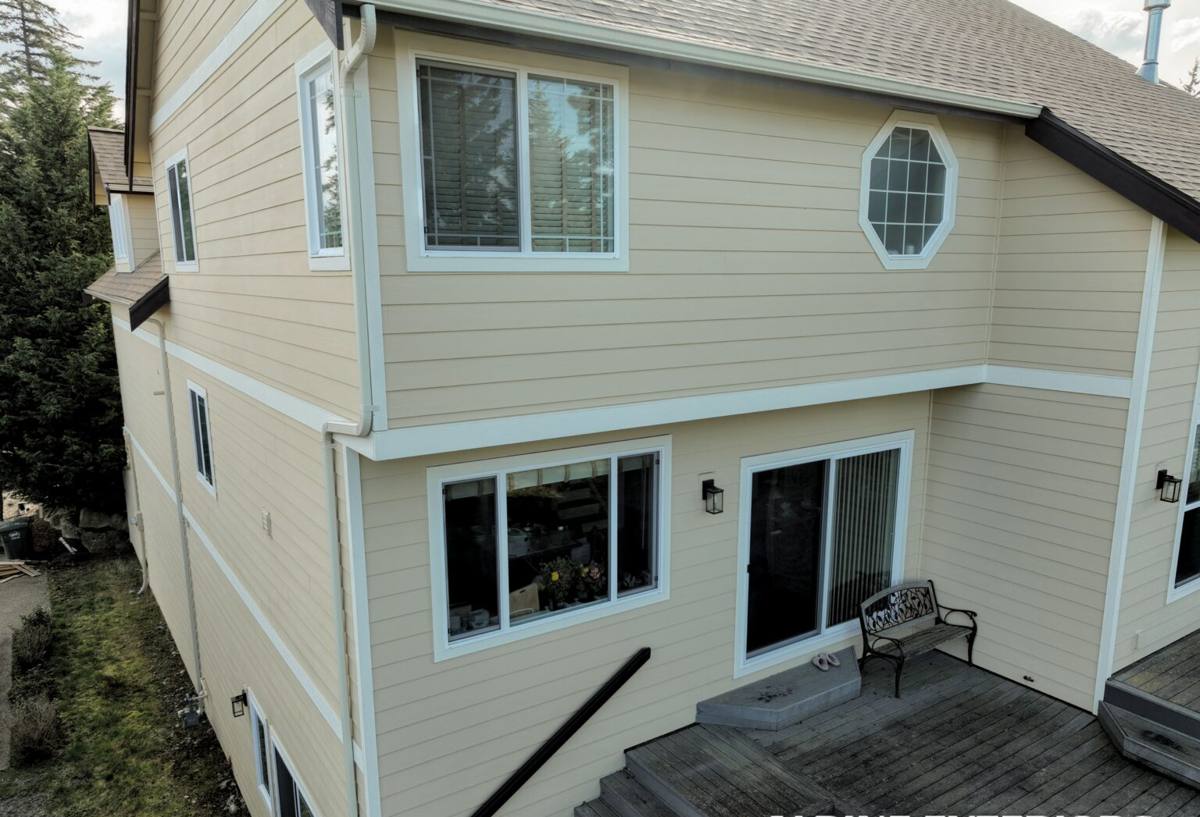
Common Deck Problems We See on Lynden Properties
Moss and Algae Buildup
Whatcom County's long moss season isn't just a cosmetic issue. Moss holds moisture directly against wood fibers and fasteners, which accelerates rot and corrosion in exactly the spots that are hardest to inspect — under rugs, planters, and furniture that sits in one place all winter. A deck that looks fine on the surface can have soft, spongy boards underneath a mat of moss.
Ledger Board and Flashing Failures
The ledger board — where the deck attaches to the house — is the single most important structural connection on most decks, and it's also the spot most exposed to driving rain when flashing is missing, undersized, or was never properly integrated with the house's water-resistive barrier. We find this on decks of every age, including newer builds where flashing details were skipped to save time.
Post and Railing Movement
Loose or wobbly railings usually trace back to post bases that have been sitting in standing water or ground contact without proper isolation. Once a post base starts to soften, the whole railing system loses rigidity, which is a safety issue, not just an inconvenience.
Board Cupping, Splitting, and Fastener Pop
Repeated wet-dry cycles cause deck boards to cup and split, and it pushes nails and screws up over time. This is common on older wood decks that were never sealed on a regular schedule, and it's one of the more straightforward repairs when caught before rot sets in underneath.
Understructure Rot
Joists, beams, and support posts underneath the deck surface don't get much airflow, especially on decks built low to the ground or over unimproved soil. Combined with Whatcom County's rainfall totals, this creates ideal conditions for rot that's invisible from above until a board fails underfoot.
Signs It's Time to Call for a Repair
- Deck boards that feel soft, spongy, or flex noticeably when you walk on them
- Railings or posts that wobble or shift when pushed
- Visible moss or dark staining concentrated in one area rather than spread evenly
- Gaps opening up between the house and the deck's ledger board
- Fasteners backing out, rust streaks around screw heads, or corroded metal connectors
- A musty smell coming from underneath the deck
- Stairs that feel less solid than they used to, especially at the top or bottom connection points
- Standing water that doesn't drain within a few hours of rain stopping
Any one of these on its own might be minor. Two or three together usually means it's worth a proper inspection before the next wet season.
What a Correct Deck Repair Actually Involves
A repair done right starts with figuring out why the damage happened, not just replacing the board or post that failed. If we patch a rotted joist without correcting the drainage or flashing issue that caused it, the new lumber will be in the same condition within a couple of wet seasons. Our approach is to trace the moisture path first.
Inspection and Diagnosis
We check moisture content in framing members, not just visible boards, and we probe areas that tend to hide damage: under the ledger, around post bases, and beneath any spot where debris or moss has been sitting. This tells us whether we're looking at a surface repair or something structural.
Structural Repairs
Ledger flashing, joist sistering or replacement, post base repair, and railing reinforcement are structural work and need to meet the same standards as new construction — proper fastener types, correct spacing, and connections rated for the loads involved. This isn't the place to cut corners, since it's the part of the deck that keeps people safe.
Surface and Cosmetic Repairs
Board replacement, refastening, sanding, and refinishing address the parts of the deck people actually see and touch. These matter for longevity too — a properly sealed surface sheds water instead of absorbing it, which slows the whole cycle of moisture damage down.
Drainage and Airflow Corrections
Where we can, we improve the conditions that caused the original failure: adjusting board spacing for better drainage, clearing airflow under low decks, and correcting grading or planter placement that's been trapping water against the structure. This is the difference between a repair that lasts and one that's a temporary fix.
Repair or Replace? How We Help You Decide
| Factor | Repair likely makes sense | Replacement likely makes sense |
|---|---|---|
| Extent of rot | Isolated to a few boards or one framing member | Widespread through multiple joists, beams, or the ledger |
| Deck age | Under 15-20 years, otherwise sound construction | Original structure is older and was never properly maintained |
| Railing/post condition | Solid except for a section or two | Movement at multiple posts, widespread base rot |
| Underlying framing | Dry and solid where probed | Soft or spongy at multiple test points |
| Budget goal | Extend usable life for a reasonable cost | Want a different layout, size, or material long-term |
Most of the decks we're called out to see in Lynden fall into the repair category — the framing is fundamentally sound and the damage is concentrated where water has been getting in. We'll tell you honestly if we think a section is beyond a reasonable repair, and we won't recommend a full rebuild when a targeted fix will hold up.
Our Deck Repair Process
- On-site inspection — we walk the full deck, probe suspect areas, and check the ledger, posts, and understructure, not just the walking surface.
- Written estimate — a clear scope of what needs structural repair versus what's cosmetic, so you know what you're paying for and why.
- Repair work — structural fixes first, then surface repairs, using fasteners and hardware rated for exterior and ground-contact exposure as appropriate.
- Moisture management — flashing corrections, drainage adjustments, or airflow improvements where they'll extend the repair's life.
- Final walkthrough — we check railings, stairs, and board fastening are solid before we consider the job done.
Material Considerations for Whatcom County's Climate
What a deck is built from affects how it holds up to a wet climate with a long moss season, and it affects how repairs get handled down the road.
| Material | How it holds up locally | Repair considerations |
|---|---|---|
| Pressure-treated wood | Good rot resistance when properly maintained and sealed on a regular schedule | Individual boards are easy to replace; framing needs periodic inspection |
| Cedar | Naturally rot-resistant but still needs sealing to handle sustained wet seasons | Matching weathered cedar takes care; structural repairs are straightforward |
| Composite decking | Resists rot and moss staining better on the surface, but framing underneath is still typically wood and needs the same moisture protection | Board replacement is simple; framing rot underneath composite can go unnoticed longer |
Our standard is to match repair materials to what performs best for the specific part of the deck — pressure-treated lumber for framing regardless of what the surface is, and a surface material choice that fits your maintenance preferences and budget. We're straightforward about the trade-offs of each option rather than pushing whatever's easiest for us to install.
Maintenance That Prevents the Next Repair
- Sweep off leaves, needles, and debris regularly, especially going into fall
- Keep moss from establishing — treat it early rather than letting it spread through a wet season
- Reseal wood decking on the schedule appropriate to the product, typically every one to three years in this climate
- Move planters and furniture periodically so moisture isn't trapped in the same spot all season
- Check railings and stair connections for movement a couple times a year
- Make sure gutters and downspouts near the deck are directing water away, not onto it
- Clear debris from between boards so water can drain instead of pooling
Why It Matters to Hire a Crew That Already Works in Lynden
Deck repair looks similar on paper everywhere, but the failure patterns in Whatcom County are specific to this climate — the moss cycle, the rainfall totals, the way moisture sits in shaded, low-airflow spots for weeks at a time. A crew that repairs decks here regularly recognizes these patterns quickly instead of treating every job as a guessing game, and that shows up in both the accuracy of the diagnosis and the durability of the fix.
We also know that a repair which ignores the reason for the original damage just buys a homeowner a year or two before the same problem resurfaces. Our goal on every Lynden deck repair is to leave the structure in a condition where it can actually handle another Whatcom County winter, not just look fixed for the next inspection.
If you've got a deck in Lynden that's showing soft spots, moss buildup, loose railings, or anything else that doesn't feel right underfoot, we're happy to take a look. Estimates are free, there's no pressure to move forward, and you'll get a straight answer about whether you're looking at a repair or something bigger — just fill out the form below to get started.