 Whatcom County
 Blaine's Climate Is Harder on Siding Than It Looks
Blaine sits at the northwest corner of Whatcom County, right on the water and a few minutes from the Canadian border. That location gives homes here a specific set of exterior problems that inland Whatcom County towns don't deal with in the same way. Salt-laden air off the water accelerates corrosion on fasteners, flashing, and anything metal that wasn't rated for coastal exposure. Wind off the water also drives rain sideways into wall assemblies at angles that a lot of siding products and installation details were never designed to shed.
On top of the salt and wind-driven rain, Whatcom County's long, wet, low-sun stretch from fall through spring keeps north- and shade-facing walls damp for weeks at a time. That's what feeds the moss and algae growth you see streaking down siding and trim on older homes in this area. None of this makes siding impossible to get right in Blaine — it just means the product and the installation details both have to be chosen for the actual conditions, not for a national average climate.
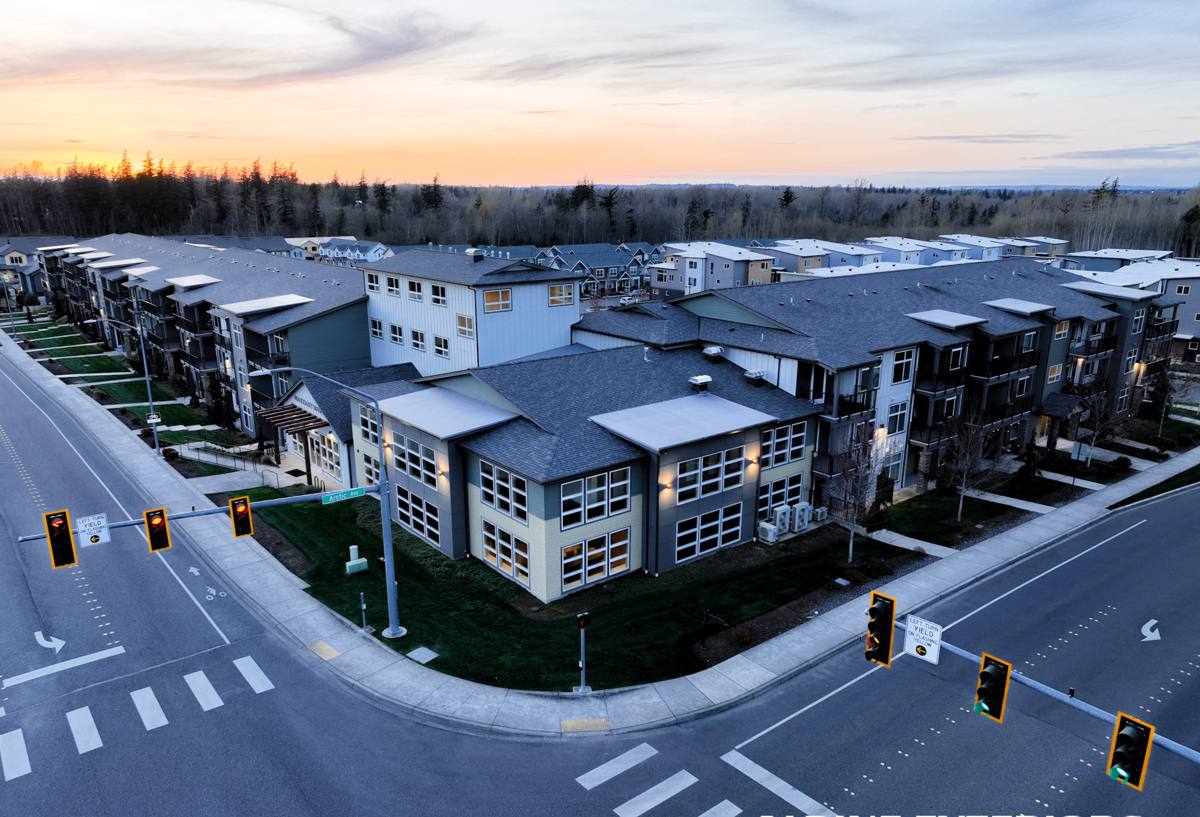
Why We Only Install James Hardie Here
We install James Hardie fiber cement exclusively — not vinyl, not LP SmartSide, not primed wood, not other fiber cement brands. That's a deliberate standard, not a lack of options. Hardie's HardieZone HZ5 product line is engineered specifically for climates like ours: cool, wet, and coastal. The fiber cement substrate doesn't absorb and hold moisture the way wood-based products can, and it won't warp, delaminate, or rot from prolonged dampness the way some engineered wood siding can if a joint or seam ever fails.
The factory-applied ColorPlus finish matters just as much as the substrate in a place like Blaine. It's baked on under controlled conditions, adheres more tightly than field-applied paint, and holds up better against the fading and chalking that salt air and constant UV-to-rain cycling cause over time. It also gives us a cleaner surface for washing off moss and algae without stripping paint down to bare material, which is a real maintenance advantage in a town with a long moss season.
Fiber cement is also non-combustible, which is a genuine plus for insurance and peace of mind, even though wildfire exposure isn't the primary reason we recommend it in a coastal town like Blaine. Here, the bigger argument is moisture and salt performance combined with a manufacturer warranty that's actually built around long-term coastal and marine-climate use.
Product Lines That Make Sense for Blaine Homes
Most Blaine homes we work on end up with one of a few Hardie configurations, chosen based on the home's exposure and existing architecture:
- HardiePlank lap siding — the most common choice, available in smooth or cedar-textured finishes, and the easiest to detail correctly around windows, corners, and water tables.
- HardiePanel vertical siding — often used for accent gables, garages, or a board-and-batten look, which also happens to shed wind-driven rain well when flashed correctly.
- HardieTrim — for corners, fascia, and window/door casing, matched to the same ColorPlus system so trim and field siding age at the same rate instead of trim fading or staining faster than the walls around it.
Color selection matters more here than in drier inland areas. Darker ColorPlus tones can help hide the early stages of moss and algae growth between cleanings on shaded, north-facing walls, while lighter tones show it faster but are easier to spot early and wash off before it sets in.
What a Correct Installation Actually Involves
Fiber cement siding is only as good as the assembly behind it. In a coastal, high-rain area like Blaine, the installation details matter more than the brand name on the plank. A correct install includes:
Drainage and moisture management
We install a weather-resistant barrier and a drainage gap (rainscreen) behind the siding on most jobs, giving any moisture that gets past the cladding a path to drain and dry instead of sitting against the sheathing. This is one of the biggest differences between a siding job that lasts and one that develops rot behind the wall in five to ten years, especially on walls that take direct wind-driven rain.
Fasteners and flashing rated for salt exposure
In a salt-air environment, the wrong fastener corrodes long before the siding itself fails, leaving streaks and eventually loose boards. We use corrosion-resistant fasteners and flashing specified for coastal exposure, not whatever is cheapest or fastest to run through a nail gun.
Clearances and joint treatment
Hardie's install guide specifies minimum clearances from grade, roofing, and decks, plus how butt joints and trim transitions should be treated and caulked. Skipping these details is the single most common cause of premature failure we see on fiber cement siding that was installed by a crew unfamiliar with the product.
Proper fastening pattern and blind-nailing where called for
Over- or under-driven fasteners, wrong nailing patterns, and face-nailing where blind-nailing is specified all shorten the life of an otherwise good product. This is installer skill, not material quality.
Signs Your Current Siding Is Losing the Battle
Before recommending a full replacement, we look for specific signs that siding in this climate is past the point of patching:
- Persistent moss or algae streaking that returns within weeks of cleaning, especially on shaded or north-facing walls
- Soft or spongy spots when pressed, particularly near the bottom courses and around window trim
- Visible gaps, cupping, or warping in lap boards or panels
- Paint that's chalking, peeling, or fading unevenly panel to panel
- Rust streaks below fasteners or trim, a sign of corroding hardware
- Caulk that's cracked, shrunk, or pulled away from joints and trim
One or two of these on their own might just need maintenance. Several together, especially combined with soft sheathing underneath, usually means the wall assembly has been taking on moisture for a while and a full re-side is the more honest recommendation.
What Affects Cost on a Blaine Siding Job
We don't publish blanket per-square-foot prices because the variables below change the number more than the siding brand does. Here's what actually drives cost on a James Hardie job in this area:
| Factor | Why it matters in Blaine |
|---|---|
| Home size and number of stories | More wall area and higher elevations mean more material, more labor, and more staging/scaffolding time |
| Tear-off complexity | Removing old vinyl is usually straightforward; removing wood siding with hidden rot from years of coastal moisture takes longer |
| Sheathing and framing repair | Homes with a history of moisture intrusion often need sheathing replaced before new siding goes on, which isn't known until tear-off |
| Rainscreen and WRB detailing | Proper drainage assemblies for wind-driven rain exposure add material and labor but reduce long-term risk |
| Trim and architectural detail | Homes with more corners, gables, dormers, and window trim take more time to flash and finish correctly |
| Site access | Waterfront lots, tight setbacks, or limited driveway access affect staging and equipment options |
How We Approach a Job in Blaine
Every project starts with an on-site inspection, not a phone estimate. We look at the current siding, check for soft spots and moisture damage, evaluate the home's wind and rain exposure based on its orientation and elevation, and talk through which Hardie product and color make sense for that specific wall.
- Inspection and moisture assessment, including probing suspect areas
- Written estimate covering material, labor, and any sheathing repair contingencies
- Tear-off of existing siding and disposal
- Sheathing repair or replacement where moisture damage is found
- Installation of weather-resistant barrier and rainscreen/furring where specified
- Hardie siding, trim, and flashing installation to manufacturer spec
- Caulking, touch-up, and final cleanup
- Final walkthrough before we consider the job done
We don't skip the moisture assessment step, even on jobs that look cosmetic from the outside. In a town this close to the water, what's happening behind the siding is usually more important than what's visible on the surface.
Why It Matters That We Already Work Blaine
A crew that mostly works drier, inland areas can install Hardie siding competently and still get the details wrong for a place like Blaine — using standard fasteners instead of corrosion-resistant ones, skipping a rainscreen because it's not strictly required everywhere, or picking a color that shows algae streaking within a season. None of those are failures of the product. They're failures of matching the install to the environment.
Working Whatcom County's coastal communities regularly means we've already seen what salt air does to the wrong fastener, what wind-driven rain does to a poorly flashed corner, and how fast moss comes back on a shaded wall if the wrong color or finish gets chosen. That local pattern recognition is worth more than a generic national installation checklist, and it's part of why we hold our own crews to installation details that go beyond the minimum manufacturer spec.
Get a Straight Answer for Your Home
If your siding in Blaine is showing moss that won't stay clean, soft spots near the base, or paint that's fading unevenly, it's worth having someone look at it before winter's rain sets in again. We'll give you a straightforward, no-pressure estimate and an honest read on whether you're looking at repair, partial replacement, or a full re-side — request a free estimate using the form below.