 Whatcom County
 New Roofs Built for Happy Valley's Weather, Not Just Any Weather
Happy Valley sits close enough to the water and the tree line that its roofs take a different kind of beating than a roof twenty miles inland. Salt-laden air off the Sound accelerates corrosion on exposed metal fasteners and flashing. Driving rain, often pushed sideways by wind, finds every weak seam in an underlayment or flashing detail. And a moss season that can run eight or nine months out of the year works its way into shingle mat and ridge lines if the roof wasn't built to shed water fast and dry out in between storms.
A "new roof installation" in Happy Valley isn't just tearing off old shingles and nailing down new ones. It's choosing materials and details that account for all three of those stressors at once. Homes here that get a generic install — one built to a national average spec instead of a Whatcom County one — tend to show moss streaking, soft decking, and flashing failure years earlier than they should.
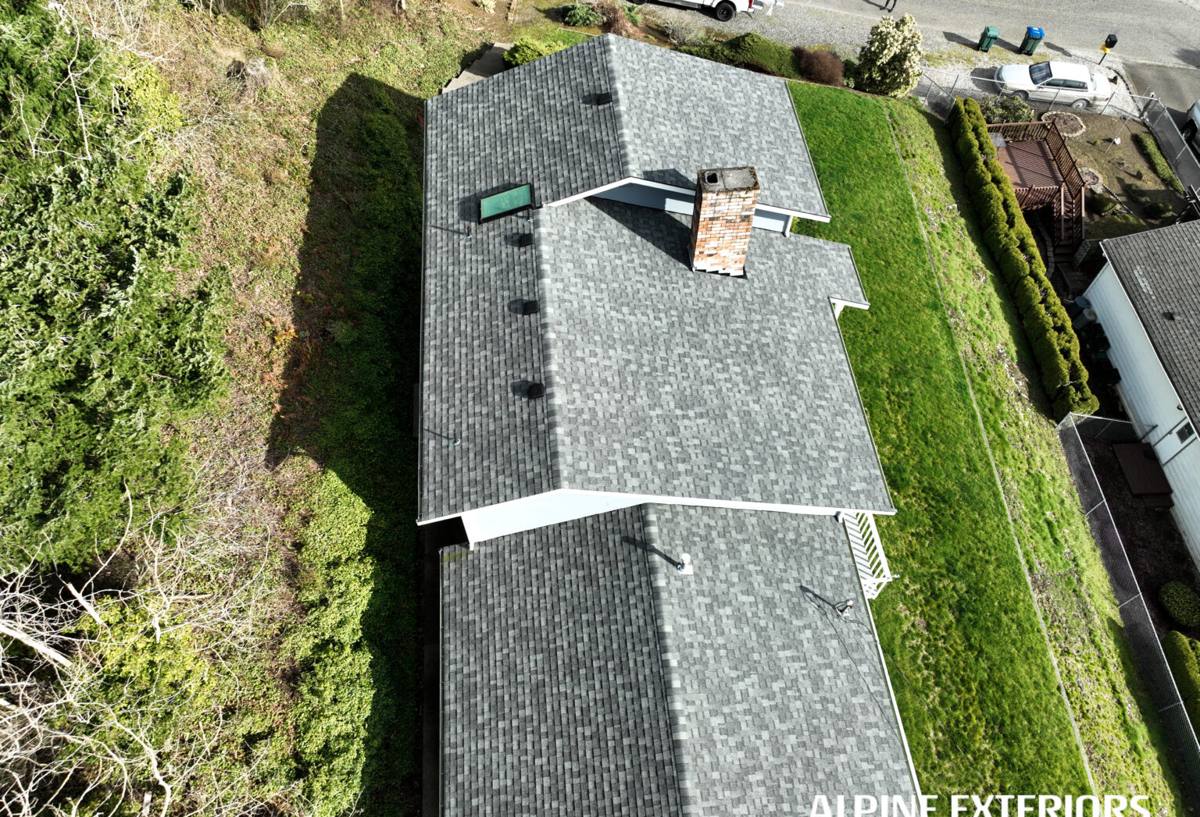
Signs a Happy Valley Roof Has Reached Replacement Age
Not every aging roof needs full replacement, but there's a point where patching stops being the honest answer. We look for a combination of these signs, not just one:
- Shingle granules collecting in gutters and downspouts, or bald patches visible on south- and west-facing slopes
- Moss established at the ridge and working down into the field of the roof, not just surface growth on the surface of the shingle
- Soft or spongy decking felt underfoot during inspection, especially near valleys and eaves
- Daylight visible through the attic at roof boards, or water staining on rafters and sheathing
- Curling, cupping, or cracked shingles, particularly on the more weather-exposed elevations
- Flashing around chimneys, skylights, and sidewalls that's rusted, lifted, or was never step-flashed correctly to begin with
If you're seeing two or three of these together, especially soft decking or daylight in the attic, that's a replacement conversation, not a repair one. A repair on a roof that's already failing structurally just delays the real cost and lets moisture do more damage to the decking underneath.
What a Correct Installation Actually Involves
Tear-Off and Deck Inspection
We remove the existing roofing down to the deck rather than layering over it. Overlaying hides problems — soft sheathing, old leaks, rotten framing — and it also traps moisture between layers, which is the last thing a roof in this climate needs. Once the deck is exposed, we inspect every sheet of plywood or board sheathing and replace anything that's delaminating, soft, or stained through.
Underlayment as the Real Water Barrier
Shingles shed most of the water, but the underlayment is what actually keeps a roof watertight when wind drives rain up under a shingle tab or when ice and heavy moss hold water against the surface longer than it should sit there. In a climate with this much sustained rain, we treat underlayment as a primary defense layer, not an afterthought, with self-adhered membrane at eaves, valleys, and any low-slope transitions where water lingers.
Flashing Done Right the First Time
Most roof leaks that show up years after an install trace back to flashing, not the shingles themselves. Step flashing at sidewalls, counter-flashing at chimneys, and properly lapped valley metal are what stop water at the details instead of hoping the shingles alone handle it. Salt air corrodes cheap or unfinished metal flashing faster here than it would inland, so material choice at these details matters as much as at the field of the roof.
Ventilation That Actually Balances
A roof that traps heat and moisture in the attic will fail from the inside before it fails from the outside. We size intake at the soffits and exhaust at the ridge so they're balanced — too much exhaust without enough intake actually pulls conditioned air and moisture up through the living space, which does more harm than good.
Choosing Materials for Salt Air, Rain, and Moss
There's no single "best" roofing material for every Whatcom County home — the right choice depends on your roof's exposure, budget, and how long you plan to stay in the house. Here's how the common options actually compare in this specific climate:
| Material | Salt Air Resistance | Moss Resistance | Typical Lifespan Here | Trade-Offs |
|---|---|---|---|---|
| Architectural asphalt shingle | Good with quality fasteners/flashing | Moderate — benefits from algae-resistant granules | 20–30 years | Most affordable; needs periodic moss treatment and gutter care |
| Standing seam metal | Very good with coated/finished panels | Excellent — sheds moss spores, little for them to grip | 40–50+ years | Higher upfront cost; needs correct fastener spec near salt air |
| Synthetic/composite shingle | Good | Good | 30–40 years | Mid-to-high cost; product and installer experience vary more |
| Wood shake | Fair — needs regular maintenance | Poor without diligent upkeep | 15–25 years realistically | High maintenance burden in a moss-heavy climate; we're honest that it's not our first recommendation here |
We don't install wood shake as our default recommendation for Happy Valley roofs — not because it can't look good, but because the maintenance schedule needed to keep it moss-free in this rainfall pattern is more than most homeowners want to commit to. If a homeowner wants it anyway for a specific architectural reason, we'll talk through what that upkeep actually requires before committing to it.
Our Installation Process, Step by Step
- On-site inspection and estimate — we walk the roof (or use a drone where pitch or access makes that unsafe), check the attic, and measure for an accurate material takeoff rather than a rough guess.
- Material selection — we go over the table above in person, matched to your roof's exposure and your budget, not a one-size pitch.
- Permitting — Whatcom County and local jurisdiction permitting is pulled before work starts, not skipped to save time.
- Delivery and staging — materials are staged to protect landscaping and driveways, with tarps and protection set before tear-off begins.
- Tear-off and deck inspection — full removal of old roofing, deck inspected board by board, damaged sheathing replaced.
- Underlayment, flashing, and ventilation install — the water-management layer goes down before a single shingle is laid.
- Field installation — shingles, panels, or shakes installed to manufacturer spec, with attention to nailing pattern and exposure, which matters more in high-wind, high-rain conditions than most homeowners realize.
- Cleanup and magnetic sweep — job site cleared of debris and swept for stray nails before we consider the job done.
- Final walkthrough — we go over the finished roof with you, including what routine maintenance it'll need going forward.
Managing Moss Season Before It Starts
Whatcom County's moss season isn't a minor cosmetic issue — established moss holds moisture against the roof surface, works under shingle tabs as it grows, and can lift granules and shorten a roof's life by years if it's left unchecked. A correct new roof installation reduces moss's foothold from day one:
- Algae- and moss-resistant shingle lines where asphalt is the chosen material
- Zinc or copper strips at the ridge on shingle roofs, which release trace metals with rainfall that inhibit moss growth down-slope
- Correct slope and valley design so water doesn't pool or slow-drain in low spots where moss establishes fastest
- Trimming recommendations for overhanging branches that shade the roof and keep it damp longer than an open, sun-exposed section
None of this makes a roof moss-proof forever — nothing does in this climate — but it buys years of reduced growth and makes annual maintenance (a simple soft wash or brush-off) far more effective than it would be on a roof that wasn't set up for it.
Cost Factors Homeowners Should Actually Weigh
Two roofs of the same square footage can price very differently based on factors that have nothing to do with the brand name on the shingle wrapper:
| Factor | Why It Moves the Price |
|---|---|
| Roof pitch and accessibility | Steeper roofs and difficult access require more safety equipment and time |
| Deck condition | Rotten or soft sheathing found at tear-off adds material and labor to replace it |
| Number of penetrations | Chimneys, skylights, and vents each need individual flashing work |
| Layers being removed | Multiple existing layers take longer to strip and haul away |
| Material choice | Metal and synthetic products cost more upfront than asphalt but last longer |
| Ventilation upgrades | Adding proper intake/exhaust where none existed is worth the added cost long-term |
We'd rather walk you through where your money is actually going than quote a flat number with no explanation behind it. An honest estimate accounts for what your specific roof needs, not a generic per-square rate.
Why Local Experience in Happy Valley Matters
A crew that already works in and around Happy Valley knows how the wind typically drives rain on exposed elevations here, which slopes tend to hold moss longest, and how local permitting works without extra back-and-forth. That familiarity translates into fewer surprises during the job — we're not learning the area's quirks on your roof. It also means we're realistic about scheduling around Whatcom County's wetter stretches, so tear-off doesn't leave your home exposed longer than it should be.
If you're weighing a new roof for a Happy Valley home, we're glad to come take a look, walk the attic, and give you a straight answer about whether you need a full replacement or just a targeted repair — no pressure either way. Fill out the form below for a free estimate.