 Whatcom County
 Building Decks for Ferndale's Specific Conditions
Ferndale sits close enough to the water and the marine air pattern that moves through Whatcom County that decks here take a different kind of beating than decks built inland or in drier climates. Salt-tinged air accelerates corrosion on fasteners and hardware. Driving rain off Bellingham Bay and the Strait pushes moisture sideways into places a deck was never designed to shed water. And the long, damp shoulder seasons that stretch from fall through spring give moss, algae, and mildew months to establish themselves on any surface that doesn't drain and dry properly. A deck built with generic, one-size-fits-all methods can look fine for a year or two and still fail early — soft framing, rusted fasteners, slick decking, and rot at the ledger board are the most common results we see when a deck wasn't built with this specific climate in mind.
A correctly built custom deck in Ferndale isn't about adding extra steps for the sake of it. It's about choosing materials, fasteners, and drainage details that actually hold up to what this part of Whatcom County throws at an exterior structure year-round.
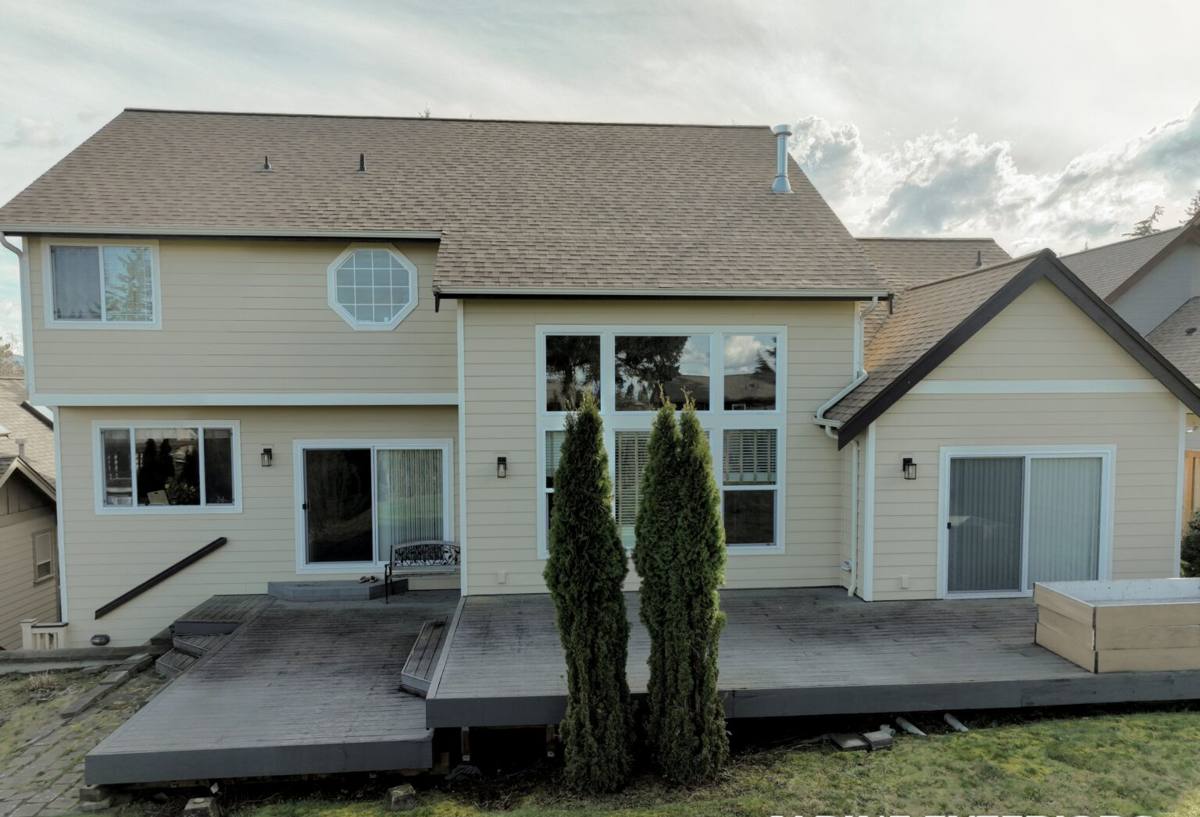
What "Custom" Should Mean for a Ferndale Deck
Custom doesn't just mean a non-rectangular shape or a built-in bench. It means the deck is designed around your actual lot, your home's exposure, and how you'll use the space — not pulled from a stock plan.
Site and Exposure
Where the deck sits relative to prevailing wind and rain direction changes what details matter most. A deck on the windward side of a home needs more attention to flashing and water diversion than one tucked under an eave. Grade and drainage around the deck's footprint also matter — standing water at the base of posts or footings is a slow, quiet way for a deck's substructure to fail.
Use and Layout
How you'll actually use the space should drive the layout — dining area, grill zone, stairs to the yard, a spot for a hot tub — because each of those adds structural or drainage requirements that are much cheaper to plan for up front than to retrofit later.
Style That Fits the House
A custom deck should also look like it belongs to the house it's attached to — matching or complementing trim color, railing style, and general proportions rather than looking like an add-on.
Decking Material Options for This Climate
There's no single "best" decking material — there's a best fit for your budget, your maintenance appetite, and how much direct weather exposure the deck gets. Here's how the common options actually perform in a wet, salt-air, moss-prone climate like Whatcom County's.
| Material | Moisture & Rot Behavior | Moss / Mildew Care | Typical Lifespan | Relative Cost |
|---|---|---|---|---|
| Pressure-treated wood | Resists rot when properly sealed; end cuts and fastener holes are vulnerable points | Needs regular cleaning and re-sealing to stay ahead of growth | 10–15 years with upkeep | Lowest |
| Cedar | Naturally moisture-resistant; still benefits from a finish in this climate | Moderate care; greys and can host moss if left unsealed | 15–20 years with upkeep | Mid |
| Capped composite | Very good — cap layer resists moisture absorption | Low; surface sheds moss and mildew more easily than wood | 25–30 years | Mid-High |
| Cellular PVC | Excellent — doesn't absorb water, won't rot | Lowest maintenance of the group | 30+ years | Highest |
We'll walk you through these trade-offs honestly during your estimate. Wood costs less up front but demands the most consistent maintenance in a climate that gives you fewer dry weeks per year to do that maintenance. Composite and PVC cost more initially but shed moisture and resist moss with far less ongoing effort — worth weighing against how much deck upkeep you actually want to do each spring.
Framing and Substructure: Where Decks Actually Fail
The decking boards are what you see, but the framing underneath is what determines whether the deck is still safe and solid in fifteen years. In a wet climate, framing failures are almost always moisture failures.
The Ledger Connection
Where the deck attaches to the house is the single most important — and most commonly under-flashed — connection on the entire structure. Water that gets behind an improperly flashed ledger board doesn't just rot the ledger; it can work its way into the house's rim joist and wall framing. Proper flashing, sized and installed correctly, is non-negotiable here.
Joists, Beams, and Hardware
Joist tape or a comparable moisture barrier on top of framing members keeps water from sitting in the fastener holes where decking screws penetrate — one of the most common early rot points on any deck. Fasteners and structural hardware should be rated for the type of lumber and treatment you're using; mismatched metals can accelerate corrosion, especially with the salt content in coastal Whatcom County air.
Footings and Drainage
Footings need to sit below frost depth and on stable, well-draining soil. Where the ground under a deck stays consistently wet, that moisture works its way into post bases and framing from below — a slower but just as damaging path as rain from above.
Railings, Fasteners, and Finish Details
Small details separate a deck that ages well from one that starts showing problems in year three. In a marine climate, fastener and hardware selection deserves real attention rather than an afterthought.
- Stainless or coated fasteners rated for treated lumber and coastal exposure — cheap fasteners rust and stain decking within a season or two
- Railing post connections designed to shed water rather than trap it against end grain
- Gaps between boards sized to allow airflow and drainage rather than trapping debris and moisture
- Stair stringers and treads detailed so water sheds off rather than pooling on horizontal surfaces
Permits and Local Considerations
Deck projects in and around Ferndale typically require a permit once they exceed certain size or height thresholds, and setback requirements from property lines can affect where a deck can be built or how large it can be. Requirements vary by exact jurisdiction and lot, so we handle the permit determination and application as part of the process rather than leaving it for you to sort out. We'd rather confirm the specifics for your property than guess — permit rules change and are easy to get wrong secondhand.
Our Process, Start to Finish
- Site visit and consultation — we look at your lot's exposure, drainage, and how you plan to use the space
- Design and material selection — layout, decking material, and railing style based on your budget and maintenance preference
- Permitting — we determine what's required and handle the application
- Framing and flashing — the structural work that determines the deck's long-term durability, done with attention to this climate's moisture demands
- Decking, railings, and finish work — installed with fasteners and details suited to salt air and heavy rain
- Final walkthrough — we go over care and maintenance specific to the material you chose
Maintenance: What to Expect After the Build
Even the best-built deck needs some seasonal attention in this climate. What that looks like depends on the material, but here's a general checklist for Whatcom County conditions:
- Clear leaves and debris from between boards before fall rains set in — trapped debris holds moisture against the decking
- Rinse or lightly scrub decking surfaces in spring to remove the moss and algae film that builds up over winter
- Check railing posts and stair connections annually for movement or soft spots
- Inspect and touch up sealant on wood decking on the manufacturer's recommended schedule — don't let it lapse through a wet winter
- Keep gutters and downspouts near the deck clear so runoff isn't being directed onto or under the structure
- Watch for standing water anywhere on or under the deck after heavy rain — it's usually a sign a drainage detail needs attention
Why Hiring a Crew That Already Works Ferndale Matters
A contractor who works this area regularly already knows how the local exposure to salt air, rain, and moss affects material choices and framing details — it's not a variable they're guessing at for the first time on your project. That familiarity shows up in the small decisions: which fastener grade to use, how much flashing detail a given ledger connection needs, which decking material actually holds up to a Whatcom County winter versus one that just looks good on a spec sheet. It also means someone who's already familiar with local permitting expectations, which keeps the project moving instead of stalling on paperwork.
If you're planning a new deck or replacing one that's showing its age, we're happy to walk your property, talk through material and design options honestly, and give you a straightforward estimate — no pressure, no upsell. Use the form below to request your free estimate.