 Whatcom County
 Fairhaven's Siding Climate: Salt Air, Driving Rain, and Moss
Fairhaven sits close to open water on Bellingham Bay, and that proximity changes what a house exterior has to deal with day to day. Salt-laden air moves off the bay and settles on siding, trim, and fasteners. Wind-driven rain off Puget Sound doesn't just fall straight down — it gets pushed sideways into wall assemblies, joints, and anywhere a seam isn't sealed correctly. Add a moss season that can stretch from fall through spring across Whatcom County, and you have a combination that punishes any siding material with a weak point.
None of this is unusual for northwest Washington, but Fairhaven's mix of older homes near the historic waterfront district and newer infill construction means we see the full range of how siding ages here — from wood that's held up reasonably well with constant upkeep, to newer products that struggled faster than owners expected. The material and the installation both matter, and in this location neither one can be treated as an afterthought.
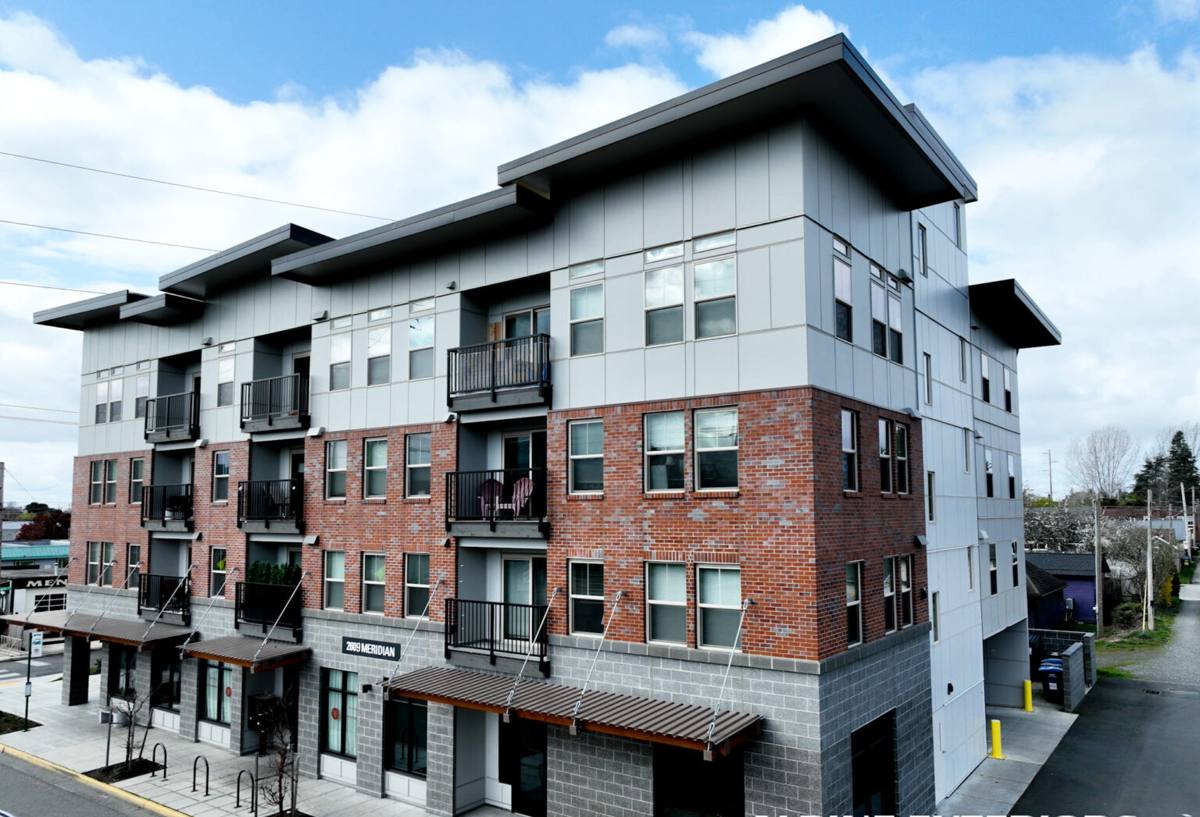
Why Fiber Cement Is the Right Material Here
Fiber cement is cement, sand, and cellulose fiber pressed and cured into a dense, stable board. It doesn't absorb water the way wood does, it won't warp or buckle in heat the way vinyl can, and it's non-combustible. For a home exposed to salt air and repeated wetting cycles, those properties matter more than they do somewhere drier and further inland.
That said, fiber cement isn't magic on its own. It still has to be installed with the right clearances, fastened correctly, and finished with a paint or factory coating system that can stand up to UV and moisture. A good product installed poorly will fail the same way a mediocre product does — just more slowly. That's why we treat the installation details in this article as equally important to the material choice itself.
What Salt Air Actually Does to Siding
Salt doesn't just sit on the surface. Over time it accelerates corrosion in exposed metal fasteners and flashing, breaks down lower-quality paint films faster than inland exposure would, and can work into any gap in caulking or trim. Homes closer to the water need siding, fasteners, and flashing details rated for that exposure — this isn't a place to cut corners on hardware to save a small amount up front.
The James Hardie System We Install
We install James Hardie fiber cement exclusively — we don't install LP SmartSide, vinyl, Cemplank, Allura, primed spruce, or cedar. That's a deliberate standard, not a sales preference. Hardie engineers its HardieZone products by climate region, and Whatcom County falls in a wet, humid zone where moisture resistance and freeze-thaw stability matter. The factory-applied ColorPlus finish is also relevant here: it's baked on and warrantied against cracking, chipping, and fading in a way field-applied paint typically isn't, which matters when a house is taking on salt spray and constant damp weather.
| Hardie Product | Where It's Used | Relevant Feature for Fairhaven |
|---|---|---|
| HardiePlank lap siding | Primary wall siding, most common choice | Available in ColorPlus finish; engineered moisture resistance |
| HardieShingle | Accent gables, dormers | Matches Craftsman and traditional coastal styles common in the area |
| HardieTrim | Corner boards, window and door trim | Resists the swelling and rot that wood trim shows near water |
| HardiePanel | Modern vertical or board-and-batten looks | Clean lines for newer builds in the neighborhood |
What Correct Installation Requires
Most fiber cement problems we're called out to inspect trace back to installation, not the material. In a wet, wind-exposed location like Fairhaven, a few details separate a job that lasts decades from one that causes trouble in five years.
Drainage Plane and Flashing
Fiber cement should go over a weather-resistant barrier with a drainage gap behind it so any moisture that does get past the siding can drain and dry rather than sitting against the wall sheathing. Window and door flashing needs to be layered correctly — head flashing over the siding, not under it — so wind-driven rain sheds outward instead of being channeled into the wall.
Fastening and Clearances
Hardie specifies fastener type, spacing, and embedment depth, and those specs exist for a reason — under-driven or over-driven nails are a common cause of premature cracking. Siding also needs proper clearance from the ground, roof lines, decks, and grade so it isn't sitting in standing water or splashback.
Trim, Caulking, and Joints
Every horizontal joint and trim intersection is a potential entry point for wind-driven rain. Correct caulking, properly lapped joints, and the right gap-and-seal approach at butt joints all matter more in a location that gets sideways rain regularly than they would somewhere sheltered.
Fiber Cement vs. Other Siding Options in Fairhaven's Climate
| Material | Salt Air Behavior | Moss & Moisture | Long-Term Trade-off |
|---|---|---|---|
| James Hardie fiber cement | Stable; factory finish resists salt-driven fading | Doesn't absorb moisture; resists rot | Higher upfront cost, long service life when installed correctly |
| Vinyl | Can fade and become brittle faster near salt exposure | Won't rot, but seams can trap moisture behind panels | Lower cost, shorter realistic lifespan in this climate |
| Cedar | Needs regular refinishing to resist salt and UV | Prone to rot and moss growth without upkeep | Attractive but high maintenance burden here |
| LP SmartSide (wood-strand) | Edges and cut ends are moisture-sensitive | Requires diligent sealing and maintenance to avoid swelling | Installation quality is unusually critical to its performance |
This isn't a claim that other materials can't work anywhere — it's why we, specifically, only install James Hardie. We'd rather stand behind one product system we know performs consistently in this climate than install several products with different maintenance demands and different failure points.
Our Process From Estimate to Final Walkthrough
The process is the same whether the home is a century-old Fairhaven original or newer construction nearby, though the prep work can differ.
- On-site inspection of existing siding, sheathing, and any moisture or rot found during tear-off planning
- Measurement and material take-off, including trim, corners, and accent details
- Written estimate covering product line, finish, and installation scope — no surprise change orders for work we could have identified upfront
- Removal of old siding and inspection of the water-resistive barrier and sheathing underneath
- Repair of any damaged sheathing before new siding goes on — this step gets skipped by rushed crews and it's where long-term problems start
- Installation of house wrap or building paper, flashing, and drainage gap per Hardie's specifications
- Fiber cement installation with correct fastening, clearances, and joint treatment
- Final trim, caulking, and a walkthrough before we consider the job finished
Maintaining Fiber Cement Siding in a Marine Climate
Fiber cement is low-maintenance compared to wood, but "low-maintenance" doesn't mean "no maintenance" — especially this close to the water and under a long moss season.
- Rinse siding periodically to clear salt residue and airborne grime, especially on walls facing the water
- Keep gutters clear so overflow doesn't run down the siding face and feed moss growth
- Trim back vegetation and tree cover that keeps siding shaded and damp longer than it needs to be
- Inspect caulking at trim joints and window edges every year or two and re-seal where it's cracked or pulled away
- Address any moss or algae on siding promptly with a gentle wash rather than pressure-washing directly into joints
- Watch for chalking or fading on older sections — it can signal it's time to check the finish, though ColorPlus is built to resist this longer than field paint
Why Local Experience in Fairhaven Matters
A crew that regularly works in Fairhaven and greater Whatcom County has already run into the specific problems this location creates: how far wind-driven rain travels up a wall on an exposed lot, how quickly moss establishes on north-facing siding under tree cover, and how salt exposure changes fastener and flashing choices near the water. That's not something a crew coming from a dry, inland market necessarily accounts for by default.
It also means fewer surprises during the estimate. We know what tear-off on an older Fairhaven home is likely to reveal, we know the style considerations that come with the neighborhood's historic character, and we know how to sequence a job around this area's rain patterns instead of losing time to weather delays.
If you're considering fiber cement siding for a home in Fairhaven or elsewhere in Whatcom County, we're happy to walk the exterior with you and put together a straightforward, no-pressure estimate — just fill out the form below.