 Whatcom County
 Decks in Fairhaven Face a Tougher Climate Than Most
Fairhaven sits close enough to the water that salt air is a daily fact of life, not an occasional nuisance. Add Whatcom County's long wet season — driving rain off Bellingham Bay, months of overcast humidity, and a moss season that can stretch from October well into spring — and you have an environment that is genuinely hard on outdoor structures. A deck built to a generic national spec, without local conditions in mind, tends to show problems within a few years: soft spots, blackened boards, corroded hardware, and a substructure that's wetter than it looks from the top.
None of that means a deck in Fairhaven has to be high-maintenance or short-lived. It means the build has to account for moisture and salt from the ground up — framing, fasteners, drainage, and decking all chosen and installed with this specific climate in mind, not just whatever's cheapest at the yard.
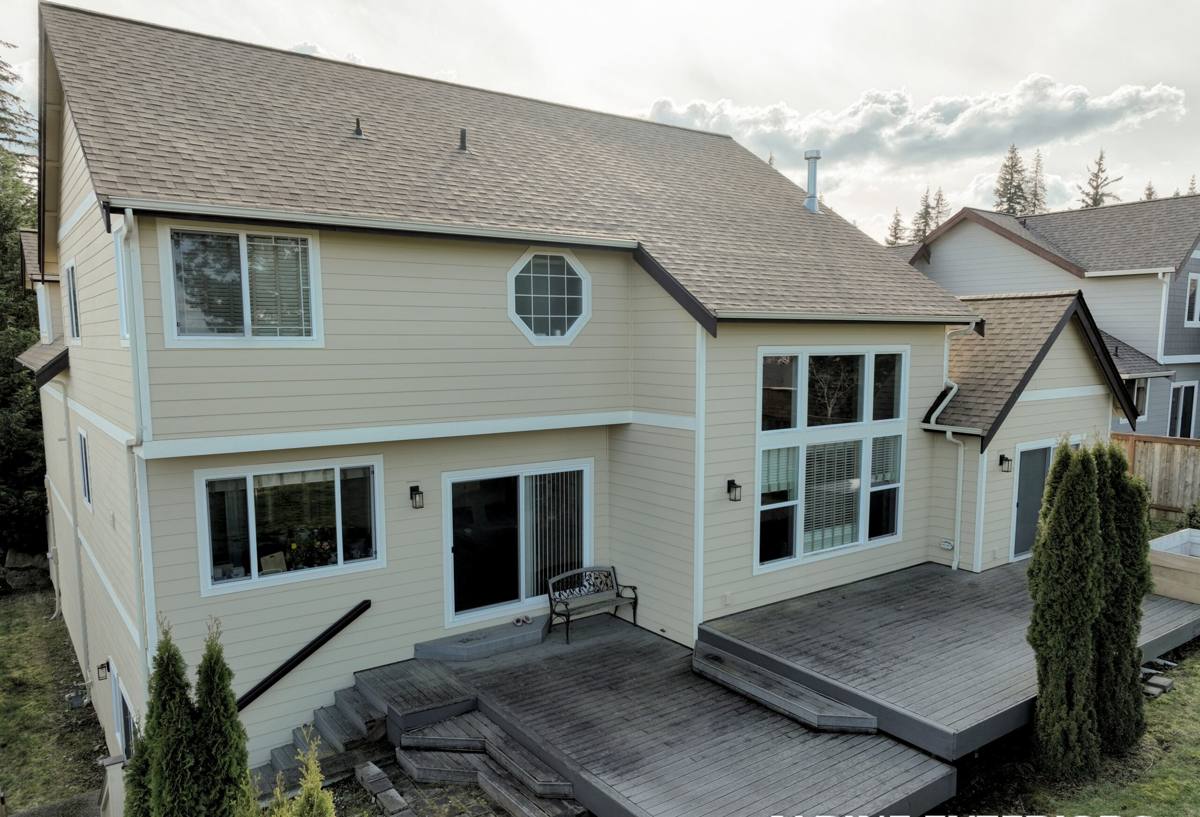
What Salt Air Actually Does to a Deck
Salt-laden air carries fine chloride particles that settle on every exposed surface. On a deck, that means:
- Accelerated corrosion of fasteners, joist hangers, and structural screws — especially anything not rated for coastal or ACQ-treated lumber contact
- Faster breakdown of clear finishes and stains, which chalk and fade sooner near the water than they would further inland
- Corrosion creep at metal-to-wood connections, where trapped moisture and salt combine to eat away at hardware from the inside out, often invisibly until a board or railing post starts to move
The fix isn't exotic — it's using hardware and fasteners actually rated for coastal exposure (stainless steel or heavy hot-dip galvanized, not standard coated screws) and being deliberate about where dissimilar metals meet. It costs a bit more up front. It's far cheaper than replacing corroded structural connectors five years in.
What Driving Rain and Moss Do to a Deck
Whatcom County's rain doesn't just fall straight down — wind off the bay pushes it sideways into ledger connections, stair stringers, and any spot where two pieces of wood meet without a gap to shed water. Moss is the other half of the problem: it holds moisture against the surface of decking boards and railings for weeks at a time, and on shaded or north-facing decks it can establish itself within a single wet season.
A deck that handles this well has a few things in common:
- Proper slope on decking boards (a slight pitch away from the house) so water actually runs off instead of pooling
- Consistent gapping between boards, sized for the specific decking material, so airflow underneath can dry the structure between storms
- Flashing at the ledger board where the deck meets the house — this is the single most common failure point on decks in wet climates, and it's invisible once the deck is built, which is exactly why it's worth getting right the first time
- A substructure kept clear of soil contact and vegetation, since moss and rot both need standing moisture to get started
Decking Material Options for Fairhaven Conditions
There's no single "best" decking material — the right choice depends on budget, maintenance appetite, and how exposed the deck is to weather. Here's how the common options actually perform in this climate:
| Material | Moisture/Salt Performance | Maintenance | Typical Lifespan Here |
|---|---|---|---|
| Pressure-treated wood | Good with proper sealing; treatment resists rot but surface still needs protection | Annual cleaning, re-seal every 2-3 years | 15-20 years with upkeep |
| Cedar | Naturally rot- and insect-resistant; still needs finish maintenance near salt air | Cleaning plus re-stain every 2-3 years | 15-20 years with upkeep |
| Composite (capped) | Excellent — doesn't absorb moisture, resists mold growth on the surface | Periodic washing; no staining or sealing | 25-30+ years |
| Composite (uncapped) | Weaker than capped composite; can absorb moisture at cut edges over time | Low, but edge sealing helps longevity | 20-25 years |
We don't push one material on every homeowner. A shaded, moss-prone lot near the water is a strong case for capped composite, where the maintenance savings pay for the price difference over time. A sunnier spot with less direct weather exposure might do perfectly well with a well-maintained cedar or treated-wood deck at a lower upfront cost. The honest answer depends on your site, not a sales script.
Why We're Selective About Hardware and Fasteners
We won't run standard coated deck screws on a project this close to the water — it's not that they're worthless everywhere, but in a salt-air environment they corrode faster than the wood around them lasts, which creates loose boards and hidden structural weakness long before the deck otherwise needs attention. Stainless steel fasteners and coastal-rated structural hardware cost more per box. On a deck that's supposed to last decades in this climate, that's not an upgrade — it's the baseline.
What a Correct Deck Build Actually Involves
A deck is a structure first and a surface second. The parts that matter most are the ones you don't see once it's finished:
Foundation and Footings
Footings need to be sized and set below frost depth and clear of standing water, with post bases that keep wood from sitting directly in wet soil. On sites with poor drainage — common on older Fairhaven lots — this sometimes means more attention to grading around the footings than a standard spec would call for.
Framing and Ledger Attachment
The ledger board — where the deck attaches to the house — is the highest-consequence connection on the whole structure. Proper flashing, correct fastener spacing, and a water-resistant barrier between ledger and house sheathing are non-negotiable here, because a failure at this joint is a slow leak that can damage the house itself, not just the deck.
Decking Installation
Board spacing, fastening method (face-screwed vs. hidden fastener systems), and consistent pitch all get set at this stage. Hidden fastener systems look cleaner and avoid surface corrosion stains around screw heads, but they're less forgiving of framing that isn't perfectly square — which is one more reason the framing stage has to be right before decking goes down.
Railings and Stairs
Code-compliant railing height and baluster spacing are the minimum. In coastal wind conditions, railing post attachment deserves extra attention — a railing that's technically up to code but weakly fastened will loosen over a few storm seasons.
Our Process for Fairhaven Deck Projects
- On-site assessment — we look at sun/shade exposure, drainage patterns, proximity to salt air, and existing structure condition if this is a replacement or expansion
- Material and design conversation — honest pros and cons for your specific site, not a one-size pitch
- Permitting — most deck projects in Whatcom County require a permit; we handle the process so it's not left to the homeowner to figure out
- Framing and structural work — footings, ledger flashing, joists, and all fastener choices matched to the coastal environment
- Decking, railing, and stair installation
- Final walkthrough — we go over maintenance expectations specific to the material you chose, so there are no surprises in year two or three
Why Local Experience in Fairhaven Matters
A crew that's built decks across Whatcom County has already seen how a specific lot's exposure to wind, rain, and salt plays out over years, not just at the moment of installation. That shows up in small decisions — how much gap to leave between boards for this particular microclimate, which hardware actually holds up on a bay-facing deck versus one further inland, where moss tends to take hold first on a shaded lot. A contractor without that local track record is guessing at some of these calls. We'd rather not guess on a structure that's supporting your family and your investment.
Maintenance That Actually Extends a Deck's Life Here
Whatever material you choose, a few habits make a real difference in this climate:
- Sweep debris and standing leaves off the deck surface regularly through fall and winter — trapped organic matter is what feeds moss growth
- Check and clear gaps between boards once or twice a year so water and debris aren't building up underneath
- Inspect the ledger flashing area annually for any signs of staining or soft wood on the siding above it
- Re-seal or re-stain wood decking on the schedule appropriate to the product — skipping a cycle in this climate shows up faster than it would in a drier region
- Have hardware and structural connections checked every few years, especially on decks with direct water exposure
Cost Factors to Expect
Every deck is priced around its own site conditions and material choices, so we won't quote a number without seeing the project. What generally moves the price:
| Factor | Effect on Cost |
|---|---|
| Height off the ground / stairs required | Increases footing, framing, and railing complexity |
| Decking material (wood vs. composite) | Composite costs more upfront, less over the deck's life |
| Site access and existing drainage issues | Poor access or wet soil adds prep work |
| Permit and inspection requirements | Adds time and modest fees, but protects the investment |
| Railing style and hardware grade | Coastal-rated stainless hardware costs more than standard fasteners |
If you're planning a new deck or replacing one that's showing its age, we're happy to take a look and put together a straightforward estimate — no pressure, no upsell script, just what your Fairhaven property actually needs. There's a form below to get that conversation started.