 Whatcom County
 Edgemoor's Climate Is Hard on Decking
Edgemoor sits close to the water, and that proximity shapes everything about how an outdoor deck ages here. Salt-laden air moves in off the bay, wood-hungry moisture sticks around for months at a time, and the tree cover that makes so many Edgemoor lots beautiful also keeps decks shaded and damp long after a storm has passed. Add in Whatcom County's long, wet shoulder seasons and you get a set of conditions that will find every weak point in a deck within a few years: corroding fasteners, swelling and checking wood, and a moss and algae film that shows up faster than most homeowners expect.
None of that means a deck can't hold up here — it means the materials and details have to be chosen for this specific environment, not for a generic build. That's the difference between a deck that looks tired in five years and one that still looks and performs well in fifteen.
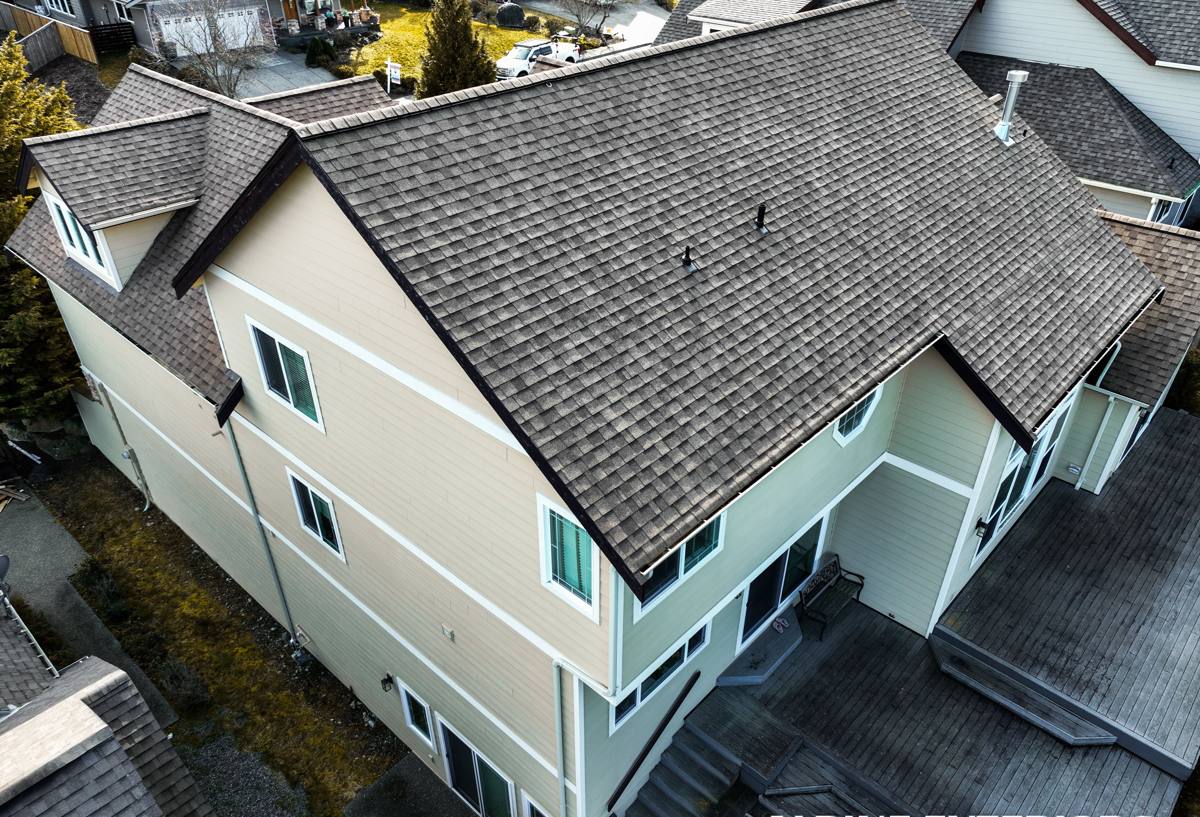
Why Composite Decking Fits Homes in Edgemoor
Composite decking was built to solve exactly the problems that wood struggles with in a marine climate. The core doesn't rot, it doesn't need annual staining or sealing, and a quality board holds its color and shape through repeated wet-dry cycles far better than natural wood. For a shaded, salt-exposed lot, that translates into fewer callbacks for splinters, cupping, and soft spots down the road.
Capped vs. Uncapped Composite
Not all composite is built the same. Older-style uncapped composite is a wood-plastic blend all the way through, which means the cut ends and surface can still absorb moisture and, over time, support mold or mildew growth — a real liability in a spot like Edgemoor where boards stay damp under tree cover for extended stretches. Capped composite wraps that core in a polymer shell that sheds water and resists staining from tannins, pollen, and the organic debris that collects on a shaded deck. As a matter of standard practice, we install capped boards and seal any field-cut ends so the core is never left exposed to standing moisture.
Hidden-Fastener vs. Face-Screwed Systems
How a board is fastened matters almost as much as the board itself. Face screws leave small recesses where water pools and where moss and algae like to get started first. Hidden-fastener clip systems eliminate those catch points and give the deck surface a cleaner, flatter plane that sheds water more evenly. Where the board profile allows it, we default to a hidden-fastener system for exactly that reason.
What a Correct Composite Deck Installation Involves
Composite decking is only as good as what's underneath it. A lot of deck problems that get blamed on the decking material actually trace back to shortcuts in the substructure — and those shortcuts show up faster in a wet, salt-air climate than they would somewhere dry.
- Ledger board flashing that ties into the house's existing water management, so the deck attachment point doesn't become a path for water behind the siding
- Joist tape over all framing members to protect the substructure from the moisture cycling a covered or shaded deck sees for most of the year
- Joist spacing and blocking set to the composite manufacturer's specification, which is often tighter than standard wood-deck spacing and matters even more under diagonal or picture-frame board patterns
- Board gapping sized correctly for both drainage and thermal expansion — too tight and moisture and moss get trapped between boards, too wide and the deck collects debris and looks unfinished
- Corrosion-resistant fastener hardware throughout, since standard fasteners degrade noticeably faster this close to salt air
- Proper fascia, stair stringer, and edge detailing so cut and exposed surfaces are protected the same as the field of the deck
Substructure Choices: Wood vs. Steel Framing
The framing underneath a composite deck can be built in pressure-treated wood or steel, and the right call depends on the site, the budget, and how long you want the substructure itself to outlast the decking above it.
| Factor | Pressure-Treated Wood Framing | Steel Deck Framing |
|---|---|---|
| Upfront cost | Lower | Higher |
| Moisture behavior in a wet climate | Can still swell, twist, or decay over time even when treated | Doesn't absorb moisture or rot; corrosion resistance depends on coating quality |
| Long-term maintenance | Benefits from periodic inspection of connectors and ledger area | Largely maintenance-free once properly coated and installed |
| Best fit | Standard elevated decks with good drainage and airflow underneath | Low-clearance decks, decks close to grade, or sites where long-term structural stability is the priority |
Either approach can be built correctly for Edgemoor's conditions — the key is matching the framing choice to the site's drainage and clearance rather than defaulting to whatever is cheapest.
Detailing for Moss, Drainage, and a Long Wet Season
Wooded, water-adjacent lots like the ones common in Edgemoor hold shade and moisture longer than open sites, which is exactly the recipe moss needs. Good decking material only gets you part of the way there — the rest comes down to how the deck is built to move water off and away from itself.
That means adequate clearance and airflow between the ground and the underside of the deck, a slight slope built into the framing so water runs off toward the yard instead of pooling under the house, and consistent board gapping that lets fine debris wash through rather than collect and hold moisture against the surface. Skipping any one of these details doesn't ruin a deck overnight, but it's exactly what shortens its life in a climate like this one.
Our Process
- On-site visit to look at sun and shade exposure, existing structure (if replacing an old deck), drainage patterns, and how the space is actually used
- Structural assessment of the ledger attachment and any existing framing being reused or tied into
- Material and layout selection matched to the site's exposure, your maintenance preferences, and your budget
- Permitting handled for the project as required by Whatcom County
- Build, with flashing, joist protection, fastening, and gapping done to spec at every step — not just the visible surface
- Final walkthrough so you know exactly what maintenance, if any, the deck needs going forward
Cost Factors on a Composite Deck Project
We won't quote a number without seeing the site, but these are the main variables that move a composite deck project up or down in cost.
| Factor | Effect on Cost |
|---|---|
| Deck size and shape | Larger footprints and complex shapes (angles, multiple levels) increase material and labor |
| Framing material (wood vs. steel) | Steel framing raises upfront cost but can reduce long-term maintenance |
| Board tier | Composite lines range from entry-level capped boards to premium grain and color options, with cost scaling accordingly |
| Railing system | Composite, aluminum, cable, and glass rail options each carry different material and installation costs |
| Site access and existing structure removal | Sloped, wooded, or hard-to-access lots and tear-off of an old deck both add labor time |
Maintenance Checklist for Edgemoor Homeowners
Composite decking cuts down on maintenance significantly compared to wood, but "low-maintenance" isn't "no-maintenance" — especially in a climate that keeps a deck damp for long stretches of the year.
- Rinse the deck a few times a year to clear salt film, pollen, and fine debris out of the board gaps
- Sweep leaves and needles off the surface regularly, especially under mature trees, so they don't sit and hold moisture
- Keep gutters and downspouts clear so roof runoff isn't sheeting directly onto the deck surface
- Trim back overhanging branches where practical to cut down on shade and leaf litter that feed moss growth
- Clean any mildew or algae film with a manufacturer-approved cleaner rather than a harsh pressure wash, which can mar the cap surface
- Check railing connections and fastener hardware once a year for movement or corrosion
Why Hire a Crew That Already Works in Edgemoor
A deck built to a generic spec sheet doesn't automatically hold up on a shaded, water-adjacent lot in Whatcom County. Knowing how fast moss establishes itself here, how much clearance a given site actually needs for airflow, and which fastener and flashing details matter most in salt air comes from having built and maintained decks in this specific area — not from a one-size-fits-all installation manual. That local knowledge shows up in the small decisions that determine whether a deck still looks and performs well a decade from now.
If you're weighing a new composite deck or replacing one that's showing its age, we're happy to take a look and talk through what makes sense for your site. Reach out for a free, no-pressure estimate using the form below.