 Whatcom County
 Why Sunnyland Decks Wear Out Faster Than the Brochure Says
If you own a home in Sunnyland, you already know your deck doesn't get an easy ride. Whatcom County's climate is hard on exterior wood and composite structures in three specific ways, and decks take the worst of all three at once. Salt-tinged air off the bay accelerates corrosion on fasteners and metal connectors. Driving rain — the kind that comes in sideways during a fall or winter storm — finds every gap in flashing and every unsealed end cut. And our long moss season, which can stretch from October well into April, keeps deck boards damp and slick long after a sunnier climate would have dried them out.
None of that means a deck in Sunnyland is doomed. It means a deck built or repaired without those three factors in mind will fail years before it should — usually starting exactly where homeowners can't see it: the ledger board connection, the joists underneath, and the fasteners holding it all together.
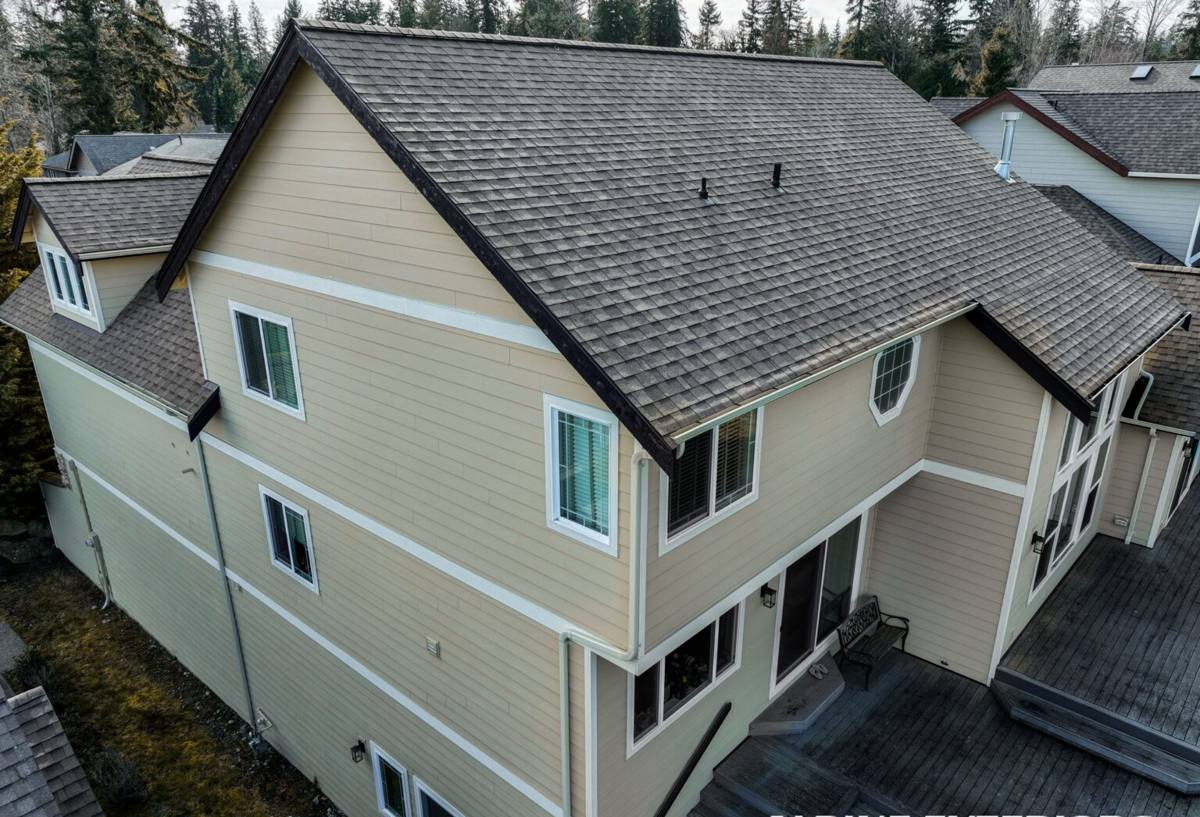
The Damage Pattern We See Most in This Neighborhood
Every region has its own signature failure pattern, and Sunnyland's is fairly consistent. We're called out most often for:
- Soft or spongy decking near the house, where the ledger board meets the siding and rain has been wicking in behind poor or missing flashing
- Rust streaking or crumbling at joist hangers and structural screws, especially on decks more than 12-15 years old
- Black or green moss buildup on boards that stay shaded most of the day, creating a slip hazard and trapping moisture against the wood
- Railing posts that have loosened or rotted at the base, often the first structural component to fail because water pools there
- Gaps or cupping in older wood decking from repeated wet-dry cycling through the winter
Most of these start small and stay hidden. A deck can look fine from the top while the framing underneath is already compromised.
Repair or Replace? How We Actually Make That Call
Not every problem deck needs to come out. A big part of an honest repair job is knowing where the line is between "fix it" and "this needs to be rebuilt." We look at four things: how much of the structural framing is affected, whether the ledger connection is sound, the age and condition of the decking material itself, and whether previous repairs were done correctly or just covered up a problem.
| Factor | Usually Repairable | Usually Needs Replacement |
|---|---|---|
| Ledger board / house connection | Isolated flashing failure, localized rot | Widespread rot into rim joist or sheathing |
| Joists & framing | One or two damaged joists | Multiple joists soft, sagging, or rusted hangers throughout |
| Decking boards | Scattered boards cupped, cracked, or stained | Majority of boards soft, splintering, or moss-stained past cleaning |
| Railings & posts | Loose hardware, minor surface wear | Post base rotted, structural wobble under load |
| Fasteners & hardware | Scattered rust, otherwise intact | Corrosion throughout, wrong fasteners used originally |
We'll tell you straight if a repair is the smarter money move or if it's just delaying a bigger job. Sometimes a $600-$1,500 repair buys a deck another decade. Sometimes it's a patch on a structure that needs to come down to the framing, and we'll say so before we start.
Watching for "Repair-Then-Repeat"
One thing we see a lot in older neighborhoods: a deck that's had two or three small repairs over the years, each one addressing the symptom but not the cause. Replacing a soft board without checking the joist underneath, or re-caulking a leaky ledger connection instead of correcting the flashing, buys a season or two before the same spot fails again. Part of doing this correctly is fixing the actual source of the water intrusion, not just the board it damaged.
What a Correct Deck Repair Actually Involves
A proper repair isn't just pulling bad boards and screwing down new ones. It involves checking the whole system the deck depends on:
- Ledger flashing: The strip of flashing between the deck and the house siding is the single most common failure point in this climate. If it's missing, improperly lapped, or corroded, water gets behind the siding and into the wall framing — not just the deck.
- Structural connections: Joist hangers, ledger bolts, and post bases need to be checked for corrosion and code-appropriate hardware, not just visual soundness.
- Fastener compatibility: Mixing the wrong metal fasteners with treated lumber or with each other accelerates corrosion through galvanic reaction — a real issue in a coastal-influenced climate.
- Drainage and airflow underneath: A deck that can't breathe underneath stays wet longer after every rain. Grading, gaps, and skirting design all affect how fast it dries out.
- Surface material condition: Whether it's wood or composite, the wear pattern tells us whether the problem is cosmetic or structural.
Our Process, Start to Finish
1. On-Site Inspection
We walk the deck, check underneath it, and probe suspect areas — soft spots, staining, rust — rather than just eyeballing the surface. This is where most of the real diagnosis happens.
2. Honest Scope and Estimate
You get a clear breakdown of what's failing, what's causing it, and what it takes to fix it correctly — with repair and replacement options laid out separately when both are reasonable choices.
3. Correcting the Cause, Not Just the Symptom
If the root issue is a flashing failure, we fix the flashing, not just the board it rotted. If it's a drainage problem, we address that too. Patching over an unresolved moisture source is the fastest way to end up back at square one in another year or two.
4. Rebuild to Current Practice
Damaged framing, hardware, and decking get replaced with materials and fasteners appropriate for this climate — not whatever happened to be on hand when the deck was first built, which is often the actual source of the problem.
5. Walkthrough
Before we call it done, we walk the finished work with you so you know what was fixed, what to watch, and what basic upkeep will keep it in good shape going forward.
Materials and Fasteners That Make Sense Here
There's no single "best" decking material for every home — it depends on budget, how much upkeep you want to do, and how the deck is used. But in a climate with this much rain and moss pressure, some choices hold up better than others:
| Material | Upkeep Needed | Moisture/Moss Behavior |
|---|---|---|
| Pressure-treated wood | Annual cleaning, periodic sealing | Performs well if sealed regularly; neglect shortens life fast |
| Cedar | Regular sealing to hold appearance | Naturally rot-resistant but still needs moisture management |
| Composite decking | Low — occasional washing | Resists rot well; still needs cleaning to prevent surface moss/algae |
For hardware, we favor stainless or heavy hot-dip galvanized fasteners and connectors over standard coated screws in areas exposed to the elements. It costs a bit more up front, but replacing corroded hardware in eight years instead of twenty isn't a trade-off worth making on a structure people walk and stand on.
Keeping a Repaired Deck in Good Shape
A correct repair buys you years, but a little seasonal attention buys you more. Here's what actually matters:
- Sweep leaves and debris off the deck regularly through fall — trapped organic matter is what feeds moss and holds moisture against the boards
- Clean visible moss or algae buildup before it gets slick, especially on shaded sections
- Check the ledger flashing area once a year for any sign of staining or gaps
- Keep gutters and downspouts near the deck clear so runoff isn't dumping directly onto or under it
- Reseal wood decking on the manufacturer's recommended schedule — don't wait until it visibly needs it
- Tighten or replace any loose railing hardware as soon as you notice it
Why Local Experience in Sunnyland Actually Matters
A deck contractor who mostly works inland or in a drier climate can still frame a deck correctly on paper and still get the flashing detail wrong for this area, because it's never mattered as much where they usually work. Crews who repair decks throughout Whatcom County regularly see how homes here — including in Sunnyland — actually age: where moss builds up first, which fastener types hold up and which don't, and how driving rain off the bay behaves differently than a straight-down rain in fastening and flashing decisions. That's not a marketing point, it's just what repeated exposure to the same conditions teaches a crew over time.
It also means faster, more accurate estimates. We're not guessing at how this climate treats a deck — we're describing what we've already seen on homes nearby.
Get a Straight Answer on Your Deck
If your deck has soft spots, visible rust, persistent moss, or just feels less solid than it used to, it's worth having someone look at it before those small issues turn into a full rebuild. We offer free, no-pressure estimates for Sunnyland homeowners — an honest look at what's going on, what it'll take to fix it, and what it'll cost, with no obligation attached. Fill out the form below to get started.