 Whatcom County
 Window Installation in Cordata: Built for This Climate, Not a Catalog
Cordata sits close enough to the water and the weather patterns coming off it that windows here take a different kind of beating than windows in a drier inland climate. Salt-laden air corrodes hardware and finishes faster than people expect, wind-driven rain finds any gap in flashing or sealant, and a long stretch of damp, low-sun months each year keeps moss and mildew active on and around window openings far longer than most manufacturers' installation guides assume. A window that's "fine" on paper can still leak, fog, or rot at the sill within a few seasons if it wasn't installed with this specific climate in mind.
This page is about one service, done right, in one place: full window installation for homes in Cordata and the surrounding Whatcom County area. Not a general overview of window brands, not a sales pitch for every siding service we offer — just what a correct window installation actually requires here, what usually goes wrong, and how we handle it.
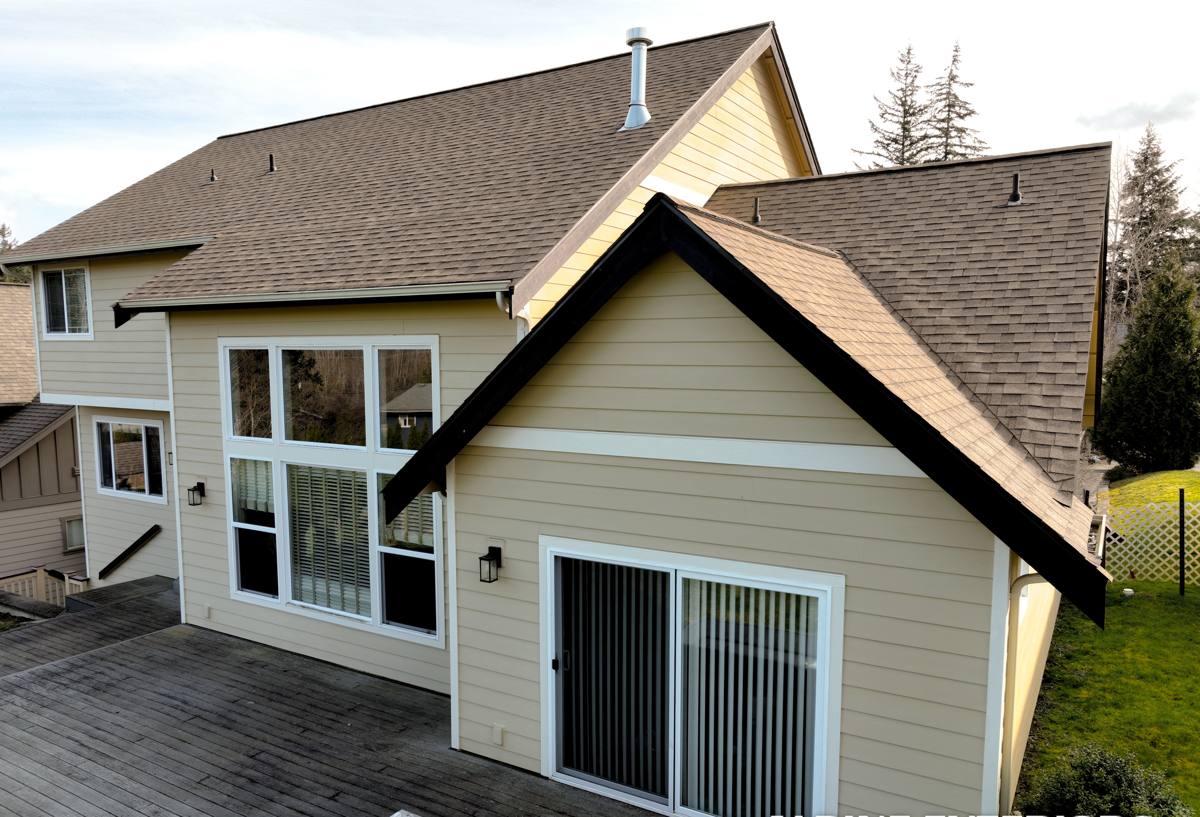
What Whatcom County Weather Does to Windows Over Time
Three conditions do most of the damage locally, and each one points to a different installation detail worth getting right:
- Salt air — accelerates corrosion on exposed hardware, screws, and lower-quality cladding finishes, especially on windows facing prevailing weather.
- Driving rain — pushes water sideways and upward under wind pressure, so it finds any installation that relies on caulk alone instead of proper flashing and drainage.
- A long moss season — sustained damp, shaded conditions let moss, algae, and mildew establish around window trim, sills, and any wood-adjacent surfaces, holding moisture against the building longer than a shorter, drier season would.
None of these are exotic problems. They're the ordinary result of living in a marine climate. But they mean a window installation built for a drier region — minimal flashing, sealant-dependent, standard hardware — will underperform here even if the window unit itself is a good product.
Signs a Cordata Home Needs New Windows, Not Just New Caulk
Homeowners often call about a symptom, not a diagnosis. Here's how to tell the difference between a maintenance issue and a real replacement need:
- Fogging or moisture between panes — the seal on a double- or triple-pane unit has failed and can't be resealed
- Soft, discolored, or spongy trim and sill wood around the window opening
- Drafts or a noticeable temperature difference near the window even when it's fully closed and latched
- Visible daylight or a whistling sound around the frame during wind
- Difficulty opening, closing, or locking — frames that have swollen, warped, or shifted
- Recurring black or green growth on the sill or lower sash that comes back within weeks of cleaning
One or two of these can sometimes be addressed with targeted repair. Multiple symptoms on the same window, or the same symptom recurring on several windows on one exposure, usually means the original installation — not just the window itself — has failed.
What a Correct Installation Actually Involves
The window unit itself gets most of the attention in sales conversations, but in this climate the installation details matter as much or more. A correct job includes:
Sill Pan Flashing
A properly sloped, sealed sill pan under the window opening gives any water that does get past the sash somewhere to go — out, not into the wall cavity. This is not optional in a driving-rain climate, and it's one of the most commonly skipped steps in lower-cost installations.
Integrated Flashing at the Head and Jambs
Flashing tape and housewrap need to be layered correctly — shingle-style, top piece over the one below — so water is always directed outward and downward, never trapped behind the trim.
Proper Air Sealing Without Trapping Moisture
The gap between the window frame and the rough opening needs to be sealed for air and insulated, but with a material and method that doesn't trap bulk water if any gets through. Overfilling with the wrong sealant can do more harm than good.
Hardware and Fastener Selection
Given salt air exposure, fastener and hardware material matters more here than in an inland installation. We select corrosion-resistant fasteners and hardware appropriate to the home's exposure, particularly on elevations facing prevailing wind and moisture.
Exterior Trim and Drainage Detailing
Trim needs a drip edge and clearance that lets water shed away from the window rather than sitting against it — a detail that also reduces the damp, shaded conditions moss needs to take hold.
Choosing Window Materials and Glass for This Climate
There's no single "best" window material — the right choice depends on the home's exposure, budget, and maintenance appetite. Here's how the common options compare for a marine climate like Whatcom County's:
| Material | How It Handles Salt Air & Moisture | Maintenance | Typical Fit |
|---|---|---|---|
| Vinyl | Good — won't rot or corrode; UV can affect finish over decades | Low | Most homes; strong value |
| Fiberglass | Very good — dimensionally stable, resists moisture and salt exposure well | Low | Higher-exposure elevations, longer-term hold |
| Wood (unclad) | Poor without diligent upkeep — moisture and salt air accelerate rot | High | Historic or interior-style priorities only |
| Wood-clad (metal or vinyl exterior) | Good on the exterior face; interior wood still needs indoor humidity control | Moderate | Homeowners wanting a wood interior look |
| Aluminum | Fair — can corrode over time in salt air unless well-finished | Moderate | Less common as a primary choice locally |
On glass, an insulated dual-pane unit with a low-E coating is the standard baseline for this region's heating season and light conditions. We don't push a single glass package on every home — the right spec depends on the room's orientation, sun exposure, and the homeowner's priorities for energy performance versus upfront cost.
Our Installation Process
- On-site assessment — we look at each window opening individually, not just the unit being replaced, checking framing condition, existing flashing, and signs of past water intrusion.
- Measurement and product selection — precise measurements and a material/glass recommendation matched to that window's exposure and the home's overall needs.
- Removal and opening inspection — old units come out carefully so we can inspect the rough opening and sheathing underneath before anything new goes in.
- Repair as needed — any soft or damaged framing found during removal gets addressed before a new window goes into a compromised opening.
- Flashing and sill pan installation — built for driving rain and wind exposure, not just code minimum.
- Window installation and air sealing — set level, plumb, and square, then sealed and insulated correctly.
- Exterior trim and finish work — detailed for drainage and a clean, weather-tight appearance.
- Final walkthrough — operation, sealing, and cleanup checked with the homeowner before we consider the job done.
Why Hiring a Crew That Already Works in Cordata Matters
Window installation isn't the same job everywhere. A crew that mostly works drier, inland regions may not default to full sill pan flashing or salt-resistant hardware, because they've never had to. A crew that works Whatcom County and the coastal neighborhoods around it treats those details as standard practice, not an upsell, because they've seen what happens when they're skipped — soft sills, failed seals, and moss creeping into trim gaps within a few short years.
Local experience also means knowing how a given elevation on a Cordata home is likely to be exposed to wind-driven rain versus a more sheltered side, and adjusting the installation detail accordingly rather than treating every window the same way.
Before You Hire: A Practical Checklist
- Ask specifically whether sill pan flashing is included, not assumed — get it in writing
- Confirm what fastener and hardware materials will be used, given salt air exposure
- Ask how they handle any rot or damage found in the rough opening during removal
- Get the glass package spec (pane count, coating) in writing, not just "energy efficient"
- Ask about warranty coverage on both the product and the installation labor separately
- Confirm licensing and insurance before any work begins
After Installation: Keeping Windows Performing in This Climate
A correct installation reduces maintenance, but it doesn't eliminate it. In a moss-prone, damp climate, periodically clearing debris and growth from sills, tracks, and surrounding trim keeps moisture from sitting against the window. Checking exterior caulking annually and addressing any cracking before the next wet season starts is a simple habit that extends the life of even a well-installed window.
If your Cordata home has windows showing any of the signs above, or you're planning a replacement and want it done with this climate actually accounted for, we're happy to take a look and provide a free, no-pressure estimate — no obligation, just an honest assessment of what your home needs.