 Whatcom County
 Why Decks in Cordata Wear Out on Their Own Schedule
Cordata sits inland from Bellingham Bay, but it still gets the marine influence that defines this whole stretch of Whatcom County — damp air moving in off the Salish Sea, long stretches of drizzle rather than hard downpours, and short winter days that never quite dry a deck out between rain events. Add a moss season that can run from October into April, and you have a climate that's harder on horizontal wood surfaces than most homeowners realize until the deck starts failing from underneath.
A deck doesn't fail all at once. It fails where water sits the longest: under debris caught between boards, around fastener heads, at the ledger board connection to the house, and at the post bases closest to grade. In Cordata, those are exactly the spots our regional weather targets hardest. A deck replacement done right isn't just new boards on old bones — it's rebuilding those failure points so the next deck lasts through decades of Whatcom County winters instead of one or two.
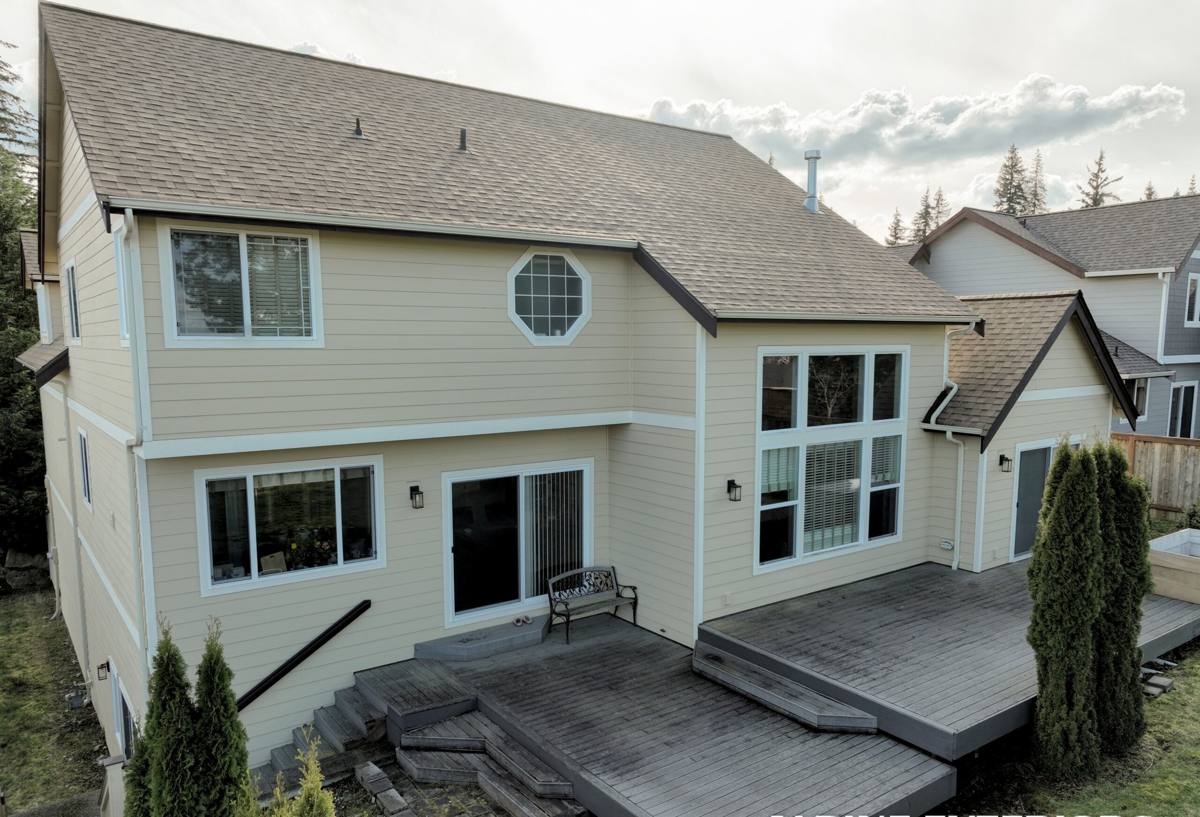
Signs a Deck Needs Replacement, Not Just Repair
Homeowners often call about a "few soft boards" and find out the problem runs deeper. Here's how we tell the difference between a repair job and a full replacement during an on-site look:
- Soft or spongy decking in more than one area, not just near a planter or grill mat
- Visible rot, dark staining, or fungal growth at the ledger board where the deck meets the house
- Posts that feel loose at the base, or footings that have visibly heaved or shifted
- Rust streaking from fasteners, which usually means the fasteners themselves are compromised
- A deck more than 15-20 years old built before current flashing and connector standards were common
- Persistent moss or algae growth that keeps coming back within weeks of cleaning
One or two of these can sometimes be handled with targeted repair. Several at once, especially ledger rot or failing footings, usually means the structure has reached the point where patching costs nearly as much as rebuilding and doesn't solve the underlying moisture problem.
What a Correct Deck Replacement Actually Involves
The Ledger Board and House Connection
This is the single most common failure point we find on older decks in this climate, and it's the one homeowners can't see without pulling boards. The ledger board bolts directly to the house rim joist, and if it wasn't flashed correctly when built, water tracks behind the siding and into the framing every time it rains — which in Whatcom County is often. A correct replacement means proper metal flashing integrated with the house's water-resistive barrier, not just caulk over the old connection, plus structural screws or through-bolts sized to current code, not the nails many older decks were hung on.
Joists, Beams, and Fasteners
All framing gets replaced with lumber rated for ground contact where it's within the required clearance, and every joist gets a protective tape or coating over the top edge before decking goes down. That top edge is where standing water sits longest under the decking boards, and it's usually the first place untreated framing starts to rot. Fasteners matter just as much — stainless or coated fastener systems that are rated for treated lumber and won't corrode from the moisture this region holds onto for months at a time.
Footings and Post Bases
Footings need to reach proper frost depth and bear on undisturbed soil, and post bases should hold the post above the concrete rather than embedding wood directly in it — a detail a lot of older Whatcom County decks skip, which is why post bottoms are so often the first thing to rot through. We also check drainage around existing footings; standing water against a footing base accelerates everything else on this list.
Guardrails and Stairs
Rail and stair rebuilds happen at the same time as decking, since it rarely makes sense to leave old rail posts bolted to new framing. Current code requirements for rail height, baluster spacing, and stair stringer support get built in from the start rather than retrofitted later.
Choosing Decking Material for This Climate
There's no single "best" decking material — there's a best fit for how much maintenance a homeowner actually wants to do, balanced against upfront cost. Here's how the common options hold up against Whatcom County's wet, mossy conditions:
| Material | Moisture Behavior | Maintenance | Typical Lifespan |
|---|---|---|---|
| Pressure-treated wood | Absorbs and releases moisture; needs sealing to slow cupping and splitting | Annual cleaning, re-sealing every 2-3 years | 15-20 years with upkeep |
| Cedar | Naturally rot-resistant but still needs finish protection in constant damp | Regular cleaning, periodic oil/stain | 15-25 years with upkeep |
| Capped composite | Shell resists moisture absorption; core stays protected from the wet cycle that damages wood | Occasional washing, no sealing or staining | 25-30+ years, manufacturer-backed |
| Uncapped composite | Can absorb some moisture at cut edges and fastener points over time | Low, but more sensitive to standing moisture than capped versions | 20-25 years |
| PVC decking | Fully synthetic, does not absorb moisture | Lowest maintenance of the group | 25-30+ years |
Given how much of the year Cordata decks stay damp, we lean toward recommending capped composite or PVC to homeowners who want to stop thinking about their deck every spring. Wood and cedar still have a place, especially where matching an existing aesthetic matters, but we're upfront that they demand a real maintenance commitment in this climate — skipping a season of sealing here does more damage than it would in a drier part of the state.
Permits and Code Considerations in Whatcom County
Most deck replacements that involve new footings, structural framing changes, or rail modifications require a permit, even when the old deck was built without one. As part of a replacement project we handle the structural planning to meet current residential code — footing depth, joist spans, ledger attachment, and guardrail specifications — so the finished deck passes inspection without surprises. If your property has specific setback rules or an HOA design requirement, we sort that out before the tear-off starts, not after materials are already on-site.
Our Deck Replacement Process
- On-site assessment — We inspect the existing structure, including pulling a few boards to check joists, ledger condition, and footings, not just a visual walk-around.
- Written scope and estimate — You get a clear breakdown of what's being replaced, the material options, and an honest price range before any work starts.
- Permit and code review — We confirm what's required for your specific project and handle the paperwork.
- Demo and disposal — Full removal of the old deck, including framing and footings that aren't being reused, hauled off the property.
- Rebuild — New footings, framing, flashing, decking, and rail installed to current code, in the sequence that protects each component from weather exposure during the build.
- Final walkthrough — We go over the finished deck with you, including basic care guidance specific to the material installed.
Living With Moss, Rain, and Marine Air After the Rebuild
Even a well-built deck needs some seasonal attention in this part of Washington. Moss spores travel easily on damp wind, and any deck surface that stays shaded and wet through fall and winter is a candidate for growth, regardless of material. A few habits keep a new deck looking and performing the way it should:
- Sweep debris out from between boards before it composts in place and holds moisture against the wood or composite core
- Rinse or wash the surface at the start and end of moss season rather than waiting until growth is visible
- Keep gutters and downspouts near the deck clear so runoff isn't draining directly onto the decking or framing below
- Check the ledger flashing and any visible fasteners once a year for early signs of moisture intrusion
- For wood or cedar decks, stay on the sealing schedule — a missed year compounds fast in constant damp conditions
What Deck Replacement Typically Costs
Every project is different once size, material, and site access are factored in, but these are the broad drivers that move a deck replacement estimate up or down:
| Cost Factor | How It Affects the Estimate |
|---|---|
| Deck size and shape | Larger footprints and multi-level designs increase material and labor |
| Decking material choice | Pressure-treated wood costs less upfront than composite or PVC, which cost more but need far less maintenance over time |
| Framing and footing condition | Full structural replacement costs more than reusing a sound substructure, when that's actually an option |
| Site access | Decks with difficult equipment or material access, including elevated or tightly landscaped sites, take more labor to demo and rebuild |
| Rail and stair scope | Custom rail systems or multiple stair runs add both material and installation time |
| Permit requirements | Additional structural engineering, when required, adds to project cost and timeline |
We don't quote a number before seeing the site and the existing structure, because guessing on framing condition is how estimates end up wrong in either direction. A written, itemized estimate after inspection is the only honest way to price a deck replacement.
Why It Matters to Hire a Crew That Already Works in Cordata
Deck replacement done to a generic standard doesn't hold up the same way here as it does in a drier climate. A crew that regularly works Whatcom County jobs already knows to flash a ledger board for constant damp exposure, size footings for our soil and frost conditions, and choose fastener systems that won't corrode in a few winters. That's not something you can fully verify from a sales conversation — it shows in how the job is scoped and built. We work throughout Whatcom County, including Cordata and the rest of the Bellingham area, and we build every deck to handle exactly the weather it's going to see, not a national average.
If your deck is showing its age or you're just not sure whether repair or replacement makes sense, we're happy to take a look. Reach out for a free, no-pressure estimate using the form below.