 Whatcom County
 Siding Repair in a Border Town That Takes a Beating
Blaine sits at the top corner of Whatcom County, right on the water and right on the border, and that location comes with a specific kind of weather load. Salt-laden air drifts in off the bay almost year-round, driving rain arrives sideways more often than straight down, and the long, mild, wet stretch from fall through spring is exactly the recipe moss and algae need to take hold on a roofline and work down into siding. None of that is unique to any one house in town — it is just what siding here is up against, every year, whether the house is a block from the water or a few miles inland.
Siding repair in this environment is not just patch-and-paint work. Done right, it means understanding why a section failed in the first place, matching the fix to the material that's already on the wall (or being honest when it's time to talk about something more durable), and making sure the repair actually holds up through the next few wet seasons instead of failing again in two years.
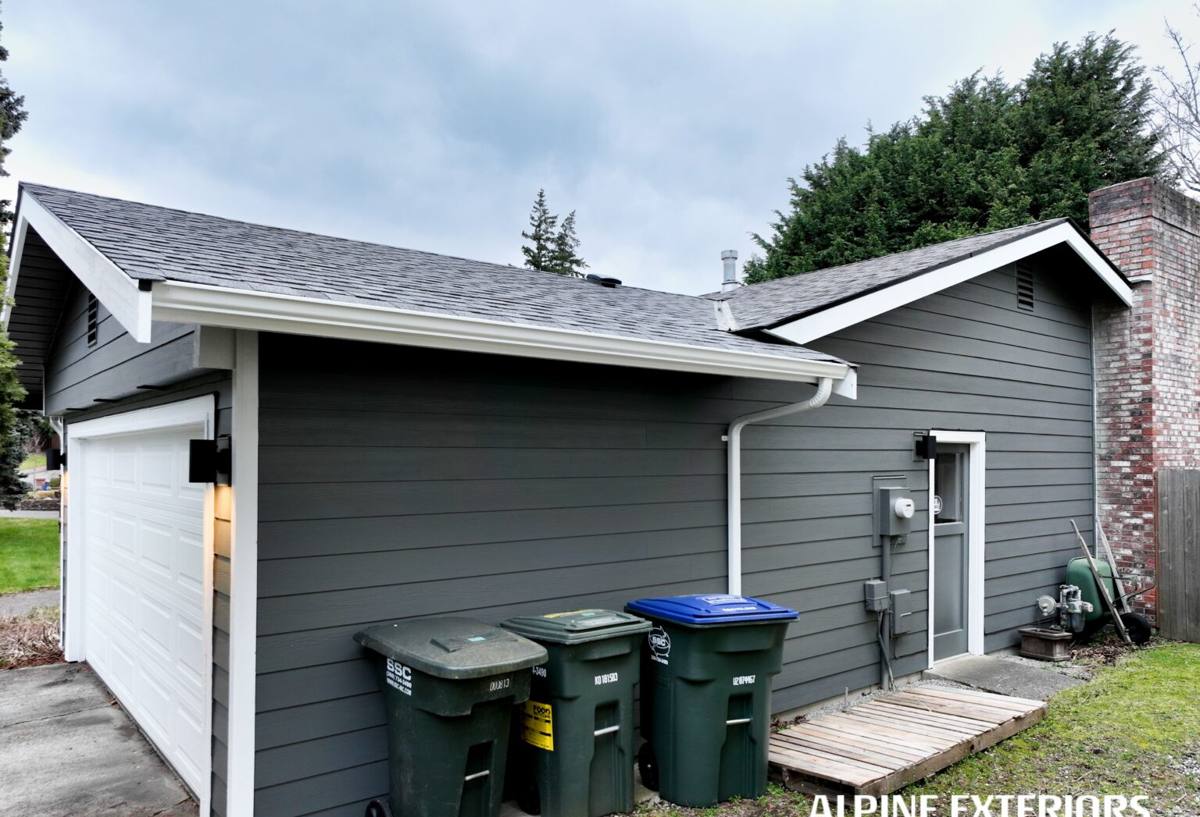
How Blaine's Climate Shows Up as Siding Damage
Salt Air and Fasteners
Homes closer to the water deal with airborne salt that accelerates corrosion on anything metal — nail heads, staples, trim flashing, even some fastener coatings that hold up fine further inland. When fasteners corrode, they can loosen, stain the siding face with rust streaks, or fail to hold boards tight against the wall, which opens the door to water intrusion behind the cladding.
Driving Rain and Butt Joints
Wind-driven rain doesn't just fall on a wall, it gets pushed into it — at butt joints where two siding pieces meet, at corner boards, and around windows and doors. Caulk and sealant that was installed correctly a decade ago eventually shrinks, cracks, or separates, and that's usually where water finds its way behind the siding first.
Moss, Algae, and Trapped Moisture
A long moss season means organic growth doesn't just sit on the surface — it holds moisture against the siding face and, on materials that aren't built to handle it, that moisture can work into seams, fastener holes, and cut edges. On wood-based products especially, that trapped moisture is often the real cause of the soft spots and swelling homeowners notice months later.
Signs Your Siding Needs Repair Now
- Soft, spongy, or crumbling spots when you press on the siding, especially near the bottom courses or below windows
- Visible cracking, splitting, or buckling in individual boards or panels
- Rust streaking running down from nail heads or metal trim
- Gaps opening up at butt joints, corner boards, or trim where caulk has failed
- Peeling or bubbling paint that keeps coming back in the same spot even after repainting
- Moss or dark staining that persists even after cleaning, suggesting moisture is already trapped underneath
- Warped or bowed sections that weren't like that when the siding was new
Any one of these on its own might be a simple, contained repair. Several of them clustered in one area, or showing up in multiple areas of the same house, usually points to a water intrusion problem that needs to be traced back to its source before any patch will hold.
What a Correct Siding Repair Actually Involves
A repair that just covers the visible damage without addressing what caused it tends to fail again within a season or two. A repair done right in this climate generally includes:
- Diagnosing the cause — not just replacing the damaged board, but figuring out whether the failure came from a fastener issue, a flashing gap, failed caulk, or moisture trapped by moss and organic debris.
- Checking what's behind the siding — the water-resistive barrier (house wrap) and flashing details around the damaged area need to be intact, or the same failure will happen again even with new siding on top.
- Removing damaged material cleanly — cutting back to sound material, not just covering rot with a new piece.
- Matching the replacement piece — thickness, profile, and reveal need to match the surrounding siding so the repair doesn't stand out or create a new water path at the seams.
- Correct fastening and sealing — proper fastener type and placement for the material, and sealant only where the manufacturer specifies it (over-caulking can trap moisture just as badly as under-caulking).
- Finish work — painting or color-matching so the repaired section blends in rather than reading as an obvious patch.
Why Matching Material Matters
One of the most common repair mistakes we see is a mismatched patch — a slightly different profile, a slightly off color, or a caulk-heavy seam that ages differently than the rest of the wall. It might look fine for a few months, but a mismatched patch usually becomes the next weak point, because it wasn't designed to shed water the same way as the original installation.
What We Repair — and an Honest Note on What's Already on Your Wall
We install James Hardie fiber cement siding exclusively, and that's also the material we're best equipped to repair, replace in kind, and color-match, including matching factory ColorPlus finishes so a repaired section doesn't need a full repaint to blend in. If your home already has Hardie siding, repairs are usually the cleanest and most durable option, since we can source matching plank profiles and finishes directly.
If your home has vinyl, LP SmartSide, cedar, or another fiber cement brand, we'll still take an honest look and tell you what's realistic. Some of those materials can be spot-repaired without much trouble. Others — particularly wood-based products that have already taken on moisture damage, or vinyl that's brittle and cracking from age and sun exposure — often reach a point where a repair is a short-term fix at best. In those cases we'll say so plainly rather than sell a patch we don't think will hold, and we'll walk you through what replacing that section (or eventually the whole wall) with fiber cement would look like.
Repair vs. Replacement: How We Make the Call
| Factor | Points Toward Repair | Points Toward Replacement |
|---|---|---|
| Extent of damage | Isolated to one or two boards/areas | Spread across multiple walls or elevations |
| Underlying structure | Sheathing and framing are dry and sound | Rot has reached sheathing or framing |
| Material condition | Rest of the siding is stable, just localized damage | Siding is generally brittle, faded, or failing overall |
| Age of siding | Well within its expected service life | Near or past the material's realistic lifespan |
| Material match | Matching replacement pieces are available | Discontinued profile/color, patch would stand out |
| Root cause | Cause was localized (one bad flashing detail, one failed caulk joint) | Cause is systemic (widespread moisture intrusion, original install issues) |
We won't push a full replacement when a repair genuinely solves the problem, and we won't recommend a repair when the underlying damage is too widespread to patch honestly. The goal is telling you what we'd do on our own house.
Our Repair Process for Blaine Homes
We start with an on-site inspection, not a phone estimate, because siding damage in this climate is often more (or less) serious than it looks from the ground. From there:
- We identify every damaged area, not just the spot you called about — one visible failure often means there are one or two more starting nearby
- We check flashing, caulking, and the water-resistive barrier wherever we open up a section, since that's usually where the real fix happens
- We give you a clear explanation of what caused the damage and what the repair will involve, in plain language
- We source matching material — Hardie plank profiles and ColorPlus finishes where applicable — before starting the work
- We complete the repair with correct fastening, sealing, and finish work so the section holds up the same way the rest of your siding does
Why a Crew That Already Works in Blaine Matters
Siding repair advice that works for a dry inland climate doesn't always hold up on the water. A crew that regularly works Whatcom County's coastal edge already knows which corners and elevations take the worst of the wind-driven rain, how quickly moss reestablishes itself in this climate, and which fastener and flashing details actually last through a coastal winter versus which ones fail early. That local pattern recognition is the difference between a repair that's cosmetic and one that's actually built for the conditions your house faces every year.
It also matters for logistics — knowing local permitting expectations, being available to come back and check a repair after the next big storm, and not treating a coastal property like a standard suburban job.
Keeping a Repair From Becoming a Repeat Repair
Once a repair is done, a little seasonal attention goes a long way in this climate:
- Keep gutters clear so water isn't overflowing directly onto siding below
- Trim back vegetation and branches that keep siding shaded and damp, which speeds up moss growth
- Rinse moss and algae buildup off siding before it has a chance to hold moisture against the surface long-term
- Do a visual walk-around each fall and spring looking for new gaps at trim, corners, and butt joints
- Address small caulk failures or hairline cracks early, before wind-driven rain has a chance to get behind them
If you're noticing soft spots, cracking, staining, or gaps in your siding anywhere in Blaine, we're happy to come take an honest look and give you a straightforward, no-pressure estimate on what it would take to fix it right.