 Whatcom County
 Why Siding Wears Differently in Bellingham
Bellingham sits where marine air off Bellingham Bay meets a wet, temperate climate that rarely gives siding a real break. Homes here deal with a longer wet season than most of the country, near-constant humidity, and salt-laden air rolling in off the water. That combination doesn't destroy siding overnight — it wears it down slowly, in ways that are easy to miss until the damage is already inside the wall.
Wood-based and wood-adjacent siding products are the most vulnerable. Moisture works into seams, fastener holes, and butt joints, and once it's behind the siding it has nowhere to go in a climate that doesn't dry out for months at a time. Add driving rain that hits west- and south-facing walls at an angle, and even well-caulked siding can start taking on water at the laps. Whatcom County's long moss season adds another layer of wear — moss and algae hold moisture against the surface, and on porous or textured siding that moisture doesn't just sit on top, it soaks in.
None of this means Bellingham homes need exotic materials or unusual construction. It means the material and the installation both have to be matched to what this specific climate does to a house, year after year, not just to what looks good on the day it goes up.
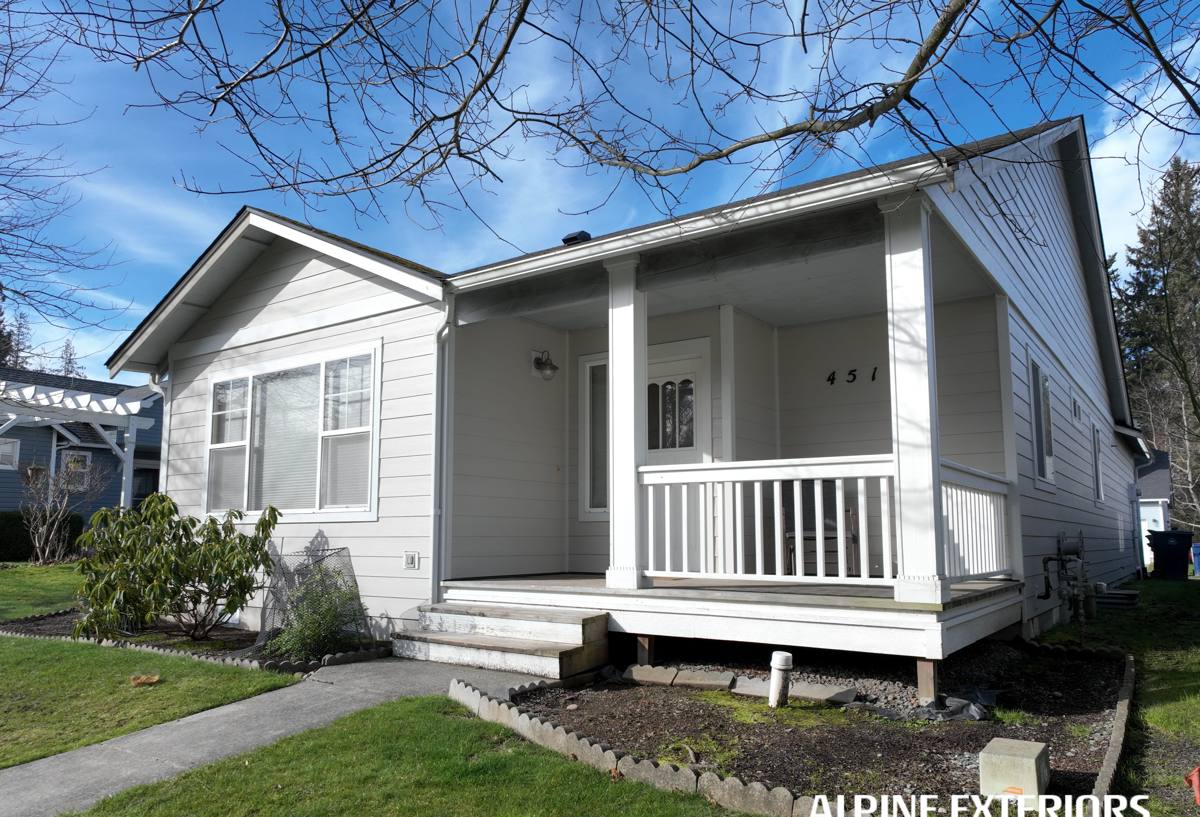
Signs a Bellingham Home Needs Siding Replacement
Siding failure in this climate is usually gradual, so most homeowners notice symptoms before they realize it's a siding problem. Common signs include:
- Soft or spongy spots when you press on the siding, especially near the bottom courses and around windows
- Paint that keeps failing in the same spots no matter how often it's repainted
- Persistent moss, algae, or black streaking that comes back within a season of cleaning
- Visible cupping, warping, or buckling boards, particularly on north- and west-facing walls
- Gaps opening up at seams, corners, or trim where caulk has pulled away
- Musty smell or staining on interior walls that share an exterior wall with worn siding
Any one of these can be a localized repair. Several at once, especially combined with siding that's original to a home built more than 20-25 years ago, usually points to replacement being the more honest recommendation than another round of patching.
Why Patching Often Falls Short Here
In a drier climate, spot repairs can buy real time. In Whatcom County's wet season, a repair only addresses the section that's visibly failed — it doesn't tell you what's happening behind the siding one course over. We've found that once moisture has been getting behind old siding for a few seasons, the sheathing and house wrap underneath are often already compromised in ways a surface repair won't fix.
What a Correct Siding Replacement Actually Involves
Full siding replacement is more than pulling off old boards and nailing up new ones. Done right, especially in a climate this wet, it's a system:
Tear-Off and Inspection
Old siding comes off down to the sheathing so we can actually see what's underneath — soft sheathing, rot around window and door openings, and compromised framing don't show up until the old material is gone. This is the point where hidden moisture damage from years of a failing weather barrier gets found and fixed, not covered over.
Weather-Resistive Barrier and Flashing
A new, correctly lapped weather-resistive barrier goes on before any siding, with flashing detailed at every window, door, and penetration so water is directed out and down, never trapped behind the cladding. In a region with as much driving rain as Bellingham gets, this layer matters as much as the siding itself.
Installation to Manufacturer Spec
Fastener placement, joint spacing, clearance from grade and roof lines, and caulking at the right joints only — not everywhere — all affect how the siding performs over time. Manufacturer installation instructions exist because they've been engineered for exactly the moisture exposure a marine climate creates.
Trim, Caulking, and Paint or Finish
The finish work is where a lot of long-term failures start. Correctly primed and sealed cut edges, proper trim details at corners and transitions, and a finish rated for sustained moisture exposure all matter more here than in a dry climate where mistakes get more forgiveness.
Why We Install Only James Hardie Fiber Cement
We standardized on James Hardie fiber cement siding and don't install vinyl, LP SmartSide, or other wood-based products, including here in Bellingham. Fiber cement is non-combustible and dimensionally stable, so it doesn't swell, cup, or delaminate the way wood-based products can when they take on repeated moisture over a long wet season. James Hardie's ColorPlus factory finish is baked on and warranted separately from the substrate, which matters in salt air and UV exposure where field-applied paint tends to fail first.
James Hardie also offers climate-engineered HZ product lines, and for a region like Whatcom County that means a product formulated for the specific moisture and temperature swings of the Pacific Northwest rather than a one-size-fits-all national spec. Combined with a strong transferable warranty, it's the product we're comfortable standing behind on a home that's going to face 20-plus more years of Bellingham weather.
Our Process for Bellingham Homeowners
- On-site assessment — we look at the current siding, check for hidden moisture and sheathing damage where accessible, and talk through what your home's exposure (sun, wind, rain direction) means for the job.
- Written estimate — a clear scope covering tear-off, any sheathing repair allowances, the weather barrier and flashing plan, the Hardie product and profile, and finish.
- Scheduling around the weather — in a climate this wet, timing tear-off and dry-in matters. We plan around forecasts so your home isn't sitting open to the weather longer than necessary.
- Installation — tear-off, sheathing repair as needed, weather barrier, flashing, Hardie siding installed to spec, trim and caulking.
- Final walkthrough — we go over the finished work with you before calling the job done.
What Drives Cost on a Bellingham Siding Replacement
| Factor | Why It Matters in Bellingham |
|---|---|
| Extent of hidden moisture damage | Sheathing or framing repair found during tear-off adds scope; long-term moisture exposure makes this more common on older homes here than in drier regions |
| Home size and wall complexity | More corners, gables, and trim details mean more flashing and cutting, which affects both material and labor |
| Siding profile and finish | Lap width, texture, and factory finish color all affect material cost within the Hardie product line |
| Site access | Tight lots, slopes, or landscaping close to the house can affect staging and labor time |
| Time of year | Scheduling around Bellingham's wet season can affect sequencing and how tear-off is staged to limit exposure |
Why a Crew That Already Works Bellingham Matters
Siding installation is sensitive to detail, and a lot of that detail is regional. A crew that already works Whatcom County knows how local building departments handle permitting and inspection, understands typical framing and sheathing conditions in homes built during this area's different construction eras, and has already worked through how to sequence a tear-off around a wet forecast instead of learning it on your roof. That local repetition is what keeps a job from becoming a learning exercise at your home's expense.
It also means we've seen how different exposures around Bellingham — closer to the water versus more inland, more wind-exposed versus more sheltered — actually play out on real siding over years, not just in a manufacturer's climate rating.
What to Ask Before Hiring
- Will the weather-resistive barrier and flashing be replaced, or reused?
- What happens if sheathing damage is found during tear-off — is that a change order or already priced in?
- Is the crew installing to the manufacturer's written specification, and can they show you that spec?
- Who is responsible for the warranty — the installer, the manufacturer, or both — and what does it actually cover?
- How will the job be sequenced to limit how long your home is open to the weather?
Caring for Your Siding After Replacement
Fiber cement is low-maintenance compared to wood-based siding, but Bellingham's climate still calls for some basic upkeep: an annual rinse to keep moss and algae from establishing on the surface, keeping gutters clear so water isn't sheeting down the wall face, and keeping landscaping trimmed back so foliage isn't holding moisture against the siding. None of this is heavy maintenance — it's the kind of routine care that keeps a correctly installed system performing for its full service life instead of fighting the marine climate from day one.
If your siding is showing wear, or you just want an honest read on where it stands, we're happy to take a look. Reach out for a free, no-pressure estimate using the form below.