 Whatcom County
 Building a Deck That Actually Holds Up in Bellingham
A deck in Bellingham lives a different life than one in a dry inland climate. Between the salt-laden air off Bellingham Bay, long stretches of driving rain through fall and winter, and a moss season that can run eight months or longer, an outdoor structure here is under constant low-grade attack. Most deck problems we see in Whatcom County aren't dramatic failures — they're slow ones: soft spots that started as a small drainage gap, fasteners that corroded years before anyone noticed, or a green film that never quite goes away no matter how often it's power-washed. A deck built for this area needs to be designed for these conditions from the framing up, not just finished to look good on day one.
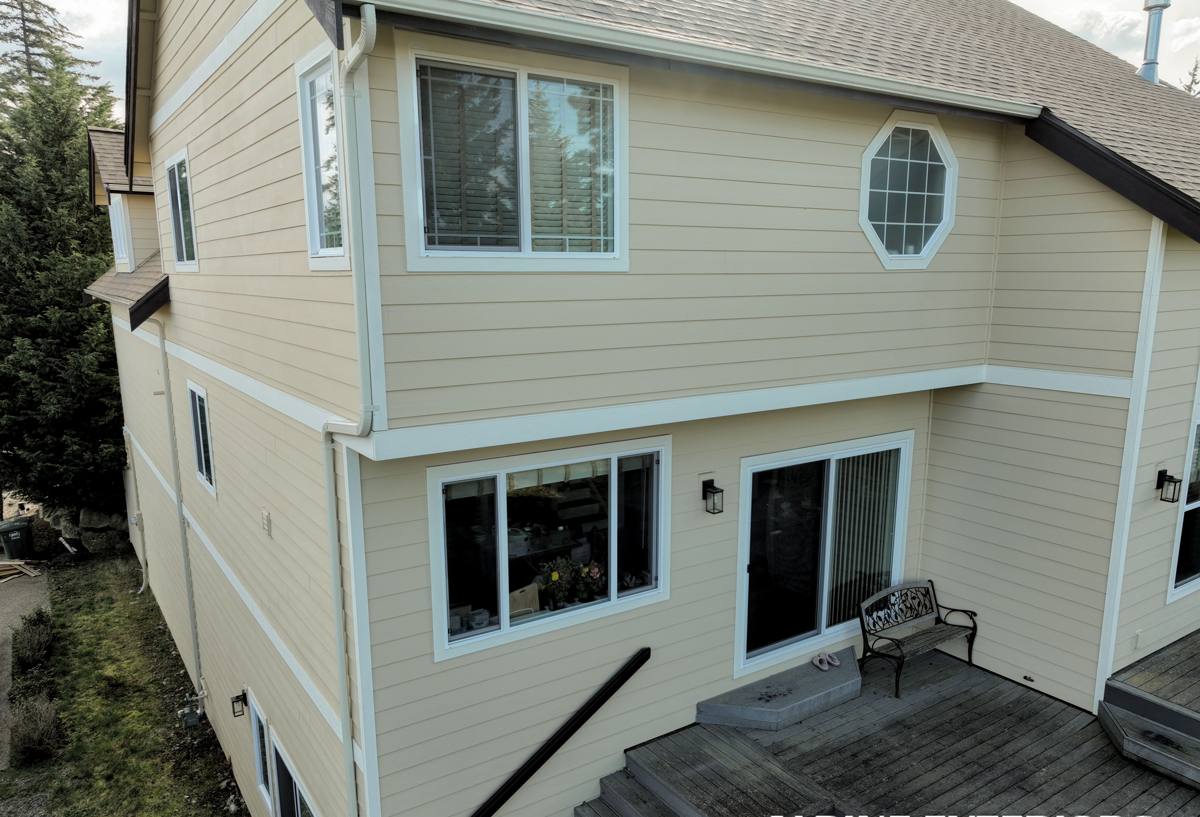
What Bellingham's Climate Actually Does to a Deck
Salt Air and Metal Corrosion
Proximity to the water means airborne salt settles on everything, including fasteners, brackets, and structural hardware. Standard galvanized coatings wear faster here than they would inland. Over years, this shows up as rust bleed at screw heads, weakened joist hangers, and connectors that fail quietly inside the structure where no one's looking.
Driving Rain and Water Intrusion
Whatcom County doesn't just get rain — it gets rain pushed sideways by wind off the Sound, which finds its way into ledger connections, under railings, and behind fascia boards that weren't flashed correctly. Water that gets trapped, rather than water that simply falls, is what actually rots a deck.
Moss and Prolonged Dampness
With overcast, damp conditions for much of the year, moss and algae get a long runway to establish themselves on any deck surface that doesn't drain and dry quickly. Moss holds moisture against the decking material, and on wood surfaces it accelerates decay. On any material, it turns a deck into a slip hazard.
Decking Material Options for This Climate
There's no single "correct" material for every project — it depends on budget, how much maintenance you're willing to do, and how the deck will be used. Here's how the common options actually perform under Bellingham conditions.
| Material | Moisture Performance | Moss/Mildew Resistance | Maintenance |
|---|---|---|---|
| Pressure-treated fir/hem-fir | Good if properly sealed and maintained | Moderate — needs regular cleaning and re-sealing | Annual cleaning, re-staining every 2-3 years |
| Cedar | Naturally moisture-resistant, but surface still needs upkeep | Moderate — natural oils help but don't eliminate moss | Regular cleaning, periodic oiling/staining |
| Composite decking | Excellent — won't rot or absorb water | Better, though moss can still grow on the surface film | Periodic washing, no sealing/staining |
| PVC/capped polymer | Excellent — fully sealed, no wood fiber to break down | Best of the group, easiest to clean off | Occasional washing |
We don't push one material on every homeowner. Real wood has a warmth and a price point a lot of people want, and it can absolutely last for decades here — it just requires an honest commitment to maintenance. Composite and PVC cost more up front but trade ongoing upkeep for consistency, which matters if a deck sits in a shaded, damp part of the yard where moss pressure is highest.
Where Decks Actually Fail: The Structure You Don't See
The decking boards get all the attention, but the framing underneath is what determines whether a deck lasts 10 years or 40. This is also where a lot of corner-cutting happens on lower-quality builds, because it's the part that isn't visible once the project is done.
Ledger Board Attachment
The ledger board — where the deck attaches to the house — is the single most common failure point on decks nationwide, and it's a bigger concern here because of how much water this connection sees. Proper flashing behind and over the ledger, with a drainage gap to let water escape rather than pool against the house band board, is non-negotiable.
Fasteners and Hardware
Given the salt air, we use corrosion-resistant hardware rated for coastal/treated-lumber exposure — not the bargain fasteners that look fine for the first year and start failing in the fourth. Mixing incompatible metals (like standard steel screws with ACQ-treated lumber) accelerates corrosion, so hardware needs to be matched to the lumber treatment being used.
Footings and Post Bases
Post bases should sit above grade with a standoff from the concrete, not buried or flush against constantly wet soil. Footing depth needs to account for local frost and soil conditions, which is part of what the permitting process checks.
Drainage, Airflow, and Keeping Moss From Taking Over
A deck that sheds water and dries out between storms will always outlast one that doesn't, regardless of material. A few design details make the biggest difference:
- Consistent board spacing gaps sized for drainage and for the specific decking material's expansion behavior
- Adequate clearance and ventilation underneath the deck so the substructure can dry out between rain events
- Gutters or drip edges positioned so roof runoff isn't dumping directly onto or under the deck
- Grading beneath the deck that moves water away rather than letting it pool under the frame
- Avoiding deep shade traps where possible, since sun exposure is one of the few natural checks on moss growth
- Surface texture or finish choices that don't create slick, moisture-trapping film when wet
None of this eliminates the need for periodic cleaning, but it drastically reduces how often and how aggressively you have to do it.
Designing for Bellingham Lots
A lot of Bellingham properties sit on sloped ground, have views toward the water or the bay that owners want to preserve, or deal with wind exposure that inland decks don't see as much. Elevated decks on sloped lots need engineered post and beam layouts sized for the actual height and load, not just scaled up from a standard ground-level design. Wind exposure also affects railing and guard design — taller or more open sites may call for sturdier railing systems than a sheltered backyard deck would need.
Permits and Code in Whatcom County
Most new decks and significant deck replacements in the City of Bellingham and unincorporated Whatcom County require a building permit, particularly once a deck is elevated above a certain height or attached to the structure of the house. Permitted work gets inspected at the framing stage, which is a genuine advantage for the homeowner — it means an independent set of eyes checks the ledger connection, footings, and structural framing before it's covered up. Guardrail height, baluster spacing, and stair requirements are also governed by code and matter for safety, not just for passing inspection. We handle the permit process as part of the job rather than leaving it to the homeowner to sort out.
Our Process for a Bellingham Deck Project
- Site visit: We look at drainage patterns, sun/shade exposure, soil condition, and how the deck will connect to the house before anything is designed.
- Design and material selection: We walk through material trade-offs honestly, based on your budget and how much upkeep you want to take on.
- Permitting: We prepare and submit what's required for the jurisdiction the property falls under.
- Framing and flashing: This is where most of the long-term durability is decided, and where we spend the most care.
- Decking, railing, and finish work: Installed to the spacing and fastening specs appropriate to the material.
- Final walkthrough: We go over maintenance expectations specific to the material you chose.
Maintaining a Deck Once It's Built
Even a well-built deck needs some ongoing attention in this climate. A simple seasonal routine goes a long way:
- Clear leaves and debris from between boards and off ledger/flashing areas before fall rains set in
- Wash the surface at least once a year to knock back moss and algae before it establishes
- Check railings, stairs, and any visible hardware for looseness or corrosion annually
- Re-seal or re-stain wood decking on the schedule appropriate to the product used
- Keep gutters and downspouts near the deck clear so runoff doesn't dump onto the structure
- Address any soft spots or discoloration immediately rather than waiting for it to spread
Why Local Deck-Building Experience Matters
A crew that only occasionally builds decks in wet coastal climates will often default to generic details that work fine in drier regions but fall short here. Knowing how driving rain moves around a ledger board, how much drainage gap a given decking product actually needs in Whatcom County's rainfall, and how fast moss will colonize a shaded north-facing deck versus a sunny one isn't something you get from a manual — it comes from building and maintaining decks in this specific environment year after year. That experience shows up in details you won't notice until years later, when the deck next door is showing rot and yours isn't.
If you're planning a new deck, replacing an aging one, or just want an honest read on whether yours needs repair versus rebuilding, we're happy to take a look. Reach out for a free, no-pressure estimate using the form below.