 Whatcom County
 Window Replacement Built for Lynden's Weather, Not Just Its Openings
Replacing a window sounds like a simple swap: old unit out, new unit in. In Lynden, that mindset is how houses end up with the same moisture problems behind a brand-new window that they had behind the old one. This part of Whatcom County deals with a steady mix of salt-tinged marine air, wind-driven rain, and a moss season that runs longer than it does in drier parts of the state. None of that is dramatic on any single day, but it adds up over years, and a window replacement done without that in mind is a window replacement that ages badly.
Whatcom County Siding replaces windows across Lynden and the surrounding valley with that climate built into every step, from the material we recommend to how we flash the opening before the new window ever goes in. A window is only as good as its installation, and the installation is only as good as the attention paid to the specific weather a house actually faces.
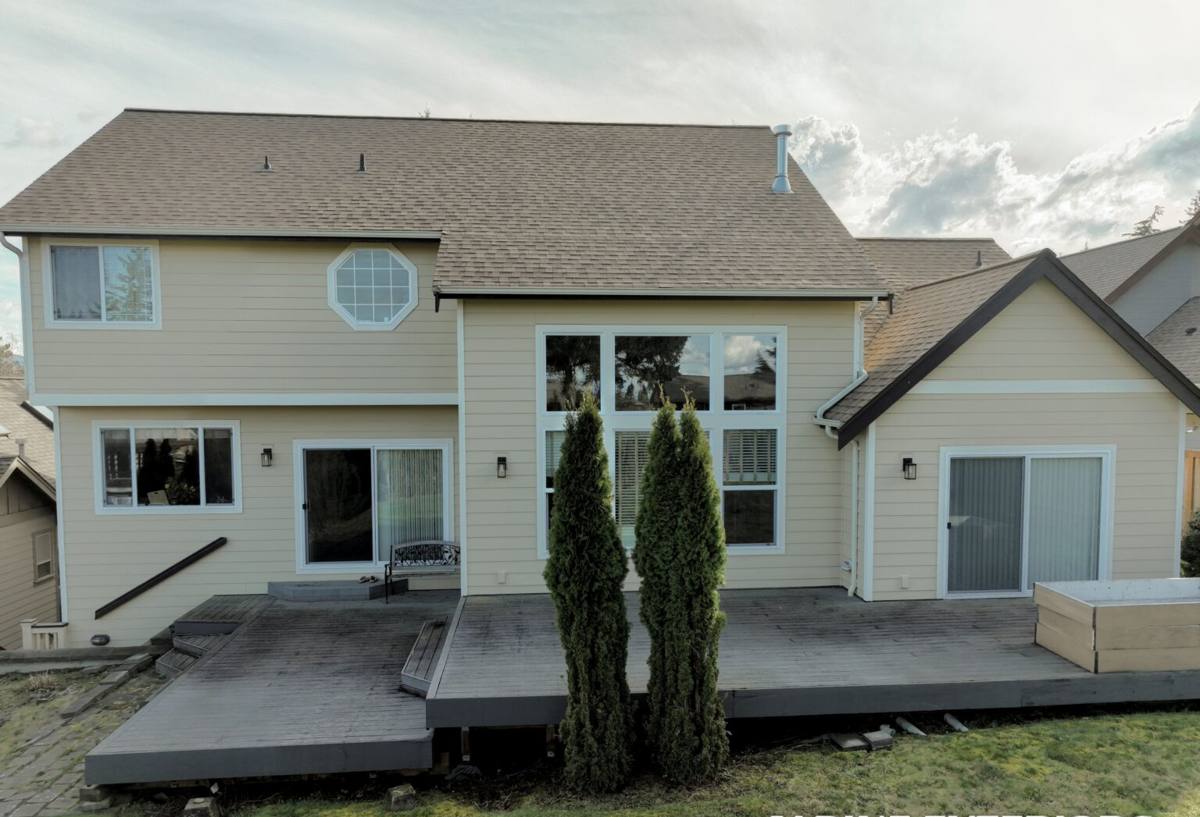
What Lynden's Climate Actually Does to Windows Over Time
Driving Rain and Wind-Loaded Walls
Rain in this part of the county rarely falls straight down. Wind pushes it sideways into window heads, jambs, and sills, which puts far more stress on flashing and sealant than a calm, vertical rain would. Over time, that wind-driven moisture finds any gap in the original installation and works its way behind the frame, where it can sit against wood framing for months without being visible from inside or outside the house.
Salt-Tinged Air and Hardware Fatigue
Even homes well inland in the Nooksack valley sit inside a marine-influenced air pattern that carries a low, steady dose of salt. That air is hard on window hardware over the years: hinges stiffen, screen frames pit, and lower-grade fasteners corrode faster than they would in a drier inland climate. It's rarely dramatic enough to notice year to year, which is exactly why it tends to surprise homeowners once a window starts sticking or a lock stops catching cleanly.
A Long Moss Season and Shaded Sills
Mild, wet weather here gives moss and mildew a much longer growing window than most of the country gets. On windows, that shows up as green film on sills and lower sashes, especially on shaded or north-facing walls near trees or farmland. Left alone, that trapped moisture slowly breaks down paint, caulk, and eventually the wood or composite material underneath.
Signs a Lynden Home Needs Replacement, Not Just Repair
Not every window problem calls for a full replacement, but a few signs reliably point past the point where a repair or reseal will hold:
- Visible fog or moisture trapped between the panes of a double- or triple-pane window, meaning the seal has already failed
- Soft, spongy, or discolored wood at the sill or lower frame corners
- A window that's noticeably harder to open, close, or lock than it used to be
- Cold drafts near a closed window, or a noticeable temperature difference around the frame
- Paint that keeps failing on the same window no matter how often it's touched up
- Daylight visible around the frame, or caulk that's cracked and pulled away in multiple spots
- More than one of the above showing up across several windows on the same wall
A single failed seal on an otherwise sound window is often worth repairing. Several of these signs together, especially on a wall that takes the brunt of the prevailing wind and rain, usually mean it's time to replace before the surrounding wall framing gets involved.
Choosing a Frame Material That Holds Up Here
There isn't one correct window material for every Lynden home. Budget, how long you plan to stay in the house, and how exposed a given wall is to wind and rain all matter. What matters most is going in with a clear picture of how each material actually performs under sustained coastal-influenced moisture, rather than picking based on price alone.
| Frame Material | How It Handles This Climate | Maintenance | Realistic Lifespan |
|---|---|---|---|
| Vinyl | Won't rot or corrode; performance depends heavily on installation and weld quality | Low | 20-30 years |
| Fiberglass | Very stable across temperature swings; strong resistance to moisture | Low | 30-40+ years |
| Vinyl-clad wood | Attractive interior finish but exposed wood at joints needs monitoring | Moderate | 20-30 years with upkeep |
| Aluminum | Conducts cold and is prone to corrosion in salt-influenced air over time unless well-finished | Moderate | 20-25 years |
We'll talk through which of these actually fits your home's exposure and budget rather than steering you toward whatever's easiest to sell. A window on a shaded, wind-facing wall doesn't necessarily need the same answer as one on a sheltered, south-facing side of the same house.
Full-Frame Replacement vs. Insert Replacement
An insert replacement fits a new window into the existing, intact frame and is faster and less disruptive to surrounding trim and siding. It's the right call when that original frame is still structurally sound and was flashed correctly to begin with. A full-frame replacement removes the window down to the rough opening and rebuilds the flashing from scratch. It costs more and takes longer, but it's the honest answer whenever there's already moisture damage at the sill or jambs, or when the original flashing was never done right in the first place. We inspect before recommending either option, because sealing a moisture problem up behind a new insert window doesn't solve it — it just hides it for a while.
What a Correct Installation Involves
Most window failures in this climate trace back to installation shortcuts, not a flawed product. On every replacement, that means:
- Removing the old unit and inspecting the opening for hidden rot or moisture damage before anything new goes in
- A sill pan pitched to shed water outward instead of letting it pool under the new frame
- Head flashing tied into the housewrap above the window so water sheds down and over, not behind it
- Jamb flashing integrated with the wall assembly rather than relying on caulk alone to keep water out
- Weep holes and drainage paths left clear, not accidentally sealed shut during installation
- Fasteners and hardware rated for a consistently damp, salt-influenced climate
- Insulation and air sealing around the frame that doesn't trap moisture against the framing
- Exterior trim and siding tied back in cleanly so the window reads as part of the wall, not a patch
None of these steps add meaningful cost relative to the window itself. Skipping any one of them is what turns a window that should last decades into one that's leaking behind the wall within a few winters.
Our Window Replacement Process
Assessment and Estimate
We look at every window being considered for replacement, not just the ones that are obviously failing, and check the condition of the surrounding sill, trim, and siding while we're there. You get a straightforward read on what actually needs replacing, what could still be repaired, and why.
Product Selection
We walk through frame material, glass package, and full-frame versus insert together, based on your budget and how exposed each wall of the house actually is, rather than a one-size answer for the whole house.
Install Day
Old units come out, openings get inspected and repaired if needed, and every new window goes in with the flashing and sealing details above treated as standard practice, not upgrades.
Walkthrough and Cleanup
We test operation on every new window, confirm the exterior finish work is tied in cleanly, and walk through the job with you before we consider it done.
What Affects the Cost of a Window Replacement in Lynden
| Factor | How It Affects Cost |
|---|---|
| Full-frame vs. insert replacement | Full-frame costs more due to added flashing, trim, and possible framing repair |
| Frame material | Fiberglass generally costs more upfront than vinyl; both outperform lower-grade aluminum long-term |
| Number of windows and access | Second-story or hard-to-access windows add labor time |
| Existing moisture damage | Rot found at the sill or framing during removal adds repair scope before the new window goes in |
| Glass package | Double-pane is standard for most homes; upgraded glass adds cost for specific insulation or noise needs |
We give a clear, itemized estimate before any work starts, and we'll flag likely added scope — like suspected sill rot — up front rather than as a surprise once the old window is out.
Why Hiring a Crew That Already Works Lynden Matters
A crew that replaces windows across this valley through every wet season learns things a spec sheet can't teach: which wall orientations in Lynden take the worst of the wind-driven rain, how much shade a given lot gets from surrounding trees or farmland, and which flashing details are worth the extra time on install day so a homeowner isn't dealing with a leak two winters later. That local pattern recognition is the difference between a window that's technically installed and one that's installed correctly for the specific conditions the house faces. It also means we're not learning this county's climate on your project.
Beyond Windows
Window replacement is a wall-assembly job, not an isolated product swap, which is why we also handle siding, roofing, and deck work. If removing an old window uncovers moisture damage in the surrounding siding or trim, we can address it as part of the same project instead of sending you to find a second contractor for a problem our own crew already found.
If your Lynden home has windows that are fogging, drafty, hard to operate, or simply past their useful life, we're glad to take a look and give you a straightforward, honest assessment. Use the form below to schedule a free, no-pressure estimate.