 Whatcom County
 Window Replacement for the Columbia Neighborhood
Columbia is one of Bellingham's older, established neighborhoods, which means a lot of the housing stock still carries its original windows or a round of aluminum-frame replacements from decades back. Both are past their functional life in most cases. If you're feeling drafts near the sash, seeing fog trapped between panes, or fighting windows that stick shut every fall, you're not imagining it — you're looking at a window's normal end-of-life behavior, sped up by the specific conditions Whatcom County throws at a house.
This page covers what window replacement actually looks like for a Columbia home: what the local climate does to windows over time, what a correct installation involves, what it reasonably costs, and why the crew doing the work matters as much as the window brand itself.
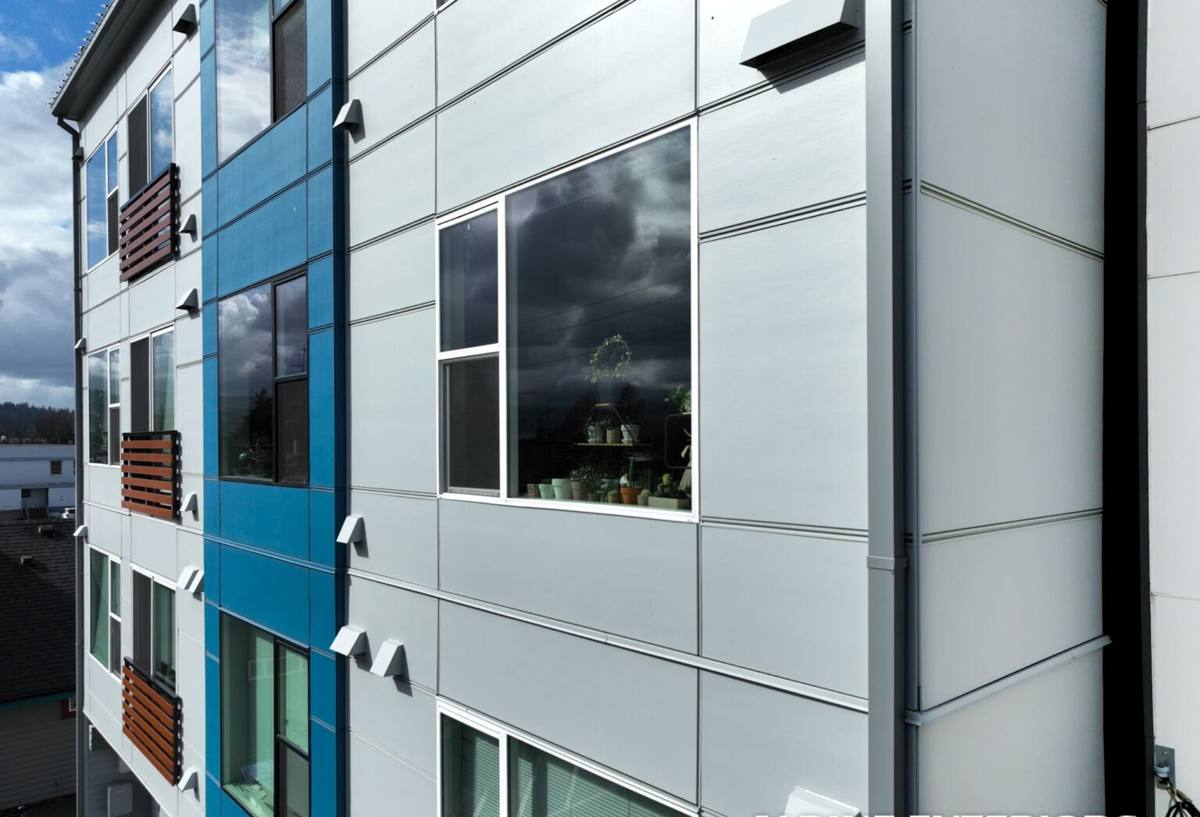
What Bellingham Bay's Climate Does to Windows
Columbia sits close enough to Bellingham Bay that salt-laden air is a real factor, not a theoretical one. Add the region's long stretch of driving rain each fall and winter, plus the shaded, damp conditions that keep moss and algae established on north- and west-facing exteriors for months at a time, and you get a specific pattern of window failure that's different from what you'd see in a drier climate.
Salt Air and Hardware
Salt-tinged moisture accelerates corrosion on window hardware — locks, hinges, balance mechanisms, and especially older aluminum frames or steel fasteners. This is usually the first thing to go on an aging window: the frame still looks intact, but the lock won't cam down tight, or the sash won't glide, because the hardware underneath has corroded.
Driving Rain and Wind-Driven Water
Whatcom County storms don't just drop rain straight down — wind pushes it sideways into wall assemblies, which is exactly where old or poorly flashed windows fail. Water finds the gap between the window frame and the rough opening, gets behind the trim, and starts rotting sill framing long before anyone notices a stain inside.
Moss and Trapped Moisture
A long moss season means more than roof and siding maintenance. Moss and algae holding moisture against window trim and sills keeps wood wet for extended stretches, which is a slower version of the same rot problem driving rain causes directly. On shaded lots — common in older neighborhoods with mature trees, including parts of Columbia — this can shave years off a window's service life compared to a home in full sun.
Signs a Columbia Home Needs Window Replacement
- Visible fog or moisture between glass panes (failed seal on a double- or triple-pane unit)
- Windows that are difficult to open, close, or lock, especially after damp weather
- Soft or discolored wood at the sill, jamb, or exterior trim
- Noticeable draft near the frame even when the window is fully latched
- Condensation forming on the interior glass regularly through fall and winter
- Paint that keeps failing on the same window's trim no matter how often it's repainted
- Visible corrosion or chalky white buildup on aluminum-frame hardware
- Rooms near the window that are noticeably harder to heat than the rest of the house
Any one of these can be a minor fix. Two or three together, especially on the same window, usually means the unit and possibly the surrounding framing need to come out.
What a Correct Window Replacement Job Involves
Removal and Opening Inspection
The old window comes out and the rough opening gets inspected before anything new goes in. This is the step that gets skipped by crews trying to move fast, and it's the one that matters most in a wet climate — if there's rot or hidden water damage in the framing, it needs to be found and addressed now, not sealed behind a new window where it will keep spreading unseen.
Flashing and Water Management
Proper flashing directs any water that gets past the exterior cladding back out, rather than letting it pool at the sill. Given how much wind-driven rain Whatcom County sees, this is not an optional detail — it's the difference between a window that sheds water for twenty-plus years and one that starts rotting the wall around it within a few seasons.
Setting, Shimming, and Leveling
The new window has to sit level, square, and plumb in the opening, shimmed correctly so the frame isn't under stress that will eventually crack seals or bind the sash. A window that looks fine on installation day but was set slightly out of square will show problems within a year or two.
Sealing and Insulating
The gap between the window frame and rough opening gets insulated and sealed with the right materials — not just caulk smeared around the outside trim. Interior and exterior sealing both matter for keeping moist air from condensing inside the wall cavity.
Interior and Exterior Finish
Trim gets reset or replaced, and exterior finish work is matched to the surrounding siding or trim so the new window doesn't look like a patch job. On homes with painted wood trim, this is also a good moment to address any trim that's showing early rot.
Choosing a Window Frame Material for This Climate
Material choice matters more here than in a mild, dry climate, because the frame is constantly dealing with moisture cycling and, in Columbia's case, some salt exposure. Here's how the common options hold up:
| Frame Material | Moisture/Salt Resistance | Maintenance | Typical Trade-Off |
|---|---|---|---|
| Vinyl | Good — won't rot or corrode | Low; occasional cleaning | Limited color/finish options; can look plain on older architectural styles |
| Fiberglass | Very good — dimensionally stable, resists moisture well | Low | Higher upfront cost than vinyl |
| Wood-clad | Good on the exterior clad side; interior wood needs care | Moderate — interior finish needs upkeep | Best fit for period-appropriate homes but requires more long-term attention |
| Bare aluminum | Poor in salt-influenced air — prone to corrosion and thermal issues | High over time | We generally steer clients away from bare aluminum for coastal-adjacent Whatcom County homes given the maintenance burden and energy performance |
None of these is universally "best" — it depends on the home's style, budget, and how much upkeep the owner wants to take on. For most Columbia homes near the bay, we lean toward vinyl or fiberglass for the balance of low maintenance and solid moisture performance, but we'll talk through wood-clad options for homes where matching original character matters more.
Glass Packages Worth Understanding
The frame gets most of the attention, but the glass package affects comfort and condensation just as much, especially with Whatcom County's damp winters.
- Double-pane, low-E glass — the standard baseline for most replacement projects; good energy performance and reduces interior condensation compared to older single-pane or early double-pane units
- Triple-pane — better insulating value, worth considering on north-facing rooms or homes with persistent condensation complaints, at a higher cost
- Argon or krypton gas fill — improves insulating performance between panes; a common upgrade rather than a separate product line
- Warm-edge spacers — reduce the cold spot at the glass edge where condensation tends to form first
Our Process, Start to Finish
1. On-Site Walkthrough
We look at every window being considered, not just the obviously bad ones, and check for the rot, seal failure, and hardware corrosion patterns common in this area.
2. Honest Recommendation
We'll tell you plainly which windows need replacing now, which can wait, and which are just cosmetic. We're not incentivized to replace more than you need.
3. Written Estimate
Materials, labor, and any anticipated framing repair are laid out clearly before work starts — no surprise change orders for things we could have caught during the walkthrough.
4. Installation
Most single-window replacements are a one-day job; full-house projects are scheduled around weather windows, since installation quality suffers if it's done in the middle of a driving rainstorm.
5. Cleanup and Walkthrough
We walk the finished work with you, operate every window, and confirm the sealing and trim before we consider the job done.
What Affects the Cost
We won't quote a number here that doesn't apply to your specific home, but these are the real variables that move the price up or down:
| Factor | Why It Matters |
|---|---|
| Number and size of windows | Larger openings and full-house projects have per-unit efficiencies but higher total cost |
| Frame material | Vinyl is generally the most budget-friendly; fiberglass and wood-clad cost more upfront |
| Glass package | Triple-pane and gas-fill upgrades add cost but improve comfort and condensation resistance |
| Hidden framing damage | Rot found once the old window is out adds labor and material that couldn't be quoted sight-unseen |
| Access and site conditions | Second-story windows, tight side yards, or landscaping obstructions affect labor time |
| Trim and finish work | Matching existing exterior trim profiles or repainting adds scope beyond the window unit itself |
Why a Crew That Already Works in Columbia Matters
Window replacement done by a crew unfamiliar with Whatcom County conditions tends to under-flash, under-seal, or use hardware that isn't suited to salt-influenced air — problems that don't show up on installation day but show up two or three winters later. A crew that regularly works in and around Columbia and greater Bellingham has already seen how the local rot and corrosion patterns play out on this housing stock, knows which framing details tend to hide moisture damage, and builds the flashing and sealing details accordingly rather than by generic assumption. That local pattern-recognition is worth more than it sounds like on paper — it's the difference between a window that's still tight in fifteen years and one that needs attention again in five.
Keeping New Windows Performing Through Moss Season
A correctly installed window still benefits from basic upkeep in this climate. Keep gutters and downspouts clear so runoff isn't sheeting directly onto window heads. Trim back vegetation and clear moss or algae buildup on trim and sills before it holds moisture against the wood or finish for months at a time. Check exterior caulking annually — sealants degrade under UV and constant moisture cycling faster here than in drier regions, and a failed bead of caulk is a much cheaper fix than the water damage it can lead to if ignored.
If you're weighing whether your Columbia home's windows need attention now or can wait another season, we're glad to take a look and give you a straight answer either way. Reach out for a free, no-pressure estimate using the form below.