 Whatcom County
 Window Replacement Built for Sunnyland's Marine Climate
Sunnyland sits close enough to Bellingham Bay that the air itself works against your windows year-round. Salt-laden moisture rides in on the wind, settles into frame joints and hardware, and slowly breaks down materials that weren't built to handle it. Add Whatcom County's long stretch of driving rain each fall and winter, plus a moss season that seems to start earlier every year, and you have a climate that is genuinely tough on window systems — not just the glass, but the frames, seals, and the wall assembly behind them.
Older wood windows in this neighborhood often show it first: swollen sashes that stick, paint that won't hold, sills going soft at the corners. Vinyl windows installed decades ago fare a little better structurally but frequently have failed seals, fogged glass, and gaps that let cold, damp air straight through. None of this is unusual for homes in this part of Whatcom County — it's just what happens when good windows reach the end of their service life in a wet, coastal-adjacent environment.
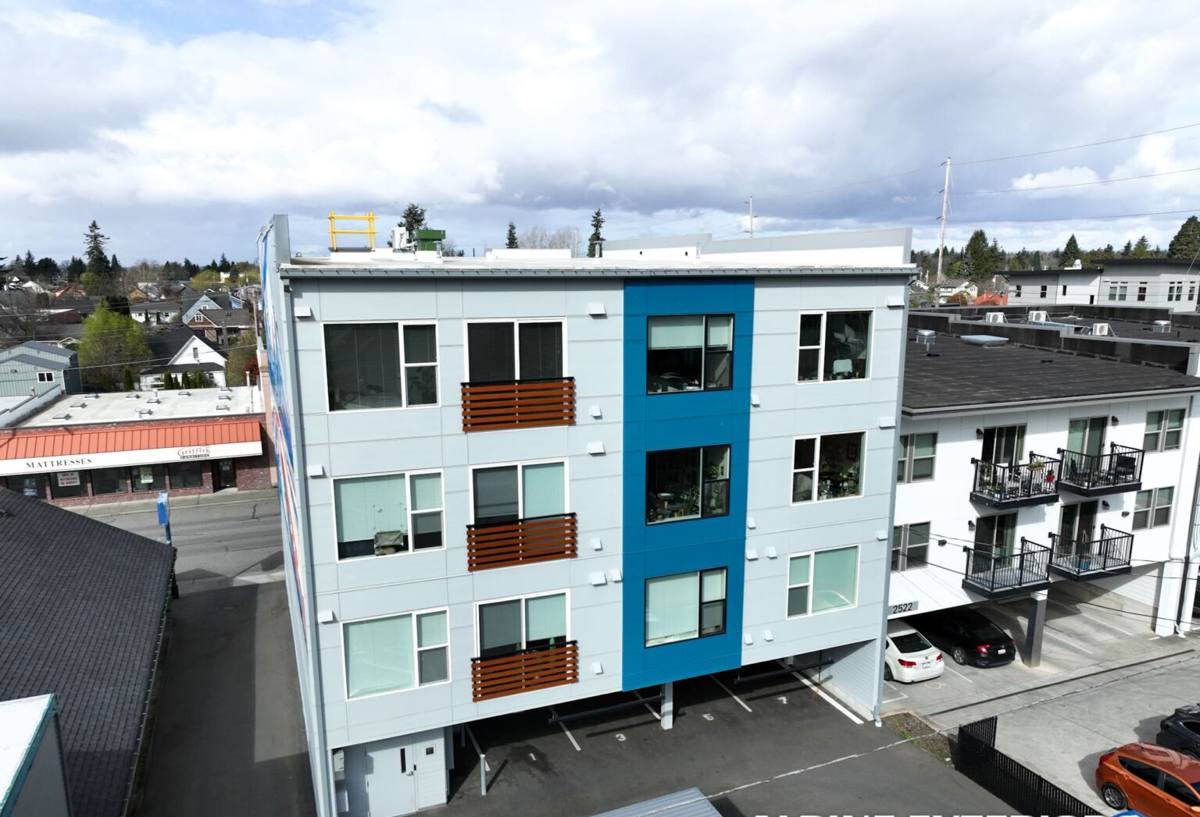
Signs a Sunnyland Home Needs Window Replacement
Not every window problem means full replacement, but certain signs point to it clearly. Before we recommend replacing anything, we look for the following:
- Fogging or a permanent haze between panes — the seal has failed and the insulating gas is gone
- Visible rot, soft spots, or dark staining at the sill or bottom corners of the frame
- Windows that won't stay open, won't latch, or have become difficult to operate
- Noticeable draft or cold spot near the window when it's shut and locked
- Moss or dark streaking on the exterior trim around the window, suggesting standing moisture
- Higher heating bills without another clear explanation
- Single-pane glass with no storm window — common in older Sunnyland homes and a real energy drain
If you're seeing two or three of these on the same window, it's usually more cost-effective to replace than to keep patching.
What a Correct Window Replacement Actually Involves
Removal and Structural Inspection
The old window comes out carefully so we can inspect the rough opening underneath — this is the step that gets skipped by crews in a hurry, and it's the one that matters most. Rot, soft framing, or old failed flashing hiding behind the trim needs to be addressed before a new window ever goes in. Installing a new window over a compromised opening just hides the problem for a few more years.
Flashing and Moisture Management
Given how much rain Whatcom County sees, proper flashing is non-negotiable. That means correctly lapped water-resistive barrier, sill pan flashing that directs any incidental water back out rather than into the wall cavity, and head flashing that sheds water away from the opening. This is the layer of the job that's invisible once trim goes back on — but it's the layer that determines whether the window lasts 20 years or leaks in year three.
Insulation and Air Sealing
The gap between the new window frame and the rough opening gets sealed with proper low-expansion foam or backer rod and sealant — never packed too tight, never left with voids. This is what actually stops drafts; the window itself is only part of the equation.
Interior and Exterior Finish Work
Once the window is set, shimmed level and plumb, and fastened per the manufacturer's schedule, we finish the exterior trim and caulk lines and restore the interior casing or stool. A clean finish line is also a functional one — gaps in caulking are where the next moisture problem starts.
Choosing the Right Frame Material for This Climate
Frame material matters more here than in drier inland climates, because the frame is exposed to sustained moisture and, in Sunnyland's case, some degree of salt air. Here's how the common options compare for a coastal-influenced Whatcom County home:
| Frame Material | Moisture & Salt Air Resistance | Maintenance | Typical Trade-Off |
|---|---|---|---|
| Vinyl | Good — won't rot or corrode | Low — occasional cleaning | Limited color/finish options; can expand and contract with temperature swings |
| Fiberglass | Very good — dimensionally stable, resists moisture well | Low | Higher upfront cost than vinyl |
| Wood, unclad | Poor in this climate without diligent upkeep | High — regular painting/sealing required | Classic look, but a real maintenance commitment near the bay |
| Wood-clad (aluminum or vinyl exterior) | Good — exterior shell protects the wood core | Moderate | Interior wood warmth with exterior protection; higher cost |
| Aluminum | Fair — can corrode over time in salt air without proper coating | Low to moderate | Thin sightlines, but more prone to thermal transfer and pitting near the coast |
For most Sunnyland homes, we steer clients toward vinyl or fiberglass for straightforward moisture and salt-air resistance with low upkeep. We don't discourage wood-clad options — some homeowners want that look and are willing to maintain it — but we're upfront that unclad wood exposed to this much sustained moisture is a harder sell as a low-maintenance choice.
Glass Packages Worth Considering
Beyond the frame, the glass package affects comfort and condensation control, which matters in a climate with this much humidity swing between seasons. Double-pane windows with a low-E coating and argon fill are the standard baseline we recommend for this area. Triple-pane adds another layer of insulation and sound dampening, which some homeowners value on busier streets or north-facing rooms that stay colder, but it comes at a real cost premium and added weight on the frame and hardware. We'll walk through where triple-pane actually pays off versus where a quality double-pane package does the job just as well.
Our Process, Start to Finish
- Walkthrough and assessment — we look at every window being considered, check the surrounding trim and siding condition, and talk through what you're actually trying to solve (drafts, moisture, appearance, energy costs)
- Written estimate — clear pricing by window, with frame and glass options spelled out so you're comparing real numbers, not guesswork
- Scheduling around the weather — we plan installation days with Whatcom County's rain patterns in mind so openings aren't sitting exposed longer than necessary
- Installation — removal, inspection, flashing, insulation, and finish work as described above, one window or one room at a time to keep your home protected throughout
- Walkthrough and cleanup — we check operation on every window, clean up debris and packaging, and go over care basics before we leave
What Affects the Cost of a Window Replacement Project
Every home and every scope is different, but the main cost drivers on a Sunnyland window project are consistent. This isn't a price list — it's a way to understand where your money goes so an estimate makes sense when you see it.
| Factor | Why It Matters |
|---|---|
| Number of windows | Per-window cost drops somewhat with larger projects due to shared setup and scheduling efficiency |
| Frame material | Vinyl is typically the most budget-friendly; fiberglass and wood-clad cost more upfront |
| Glass package | Double-pane low-E is the baseline; triple-pane and specialty coatings add cost |
| Window size and type | Large picture windows, bays, or custom shapes cost more than standard double-hung or sliders |
| Condition of the rough opening | Hidden rot or old flashing failures found during removal can add scope — we flag this before proceeding, not after |
| Access and site conditions | Second-story windows or tight access can affect labor time |
We give honest, itemized estimates so you can see exactly what's driving the total, and we flag likely surprises — like suspected rot behind old trim — before we start, not as a change order afterward.
Why Hiring a Crew That Already Works in Sunnyland Matters
A window that's correctly installed for a dry inland climate can still fail early here if it's not detailed for sustained coastal moisture and salt exposure. Crews who regularly work Whatcom County homes know to flash more conservatively, to be more careful about sealant selection and cure times in a climate that doesn't dry out quickly, and to recognize early signs of moisture intrusion in older Sunnyland construction before they become structural problems. That local pattern recognition is the difference between a window that looks fine on install day and one that's still performing well a decade later.
We also know how this neighborhood's housing stock tends to be built — the era of construction common in the area, the typical siding and trim details, and the kinds of moisture issues that show up around older window openings. That familiarity speeds up the assessment and helps us catch problems a crew unfamiliar with the area might miss.
Maintaining Your New Windows in a Wet, Salt-Influenced Climate
New windows still need some basic upkeep here to get their full lifespan. Rinse exterior frames periodically to clear salt residue and organic buildup, especially after storms. Keep weep holes on vinyl and fiberglass frames clear so water drains properly instead of pooling. Check exterior caulk lines annually, particularly after the first full winter, since new sealant can show its first signs of wear once it's been through a real Whatcom County rainy season. None of this is heavy maintenance — it's the kind of occasional attention that keeps a well-installed window performing the way it should.
If your Sunnyland home has windows showing any of the signs above, or you're just ready to stop fighting drafts and moss stains every winter, we're happy to take a look. Reach out for a free, no-pressure estimate — we'll walk the windows with you, answer your questions honestly, and give you real numbers to work with. The form below is the easiest way to get started.