 Whatcom County
 Why Sunnyland Roofs Wear Differently Than Roofs Inland
Sunnyland sits close enough to Bellingham Bay that salt-laden air is a real factor in how roofing materials age, not just a talking point. Combine that with Whatcom County's long, wet fall-through-spring stretch and the moss season that follows it, and you get a roofing environment that's tougher on materials than most manufacturers' warranty testing accounts for. A roof that would last three decades in a dry inland climate can show granule loss, fastener corrosion, or moss-driven shingle lift years earlier here if it wasn't built for these specific conditions.
New roof installation in this neighborhood isn't just about swapping old shingles for new ones. It's about choosing materials, fasteners, and underlayment systems that are rated for coastal exposure, then installing them with the ventilation and drainage details that keep moss from taking hold in the first place. Get those details wrong and you're looking at a callback in five years instead of a roof that earns out its full warranty.
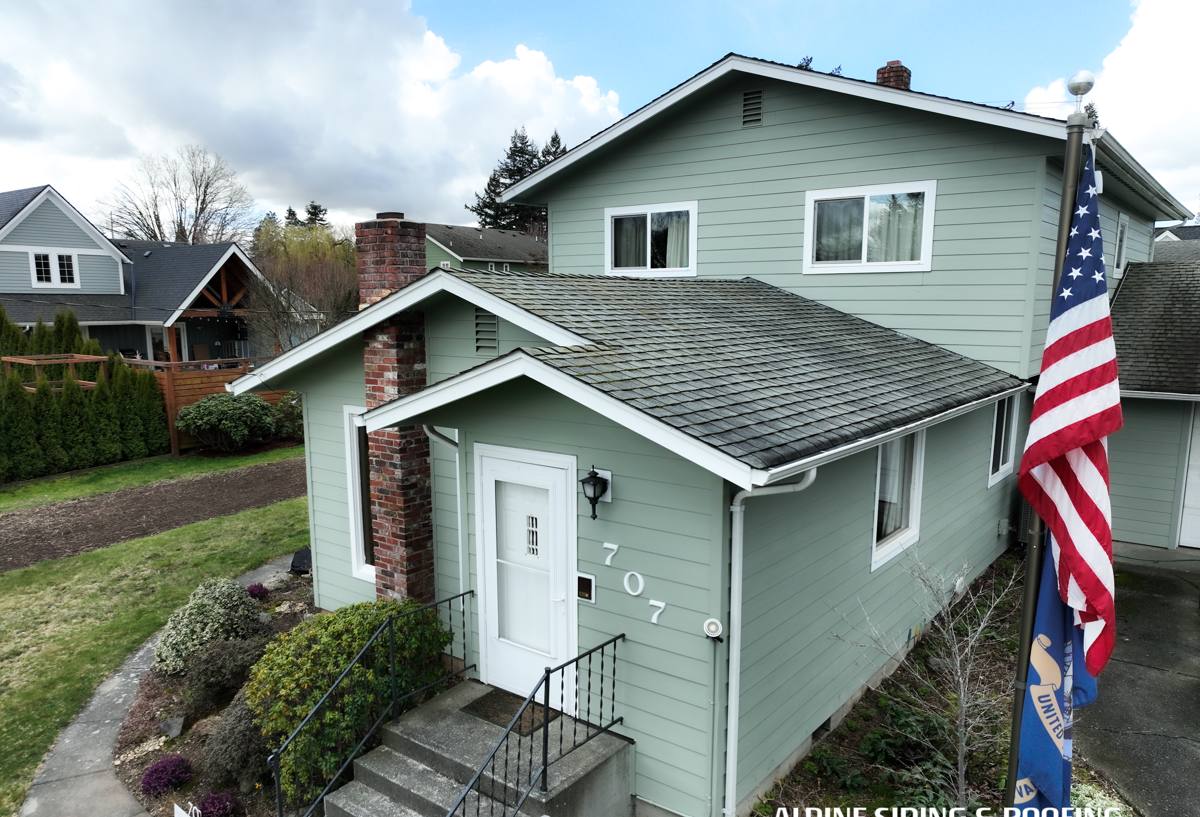
What "Correct" Actually Means on a New Roof Installation
A new roof is more than the shingles or panels you see from the street. The parts nobody notices when they're done right are the parts that determine whether the roof survives Whatcom County winters:
- Deck inspection and repair — any soft, rotted, or delaminated sheathing gets replaced before anything new goes down, not covered over.
- Ice-and-water or synthetic underlayment — a continuous moisture barrier under the roofing material, with extra protection at eaves and valleys where water lingers longest.
- Flashing at every penetration — chimneys, vents, skylights, and wall intersections are where the vast majority of leaks start, and where corrosion-resistant metal matters most this close to the water.
- Balanced intake and exhaust ventilation — proper airflow keeps the underside of the deck dry and slows moss and moisture-driven wood rot from the inside out.
- Fastener selection — coastal air corrodes standard fasteners faster; corrosion-resistant nails and screws aren't optional upgrades here, they're baseline for the environment.
Skipping or shortcutting any one of these doesn't show up on day one. It shows up as a leak, a soft spot, or premature moss growth two or three winters later — by which point it's a repair bill, not a warranty claim.
Roofing Material Choices for This Climate
There's no single "best" roofing material for every Sunnyland home — it depends on the roof's slope, the home's style, and how much long-term maintenance an owner wants to take on. Here's how the common options actually perform under salt air, driving rain, and heavy moss pressure:
| Material | Salt Air Resistance | Moss Resistance | Typical Lifespan Here |
|---|---|---|---|
| Architectural asphalt shingle | Good with quality fasteners and flashing | Moderate — needs periodic cleaning and good airflow | 20–30 years |
| Standing seam metal | Excellent when properly coated and fastened | Very good — sheds moss more easily than textured surfaces | 40–60 years |
| Composite/synthetic shake | Good | Good — smoother surface than cedar | 30–50 years |
| Cedar shake | Fair — needs regular maintenance near salt air | Poor without diligent upkeep | 20–30 years with maintenance |
We don't push one product line on every roof. Asphalt shingle remains the most cost-effective choice for most homes and holds up well when the underlayment and flashing details are done right. Metal roofing costs more upfront but shrugs off moss and salt exposure with far less maintenance over the decades. Cedar shake has real curb appeal, but in an area with this much sustained moisture, it demands a maintenance commitment we're upfront about before anyone signs a contract — that's a trade-off worth knowing going in, not discovering later.
A Note on Underlayment
Whatever the surface material, the underlayment underneath matters just as much in this climate. Synthetic underlayments generally outperform old-style felt in wet-climate durability and tear resistance, and self-adhered membrane at eaves and valleys is worth the extra material cost given how much water Whatcom County roofs handle over a typical winter.
Moss and Moisture: What Actually Prevents Long-Term Damage
Moss isn't just cosmetic. Once it establishes on a roof, it holds moisture against the surface, lifts shingle edges, and creates a foothold for wood rot in the deck below. A long moss season, like the one this region sees, means moss has more months of the year to take root than it would somewhere drier.
Preventing moss starts at installation, not with a cleaning crew years later. A few things make the biggest difference:
- Adequate roof slope and drainage design so water doesn't pool or sheet slowly across shade-prone sections
- Balanced attic ventilation so the roof deck dries out between rain events instead of staying damp
- Zinc or copper strips at the ridge on shingle roofs in heavily shaded sections, which discourage moss regrowth over time
- Trimming back overhanging branches that keep sections of roof shaded and damp longer than the rest
- Choosing a surface material — like metal or smoother composites — that gives moss less to grip onto in the first place
None of this replaces periodic roof inspection, but a roof installed with these details in mind needs far less intervention over its life than one that wasn't.
Our Installation Process, Step by Step
Homeowners deserve to know what's actually happening on their roof, not just a start and end date. Here's how a full new roof installation runs from first visit to final walkthrough:
- On-site assessment — we inspect the existing roof, deck condition, ventilation setup, and any problem areas (valleys, chimneys, low-slope sections) before quoting anything.
- Material selection and proposal — we walk through the honest trade-offs between material options for your specific roof and budget, no upselling.
- Permitting — we handle the permit process required for roof replacement in Whatcom County so you don't have to track it down yourself.
- Tear-off and deck inspection — old roofing comes off down to the deck, which gets inspected and repaired as needed before anything new goes on.
- Underlayment and flashing installation — moisture barrier goes down first, followed by new flashing at every penetration and edge.
- Roofing material installation — shingles, panels, or shakes installed to manufacturer spec with corrosion-resistant fasteners.
- Ventilation check and adjustment — intake and exhaust ventilation confirmed balanced for the home's attic volume.
- Cleanup and final walkthrough — job site cleared, magnetic sweep for stray fasteners, and a walkthrough so you know exactly what was done.
Ventilation: The Detail Most Roofs Get Wrong
Attic ventilation doesn't get much attention in roofing conversations, but it's one of the biggest factors in how long a roof lasts in a wet climate. Without enough intake at the eaves and exhaust at the ridge, warm moist air from inside the home gets trapped against the underside of the roof deck. Over a Whatcom County winter, that trapped moisture condenses, and condensation on the deck is just as damaging as a rain leak — it just takes longer to notice.
Part of every new roof installation includes evaluating whether the existing ventilation setup is adequate for the home, and correcting it if it isn't. Adding or resizing ridge vents, soffit vents, or gable vents at the same time as a roof replacement is far more cost-effective than doing it as a separate project later.
Timeline and What to Expect
Most single-family roof replacements in this size range take one to three days of active work, weather permitting — and weather is the real variable in Whatcom County. Driving rain doesn't just slow a crew down; it can make certain steps unsafe or ineffective to attempt, so a crew that schedules around realistic local weather windows will give you a more honest timeline than one quoting a fixed date regardless of forecast.
Here's a general breakdown of what affects how long a project takes:
| Factor | Impact on Timeline |
|---|---|
| Roof size and number of levels | Larger, multi-plane roofs take longer to tear off and install |
| Deck condition | Rot or soft decking discovered during tear-off adds repair time |
| Material choice | Metal and cedar generally take longer to install than asphalt shingle |
| Weather windows | Extended rain can push a 2-day job into a multi-day stretch |
| Permit processing | Adds lead time before work can start, varies by scope |
Cost Factors Homeowners Should Understand
We don't publish blanket pricing because roof cost genuinely varies based on size, pitch, material, and what's found once tear-off starts. What we can say honestly is which factors move the number the most:
- Total roof square footage and the number of roof planes or valleys
- Roof pitch — steeper roofs require more safety setup and labor time
- Material choice, from asphalt shingle on the lower end to standing seam metal on the higher end
- Deck repair needs discovered during tear-off, which can't always be predicted before the old roofing comes off
- Ventilation upgrades if the existing attic airflow needs correction
An accurate quote requires an on-site look at the actual roof, not a phone estimate based on square footage alone. That's why we walk every roof before putting a number to it.
Why a Crew That Already Works Sunnyland Matters
Roofing crews who work broadly across Western Washington know general best practices. A crew that regularly works Sunnyland and the surrounding Bellingham neighborhoods knows how this specific pocket of Whatcom County behaves — which roof orientations hold moss longest, how much salt exposure a given block actually sees off the bay, and which permit and inspection steps the local jurisdiction expects. That local familiarity translates into fewer surprises mid-project and a roof detailed for the conditions it will actually face, not generic conditions from a training manual.
It also means we're not disappearing after the invoice clears. A local crew has a reputation in the neighborhood to protect, and that's a stronger incentive to get flashing, ventilation, and fastener details right the first time than a warranty document ever is.
Get a Free, No-Pressure Estimate
If your Sunnyland roof is showing moss, granule loss, soft spots, or you're just past the age where waiting makes sense, we're happy to take a look and give you a straight answer about what it needs. Fill out the form below for a free estimate — no pressure, no obligation, just an honest assessment of your roof and your options.