 Whatcom County
 Deck Replacement Built for Sunnyland's Weather
Sunnyland sits close enough to Bellingham Bay that salt-tinged air, wind-driven rain, and long stretches of overcast, moisture-heavy weather are just part of owning a home here. A deck in this neighborhood doesn't fail the way a deck in a dry inland climate fails. It doesn't usually snap a board from dry rot in year one. It fails slowly, from the inside out — moisture working into end grain, fasteners corroding under the surface, and moss and algae holding water against wood and composite alike for weeks at a time during our wet season. If you've noticed your deck feels soft in spots, has dark staining that pressure washing won't touch, or has ledger or post connections that look tired, that's Whatcom County's climate doing what it does to an aging structure.
Replacing a deck here isn't just swapping old boards for new ones. It's an opportunity to rebuild the parts you can't see — framing, flashing, fasteners, and drainage — so the new surface actually lasts through another 15-20 winters of Pacific Northwest rain instead of just looking good for the first two.
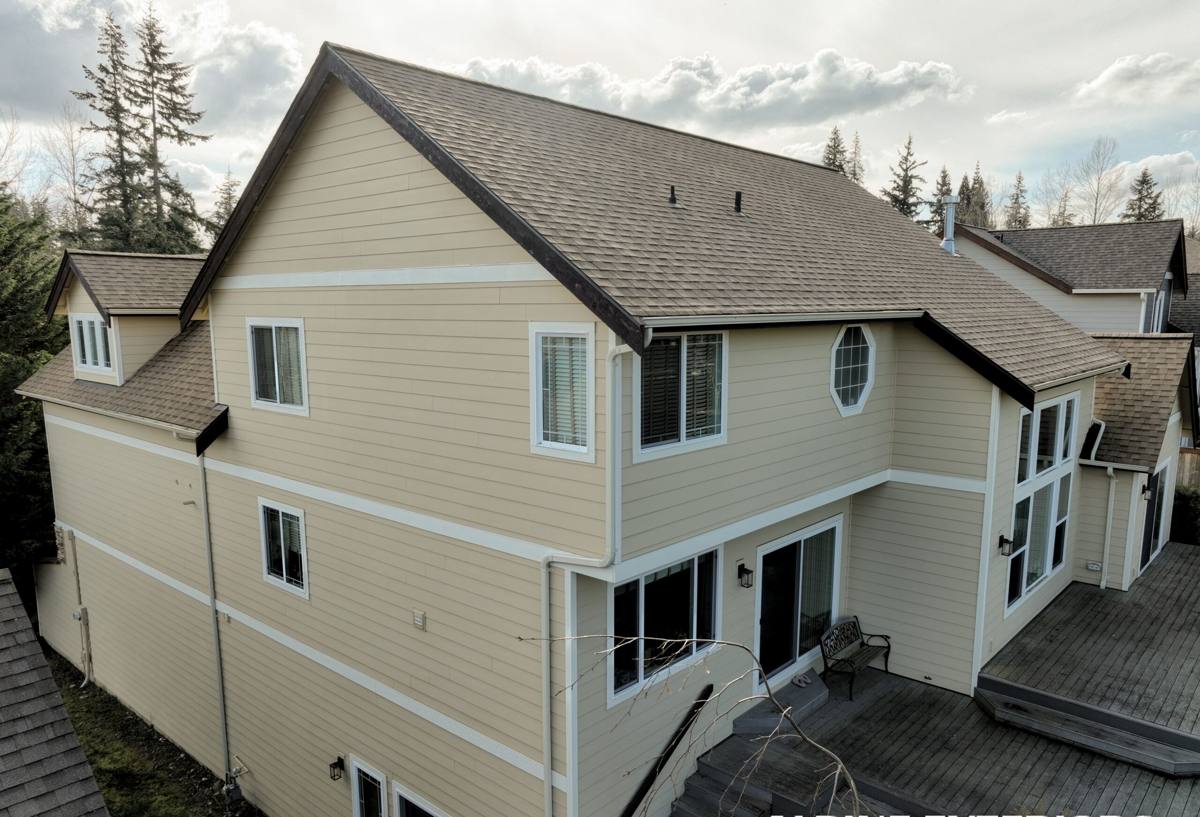
Why Decks Wear Out Faster in This Neighborhood
Salt Air and Metal Fatigue
Sunnyland's proximity to the water means airborne salt reaches fasteners, brackets, and ledger board hardware even on decks that never get direct spray. Standard galvanized nails and screws corrode faster here than they would twenty miles inland. Once a fastener starts to rust, it loses grip strength long before the wood around it shows any obvious damage — which is why decks can look fine on the surface but feel spongy or slightly loose underfoot.
Driving Rain and End-Grain Saturation
Wind-driven rain during fall and winter storms doesn't just fall straight down — it gets pushed sideways into board ends, post bases, and the gap between decking and house siding. End grain soaks up water far faster than the flat face of a board, so the first visible rot on most decks shows up at board ends, stair stringers, and anywhere wood meets a horizontal surface.
The Long Moss Season
Whatcom County's moss season effectively runs most of the year. Moss and algae hold moisture against a deck surface long after the rain has stopped, which keeps wood wet for days at a stretch and turns any north-facing or shaded deck into a slip hazard. On composite decking, moss buildup in board grooves is mostly cosmetic, but on wood it accelerates surface decay and can trap water at fastener heads.
Signs a Repair Won't Be Enough
- Boards that flex, feel spongy, or bounce noticeably when walked on
- Soft or discolored wood at the ledger board where the deck attaches to the house
- Rust streaking below joist hangers, post bases, or railing brackets
- Gaps or movement at post-to-beam or beam-to-ledger connections
- Persistent moss or algae staining that returns within weeks of cleaning
- A deck older than 15-20 years that has never had the substructure inspected
- Railings that wobble when pushed, which often points to post rot below the surface
If you're only seeing one or two of these, a targeted repair might still make sense. If you're seeing several, especially anything involving the ledger board or structural posts, replacement is almost always the more honest recommendation — patching around a compromised frame just moves the failure point somewhere else.
What a Correct Deck Replacement Actually Involves
Tear-Off and Structural Assessment
We remove the old decking and railing down to the frame, then actually look at what's underneath — joists, beams, posts, and footings. This is the step that gets skipped on cut-rate jobs, and it's the one that matters most in a climate like ours, because hidden rot at the ledger or post bases is exactly what a driving-rain, high-moisture environment produces over time.
Ledger Board and Flashing
The ledger board connection to the house is the single most important — and most commonly botched — part of any deck. Proper flashing (not just caulk) needs to direct water away from the house band board, with a drainage gap so water doesn't get trapped between the deck and the siding. This is a common point of moisture intrusion into the house itself, not just the deck.
Framing and Fasteners
Given the salt exposure in Sunnyland, we use corrosion-resistant, code-rated fasteners and hardware rather than standard-grade galvanized options wherever it matters — joist hangers, structural screws, and post connectors. It costs a little more up front and saves you from hidden corrosion failures a decade in.
Decking Material Installation
Whether you choose wood or composite, correct spacing for drainage and expansion, proper fastening patterns, and attention to end-grain sealing (on wood) all affect how the deck performs through wet winters. Composite boards still need proper ventilation underneath — trapping moisture below a composite deck causes joist rot even though the boards themselves won't decay.
Railings and Stairs
Railing posts are almost always through-bolted to the frame, not just screwed to the rim joist — a detail that affects both code compliance and long-term stability. Stair stringers get the same fastener and flashing attention as the rest of the frame, since they take direct rain exposure with no roof overhead in most layouts.
Choosing a Decking Material for This Climate
| Material | Moisture Behavior in Whatcom County | Maintenance | Typical Lifespan Here |
|---|---|---|---|
| Pressure-treated wood | Resists rot when sealed regularly; end grain still vulnerable | Annual cleaning, re-stain/seal every 2-3 years | 12-18 years |
| Cedar | Naturally moisture-resistant but needs upkeep to hold color and resist moss | Cleaning and sealing every 1-2 years | 15-20 years |
| Composite decking | Won't rot, but needs proper under-deck ventilation and grooved-board cleaning | Periodic washing to clear moss/algae from grooves | 25-30 years |
| PVC/capped composite | Best moisture resistance of the group; sheds water fully | Occasional washing | 25-30+ years |
There's no universally "right" choice — a lot of it comes down to budget, how much upkeep you want to do, and whether you want the look of real wood. We'll walk through the honest trade-offs for your specific deck rather than push whatever has the best margin.
Our Process for Sunnyland Deck Replacements
- On-site assessment — we inspect the existing deck, ledger connection, and any visible moisture damage before quoting anything
- Written estimate — clear scope, materials, and pricing with no vague allowances buried in the fine print
- Permit handling — most deck replacements of any size require a Whatcom County or City of Bellingham permit; we handle that paperwork so you don't have to
- Tear-off and frame inspection — old decking removed, structure evaluated, any rot or corrosion documented and discussed with you before proceeding
- Rebuild — framing repairs, proper ledger flashing, corrosion-resistant fasteners, and new decking installed to code
- Final walkthrough — we go over the finished deck together and cover basic care specific to your chosen material
Cost Factors Worth Understanding
| Factor | Why It Moves the Price |
|---|---|
| Deck size and shape | Multi-level decks, curves, and built-in features add labor beyond raw square footage |
| Material choice | Composite and PVC decking cost more per board than pressure-treated wood but need less upkeep over time |
| Substructure condition | Rotted joists, posts, or footings found during tear-off add cost but shouldn't be skipped |
| Height and railing requirements | Elevated decks need more robust railing and post bracing per code |
| Permit and inspection requirements | Structural changes or larger decks trigger a permit review that adds time, not just paperwork |
We give broad, honest ranges up front and firm numbers after we've actually seen the deck — not a lowball quote that grows once the tear-off starts.
Why It Matters That We Already Work in Sunnyland
A crew that works Whatcom County regularly already knows how local building department reviews permits, what fastener and flashing details actually hold up against our salt air and driving rain, and how much moss buildup is normal versus a sign of a drainage problem. That familiarity shows up in small decisions — flashing details, fastener grade, drainage spacing — that a crew from outside the region might not think twice about, because they're not dealing with this climate on every job.
It also means we're not disappearing after the invoice clears. If something needs a second look after the first wet winter, we're a short drive away, not a company that was passing through the area for one job.
Get a Straightforward Estimate
If your deck is showing its age — soft spots, rust staining, persistent moss, or a substructure you haven't looked at in years — we're happy to come take a look and give you an honest read on repair versus replacement. There's no pressure and no obligation; fill out the form below to schedule a free estimate for your Sunnyland deck.