 Whatcom County
 Asphalt Shingle Roofing Built for Sunnyland's Climate
Sunnyland sits close enough to the water and the hills that its roofs take a different kind of beating than roofs twenty minutes inland. Homes here deal with salt-laden air off Bellingham Bay, driving rain that comes in sideways during winter storms, and a moss season that can stretch from October clear through April. An asphalt shingle roof that isn't specified and installed with those three factors in mind will show its age faster than it should — curling edges, granule loss, and moss creeping under the shingle tabs within a handful of years instead of lasting out its full service life.
Asphalt shingles remain the most practical roofing choice for most Sunnyland homes. They're cost-effective, widely available in styles that match the neighborhood's mix of older bungalows and newer builds, and when installed correctly they hold up well to Pacific Northwest weather. The key phrase is "installed correctly" — a roof in this part of Whatcom County isn't just about nailing shingles to a deck, it's about managing moisture at every layer, from the underlayment up through the ridge vent.
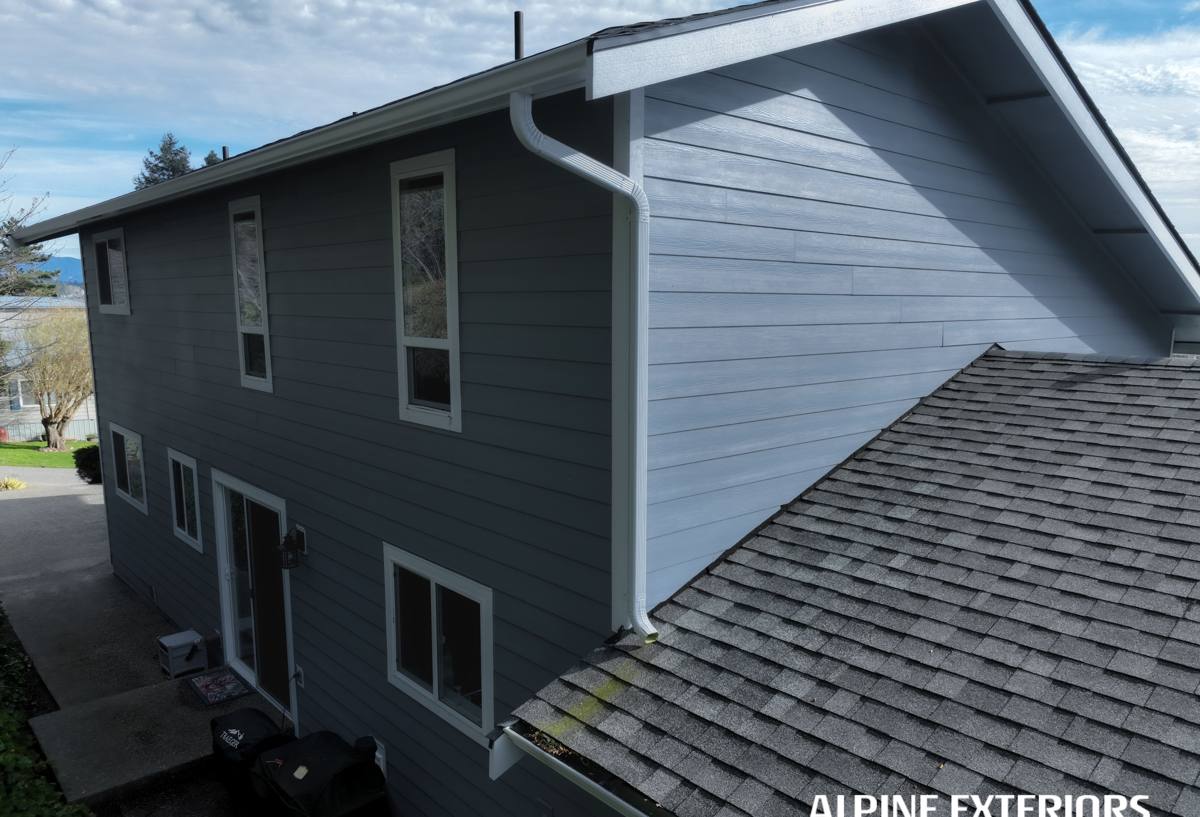
What Sunnyland's Climate Actually Does to a Roof
Salt Air and Corrosion
Proximity to the bay means airborne salt settles on every exterior surface, including your roof. Over time, salt exposure accelerates corrosion on exposed metal — flashing, fasteners, and vent stacks in particular. Cheap galvanized fasteners or standard flashing that might hold up fine further inland can start rusting and staining within a few seasons here. That's why we spec corrosion-resistant fasteners and flashing on every roof we install in this area, not just the ones directly on the waterfront.
Driving Rain
Whatcom County storms don't always come straight down. Wind-driven rain pushes water sideways and upward under shingle edges, especially at valleys, eaves, and anywhere two roof planes meet. A roof that relies on shingles alone to keep water out — without proper underlayment, ice-and-water shield at vulnerable points, and correctly lapped flashing — will eventually leak, even if every shingle looks intact from the ground.
Moss and Prolonged Dampness
Sunnyland's tree cover and the region's long wet season create ideal conditions for moss growth. Moss isn't just a cosmetic issue. As it establishes itself, it lifts shingle edges, holds moisture against the roof deck, and can work its way under tabs over time. A roof with poor ventilation or a deck that's already retaining moisture from underneath is more susceptible to moss taking hold and doing real damage rather than just sitting on the surface.
What a Correct Asphalt Shingle Roof Involves
A roof that's going to hold up in this specific environment needs several layers working together, not just a good-looking shingle on top. Here's what we consider non-negotiable on every Sunnyland roofing job:
- Deck inspection and repair — any soft, delaminated, or water-stained decking gets replaced before a single shingle goes down. Roofing over a compromised deck just hides a problem that gets worse.
- Ice-and-water shield at vulnerable areas — eaves, valleys, and roof-to-wall transitions get a self-adhering waterproof membrane, not just standard felt.
- Synthetic underlayment across the field — a durable, water-resistant layer under the shingles that also protects the deck during construction if weather moves in mid-job.
- Corrosion-resistant flashing and fasteners — given the salt air here, we don't use bargain-grade metal or fasteners that will streak and rust prematurely.
- Balanced attic ventilation — intake at the eaves and exhaust at the ridge, sized correctly for the attic volume, so moisture doesn't get trapped under the deck where it feeds rot and moss.
- Proper nailing pattern — hand-driven or gun-set to the manufacturer's specified pattern and pressure, since overdriven or underdriven nails are one of the most common causes of early shingle failure.
- Starter strip and ridge cap done right — the edges and ridge are where wind and driving rain find weak points first, so these get full attention rather than treated as an afterthought.
Choosing the Right Shingle for This Area
Not every asphalt shingle product is suited to Sunnyland's conditions equally well. We steer homeowners toward algae-resistant (AR) shingles as a baseline — these have copper-containing granules that resist the black streaking algae common in wet Pacific Northwest climates. Beyond that, wind rating and impact rating matter more here than in drier regions, given the storm exposure off the water.
| Shingle Type | Typical Lifespan (PNW conditions) | Best Fit For |
|---|---|---|
| 3-Tab Asphalt | 15–20 years | Budget-conscious projects, simple roof lines, rental properties |
| Architectural (Dimensional) | 25–30 years | Most Sunnyland homes — better wind resistance and shadow-line appearance |
| Premium/Designer Architectural | 30+ years | Homes wanting a heavier, high-end look with the best warranty terms |
We don't push premium products as a default upsell. Architectural shingles are our standard recommendation for most homes in this area mainly because their thicker profile and better wind ratings genuinely perform better against driving coastal rain and gusts — not because they're the most expensive option on the shelf.
Our Process for Sunnyland Roofing Projects
1. On-Site Inspection and Honest Assessment
We start with a walk of the roof, attic, and exterior to check the deck condition, existing ventilation, flashing points, and any signs of moss or moisture intrusion already present. We'll tell you plainly if a repair is sufficient or if a full replacement is the more cost-effective long-term call.
2. Clear, Written Scope
Before any work starts, you get a written scope covering shingle product, underlayment type, flashing plan, ventilation changes if needed, and a realistic timeline that accounts for typical Whatcom County weather windows.
3. Deck Prep and Tear-Off
Old roofing comes off down to the deck so we can actually inspect it, not roof over unknown problems. Any damaged sheathing is replaced before underlayment goes down.
4. Weatherproofing Layers
Ice-and-water shield at the vulnerable points, synthetic underlayment across the field, and flashing installed correctly at every penetration, valley, and wall transition.
5. Shingle Installation
Installed to manufacturer specification for nailing pattern, exposure, and sealant activation, with attention to starter courses and ridge caps.
6. Final Walkthrough
We walk the finished roof with you, confirm ventilation is functioning, and make sure gutters and downspouts are clear so the new roof can shed water the way it's designed to.
Maintenance That Actually Extends Roof Life Here
A well-installed roof still needs some seasonal attention in a climate like this one. Most of it is simple and doesn't require a professional every time:
- Keep overhanging branches trimmed back to reduce shade and debris buildup, which slows drying and encourages moss.
- Clear gutters and downspouts at least twice a year — clogged gutters back water up under the eaves, exactly where ice-and-water shield is doing its job, but only up to a point.
- Have moss treated or gently removed before it establishes a thick mat, rather than after — a soft wash approach protects granules better than pressure washing or aggressive scraping.
- Watch for granules collecting in gutters, which can signal a shingle surface starting to wear.
- Schedule a roof check after any major windstorm to catch lifted shingles or flashing before a small issue becomes a leak.
Why Ventilation Deserves More Attention Than It Gets
A lot of premature roof aging in Whatcom County isn't caused by weather hitting the shingles from outside — it's caused by trapped moisture underneath. Bathroom and kitchen exhaust that dumps into the attic instead of outside, insufficient soffit intake, or a ridge vent that's undersized for the roof area all lead to warm, moist air condensing against the underside of the deck. Over a wet winter, that condensation can rot sheathing from below while the shingles above still look fine. Whenever we replace a roof, we evaluate the existing ventilation and correct it if it's inadequate, rather than just replicating whatever was there before.
Why Local Experience in Sunnyland Matters
A roofing crew that's worked other jobs in this specific part of Whatcom County already knows which details matter most here — the flashing upgrades worth insisting on given the salt air, where moss tends to accumulate first based on tree cover and roof orientation, and how the local storm patterns tend to test a roof's weak points. That local pattern recognition shows up in fewer callbacks and a roof that performs the way it's supposed to for its full expected lifespan, not just for the first few dry summers.
It also matters for permitting and code familiarity — Whatcom County and City of Bellingham requirements around roofing, ventilation, and in some cases historic or neighborhood-specific guidelines are things a crew that regularly works this area already has sorted out, rather than learning on your project.
Signs Your Sunnyland Roof May Need Attention
| What You See | What It Likely Means |
|---|---|
| Granules collecting in gutters | Shingle surface wearing down, especially on south/west-facing slopes |
| Dark streaks across the roof | Algae growth — common in damp PNW climates, cosmetic but worth addressing |
| Thick green moss mats | Moisture retention risk; can lift shingle edges if left untreated |
| Curling or cupping shingle edges | Age, heat cycling, or ventilation issues underneath |
| Water stains on interior ceilings | Active leak — needs prompt inspection, not a wait-and-see approach |
| Rusty streaking near flashing or vents | Fastener or flashing corrosion, accelerated by salt air exposure |
Getting Started
Whether your Sunnyland roof needs a full replacement, a repair after storm damage, or just an honest inspection to see where it stands, we're glad to take a look. We'll give you a straightforward read on the roof's condition and what it would take to get it performing the way it should for the salt air, rain, and moss season this area brings every year. Reach out for a free, no-pressure estimate using the form below.