 Whatcom County
 Storm Damage Roof Repair Built for Sunnyland's Weather
Sunnyland homeowners deal with a specific combination of weather stress that a lot of roofing crews from outside the area simply don't plan for. You've got salt-laden air drifting in off the water, long stretches of driving rain through the fall and winter, and a moss season that can run nine months out of the year on shaded, north-facing roof planes. None of these things individually is dramatic, but stacked together over years, they create the exact conditions that turn a minor storm event into a real roof problem. We repair storm-damaged roofs in Sunnyland and the surrounding Whatcom County neighborhoods, and our approach is shaped around that local reality, not a generic checklist.
"Storm damage" in this part of Washington rarely means a roof torn apart in one dramatic afternoon. More often it's wind-lifted shingles that let water track underneath, a branch strike that cracks a section of roofing, or heavy rain finding a weak point that had been quietly failing for a season already. Our job is to find the actual damage, not just patch the obvious spot, and repair it so the same failure doesn't come back with the next front that rolls through.
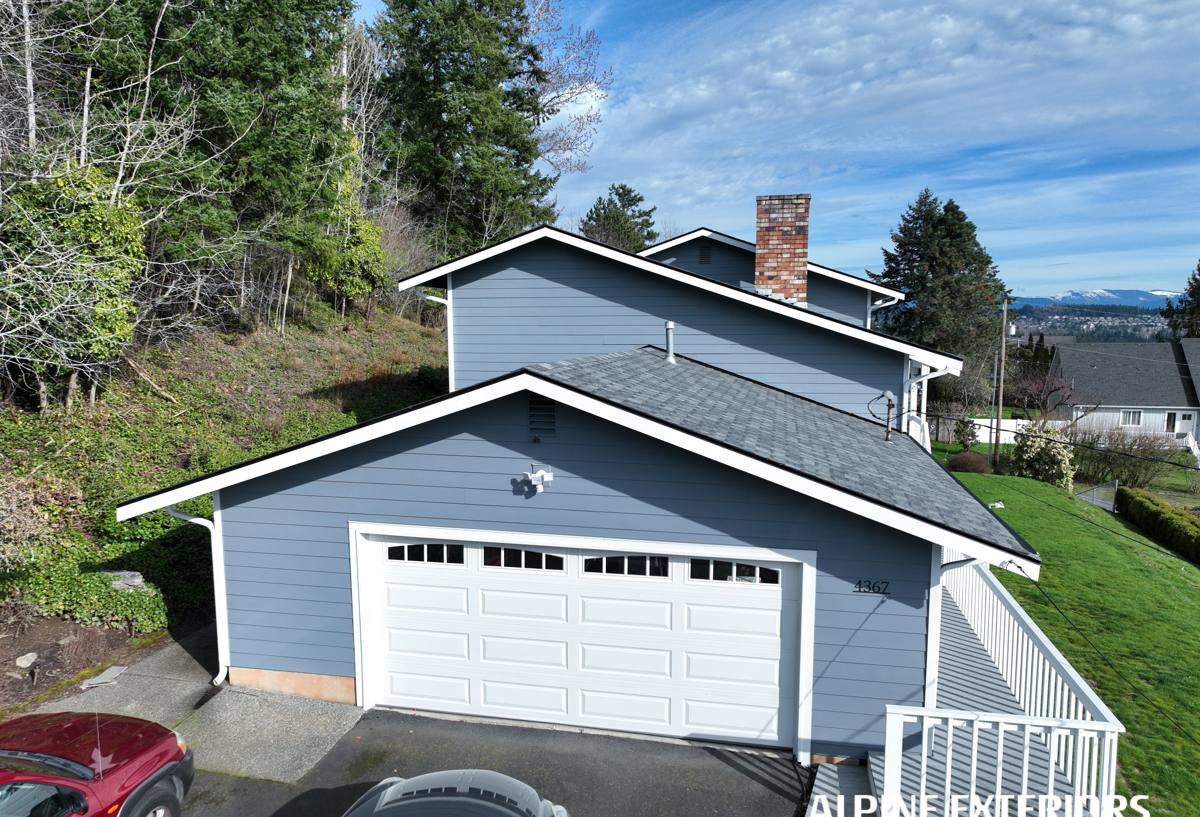
What Local Storms Actually Do to Sunnyland Roofs
Wind and Rain Together
Whatcom County storms usually bring wind and heavy rain at the same time, which is a worse combination than either one alone. Wind can lift or loosen shingle edges and flashing without fully removing anything, so the roof looks intact from the ground. Then driving rain, pushed sideways by the same wind, gets up under those loosened edges and finds its way into the roof deck. By the time a stain shows up on a ceiling inside the house, water has often been getting in for weeks.
Moss and Trapped Moisture
Moss doesn't cause storm damage directly, but it sets the stage for it. A moss mat holds moisture against the shingle surface long after a storm passes, which softens the granule surface and shortens the life of asphalt shingles years ahead of schedule. It also lifts shingle edges slightly as it grows, giving wind and rain an easier point of entry during the next weather event. Any honest storm repair on a Sunnyland roof has to account for how much moss growth contributed to the failure, not just fix the visible tear.
Salt Air and Metal Components
Proximity to the water means salt in the air, and salt is hard on the metal parts of a roof system — flashing, valleys, fasteners, and vents. Corrosion works slowly and quietly, and a fastener or flashing seam that's been weakening for a couple of seasons is far more likely to fail outright during a wind event. When we're repairing storm damage, we're checking these metal components specifically, because a repair that ignores corroding flashing is a repair that fails again at the next storm.
What a Correct Storm Damage Repair Actually Involves
A lot of storm repair work in this region gets done as a quick patch: replace the shingles that are obviously missing or torn, seal the visible gap, and call it done. That approach misses the underlying cause more often than not. A correct repair follows a sequence:
- Full roof inspection, not just the damaged section. Wind and rain rarely affect only one spot. We check the whole roof plane, plus adjacent areas, because storm forces tend to stress a roof unevenly.
- Deck and underlayment check. If water got past the shingle layer, the question is how far it traveled and whether the roof deck itself absorbed moisture. Repairing the surface over a wet or weakened deck just delays the next failure.
- Flashing and valley review. These are the most common points of storm-driven leaks in our experience, and they're the parts most often skipped in a rushed patch job.
- Moss and debris clearing. Trapped moisture and debris get removed before any new material goes down, so the repair isn't sealing moisture in.
- Matched repair materials. New shingles or flashing that don't match the existing roof's age and profile can create their own water-shedding problems at the seams.
Common Signs of Storm Damage Worth Checking
- Shingles that look lifted, curled, or slightly out of alignment after a windy night
- Granules collecting in gutters or at downspout outlets after a storm
- A new or growing ceiling stain, even a faint one, after heavy rain
- Visible gaps or bent sections in flashing around chimneys, skylights, or roof valleys
- Moss mats that look disturbed or partially torn loose after high wind
- Any daylight visible through the roof deck from inside an attic space
- A musty smell in an attic or upper room that wasn't there before
None of these on their own always means a major problem, but any of them is worth a look after a storm rather than waiting to see if it gets worse.
Repair Approaches Compared
| Approach | What It Addresses | Where It Falls Short |
|---|---|---|
| Spot patch (visible damage only) | Immediately stops an active leak or obvious gap | Doesn't check for hidden moisture spread or related weak points nearby |
| Full section repair | Replaces the entire damaged roof plane section, including underlayment if needed | More cost and time than a spot patch, but far fewer repeat calls |
| Repair plus moss/debris treatment | Fixes the storm damage and removes the conditions that made it worse | Requires access to the whole roof, not just the damaged area |
| Full roof replacement | Appropriate when storm damage reveals a roof already near end of life | Only makes sense once inspection shows repair won't hold long-term |
Most storm calls in Sunnyland land in the second or third row of that table. Roofs that are otherwise in reasonable shape don't need to be replaced over one storm event — they need a repair that actually deals with what happened, including the moss and moisture conditions that made the damage possible in the first place.
Our Process for Sunnyland Storm Repairs
When we get a call about storm damage in Sunnyland, we move through the same steps every time, because consistency is what prevents missed damage:
- Initial phone or on-site assessment to understand what happened and how urgent it is — an active leak gets prioritized differently than a cosmetic concern.
- Full inspection covering the whole roof, attic access where available, and the metal and flashing components that salt air affects most.
- Clear explanation of findings before any work starts, including what's storm-related versus what was already a developing issue.
- Repair using materials matched to the existing roof, so the fix blends in and performs consistently with the rest of the roof system.
- Cleanup of debris, old materials, and any moss removed during the process.
Why Local Experience Matters for This Kind of Work
A roofing crew that mainly works inland or in a drier climate doesn't have daily experience with what salt air does to flashing over five or ten years, or how a moss mat that's held moisture all winter behaves when it's finally disturbed by wind. Those aren't things you learn from a training manual — they're things you learn from repairing roofs in this specific part of Whatcom County, season after season. We've seen how storm damage shows up differently on a shaded, moss-prone north slope versus a wind-exposed south slope, and that shapes where we look first and what we check twice.
There's also a practical side to hiring a crew that already works in Sunnyland: familiarity with the housing stock, typical roof ages in the area, and how local weather patterns tend to move through. That local knowledge doesn't replace a careful inspection, but it does mean we're not guessing at what's normal for this area versus what's an actual red flag.
Cost Factors Worth Understanding
We don't publish fixed prices for storm repair because every roof and every storm event is different, but the main factors that affect cost are consistent:
| Factor | Why It Matters |
|---|---|
| Extent of the damaged area | A single lifted section costs far less to repair than a section with deck damage |
| Roof accessibility and pitch | Steeper or harder-to-access roofs take more time and equipment to repair safely |
| Underlying moss or moisture condition | Roofs with heavy pre-existing moss growth often need cleaning and treatment alongside the repair |
| Age and condition of the existing roof | An older roof may reveal that repair is only a short-term fix compared to replacement |
| Matching materials | Finding shingles or flashing that match an older roof can add time to sourcing |
When to Call Right Away
Some situations shouldn't wait for a scheduled inspection. Active water coming through a ceiling, visible daylight through a roof deck, or a section of roofing that's clearly come loose in high wind all warrant a prompt call, even if it's just to get a tarp or temporary protection in place until a full repair can happen. Waiting through another rain event on a roof that's already compromised almost always makes the eventual repair larger and more expensive.
If you've had a recent storm move through Sunnyland and you're not sure whether what you're seeing is worth a repair call, we're happy to take a look. We offer free, no-pressure estimates so you can understand exactly what's going on with your roof and what it would take to fix it properly before you decide anything.