 Whatcom County
 Why Blaine Roofs Take a Beating From Pacific Northwest Storms
Blaine sits right where marine weather off the Strait of Georgia and Puget Sound meets the wind funneling down from the Fraser Valley. That combination means homes here deal with a specific mix of stressors that roofs in drier parts of the country never see: salt-laden air off the water, driving rain that comes in sideways during winter windstorms, and a moss season that can run most of the year in shaded, north-facing sections of a roof. None of these things cause dramatic, obvious damage overnight. They work slowly, and by the time a homeowner notices a stain on the ceiling or a shingle in the yard, the underlying damage has usually been building for a while.
Storm damage repair in Blaine isn't just about patching what broke during the last windstorm. It's about understanding how salt air corrodes fasteners and flashing over time, how wind-driven rain finds its way under shingles that would hold up fine in a calmer climate, and how moss holds moisture against the roof deck long after the rain stops. A repair that ignores those realities tends to fail again within a year or two.
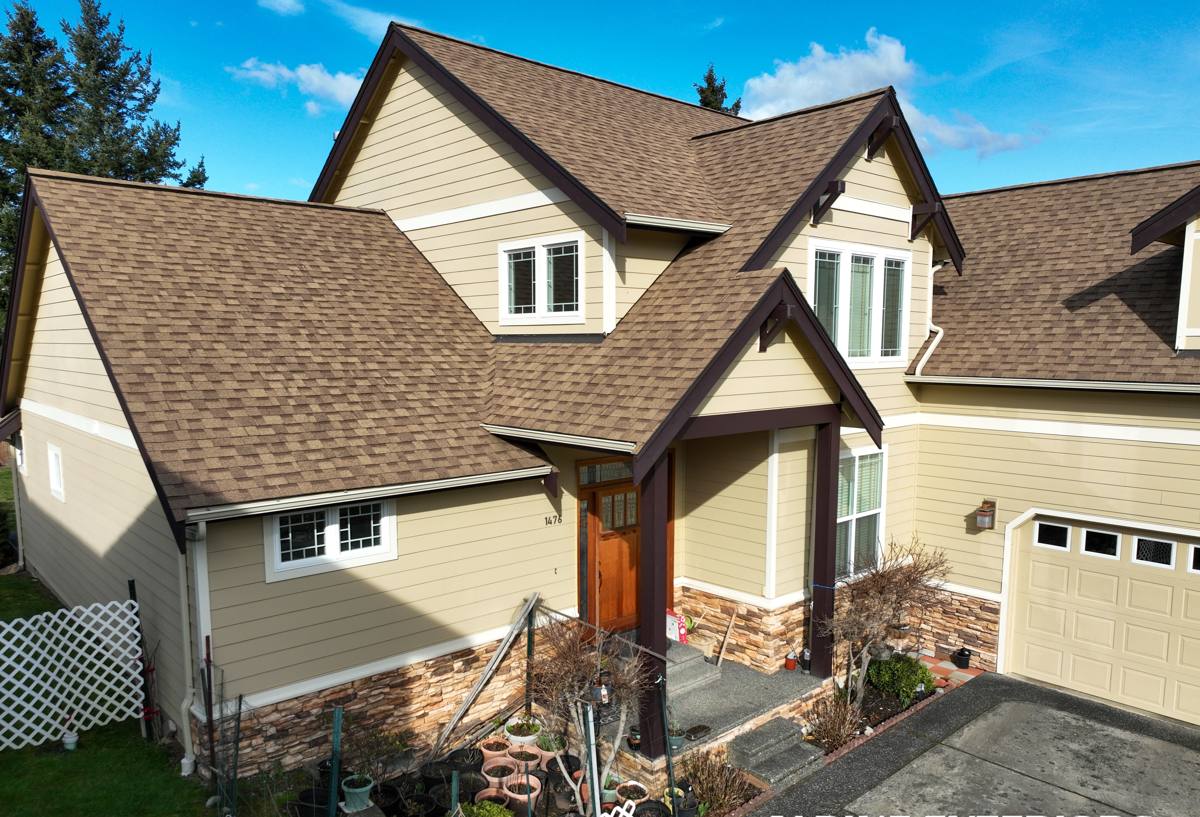
What Counts as Storm Damage (And What Doesn't)
Not every roof problem after a storm is actually storm damage, and it matters for both the repair approach and any insurance conversation. Here's how we break it down when we inspect a Blaine roof after weather.
Wind Damage
High winds off the water can lift shingle tabs, crease them, or tear them off entirely, especially along ridgelines and roof edges where uplift is strongest. Sometimes the shingle looks fine from the ground but the seal strip underneath has broken loose, which means it'll lift again in the next windstorm even though nothing looks wrong today.
Wind-Driven Rain and Moss
Rain that's pushed sideways by wind behaves differently than rain falling straight down. It can work its way under shingle edges, around chimney flashing, and into vent boots that would otherwise shed water fine. Add a mat of moss holding moisture against the shingles, and you get slow rot in the roof deck that shows up as a soft spot or a leak that seems to have "no cause."
Impact Damage
Falling branches and wind-blown debris are common causes of storm damage in areas with mature trees, which describes a lot of Blaine's residential lots. Impact damage can range from an obviously cracked shingle to bruising that only shows up on close inspection.
What a Correct Storm Damage Roof Repair Involves
Inspection First, Not Assumptions
A proper repair starts with getting on the roof, not just looking at it from the driveway. We check the obvious damage plus everything around it: the flashing at chimneys and valleys, the fastener condition, the state of the underlayment where it's exposed, and whether moss or debris is trapping moisture nearby. Storm damage is rarely isolated to one shingle; wind and water tend to compromise a section, not a single point.
Matching Materials and Method
Repairs should use materials that match what's already on the roof in type, weight, and where reasonably possible, color and profile, so the repaired section weathers at the same rate as the rest of the roof. Just as important is proper technique: correctly lapped flashing, sealed nail heads, and shingles fastened in the wind-resistant pattern appropriate for an area that sees regular high-wind events. A repair that looks fine but skips these details is the kind that comes back to bite a homeowner in the next storm season.
Addressing the Cause, Not Just the Symptom
If moss buildup contributed to the damage, part of the repair should include moss treatment and, where it makes sense, recommending gutter or ventilation adjustments so the same spot doesn't fail again. Fixing a leak without addressing what let the water in is a short-term patch, not a repair.
Our Process for Blaine Storm Repairs
- Inspection and documentation: We get on the roof, photograph the damage, and check adjacent areas that often get overlooked.
- Honest assessment: We tell you plainly whether you're looking at a spot repair, a larger section replacement, or something that's really a full re-roof wearing a storm-damage label.
- Written scope and estimate: You get a clear description of what we'll do and why, not just a price.
- Repair work: Matching materials, correct flashing and fastening technique, and cleanup of debris or moss contributing to the problem.
- Final check: We walk the repair with you or document it clearly if you're not able to be on site, so you know exactly what was done.
Repair vs. Replace: Cost Factors to Weigh
Storm damage doesn't always mean a full roof replacement, but sometimes it's the tipping point that makes a repair not worth doing on its own. Here are the factors that typically decide which direction makes sense.
| Factor | Favors Repair | Favors Replacement |
|---|---|---|
| Roof age | Under roughly two-thirds of expected lifespan | Near or past expected lifespan |
| Extent of damage | Localized to one section or slope | Spread across multiple slopes |
| Underlying deck condition | Solid, no rot found | Soft spots or rot discovered during inspection |
| Moss and moisture history | Isolated, treatable | Chronic, affecting multiple areas over years |
| Material availability | Matching shingles still available | Discontinued style, visible mismatch likely |
Cost for storm damage repair work varies widely depending on scope, access, and materials, so we avoid throwing out numbers before we've actually inspected the roof. What we can promise is a written estimate before any work starts, with no pressure to upsell a full replacement if a repair is genuinely the right call.
Insurance and Storm Damage Claims
Many storm damage repairs in Whatcom County get filed as insurance claims, particularly after a named windstorm event. If you're planning to file a claim, it helps to have photo documentation and a written inspection report before repairs begin, since insurers generally want to see the damage as it occurred. We can provide that documentation, but we're a roofing contractor, not a public adjuster, so we always encourage homeowners to read their policy and talk directly with their adjuster about coverage specifics rather than relying solely on a contractor's opinion of what will or won't be covered.
Why a Local Whatcom County Crew Matters
A crew that only shows up in Blaine after a major storm event, does one job, and leaves doesn't have much reason to stand behind the work a year later. A crew based in the area and working Whatcom County regularly has a reputation to maintain here and a practical incentive to do the repair right the first time. Local familiarity also means we already understand things like which roof orientations in Blaine tend to hold moss longest, how salt air affects metal flashing and fasteners near the water, and what wind exposure looks like on an open lot versus one tucked behind trees. That context shapes the repair, not just the paperwork.
Signs You Need a Roof Inspection After a Storm
You don't need to wait for an active leak to have your roof checked. After any significant windstorm, it's worth looking for:
- Shingle granules collecting in gutters or at the base of downspouts
- Shingles that look lifted, curled, or missing from any section of the roof
- Dented or cracked flashing around chimneys, vents, or skylights
- New or expanding water stains on ceilings or in the attic
- Visible sagging in any part of the roofline
- Fresh moss growth concentrated in one area, which can signal a spot holding water longer than it should
- Debris, branches, or tree damage that landed on or near the roof
Any one of these on its own might be minor, but they're worth a professional look before the next round of Whatcom County weather turns a small issue into a bigger one.
Maintaining Your Roof Between Storms
The best storm damage repair is the one you never need. Regular moss treatment, keeping gutters clear so water doesn't back up under the roof edge, and trimming branches that overhang the roofline all reduce how much damage a given storm can do. In a climate like ours, where driving rain and long wet seasons are the norm rather than the exception, a roof that gets checked annually tends to hold up far better than one that only gets attention when something visibly breaks.
If your Blaine roof took a hit in the last storm, or you just want an honest opinion on whether it's holding up the way it should, we're happy to take a look. Reach out for a free, no-pressure estimate using the form below.