 Whatcom County
 Why South Hill Siding Takes a Different Approach
South Hill homes sit in a stretch of Whatcom County where the weather doesn't let up for long. Salt-laden air moves in off the water, driving rain comes sideways more often than straight down, and the region's long, damp moss season keeps north- and west-facing walls wet for weeks at a time. Siding here isn't just cosmetic — it's the first line of defense against a climate that never fully dries out. A product or installation that would hold up fine in a drier inland county can fail early in South Hill if it wasn't chosen and installed with these exact conditions in mind.
That's the lens we use on every South Hill siding installation: not "what's the cheapest option that looks good on day one," but "what will still be doing its job in fifteen or twenty years after another decade and a half of Whatcom County winters."
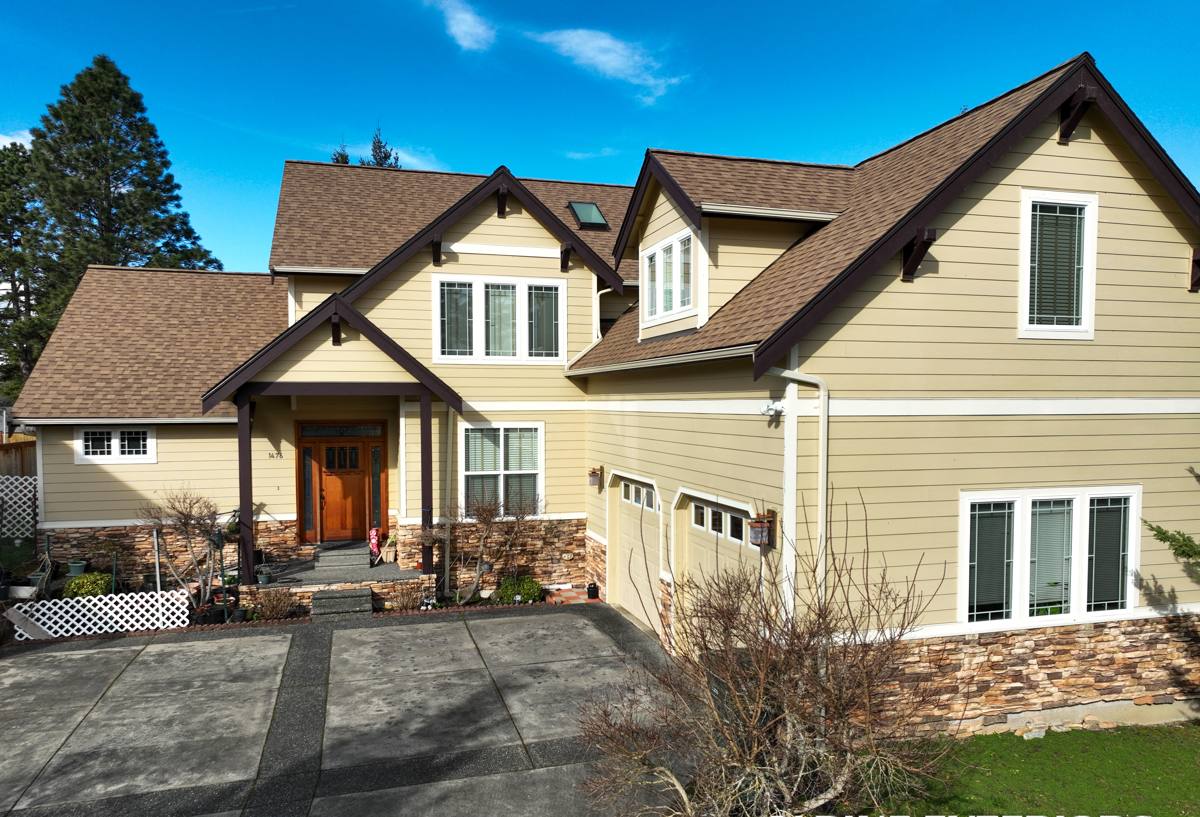
What Salt Air, Rain, and Moss Actually Do to Siding
Salt Air
Airborne salt accelerates corrosion on fasteners, trim, and metal flashing, and it can degrade certain paint and coating systems faster than a manufacturer's inland testing would suggest. Siding materials and finishes that aren't engineered with coastal exposure in mind tend to show fading, chalking, or corrosion streaking sooner than homeowners expect.
Driving Rain
Wind-driven rain doesn't just hit a wall — it gets pushed into every seam, lap, and penetration that isn't properly flashed and sealed. Over time, water that finds its way behind the siding (rather than running off the surface) is what causes rot, mold, and structural damage, usually long before it's visible from the street.
Moss Season
Extended damp periods keep shaded and north-facing siding wet far longer than sun-exposed walls. That moisture supports moss and algae growth, which holds even more water against the surface and, on the wrong material, can trap it long enough to cause swelling, delamination, or rot at seams and butt joints.
None of this is unique to any one house — it's the baseline condition every siding job in this part of Whatcom County has to be designed around.
What a Correct Siding Installation Involves
A siding job that's going to hold up in South Hill's conditions isn't just about the panels themselves. The details underneath and around them matter as much, if not more:
- Weather-resistive barrier: A continuous, properly lapped water and air barrier behind the siding, installed so any water that does get past the surface drains out instead of pooling.
- Flashing at every penetration: Windows, doors, hose bibs, vents, and light fixtures all need correctly lapped flashing so water is directed out and away from the wall assembly, not funneled behind it.
- Proper clearances: Siding held to manufacturer-specified gaps above rooflines, decks, and grade so splashback and standing water don't sit against the bottom edge.
- Correct fastening: Fasteners rated for the material and matched to the exposure — placed where the manufacturer specifies, not just where it's convenient.
- Sealed and caulked joints done right: Butt joints, corners, and trim intersections sealed with products rated for the material and the climate, not general-purpose caulk that will crack out in a few seasons.
- Ventilation behind the cladding: A rainscreen gap or drainage plane where appropriate, so moisture that gets behind the siding has somewhere to go besides the sheathing.
Skip any one of these and the siding itself almost doesn't matter — water will find the weak point eventually, especially with the volume of driving rain South Hill sees over a typical year.
Why We Install Only James Hardie Fiber Cement
We install one siding system: James Hardie fiber cement. That's a deliberate standard, not a limitation in what we're capable of installing. Fiber cement doesn't absorb and swell with moisture the way wood-based products can, it's non-combustible, and Hardie's ColorPlus factory-applied finish is baked on and engineered to hold color and resist fading far longer than field-applied paint. For a climate defined by salt air and sustained dampness, that combination matters more here than in most parts of the country.
Hardie also builds region-specific HZ5 product formulations engineered for the freeze-thaw and moisture patterns of the Pacific Northwest, and backs its products with a strong, transferable warranty — one that holds up because the material and finish are manufactured to a consistent standard, not dependent on field-applied coatings holding up over time.
We don't install vinyl, LP SmartSide, Cemplank, Allura, primed spruce, or cedar. Each of those has a place in the market and reasonable people choose them for good reasons — but given what South Hill's climate does to siding over a couple of decades, we'd rather stand behind one system we trust completely than offer a menu of products with real trade-offs we'd have to talk homeowners out of later.
How the Common Alternatives Stack Up in This Climate
| Material | How it handles salt air & rain | How it handles moss season | Long-term maintenance |
|---|---|---|---|
| James Hardie fiber cement | Non-combustible, dimensionally stable, factory finish resists coastal fading | Doesn't swell or delaminate from sustained moisture | Occasional wash; ColorPlus finish holds up for years without repainting |
| Vinyl | Can warp or fade with UV and temperature swings; seams are a water entry risk | Moss and algae show on the surface; doesn't trap moisture internally but panels can flex | Low upkeep but limited repair options — often full panel replacement |
| LP SmartSide / engineered wood | Engineered to resist moisture better than raw wood, but edge and seam sealing is critical | Vulnerable if coatings fail and moisture reaches the wood strand core | Field-applied finishes need recoating on a schedule |
| Cedar / primed spruce | Natural material; absorbs moisture and moves seasonally | Prone to moss growth and, if untreated, rot in shaded damp areas | Regular refinishing and moisture monitoring required |
Our South Hill Installation Process
- On-site assessment: We walk the exterior, check the condition of the existing sheathing and water barrier where accessible, and note problem areas — shaded walls, past moisture staining, poor flashing details.
- Tear-off and inspection: Old siding comes off and we inspect the sheathing underneath for rot or damage before anything new goes up. Problems found here get fixed, not covered over.
- Water barrier and flashing: A new weather-resistive barrier goes on with correct laps, followed by flashing at every window, door, and penetration.
- Hardie installation to spec: Panels, fasteners, and clearances installed exactly to James Hardie's published installation requirements — which is also what keeps the manufacturer's warranty intact.
- Trim, caulking, and finish details: Corners, joints, and trim sealed with climate-appropriate products, and a final walkthrough before we call the job done.
Signs South Hill Siding Needs Attention
- Persistent moss or dark streaking that comes back soon after cleaning
- Soft spots, bubbling, or visible swelling near the bottom edge or seams
- Paint that's peeling or bubbling rather than just fading evenly
- Gaps, warping, or cracking at corners and trim
- Rising energy bills that suggest the wall assembly isn't performing the way it should
- Visible rust streaking from fasteners or metal flashing
Any one of these on its own isn't necessarily an emergency, but a few together usually means water is getting where it shouldn't and it's worth having someone take a real look before the underlying structure is affected.
Cost Factors for South Hill Siding Installation
| Factor | Why it affects cost |
|---|---|
| Home size and wall complexity | More corners, gables, and dormers mean more cutting, flashing, and labor |
| Condition of existing sheathing | Rot or moisture damage found during tear-off requires repair before new siding goes on |
| Siding profile and trim details | Lap width, trim style, and accent details all affect material and labor time |
| Access and site conditions | Grade, landscaping, and how close the home is to property lines can affect setup and staging |
| Existing paint or coating removal | Some older siding requires extra prep or disposal considerations |
We give straightforward, itemized estimates after an in-person look at the home — not a ballpark over the phone based on square footage alone.
Why a Crew That Already Works in South Hill Matters
A contractor who works this part of Whatcom County regularly already knows which walls take the brunt of the driving rain, where moss builds up fastest, and how the salt air affects fastener and trim choices over time. That's not something you can fully substitute with a general installation manual — it shapes small decisions throughout the job, from where extra flashing attention goes to how tight the caulking schedule needs to be on north-facing walls. It also means someone who stands behind the work is still local and reachable years later if a question comes up.
If your South Hill home needs new siding or you're not sure whether what's on the walls now is holding up the way it should, we're happy to take a look. Reach out for a free, no-pressure estimate using the form below.