 Whatcom County
 Roof Replacement in South Hill: A Job Shaped by the Hill It Sits On
South Hill sits above the rest of town, on sloped, tree-lined streets where older homes look out over the water and the lowlands below. That elevation and tree cover are part of what make the neighborhood desirable, but they're also exactly what make roofs here wear differently than roofs on flatter, more open ground elsewhere in Whatcom County. Salt-laden air moving in off the water, driving rain that comes at these roofs sideways as much as straight down, and a long, damp moss season that never really gives a roof a chance to dry out completely — all of it adds up over the years in ways that aren't always visible from the ground.
This page covers roof replacement specifically for South Hill: what the local climate actually does to a roof over time, what a correct replacement involves from tear-off to final inspection, how to tell replacement from repair, and why a crew that already works this hillside understands things a roofer coming in from outside the county might miss. We're not covering gutters, siding, or general remodeling here — just roof replacement, done right, for the conditions South Hill actually has.
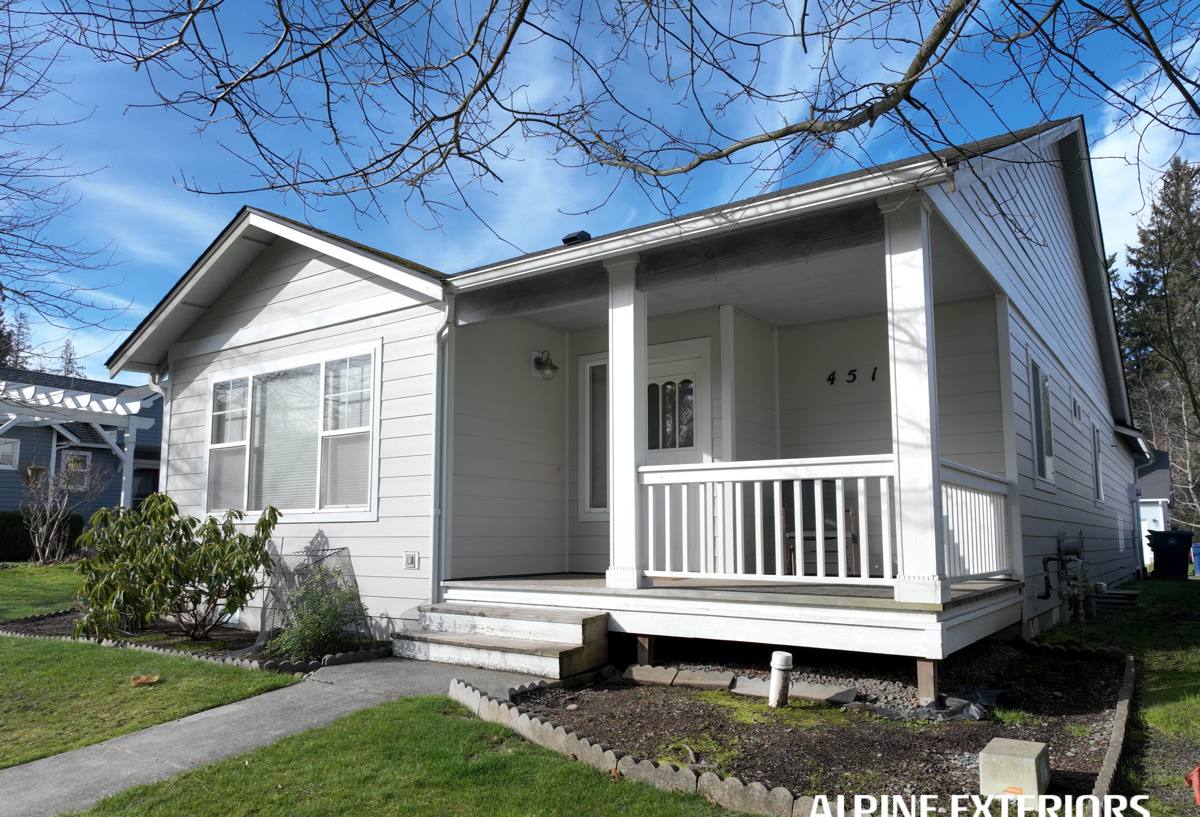
What South Hill's Climate Actually Does to a Roof
Salt Air and Slow Corrosion
Being on a hill close to the water means salt-bearing air reaches South Hill roofs more than it would a home further inland, and it works on metal quietly, over years rather than seasons. Flashing, fasteners, vents, and any exposed metal roofing components take the brunt of it. A fastener or flashing detail that would hold up for decades in a dry, inland climate can start showing corrosion well before that here if the wrong metal or coating was used. That's why material selection for every metal component on the roof — not just the shingles or panels themselves — is something we treat as a real decision, not an afterthought.
Driving Rain That Finds the Weak Points
Whatcom County gets weather off the water that doesn't fall straight down. Wind-driven rain pushes up and sideways under shingle edges, around penetrations, and into any gap in flashing that a calmer, drier climate would never stress. On a hillside like South Hill, homes also catch more wind exposure than roofs tucked into a valley or surrounded by other buildings. Almost every roof leak we trace back to its source turns out to be a flashing, valley, or penetration detail — not a failure of the roofing material itself. That's the part of a roof replacement that separates a job that looks finished from one that's actually built to shed water correctly for the next twenty-plus years.
A Moss Season That Runs Most of the Year
South Hill's tree canopy is part of what gives the neighborhood its character, but shade and moisture are a hard combination for a roof. North-facing slopes and roof sections shaded by mature trees stay damp for extended stretches rather than drying out quickly between rains, and that's exactly the environment moss needs to take hold. Moss isn't just cosmetic — its root structure holds moisture against the roofing material and can lift shingle edges over time, letting water underneath where it doesn't belong. A roof that isn't given the ventilation, slope detailing, and material choice to handle a long damp season will show moss and the wear that comes with it faster here than almost anywhere else in the county.
Signs Your South Hill Roof Needs Replacement, Not Just Repair
Not every roof problem calls for a full replacement, and we'll tell you honestly when a repair is the right call instead. But there are signs that point toward replacement being the smarter long-term decision rather than continuing to patch a roof that's past the point where patching makes sense.
- Granule loss heavy enough that you're finding significant amounts in gutters or at downspout outlets, which signals the shingles' weather-protective layer is wearing through
- Multiple layers of moss or lichen that keep returning within a season or two after cleaning, especially on shaded slopes
- Shingles that are curling, cupping, or cracking across large sections rather than just a few isolated spots
- Daylight visible through the roof deck from inside the attic, or water stains on the underside of the decking
- A roof already past or close to the end of its material's typical service life, where repairs are becoming frequent and increasingly expensive
- Soft or spongy spots underfoot when walking the roof, which usually mean the decking underneath has started to fail
- Repeated leaks in different locations rather than one recurring spot, which often means the underlying materials are failing broadly rather than at a single fixable point
If you're only seeing one or two of these, a targeted repair may still make sense — we'll assess honestly rather than push a full replacement when a repair would genuinely serve you better.
How a Correct Roof Replacement Actually Works
A roof replacement has more steps than most homeowners expect, and skipping or rushing any one of them is where problems start showing up two or three winters later. Here's the sequence we follow, in the order it happens:
- Roof and attic inspection. Before any material comes off, we check the existing roof, decking, and attic for rot, moisture damage, or ventilation problems. What we find here shapes the scope of the job — we're not guessing at what's underneath.
- Full tear-off. The old roofing material comes off down to the deck. This is the only way to know what condition the decking and structure are actually in, and it's the step that gets skipped on overlay jobs, which is exactly why we don't recommend overlays on this hillside.
- Deck repair or replacement. Any decking that's rotted, delaminated, or soft gets replaced before new material goes down. Installing a new roof over a compromised deck just hides the problem for a while.
- Ice and water barrier at vulnerable areas. Eaves, valleys, and areas prone to standing water get a self-adhering waterproof membrane underneath the main roofing material, giving a second line of defense exactly where driving rain and moss-retained moisture put the most pressure.
- Underlayment. A synthetic or felt underlayment covers the rest of the deck, providing a continuous secondary water barrier beneath the finished roofing material.
- Flashing at every penetration and transition. Valleys, chimneys, vent pipes, skylights, and wall transitions all get new flashing, correctly lapped so water is always directed outward and down, never trapped behind a joint.
- Ventilation correction. Intake and exhaust ventilation are checked and corrected as needed. Proper attic airflow is one of the most overlooked factors in how long a roof actually lasts in a damp, shaded climate like South Hill's.
- Roofing material installation. The new material goes down according to the manufacturer's specified pattern and fastening schedule, not a shortcut version of it.
- Ridge and final details. Ridge caps, ridge venting, and any remaining trim are finished, and the full roof gets a final walk-through inspection before we call the job done.
Roofing Material Options for a South Hill Home
Material choice matters more on a hillside with heavy tree cover and salt-laden air than it would in a drier, more open location. The table below covers the options South Hill homeowners most often weigh against each other.
| Material | Performance in Moss and Rain | Maintenance | Typical Trade-Off |
|---|---|---|---|
| Architectural asphalt shingles | Good, especially with algae-resistant granules; still needs periodic moss removal on shaded slopes | Low to moderate — occasional cleaning recommended | Most cost-effective upfront; shorter service life than metal or synthetic options |
| Standing seam metal | Excellent — smooth, steep-shedding surface resists moss buildup better than most materials | Low — minimal upkeep once installed correctly | Higher upfront cost; requires correct fastener and flashing materials to avoid salt-air corrosion |
| Synthetic composite (shake or slate look) | Very good moisture resistance; won't rot or absorb water like natural wood | Low to moderate | Higher material cost than asphalt; fewer installers are experienced with it |
| Natural cedar shake | Requires diligent maintenance in a damp, shaded climate to avoid moss and rot taking hold | High — regular treatment and moss prevention needed | Traditional appearance many homeowners want, but the highest ongoing maintenance burden of any option here |
For most South Hill homes, especially those under heavier tree cover, we lean toward architectural asphalt with algae-resistant granules or standing seam metal, because both hold up against moss and driving rain with a manageable maintenance burden. Cedar shake remains a legitimate choice for homeowners who want that traditional look, and we'll install it correctly if that's the priority — but it's worth going in with clear eyes about the upkeep a shaded, damp hillside demands of that material specifically.
Why Attic Ventilation Matters More on a Shaded Hillside
Ventilation doesn't get the attention roofing material does, but it has just as much bearing on how long a roof replacement actually lasts. In a climate where roofs don't get much of a chance to dry between rain events, trapped heat and moisture in the attic work against the roof from underneath, not just from the weather hitting it from above. Poor ventilation can lead to condensation on the underside of the decking, premature wear on the roofing material from below, and ice damming risk during cold snaps when warm, moist attic air meets a cold roof surface. On a shaded South Hill roof, correcting intake and exhaust airflow during a replacement is one of the more valuable things we do that a homeowner would otherwise never see or think to ask about.
Full Tear-Off vs. Roofing Over the Old Layer
Some contractors offer to install new shingles directly over an existing layer to save on labor and disposal cost. We don't do that on South Hill roofs, and it's worth explaining why rather than just saying no. Roofing over an existing layer means the deck never gets inspected, so any rot, moisture damage, or ventilation problem underneath stays hidden and unaddressed. It also means the new shingles are fastened over an uneven, aged surface rather than a flat, sound deck, which shortens the service life of the new material and can void manufacturer warranties outright. On a hillside home already dealing with more moisture exposure than most, skipping the tear-off is exactly the kind of shortcut that turns into a bigger, more expensive problem a few years down the line. A full tear-off costs more upfront in labor, but it's the only way to actually know what you're building on.
What to Check Before Hiring a Roof Replacement Contractor
South Hill's hillside streets, tree cover, and older housing stock mean a roofing crew that hasn't worked this specific area before is more likely to underestimate what the job actually requires — access, staging, tree management, and the moisture conditions underneath the surface. Here's what we'd suggest checking before hiring anyone for a roof replacement in this neighborhood:
- Proper licensing, bonding, and insurance for roofing work in Washington State
- A written estimate that specifies full tear-off, not just an option that's cheaper because it skips it
- Specific mention of ice and water barrier at eaves and valleys, not just underlayment across the whole roof
- A clear plan for attic ventilation correction as part of the scope, not an unaddressed afterthought
- Experience working on sloped, tree-covered lots specifically, since access and staging differ from flat, open lots
- A manufacturer warranty that stays valid because the installation follows the specified fastening and ventilation requirements
- Local references or a track record in Whatcom County specifically, not just general regional experience
Why a Local South Hill Crew Makes a Real Difference
A crew that already works South Hill's streets knows the practical realities of the neighborhood before the first ladder goes up — the tree canopy that shades certain slopes longer than others, the hillside access that changes how staging and material delivery get planned, and the moisture patterns that mean two roofs on the same block can wear at noticeably different rates depending on sun exposure and tree cover. That familiarity doesn't replace a proper inspection of your specific roof, but it does mean fewer surprises mid-job and a crew that's already calibrated to what Whatcom County's climate demands rather than applying a generic approach built for a drier region.
If your South Hill roof is showing its age, or you just want an honest read on repair versus replacement, we're happy to take a look. Reach out for a free, no-pressure estimate using the form below — we'll give you a straight assessment of what your roof actually needs, not a sales pitch.