 Whatcom County
 Siding in South Hill Has a Harder Job Than People Think
If you live in the South Hill area of Whatcom County, your siding isn't just cosmetic — it's the thing standing between your framing and a climate that rarely gives a house a break. Salt-laden air off the water, long stretches of driving rain, and a moss season that can run most of the year all work on exterior walls at once. Wood siding swells and checks. Vinyl chalks, warps in the wind, and gives moss and algae plenty of rough surface to grip. Cheaper fiber cement blends can absorb moisture at cut edges if they aren't sealed correctly. None of that is a knock on any one homeowner's choices — it's just what this stretch of Washington does to a house, year after year.
We install James Hardie fiber cement siding exclusively, and we only work in this climate zone. That combination matters more than it sounds like it should, because a product built for a dry inland climate and installed the same way you'd install it in Arizona is going to fail here faster than it should, regardless of the brand on the box.
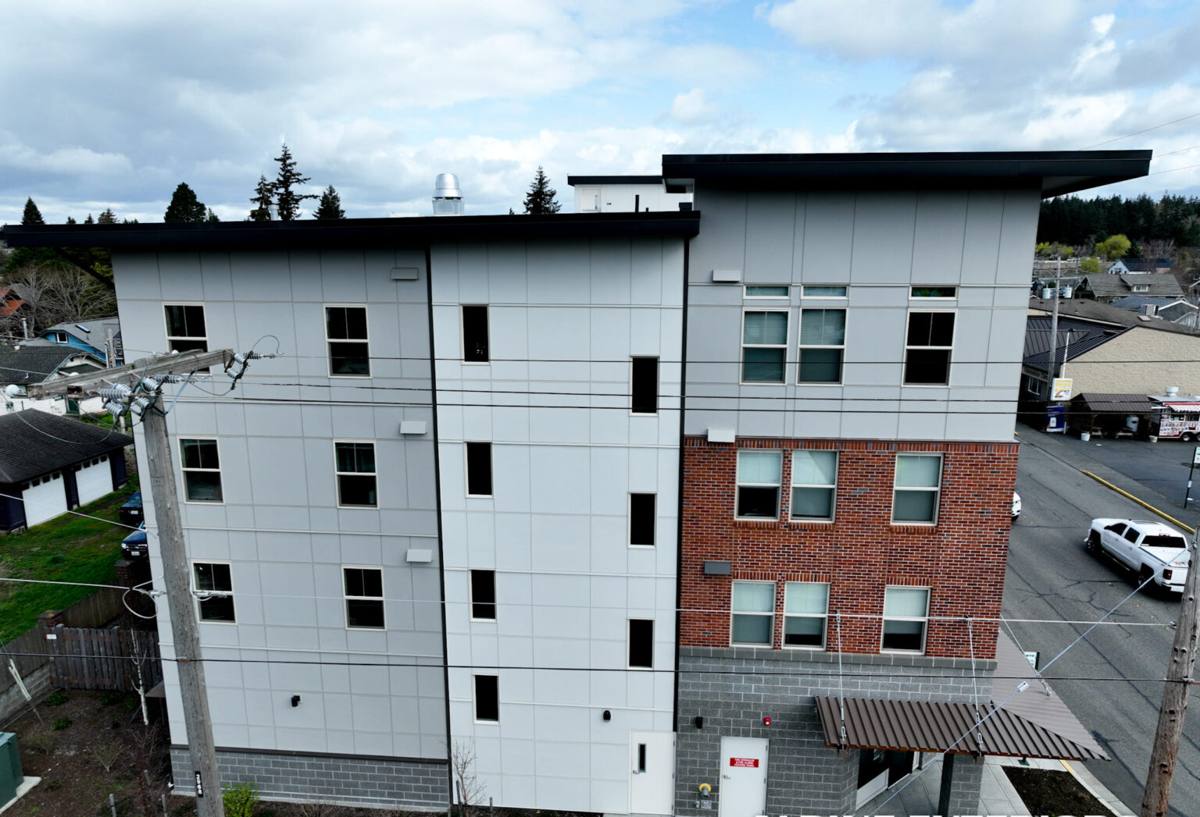
Why the Climate Around South Hill Punishes the Wrong Siding Choice
Salt Air
Homes closer to Whatcom County's shoreline and waterways deal with airborne salt that accelerates corrosion on fasteners, trim flashing, and any exposed metal. Over time it also breaks down lesser paint finishes, leaving chalky, faded siding that needs repainting years before it should.
Driving Rain
Wind-driven rain doesn't just hit a wall — it gets pushed sideways and upward into laps, seams, and butt joints. Siding systems that rely on caulk alone to keep water out, instead of proper flashing and drainage behind the cladding, are the ones that eventually rot the sheathing nobody can see until there's a problem.
Moss and Algae Season
Between the shade from mature trees common in this area and the near-constant moisture, north-facing and shaded walls grow moss and algae readily. Porous or textured surfaces give it more to hold onto, and once it's established, it holds moisture against the siding longer than an open, well-drained surface would.
Why We Standardized on James Hardie for This Area
We made a deliberate decision to install only James Hardie fiber cement siding — not LP SmartSide, not vinyl, not Cemplank or Allura, not primed spruce or cedar. That's not a marketing position; it's a standard we hold because of what we've seen matter in this exact climate.
- Fiber cement is non-combustible, which matters both for insurance conversations and for long-term peace of mind.
- Hardie's ColorPlus factory finish is baked on under controlled conditions, which holds up to salt air and UV exposure far better than field-applied paint.
- Hardie engineers specific product lines (HZ5, for example) for regions that see the kind of moisture cycling and freeze-thaw swings the Pacific Northwest gets.
- The product carries a strong, transferable manufacturer warranty when installed to Hardie's written specifications — which is a meaningful detail if you ever sell the home.
- It has a long, proven track record in wet coastal climates specifically, not just a general claim of durability.
We're not going to tell you every other product is junk — some of them have real strengths in the right application. But we've chosen to put our name behind one system, install it correctly every time, and know exactly how it behaves in Whatcom County weather instead of splitting our expertise across several products.
What a Correct Hardie Installation Actually Involves
This is where most siding problems actually start — not with the product, but with the install. Hardie publishes detailed installation requirements, and skipping steps is how a good product ends up with a bad reputation.
Water Management Behind the Siding
Correct installation isn't just nailing boards to a wall. It starts with a properly lapped weather-resistive barrier, correctly flashed windows and doors, and — in most cases on our jobs — a rain screen gap that lets any moisture that does get behind the cladding drain and dry out instead of sitting against the sheathing.
Clearances and Fastening
Hardie specifies minimum clearances from grade, roof lines, decks, and other transitions for a reason: those are the spots where water concentrates. Fasteners need to be the correct type, spaced correctly, and driven correctly — overdriven nails crack the board's fiber structure and create a weak point that shows up as a crack years later.
Cut Edges and Caulking
Every field-cut edge should be sealed per Hardie's specifications before installation. Joints and penetrations need the right sealant, applied correctly — not as a substitute for proper flashing, but as a secondary layer of protection.
Trim and Transitions
Corners, window and door casings, and roof-to-wall transitions are where most siding failures actually originate, not the flat field of the wall. These details take more time and more skill, and they're the first thing we check on any home before quoting the job.
How Our Process Works in South Hill
- On-site assessment. We walk the exterior, check existing siding and trim condition, look at moisture history (staining, soft spots, moss patterns), and note anything specific to sun exposure and drainage on your lot.
- Written scope and product selection. We spec the correct Hardie product line, panel or lap profile, and ColorPlus color, and lay out clearances, flashing details, and rain screen approach specific to your home.
- Prep and tear-off. Old siding comes off, sheathing gets inspected and repaired where needed, and the weather barrier gets installed correctly before a single piece of new siding goes up.
- Installation to Hardie spec. Fastening, clearances, sealing, and trim work are done to manufacturer requirements — this is also what keeps the transferable warranty intact.
- Final walkthrough. We check caulking, trim lines, and clearances with you before calling the job finished.
Correct vs. Corner-Cut: What the Difference Looks Like
| Detail | Done Right | Common Shortcut |
|---|---|---|
| Rain screen / drainage gap | Included so trapped moisture can drain and dry | Skipped, siding installed direct to barrier |
| Fastener depth | Set flush per spec, not overdriven | Nail gun overdrives, cracks the board's fiber |
| Cut edge sealing | Sealed before installation per Hardie spec | Left raw, absorbs moisture over time |
| Clearance from grade/decks | Meets Hardie's minimum clearances | Siding run too close, wicks moisture |
| Warranty status | Full transferable manufacturer warranty intact | Warranty voided by non-spec installation |
Living With Hardie Siding in This Climate
One reason we like recommending Hardie for this area specifically is that it's low-maintenance without being no-maintenance. It won't rot, and the ColorPlus finish resists fading and chalking far longer than field-painted wood siding. That said, moss and algae can still grow on any exterior surface here given enough shade and moisture — a periodic soft wash (not high-pressure blasting, which can force water into seams) keeps it looking clean and prevents buildup from holding moisture against the wall long-term. Checking caulked joints every couple of years and keeping gutters and downspouts clear so water isn't sheeting down the wall face are the other two habits that go a long way in this climate.
What to Ask Any Siding Contractor Before You Hire Them
Whether you talk to us or someone else, these are the questions that separate a crew that knows this climate from one that doesn't:
- Are you a certified or factory-trained installer for the product you're proposing?
- Will you install a rain screen / drainage gap, and why or why not for my specific home?
- What's your plan for flashing windows, doors, and roof transitions — can you walk me through it?
- How do you handle cut-edge sealing on-site?
- What does the manufacturer's warranty require to stay valid, and will your installation meet that?
- Have you worked on homes in this specific area, dealing with this specific mix of salt air and rain exposure?
If a contractor can't answer those clearly, that's worth knowing before they're on your roofline.
What Drives the Cost of a Hardie Siding Job Here
| Factor | Why It Matters |
|---|---|
| Home size and wall complexity | More corners, gables, and trim details mean more labor and material cuts |
| Existing siding removal | Tear-off, disposal, and any sheathing repair add time before new siding starts |
| Product line and profile | Lap, panel, and shingle-style Hardie products differ in material and labor cost |
| ColorPlus vs. field paint | Factory-finished color adds material cost but removes a future repainting cycle |
| Access and site conditions | Slopes, tight lot lines, and landscaping can affect staging and labor time |
We don't publish blanket prices because every home is different, but we'll always give you a clear, itemized written estimate before any work starts — no surprise add-ons partway through the job.
Ready to Talk About Your Home?
If your South Hill home's siding is showing its age — fading, moss buildup that won't go away, soft spots near the bottom courses, or just a system that was never installed to spec in the first place — we're happy to take a look and give you an honest read on what it needs. Reach out for a free, no-pressure estimate using the form below.