 Whatcom County
 Board & Batten Siding for South Hill Homes
South Hill sits in a part of Whatcom County where the exterior of a house works harder than most homeowners realize. Between the salt-laden air moving in off the water, long stretches of driving rain, and a moss season that can run most of the year in shaded spots, siding here isn't just a design choice — it's a maintenance decision that plays out over decades. Board and batten is one of the more popular looks we get asked about in this neighborhood, and it can be a genuinely good fit, but only when the material and the installation account for what this climate actually does to a wall.
This page covers what board and batten siding needs to hold up in South Hill specifically, what a correct installation involves, and why we only install it in James Hardie fiber cement rather than the wood or engineered-wood alternatives that are also marketed under the "board and batten" name.
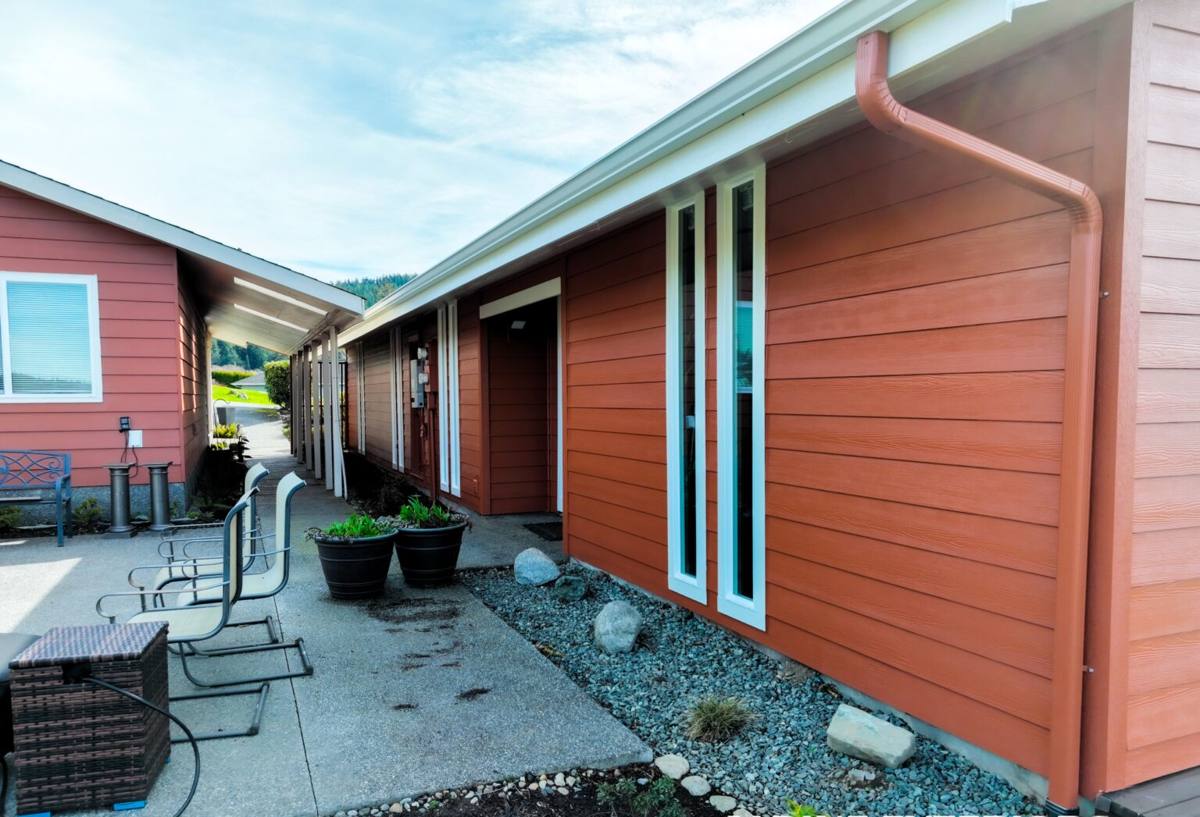
Why South Hill's Climate Is Tougher on Siding Than It Looks
South Hill isn't right on the water, but it's close enough that airborne salt is a real factor, especially on homes with any western or southwestern exposure. Salt air accelerates corrosion on fasteners, flashing, and any exposed metal trim, and it also speeds up the breakdown of paint films and caulk joints. Add in Whatcom County's pattern of long, wind-driven rain events rather than short downpours, and you get water that doesn't just fall on a wall — it gets pushed sideways into every seam, joint, and batten gap that isn't detailed correctly.
Then there's moss. Homes with mature trees, north-facing walls, or heavy shade — common throughout South Hill's older residential streets — stay damp longer after every rain. That extended moisture dwell time is exactly what moss, mildew, and algae need to take hold on siding surfaces and trim.
What This Means for a Vertical Board & Batten Wall Specifically
Board and batten is a vertical siding pattern, and vertical seams behave differently than horizontal lap siding in wind-driven rain. Every batten strip creates a vertical joint where water can be forced upward or sideways by wind pressure, not just downward by gravity. If the batten spacing, fastening, and underlying water-resistive barrier aren't installed with that in mind, water finds its way behind the boards — and once it's behind the cladding, it's out of sight until it shows up as rot, staining, or a soft spot in the wall.
What a Correct Board & Batten Job Actually Involves
A board and batten installation that's built for this climate isn't just nailing strips over plywood in a pleasing pattern. The details that matter are mostly invisible once the job is done:
- A continuous water-resistive barrier (weather barrier or building wrap) installed shingle-style so water is always directed outward and down, never trapped behind it
- Rainscreen furring or a drainage gap behind the siding panels, so any moisture that does get past the outer layer has somewhere to drain and dry rather than sitting against the sheathing
- Correctly flashed window and door openings, deck ledgers, and any wall penetrations — these are the highest-risk failure points on any home, board and batten or not
- Batten spacing and fastening that follows the manufacturer's engineering, not just a look the crew likes
- Factory-finished panels and trim, so the color coat isn't relying on field-applied paint to hold up against salt air and UV
Skip any one of these and the siding can still look right for a few years. The problems that show up when it's skipped tend to show up slowly, behind the wall, which is part of why board and batten has a reputation (fair or not) for callbacks when it's installed casually.
Why We Only Install This in James Hardie Fiber Cement
Board and batten is offered in several materials, and we get asked regularly why we don't install it in cedar, primed spruce, LP SmartSide, or vinyl board-and-batten panel systems. Each of those has genuine strengths, but in a climate like South Hill's, each also carries trade-offs we're not willing to put our name behind:
Wood and Primed Spruce
Real wood board and batten looks great and can be repaired board-by-board, but it's the most maintenance-intensive option in a salt-air, high-moisture environment. It needs regular repainting, and any gap in that maintenance schedule opens the door to rot, especially at the exposed end grain on battens and board tops.
Engineered Wood (LP SmartSide and similar)
Engineered wood siding is more moisture-resistant than raw wood, but it's still a wood-fiber product at its core. In a climate with sustained damp exposure and moss growth, wood-fiber products are more sensitive to edge swelling and moisture intrusion than fiber cement if any detail — caulking, flashing, cut-edge sealing — is missed or degrades over time.
Vinyl Board & Batten
Vinyl is low-maintenance and inexpensive, but it's a thin plastic product that can warp or become brittle over time, and it doesn't hold paint if a homeowner ever wants to change the color. It also doesn't give the crisp, deep-shadow-line look that board and batten is chosen for in the first place — the panels tend to look flatter up close.
James Hardie Fiber Cement
Hardie's board and batten products are fiber cement — a mix of cement, sand, and cellulose fiber — which doesn't absorb and swell the way wood or wood-fiber products can, isn't a food source for moss or mildew the way raw wood is, and is factory-engineered for Pacific Northwest moisture conditions through its HZ5 product line. It's also non-combustible, comes with a factory-applied ColorPlus finish that resists fading and doesn't need repainting on the same schedule as field-painted wood, and carries a strong transferable warranty. That combination is why we standardized on it and don't install the alternatives.
Quick Comparison
| Material | Moisture Behavior | Maintenance | Salt Air / Moss Resistance |
|---|---|---|---|
| Cedar / Primed Spruce | Absorbs moisture, swells if unmaintained | High — regular repainting | Low without diligent upkeep |
| Engineered Wood | Better than raw wood, still fiber-based | Moderate | Moderate |
| Vinyl | Doesn't absorb water, but can warp with heat/cold cycling | Low | Moderate — can look chalky over time |
| James Hardie Fiber Cement | Does not swell, warp, or rot | Low — factory finish, no repainting cycle | High — engineered for PNW conditions |
Our Process on South Hill Board & Batten Projects
Every board and batten job we do in this neighborhood follows the same sequence, whether it's a full re-side or a single wall addition:
- On-site assessment — we look at existing sheathing condition, current moisture damage (if any), sun and shade exposure, and how wind-driven rain hits the specific walls involved
- Tear-off and sheathing inspection — old siding comes off and we check for rot or water damage before anything new goes up; problems found here get addressed, not covered over
- Water-resistive barrier and rainscreen installation — installed to manufacturer spec, lapped correctly at every seam
- Flashing at every penetration — windows, doors, hose bibs, light fixtures, deck ledgers
- Hardie panel and batten installation — fastened and spaced to Hardie's engineering guidelines, not shortcut spacing
- Final trim, caulking, and touch-up — using products rated for the finish system, not generic caulk
We don't skip the rainscreen gap to save a step, and we don't substitute a cheaper water barrier to hit a lower bid. Those two items are the difference between board and batten that looks good for two years and board and batten that looks good for twenty.
Why Local Experience on This Specific Job Matters
A crew that's worked board and batten jobs elsewhere in the country — say, a drier climate — can still make a technically "correct" installation that underperforms here, simply because the assumptions baked into standard training don't account for sustained wind-driven rain and salt exposure. Knowing which walls in South Hill take the worst weather, how shade patterns affect drying time on specific lots, and which flashing details actually matter in this microclimate comes from doing the work here repeatedly, not from a generic install manual.
We also know this: callbacks on siding jobs in Whatcom County are almost never about the panel itself failing. They're about a flashing detail, a missed rainscreen gap, or a caulk joint that wasn't rated for the exposure. Getting those right the first time is the actual value of hiring a crew that already works this area.
Signs Your Current Siding May Already Be Struggling
- Soft or spongy spots when you press on the siding near the bottom of walls or below windows
- Persistent moss or dark streaking that comes back within weeks of cleaning
- Paint that's peeling or bubbling rather than just fading
- Visible gaps or warping at batten joints
- A musty smell near exterior walls inside the home
Any of these are worth a look before they turn into a sheathing repair rather than a siding replacement.
Get a Straightforward Look at Your Home
If you're weighing board and batten for a South Hill home, we're happy to walk the property, talk through what your specific exposure and shade conditions call for, and give you an honest estimate — no pressure, no upsell. Use the form below to schedule a free assessment.