 Whatcom County
 Asphalt Shingle Roofing Built for South Hill's Climate
South Hill homes sit close enough to the water and open enough to weather that roofs here take a different kind of beating than roofs forty miles inland. Salt-laden air corrodes exposed metal faster than it should. Driving rain off Bellingham Bay finds every gap in flashing and underlayment. And the long, damp moss season that defines western Whatcom County means shaded roof slopes stay wet for months at a stretch. Asphalt shingle roofing can absolutely handle these conditions, but only when it's specified and installed with them in mind. A shingle system that would be perfectly fine in a drier climate can underperform here in half the time.
We work on South Hill roofs regularly, which means we're not guessing at what fails first in this neighborhood. We're applying what we've already seen on nearby homes to the roof in front of us.
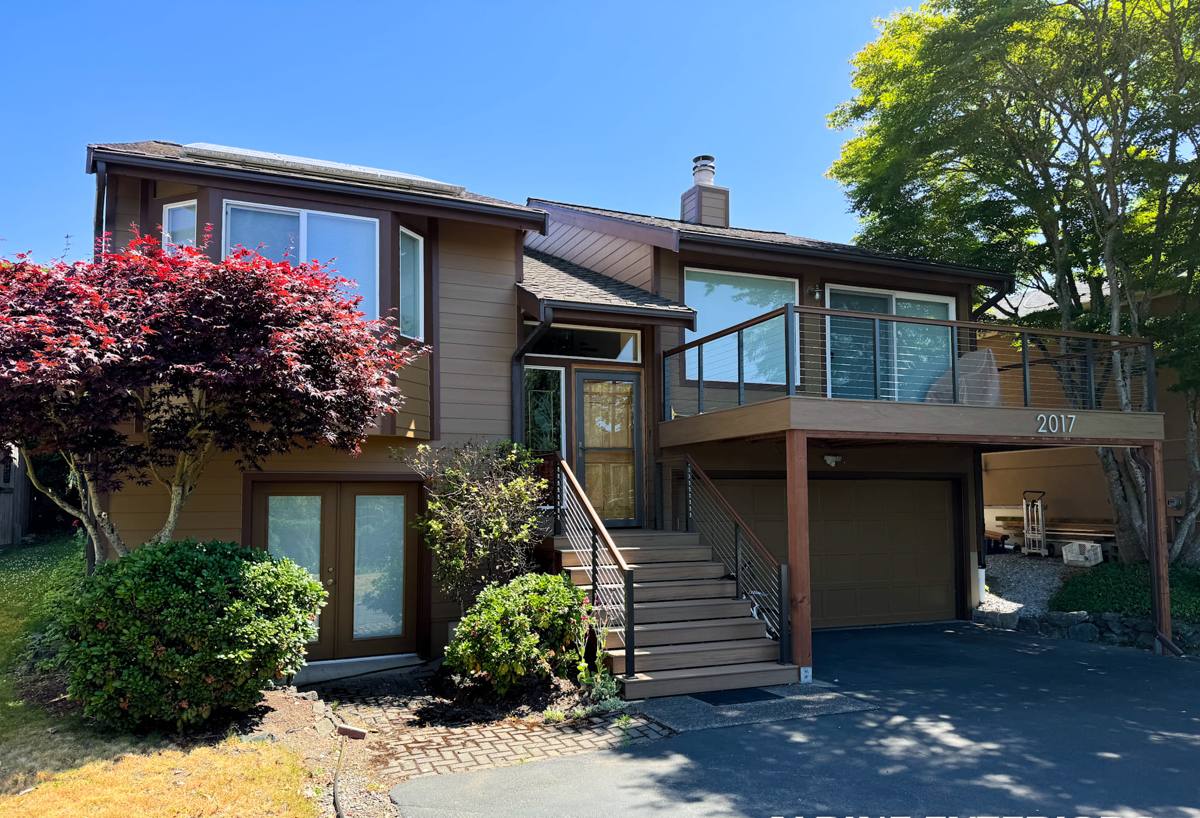
What South Hill's Climate Actually Does to a Roof
Salt Air and Metal Components
Even a few miles inland from Bellingham Bay, airborne salt accelerates corrosion on exposed fasteners, drip edge, and step flashing. Roofs with cheap or unprotected metal components show rust streaks and early flashing failure well before the shingles themselves are worn out. This is a detail-level issue, not a shingle-brand issue — it's solved by choosing corrosion-resistant flashing and fasteners at the outset.
Driving Rain and Wind-Driven Water
Whatcom County storms don't always arrive as vertical rain. Wind pushes water sideways and uphill under shingle tabs, especially at roof edges, valleys, and anywhere the roof plane changes. A roof built for calmer weather can rely on gravity alone to shed water. A roof built for South Hill needs underlayment and flashing details that assume water will try to travel in directions gravity wouldn't predict.
Moss, Shade, and Standing Moisture
North-facing slopes and roofs shaded by mature trees — common throughout South Hill's older, tree-lined lots — stay damp long after the rest of the roof has dried out. That sustained moisture is exactly what moss needs to establish. Once moss takes hold, it lifts shingle edges, holds water against the roof deck, and shortens the life of the whole system. Moss isn't cosmetic here; it's a mechanical threat to the roof's water-shedding ability.
Freeze-Thaw Cycling
Whatcom County doesn't see extreme cold, but it does see repeated freeze-thaw swings through the winter. Water that's worked its way into a compromised shingle or seam can freeze, expand, and widen the damage, then thaw and let more water in. Over a few seasons, small vulnerabilities become real leaks.
What a Correct Asphalt Shingle Roof Includes Here
A roof that's going to hold up on South Hill isn't just "shingles nailed to a deck." It's a layered system, and every layer matters for this climate specifically.
- Ice and water shield at vulnerable areas — eaves, valleys, and roof penetrations get a self-adhering waterproof membrane, not just standard felt, because these are the spots wind-driven rain and moss-related moisture concentrate.
- Synthetic underlayment across the full deck — more durable and water-resistant than old-style felt, which matters when a roof spends much of the year wet.
- Corrosion-resistant flashing and fasteners — chosen specifically because of the salt-air exposure common to South Hill and the surrounding Whatcom County coastline.
- Proper ventilation at ridge and soffit — moisture trapped in the attic works against the roof from underneath, and poor ventilation is one of the most common hidden causes of premature shingle failure we find on older South Hill homes.
- Algae-resistant shingle products — many manufacturers now build copper-infused granules into their shingle lines specifically to slow moss and algae growth, which is worth the modest upcharge in a moss-heavy climate like this one.
- Correct nailing pattern and exposure — under-nailing or over-driving fasteners is a leading cause of early wind and water damage, and it's invisible until something goes wrong.
Comparing Shingle Options for a South Hill Home
Not every asphalt shingle product is built the same way, and the right choice depends on how much moss pressure a specific roof faces, how visible the roof is from the street, and budget. Here's how the common options stack up for this climate.
| Shingle Type | Typical Lifespan | Moss/Algae Resistance | Best Fit |
|---|---|---|---|
| 3-Tab (standard) | 15–20 years | Low unless treated | Budget-driven projects, rental properties |
| Architectural / Dimensional | 25–30 years | Moderate to high with algae-resistant granules | Most South Hill homes; best balance of cost and durability |
| Premium/Designer Laminate | 30+ years | High with algae-resistant granules | Steep-slope, highly visible, or heavily shaded roofs |
We steer most South Hill homeowners toward algae-resistant architectural shingles as the practical middle ground — better wind rating and impact resistance than 3-tab, without the full premium price tag, and specifically formulated to slow the moss and algae growth this area is known for.
Installation vs. Replacement vs. Repair — What Your Roof Actually Needs
Repair
If the roof is younger, the damage is localized — a few lifted shingles after a windstorm, a flashing leak at a chimney or vent — repair is often the right call. We inspect the surrounding shingles and decking before quoting repair-only work, because a leak that's been active for a while can hide deck damage that a surface patch won't fix.
Full Replacement
When shingles are curling, granules are washing into the gutters in volume, or moss has been established for more than a season or two, patch repairs stop making financial sense. At that point the underlayment and decking underneath have usually absorbed more moisture than they should have, and a full tear-off lets us address the whole system instead of layering a fix on top of a compromised base.
New Construction or Full Tear-Off
For new builds or additions on South Hill, we spec the roofing system to the site conditions from day one — slope, sun exposure, tree cover, and proximity to the water all factor into product selection and underlayment strategy before a single shingle goes down.
Our Process on a South Hill Roofing Project
- On-site inspection — we walk the roof (or use a drone where pitch or access makes that safer) and check the attic from inside for ventilation issues and moisture staining.
- Honest assessment — we tell you plainly whether you're looking at repair or replacement, and why, including what we found in the decking and flashing.
- Written estimate — clear scope, materials, and timeline before any work starts. No surprise change orders for things we could have caught during inspection.
- Tear-off and deck inspection — on replacement jobs, we remove the old roofing down to the deck and replace any damaged sheathing before anything new goes down.
- Underlayment and flashing — installed to the standard described above, not the minimum code allows.
- Shingle installation — correct nailing pattern, exposure, and manufacturer specifications to keep the warranty valid.
- Cleanup and final walkthrough — magnetic sweep for nails, debris hauled off, and a walkthrough so you know what was done and why.
Cost Factors for South Hill Roofing Projects
Every roof is different, so we won't quote a number without seeing the job, but these are the variables that move the price most:
| Factor | Why It Matters |
|---|---|
| Roof size and number of planes | More material, more labor, more flashing detail |
| Pitch and access | Steep or hard-to-reach roofs require more safety setup and time |
| Layers to remove | Tearing off multiple existing layers adds labor and disposal cost |
| Deck condition | Rotted or soft decking found during tear-off needs replacement before shingles go down |
| Shingle grade chosen | 3-tab, architectural, and premium products carry different material costs |
| Ventilation upgrades | Adding or correcting ridge/soffit ventilation is worth doing during a re-roof |
Maintenance That Extends the Life of Your Roof
A well-installed roof still needs some attention in this climate, especially with moss season lasting as long as it does in Whatcom County. A short annual checklist goes a long way:
- Clean gutters and downspouts each fall so water isn't backing up under the eaves
- Have shaded or moss-prone slopes treated or gently cleaned before moss establishes, not after
- Check attic ventilation isn't blocked by insulation or storage
- Look for lifted or missing shingles after major windstorms
- Have flashing around chimneys, skylights, and vents inspected every few years, since these are the most common leak points
Pressure washing shingle roofs is not something we recommend — it strips granules and shortens shingle life. Gentle, low-pressure treatments are the safer way to manage moss without damaging the roofing material itself.
Why Local Experience on South Hill Matters
A roofing crew that only shows up in this area occasionally is guessing at conditions a local crew already knows. We've seen how South Hill's tree cover, exposure to the water, and rainfall patterns play out on real roofs over multiple seasons — which slopes hold moisture longest, which flashing details fail first in salt air, and which shingle products actually earn their upcharge here versus which ones are marketing. That local pattern recognition shows up in the details: where we add extra waterproofing, which ventilation fixes we prioritize, and how we set expectations about moss and maintenance from day one.
If your South Hill roof needs a straight answer about repair versus replacement, or you're planning ahead for a re-roof, we're glad to take a look. Reach out for a free, no-pressure estimate using the form below.