 Whatcom County
 Why Silver Beach Homes Go Through Siding Faster
Silver Beach sits close enough to open water that homes here take a different kind of beating than siding fifteen or twenty miles inland. Salt-laden air works its way into seams and fastener heads year-round. Driving rain, pushed sideways by wind off the water, finds every gap in flashing and trim that a calmer site would never expose. And because the surrounding tree cover and damp ground hold moisture long after a storm passes, moss and algae get a running start every fall and don't fully let go until late spring.
None of that is exotic weather. It's just persistent. The problem for siding isn't one big event — it's thousands of small exposures, day after day, for years. Materials that hold up fine in a drier or more sheltered part of Whatcom County can start showing stress here five or ten years sooner. Paint fails faster. Seams open up. Anything that traps moisture against wood or wood-based substrate becomes a slow-motion problem.
That's the lens we use when we talk about siding replacement in this neighborhood: not "what's the cheapest way to cover the walls" but "what actually survives this specific exposure without turning into a maintenance project."
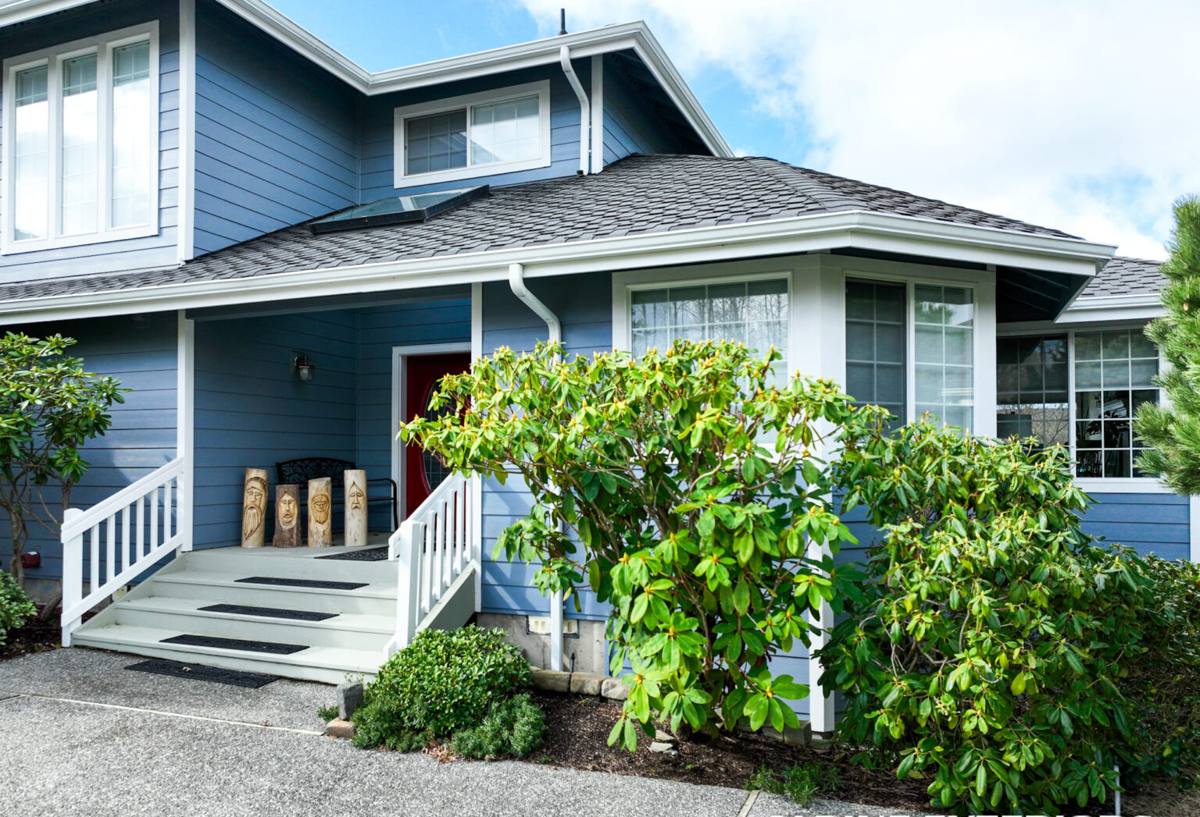
Signs It's Replacement Time, Not Repair Time
A lot of Silver Beach homeowners call us after patching the same trouble spot two or three times. Repair makes sense when the damage is isolated and the rest of the siding is sound. Replacement is the honest answer once the underlying material or the water management behind it has failed broadly. Look for:
- Soft, spongy, or crumbling siding when you press on it, especially near the bottom courses and around windows
- Paint that won't hold — bubbling, peeling, or needing a full repaint every few years
- Persistent moss or dark streaking that comes back within weeks of cleaning
- Visible gaps, warping, or buckling boards, particularly on the sides that face prevailing wind and rain
- Rot or soft spots at butt joints, corners, or anywhere trim meets siding
- Interior clues — musty smells, peeling interior paint, or discoloration on walls that share an exterior wall with problem siding
If you're seeing two or more of these, especially on the water-facing side of the house, you're usually past the point where caulk and touch-up paint buy you much time.
What a Correct Replacement Actually Involves
Siding replacement done right is mostly about what happens before the new material ever goes up. In an exposure like Silver Beach's, cutting corners at this stage is exactly how a ten-year-old wall ends up with rot behind brand-new siding.
Full Tear-Off and Inspection
We remove the old siding entirely rather than side over it. That's the only way to actually see the sheathing, framing, and existing water barrier. Hidden rot, soft sheathing, or a failed old house wrap gets found and fixed now — not discovered in five years when the new siding starts failing for the same reason the old one did.
Water-Resistive Barrier and Flashing
A correctly lapped weather-resistive barrier, properly integrated window and door flashing, and careful attention to every penetration — vents, hose bibs, light fixtures — matter more here than in a sheltered inland lot. Wind-driven rain finds the one spot that wasn't lapped correctly. This is the step that separates a siding job that lasts decades from one that looks fine for a couple of years and then doesn't.
Fastening and Clearances
Manufacturer-specified fastener spacing, proper nail penetration into framing, and correct clearance between siding and grade, decks, or roof lines all affect how the wall handles moisture long-term. Get siding-to-grade clearance wrong and you're feeding the moss and rot problem you're trying to solve.
Why We Only Install James Hardie Fiber Cement
We don't install vinyl, LP SmartSide, Cemplank, Allura, or primed spruce or cedar siding, and in an exposure like Silver Beach's the reasoning is straightforward. Every one of those products can be installed correctly and perform for a while. The question we ask is how they hold up over twenty or thirty years of salt air, standing moisture, and heavy moss pressure with realistic maintenance — not ideal maintenance.
Vinyl expands and contracts more with temperature swings, can become brittle over time, and doesn't offer the impact resistance or dimensional stability that a wind-exposed shoreline lot rewards. Engineered wood products like LP SmartSide use wood strand cores that, while treated, are still wood-based — meaning long-term performance depends heavily on caulking, paint maintenance, and keeping water off cut edges, which is a hard standard to hold in an exposure this damp. Primed spruce and cedar are natural wood products that need the most active maintenance of any siding option and are the most vulnerable to the rot and moss cycle this climate produces.
James Hardie fiber cement is non-combustible, doesn't support the kind of moisture-driven rot that wood-based products are vulnerable to, and holds paint and color far longer because of the factory-applied ColorPlus finish baked on before installation — not brushed on in the field. It's also engineered in climate-specific HZ formulations built for exactly this kind of wet, humid, moisture-heavy region. That's the whole reason we standardized on it: it's the product that actually matches what this specific coastline demands from a wall.
| Factor | James Hardie Fiber Cement | Vinyl | Wood / Engineered Wood |
|---|---|---|---|
| Moisture resistance | Does not rot; engineered for wet climates | Doesn't rot but can trap moisture behind panels | Vulnerable to rot without diligent upkeep |
| Finish durability | Factory ColorPlus finish, long fade resistance | Color molded in, can fade and chalk | Field-applied paint, needs repainting cycles |
| Fire resistance | Non-combustible | Combustible | Combustible |
| Impact/wind durability | Rigid, holds up well to debris and wind | Can crack or blow off in high wind | Dents and damages more easily |
| Typical maintenance | Occasional washing | Occasional washing | Regular painting, sealing, moss control |
Choosing the Right Hardie Line for a Shoreline Property
Not every Hardie product is specified the same way. For homes in a coastal-influenced exposure like Silver Beach, we generally lean toward Hardie's HZ5 product line, which is engineered for cold, wet, and freeze-prone climates rather than the HZ10 line built for hot, dry regions. The distinction matters — it affects how the product is formulated to handle moisture cycling over time.
Beyond the technical line, most of the decision comes down to profile and color. HardiePlank lap siding is the most common choice for a traditional look; HardiePanel with battens gives a more modern, vertical look that some Silver Beach homes with contemporary updates are moving toward; HardieShingle works well for accent areas like gables. ColorPlus finishes come in a range of tones that hold up to UV and salt exposure far longer than a standard field-applied paint job, which matters when repainting a shoreline home isn't a small job.
Our Process, Start to Finish
A siding replacement should feel predictable, not stressful. Here's roughly how ours runs:
- On-site assessment — we walk the exterior, check for rot and water damage, and talk through what we're seeing with you directly
- Detailed proposal — product line, profile, color, and a clear scope of work, not a vague allowance
- Scheduling — we plan around weather windows, since installing in the wrong conditions is how corners get cut
- Tear-off and inspection — old siding comes off, sheathing gets inspected, any rot gets addressed before we move forward
- Water management install — weather-resistive barrier, flashing, and trim details done to manufacturer spec
- Hardie installation — siding installed with correct fastening, clearances, and joint treatment
- Final walkthrough — we go over the finished work with you before calling the job done
Checklist for what to confirm before work starts, no matter who you hire:
- Is the old siding coming off completely, or is this a side-over job?
- What water-resistive barrier and flashing details are included, in writing?
- Which Hardie product line and profile is specified, and is it the climate-appropriate HZ formulation?
- What happens if rot or damage is found once the old siding comes off?
- What's the warranty structure — on the product, and separately on the labor?
What Affects the Cost
Every Silver Beach home is different, so we won't quote a number without seeing the house, but the main cost drivers are consistent from job to job.
| Cost Factor | Why It Matters |
|---|---|
| Condition of sheathing underneath | Rot found during tear-off adds repair scope before new siding goes on |
| Home size and wall complexity | More corners, gables, and trim details mean more labor and cut waste |
| Product profile and accessories | Lap siding, panel-and-batten, and shingle accents price differently |
| Access and site conditions | Slopes, tight lots, or limited staging area near the water affect labor time |
| Trim and detail scope | Full trim replacement alongside siding adds cost but keeps the finished look consistent |
The honest range for a full siding replacement varies widely based on these factors — we'll give you real numbers once we've actually looked at the house, not a ballpark pulled out of thin air.
Why Local Experience in Silver Beach Actually Matters
A crew that mostly works drier, more sheltered parts of Whatcom County can still do competent work — but they're guessing at details that a crew working shoreline exposures already knows cold: how much clearance to leave at grade given how wet the ground stays, which flashing details actually matter on the wind-exposed side of a house, and how much moss pressure to expect before recommending gutter and drainage adjustments alongside the siding itself. That's not a marketing point — it's the difference between a wall assembly built for the conditions it actually faces and one built to a generic spec sheet.
We've built our whole approach — one product line, installed correctly, with the water management details that a place like this demands — around exposures exactly like this one.
If your Silver Beach home's siding is showing its age, we're happy to take a look and give you a straight assessment — no pressure, no obligation. Use the form below to request a free estimate.