 Whatcom County
 Siding Repair Built for Silver Beach's Lakeside Conditions
Silver Beach sits in one of the shadier, moisture-holding corners of Whatcom County. Mature tree canopy, proximity to Lake Whatcom, and long stretches of overcast, drizzly weather mean siding here rarely fails the same way it does on an open, sun-exposed lot across the county. It fails from the shaded, damp side of the house first — the side that never quite dries out between storms. If you're noticing soft spots, peeling paint, or dark streaking on your siding, you're not imagining it. You're seeing what this specific microclimate does to exterior materials over time.
This page covers siding repair specifically for Silver Beach homes: what typically goes wrong here, what a correct repair actually involves, and why it matters to hire a crew that already understands lakeside, shaded-lot conditions rather than a general contractor working from a generic checklist.
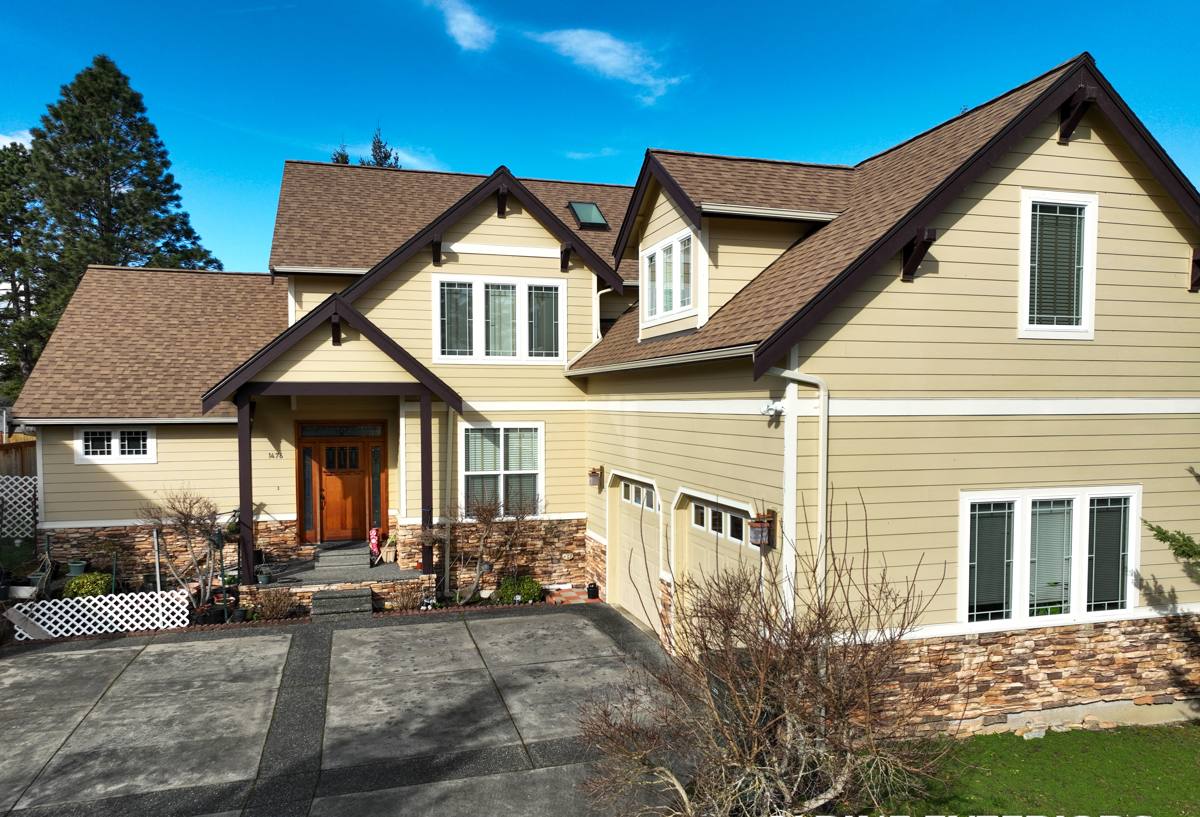
Why Whatcom County's Climate Is Hard on Siding
Across Whatcom County, siding contends with a combination of driving rain off the Sound, salt-laden air along the coastal corridor, and a moss season that can stretch from fall through spring. Even inland and lake-adjacent neighborhoods like Silver Beach feel the effects of that regional weather pattern — the rain totals and humidity are county-wide, even where the salt air is more diffuse than it is right on the water.
What makes Silver Beach distinct within that broader picture is shade. Tree cover around the lake keeps siding wet longer after every rain event, and it feeds the moss and algae growth that thrives in damp, low-light conditions. A wall that gets full afternoon sun sheds moisture in an hour; a shaded wall near the lake can stay damp most of the day. That extra dwell time is what turns ordinary weather exposure into real material damage over the years.
What This Means in Practice
- North- and east-facing walls typically show damage first and worst
- Moss and algae growth is heavier and returns faster than on sun-exposed elevations
- Caulk and paint fail sooner in shaded, humid conditions
- Wood-based siding products are especially vulnerable to prolonged moisture contact
- Damage often starts low, near grade, where humidity and splash-back combine
Common Siding Problems We See in Silver Beach
Every neighborhood has a pattern. In Silver Beach, the repair calls we get tend to cluster around a handful of recurring issues:
Moss and Algae Buildup
Green or black staining on shaded walls and along the lower courses of siding is the most visible sign of the local climate at work. Left alone, moss holds moisture directly against the siding surface, which accelerates whatever is happening underneath — whether that's paint failure on wood siding or joint deterioration on other materials.
Soft or Swollen Siding
On wood-based products, prolonged moisture exposure leads to swelling, softening, and eventually rot — often starting at butt joints, corners, or anywhere water can sit rather than run off. By the time it's visible from the ground, the damage underneath is usually more extensive than it looks.
Failed Caulk and Open Joints
Caulk has a shorter service life in shaded, damp conditions than manufacturers' general guidance assumes. Once a joint opens up, water gets behind the siding instead of running down the face of it — which is a much faster path to structural damage.
Paint and Finish Breakdown
Peeling, bubbling, or chalking paint on siding near the lake is often a moisture problem showing up as a cosmetic one. Repainting over it without addressing the underlying moisture source is a short-term fix that tends to fail again within a season or two.
Impact and Debris Damage
Tree limbs, dropped branches, and general yard debris near wooded lots cause cracked or dented siding sections more often here than on open lots elsewhere in the county.
Repair or Replace: How to Tell the Difference
Not every siding problem in Silver Beach requires a full re-side. A lot of what we see is legitimately repairable — but only if the damage is caught before it spreads past the visible symptom. Here's a general framework for how we think through it:
| Situation | Usually Repairable | Usually Needs Replacement |
|---|---|---|
| Isolated soft spot or crack, one or two boards | Yes, if sheathing underneath is sound | Only if surrounding boards test soft too |
| Moss/algae staining, no soft material | Yes — cleaning, repair of failed joints, repaint | No |
| Rot at multiple locations, same elevation | Rarely — points to a systemic moisture issue | Often yes for that elevation |
| Widespread softness across several walls | No | Yes |
| Impact damage, structure underneath intact | Yes | Only if sheathing is also damaged |
| Siding is 25+ years old and failing broadly | Rarely cost-effective | Yes |
The honest answer is that we won't know for certain until we're up close with a moisture meter and a screwdriver, checking whether the substrate underneath is still sound. That inspection is the real starting point of any repair estimate — not a guess from the ground.
What a Correct Siding Repair Actually Involves
A repair that only replaces the visibly damaged board and stops there is a repair that's likely to fail again. Here's what we actually do:
1. Diagnose the Moisture Source First
Before touching a single board, we figure out why that spot failed. Is it a flashing problem, a caulk failure, grade sloping toward the foundation, sprinkler overspray, or just prolonged shade and humidity doing what it does? Replacing siding without fixing the cause just resets the clock on the same failure.
2. Open It Up and Check the Substrate
We remove the damaged section and inspect the sheathing, house wrap, and framing behind it. This is the step that gets skipped in a rushed repair — and it's the step that determines whether you're looking at a board replacement or something bigger.
3. Repair the Water Management Details
Flashing, house wrap, and drainage details get corrected or reinforced as part of the repair, not left as-is. Siding is only as good as the water management system behind it.
4. Match Materials and Finish
Where the existing siding is a matchable product, we source and install replacement pieces that blend in rather than leaving an obvious patch. Where the existing material has aged past a good match, we're upfront about that trade-off before starting.
5. Seal, Caulk, and Finish Correctly
Joints, fastener heads, and transitions get sealed with products rated for this climate, not whatever's fastest. In a shaded, damp environment like Silver Beach, cutting corners here is exactly how the same repair call comes back in two years.
Why a Local Crew Matters for This Job
Siding repair is diagnostic work as much as it's carpentry. A crew that has already worked on lakeside, shaded lots in Whatcom County recognizes the pattern of Silver Beach damage on sight — where it tends to start, how far it typically extends, and which repairs actually hold up in these conditions versus which ones just look fixed for a season. That experience shortens the inspection, sharpens the estimate, and avoids the common mistake of treating every home like it's sitting in full sun on an open lot.
It also matters for logistics. Narrow lake-area streets, mature trees, and tighter lots common around Silver Beach affect how a crew stages material and equipment. A crew unfamiliar with the area loses time — and sometimes cuts corners — working around those constraints for the first time on your job.
What We Use for Repairs and Replacement
For matching repairs, we work with whatever material is already on the house where that's the responsible choice. But when a repair area is too far gone to patch credibly, or when a homeowner is ready to stop repairing and replace a problem elevation for good, we install James Hardie fiber cement exclusively. It's a decision we made deliberately: Hardie's fiber cement doesn't absorb and swell with moisture the way wood-based products do, it's non-combustible, and its factory-applied ColorPlus finish holds up to years of shade and damp without the repeated repainting that wood or primed siding demands in this climate. We don't install vinyl, LP SmartSide, or cedar — not because those products have no merit, but because we've standardized on what performs best under exactly the conditions Silver Beach sees every winter.
Hardie's HZ5 product line is engineered for climates with significant moisture exposure, which makes it a sound match for lake-adjacent, shaded properties in this part of the county. If a repair conversation turns into a replacement conversation, that's the direction we'll steer it — with the reasoning laid out plainly, not oversold.
Maintaining Siding After a Repair
A good repair holds up longer with a little routine attention, especially in a shaded, moisture-prone spot like Silver Beach. This isn't a demanding maintenance schedule — just a few habits that matter more here than they would on a sunnier lot:
- Rinse moss and algae off siding annually before it gets a foothold, rather than after it's established
- Keep tree branches and shrubs trimmed back from siding to improve airflow and reduce shade dwell time
- Check caulk at joints and trim once a year and re-caulk before it fully opens up
- Direct sprinklers and downspouts away from siding surfaces
- Walk the shaded elevations after major storms and check for new soft spots or displaced boards
- Address small repairs promptly — the cost difference between a one-board fix and a multi-board rot repair is significant
Get a Straight Answer on Your Siding
If you're seeing moss, soft spots, or failing paint on your Silver Beach home, the fastest way to know what you're actually dealing with is a hands-on inspection — not a guess from a photo or a phone call. We'll tell you plainly whether it's a repair, what's driving the damage, and what it would take to fix it right. Request a free, no-pressure estimate using the form below and we'll take a look.