 Whatcom County
 Roof Repair Built for Silver Beach's Conditions
Silver Beach sits close enough to the water that homes here deal with a different mix of weather stress than roofs a few miles inland. Salt-laden air, wind-driven rain off Bellingham Bay, and a moss season that runs longer than most homeowners expect all show up in the same place: the roof. If you're noticing a stain on a ceiling, a shingle out of place after a windstorm, or dark streaks creeping across the roof plane, the cause is rarely random. It's usually one of a handful of predictable failure points that this climate creates, and repairing it correctly means understanding why it happened, not just patching what's visible.
We work on roofs throughout Whatcom County, and Silver Beach comes with its own pattern of calls: moss-driven shingle lift, flashing that's corroded faster than it should have, and soft spots from long-term moisture intrusion that started small and got ignored. A repair that doesn't account for those causes tends to fail again within a season or two.
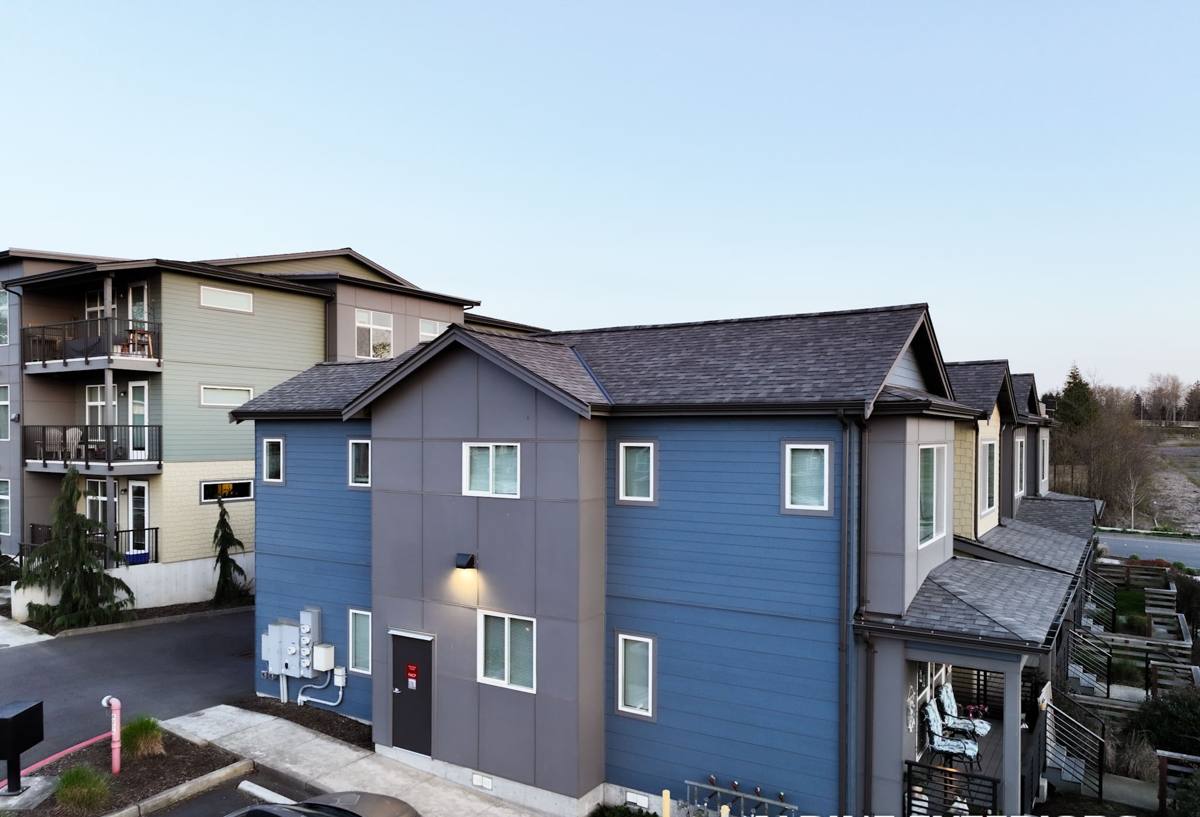
Why Roofs in This Area Wear Differently
Salt Air and Metal Components
Proximity to saltwater accelerates corrosion on anything metal — flashing, fasteners, drip edge, vent boots with metal collars. Standard galvanized fasteners that would last decades further inland can start rusting and backing out years sooner near the water. When we repair a roof in Silver Beach, we're paying close attention to metal condition even in areas that look fine at a glance, because corrosion often starts from the underside or at fastener heads before it's visible from the ground.
Driving Rain and Wind Exposure
Open exposure toward the water means rain doesn't just fall straight down here — it drives sideways under wind gusts, which puts pressure on laps, seams, and flashing details that a calmer inland roof rarely sees. Wind-driven rain finds gaps that vertical rain never would, particularly around chimneys, skylights, and roof-to-wall transitions.
Moss and Extended Wet Seasons
Whatcom County's wet season runs long, and Silver Beach's tree cover and shade patterns give moss plenty of time to establish. Moss doesn't just look bad — it holds moisture against the shingle surface, works its way under shingle edges as it grows, and physically lifts tabs over time, breaking the seal that keeps water out. A roof with heavy moss growth is often losing its watertight integrity well before a homeowner sees an actual leak.
What a Correct Repair Actually Involves
A roof repair done right isn't just swapping a damaged shingle for a new one. It starts with figuring out how water is actually getting in, because the entry point and the visible damage are often in different places — water travels along the underlayment or decking before it shows up as a stain.
- Identify the true entry point, not just the visible symptom, by checking the roof from both the surface and, when accessible, the attic or interior side
- Assess the decking underneath for soft spots, delamination, or rot before any new material goes down
- Check flashing condition at every penetration and transition — chimneys, vents, skylights, roof-to-wall junctions
- Match shingle type, color, and exposure to the existing roof as closely as possible so the repair doesn't stand out or create a new water path
- Clear moss and organic debris from the surrounding area, not just the repair zone, so growth doesn't undermine the fix
- Verify proper ventilation isn't part of the problem — trapped moisture from poor attic airflow can mimic or worsen leak symptoms
Skipping any of these steps is how a "repair" ends up being a temporary patch. We've seen roofs where a previous repair sealed the visible symptom but left rotted decking or corroded flashing underneath, which resurfaced as a leak within a year.
Common Repair Scenarios We See Near the Water
| Issue | Typical Cause | What the Repair Involves |
|---|---|---|
| Lifted or missing shingles | Wind-driven rain, moss undermining the seal, age | Remove damaged shingles, inspect decking, install matched replacement, reseal properly |
| Flashing leaks around chimneys/vents | Salt-air corrosion, thermal expansion cycling | Remove and replace corroded flashing, re-integrate with roofing layers correctly |
| Ceiling stains without visible roof damage | Water traveling under moss-lifted shingles or through failed underlayment | Trace the path, open the section, replace compromised underlayment and decking as needed |
| Granule loss / bare patches | Age combined with sustained moisture exposure | Evaluate remaining shingle life; targeted section replacement vs. flagging for future full replacement |
| Soft or spongy roof sections | Long-term undetected moisture intrusion, rot | Cut back to sound decking, replace structural material, rebuild the roofing layers correctly |
Our Process for a Silver Beach Repair
1. On-Site Inspection
We start by walking the roof and checking accessible interior areas, looking at the whole system — shingles, flashing, ventilation, and signs of moss or moisture damage — not just the spot the homeowner called about.
2. Honest Assessment
We tell you what we actually find, including if a repair is the right call versus if the damage suggests the roof is nearing the end of its useful life. Not every leak needs a full roof; but not every leak is a five-minute patch either, and we won't tell you it is just to close the job faster.
3. Written Scope Before Work Starts
You know what's being repaired, why, and roughly what it involves before any work begins. No surprise scope creep once the roof is opened up, unless we find something that genuinely wasn't visible until then — and if that happens, we stop and talk to you first.
4. Repair and Cleanup
We match materials, address the root cause (not just the symptom), and clean the work area and surrounding roof surface of debris before we leave.
Cost Factors for Roof Repair
Repair costs vary enough that a fixed number isn't honest to give without seeing the roof. What actually drives the price:
| Factor | Why It Matters |
|---|---|
| Extent of decking damage | Rotted plywood or sheathing underneath adds material and labor beyond the surface repair |
| Roof pitch and access | Steeper roofs and difficult access near trees or tight lot lines take longer and require more safety setup |
| Age and availability of matching shingles | Older roofs may need a close color match rather than an exact one if the original product is discontinued |
| Number of penetrations involved | Chimneys, skylights, and multiple vents each add flashing work |
| Moss and debris removal needed | Heavy growth requires careful removal to avoid damaging shingles further during cleanup |
Most straightforward repairs — a section of storm-damaged shingles, a single flashing failure — land in a modest range. Repairs involving decking replacement or multiple problem areas cost more, simply because more material and labor are involved. We'll give you real numbers after we've actually looked at your roof.
Why Local Experience with Silver Beach Roofs Matters
A crew that only occasionally works this close to the water can miss things that are obvious to someone who deals with it regularly — how fast corrosion moves on fasteners here, which moss patterns signal a bigger underlying issue, and how wind exposure off the bay changes where flashing tends to fail first. We work throughout Whatcom County and see enough of these roofs to know the difference between cosmetic moss growth and moss that's already done structural damage to the shingle mat underneath.
That experience also means we're not guessing at what "matches" the existing roof or what ventilation setup actually works for a given roof design — we've seen what holds up in this specific environment and what doesn't.
Maintenance That Extends the Life of a Repair
- Have moss removed before it establishes heavily, ideally at the first sign of growth rather than after it's spread across a slope
- Keep gutters clear so water isn't backing up under the shingle edge during heavy rain
- Trim back overhanging branches where possible to reduce shade, debris buildup, and moss-friendly conditions
- Schedule a roof check after major windstorms, especially if you hear or see debris hit the roof
- Address small leaks immediately — a stain that seems minor now is often evidence of an entry point that's been active for a while
If you're dealing with a leak, storm damage, or just want an honest look at a roof that's showing its age in Silver Beach, we're happy to come take a look. The estimate is free, there's no pressure to move forward, and you'll get a straight answer about what your roof actually needs.