 Whatcom County
 Building Decks for Silver Beach's Particular Climate
Silver Beach sits close to water, and that changes what a deck has to withstand year-round. Between the humidity coming off Lake Whatcom, the damp marine air that moves through Whatcom County from the Sound, and a rainy season that stretches for months, a deck here is under near-constant moisture pressure. Add in a long moss season where shaded, north-facing structures barely get a chance to dry between storms, and you have a set of conditions that will find every weak point in a deck's design within a few years if it wasn't built to handle them.
This isn't a page about decks in general. It's about what actually holds up on a Silver Beach property, why some builds fail early, and what a correctly built deck looks like when it's designed for this specific environment rather than a generic climate.
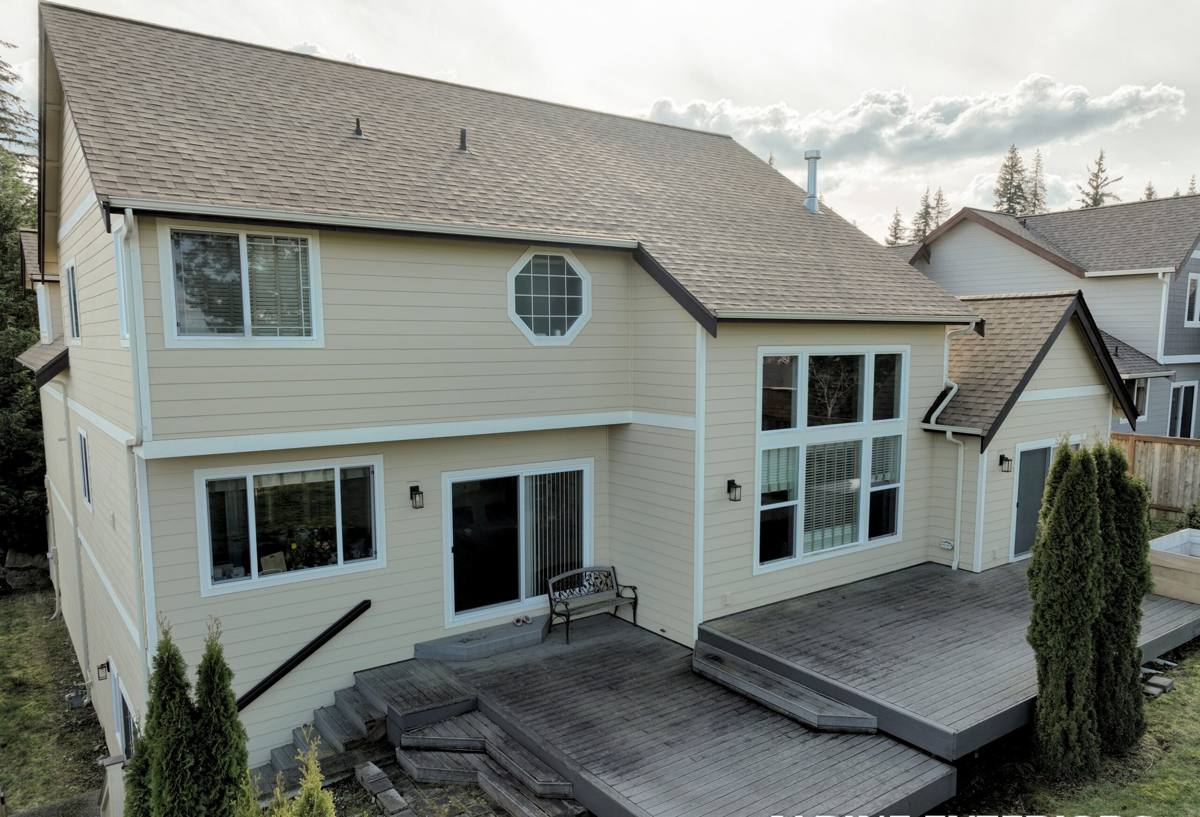
What Local Conditions Actually Do to a Deck
Homeowners often assume deck problems come from age. More often, they come from moisture that had nowhere to go. In Whatcom County, and especially in lake-adjacent and tree-shaded areas like Silver Beach, three things do most of the damage:
- Standing moisture at connection points — ledger boards, joist hangers, and post bases that stay wet longer than they stay dry, leading to rot and corrosion from the inside out.
- Moss and algae growth — on decking surfaces, stair treads, and especially shaded understructure, moss holds moisture against wood and creates a slip hazard on top of everything else.
- Salt-influenced marine air — accelerates corrosion on fasteners, brackets, and any exposed metal hardware that isn't rated for it.
None of these are dramatic, one-time events. They're slow, cumulative processes that show up as soft boards, loose railings, or a deck that just feels less solid than it did five years ago. A deck built without these conditions in mind will show its age faster than one built specifically for them.
What a Correctly Built Deck Requires Here
Ledger Attachment and Flashing
The ledger board — where the deck attaches to the house — is the single most common failure point on decks in wet climates. It has to be properly flashed so water is directed away from the house band joist, not trapped behind the ledger where it will rot both the deck framing and the wall structure behind it. This is not an area to cut corners; it's the difference between a deck lasting decades and a deck causing a structural repair bill on the house itself.
Joist and Framing Protection
Every cut end, notch, and fastener hole in pressure-treated framing lumber exposes untreated wood underneath. Those cut ends need to be sealed, and joists benefit from a protective tape or coating on the top edge where deck boards are fastened down — this is exactly where water collects and sits the longest.
Airflow Underneath
A deck built low to the ground or against a slope with poor airflow underneath will trap humidity, which is exactly the environment moss and rot organisms need. Proper joist height, clearance, and in some cases venting or drainage grading underneath the structure make a real difference over the life of the deck.
Fastener and Hardware Selection
Not all screws and brackets are created equal. In a marine-influenced climate, hardware needs a corrosion rating suited to the exposure — using standard interior-grade fasteners on an exterior deck near the water is a shortcut that shows up as rust streaks and loosening connections within a few seasons.
Decking Material Comparison
Material choice matters more here than in drier inland climates, because the decking surface itself is what fights moss and moisture exposure every day. Here's how the common options actually perform under Whatcom County conditions:
| Material | Moisture Behavior | Moss/Algae Resistance | Maintenance |
|---|---|---|---|
| Pressure-treated wood | Absorbs and releases moisture; prone to cupping if not sealed regularly | Needs regular cleaning to prevent buildup | Annual cleaning, periodic sealing/staining |
| Cedar | Naturally moisture-resistant, but surface still weathers | Better than treated pine, still needs upkeep | Periodic cleaning and oiling to maintain color and resistance |
| Capped composite | Does not absorb moisture into the core | Surface can still grow algae/moss film if shaded and unwashed | Occasional washing, no sealing or staining |
| PVC decking | Fully moisture-resistant, does not rot | Surface texture affects grip when damp or mossy | Lowest maintenance; periodic washing |
There's no single "best" material for every home — it depends on budget, the amount of shade the deck gets, and how much upkeep a homeowner wants to take on. We'll walk through the honest trade-offs for your specific site rather than pushing one product line.
Railings, Stairs, and Code Requirements
Any deck more than a modest height off grade needs code-compliant railings, and stairs need proper rise-and-run consistency and secure stringer attachment — this matters even more on a sloped or waterfront-adjacent lot where a deck may sit higher above grade than a typical flat-lot build. Railing hardware is another spot where marine-grade fasteners and properly sealed post connections prevent the kind of slow loosening that turns into a safety issue a few years down the line. Stair treads in particular need a surface and drainage detail that resists moss buildup, since a mossy stair tread in a wet climate is one of the more common causes of fall injuries on residential decks.
Our Process for a Silver Beach Deck Project
- On-site assessment — we look at grade, drainage, sun/shade exposure, and how the deck will tie into the existing structure before any design work starts.
- Design and material selection — we walk through decking, railing, and structural options with honest cost and maintenance trade-offs for your specific site conditions.
- Permitting — deck permits are handled through the applicable local building department; we manage the paperwork and inspections as part of the build.
- Framing and structural work — ledger flashing, joist protection, proper footings, and corrosion-rated hardware are non-negotiable steps, not upgrades.
- Decking, railing, and finish work — installed with the spacing and fastening details that allow for drainage and airflow, not just a finished look.
- Final walkthrough — we go over maintenance expectations specific to your material choice and site conditions before we consider the job done.
Cost Factors to Understand Before You Budget
Deck pricing varies widely based on size, material, and site conditions, so we won't quote a number without seeing the property. What we can tell you is what tends to move the price:
| Factor | Why It Matters |
|---|---|
| Height above grade | Taller decks need more substantial footings, framing, and railing/stair work |
| Ground slope and access | Sloped or hard-to-access lots increase labor and sometimes require engineered footings |
| Decking material | Composite and PVC cost more upfront than wood but reduce long-term maintenance spend |
| Railing style | Cable, glass, and custom railing systems cost more than standard baluster railings |
| Existing structure condition | If we're replacing an old deck, hidden rot or ledger damage can affect scope once we open things up |
Maintenance That Actually Extends a Deck's Life Here
Whatever material you choose, a few habits make a real difference in a climate like ours:
- Clear leaves and debris from between boards and off the surface regularly, especially in fall
- Wash the deck surface at least once or twice a year to remove moss and algae film before it takes hold
- Check railing posts and stair connections annually for looseness, especially after winter storms
- Keep gutters and downspouts near the deck clear so runoff isn't draining directly onto the structure
- Reseal or restain wood decking on the schedule appropriate to the product — don't wait until it's visibly gray and worn
- Trim back overhanging vegetation that keeps sections of the deck shaded and damp longer than the rest
Why Local Build Experience Matters
A deck design that works fine in a dry inland climate can fail early here if it's built the same way. Crews who regularly work in Whatcom County's lake-adjacent and marine-influenced neighborhoods know which connection details need extra attention, which hardware actually holds up, and how much airflow and drainage a given site needs based on its shade and grade — not from a manual, but from seeing what fails and what doesn't over years of local builds. That's the difference between a deck that needs attention every couple of years and one that stays solid for decades.
Ready to Talk About Your Deck?
If you're planning a new deck or replacing one that's showing its age, we're happy to come take a look, walk the site with you, and give you a straightforward, no-pressure estimate based on what your property actually needs. There's a form below — reach out and we'll get you scheduled.