 Whatcom County
 Why Composite Decking Suits Silver Beach
Silver Beach sits in one of the wetter corners of Whatcom County, and that shows up fast on an outdoor deck. Between driving rain off the water, heavy tree cover on many lots, and a moss season that can stretch from October well into spring, any decking material here has to deal with near-constant moisture rather than the occasional summer shower. Traditional wood decking needs regular sealing and sanding to keep up with that; composite decking was built for exactly this kind of climate, which is why it has become the go-to choice for homeowners in this part of Whatcom County who want a deck they're not fighting every year.
Composite boards are a blend of wood fiber and plastic, capped on most modern products with a protective shell that resists moisture absorption, staining, and the gray weathering that untreated wood gets after a few Pacific Northwest winters. That doesn't mean composite is maintenance-free — nothing sitting outside in Whatcom County's rainfall is — but it removes the parts of deck ownership that cause the most damage over time: swelling, splintering, and rot at the boards themselves.
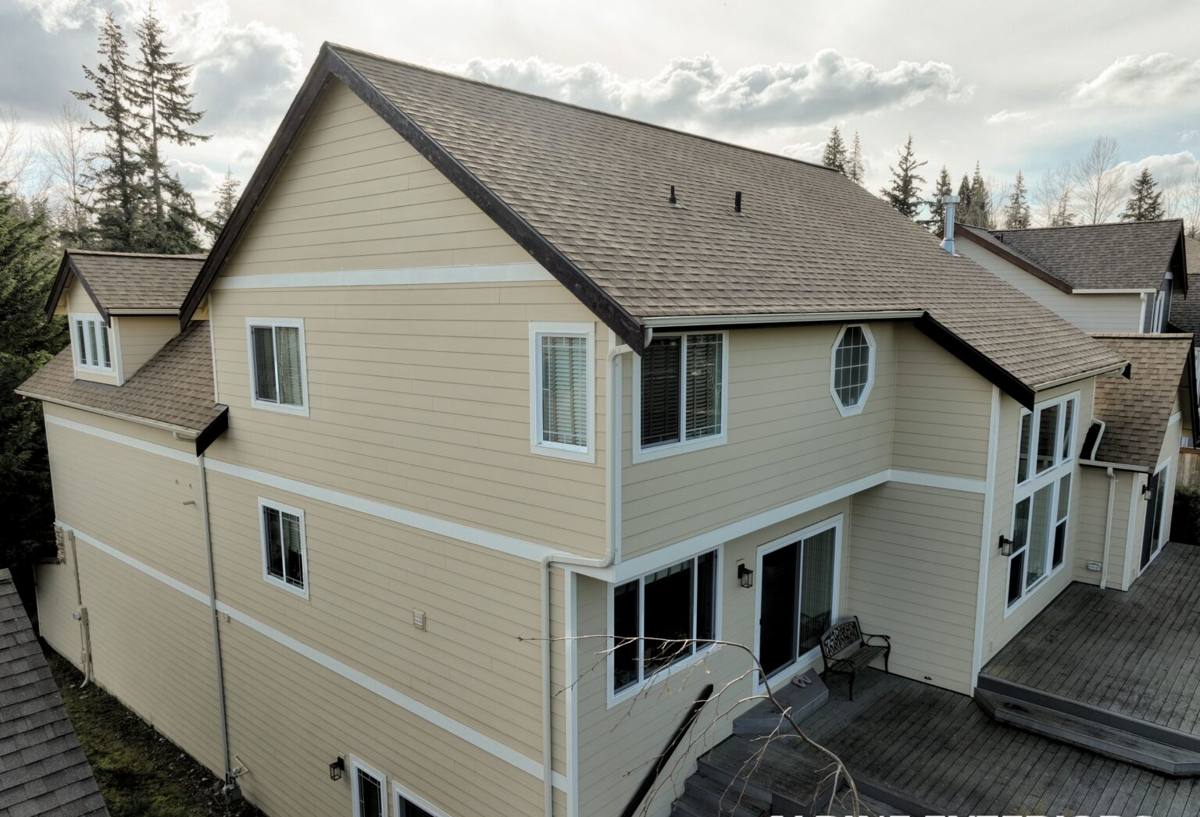
What the Climate Actually Does to a Deck
It helps to understand the specific failure points before talking about the fix. In a wet, shaded, salt-tinged environment like this:
- Standing water on board surfaces or between boards feeds algae and moss growth, which makes decking slick and, over time, stains the surface.
- Trapped moisture underneath the deck, where sun and air movement rarely reach, is where framing rot usually starts — long before anyone notices a problem on top.
- Metal fasteners and hardware exposed to salt-laden air and constant damp corrode faster than in drier inland areas, which is why fastener choice matters more here than in most parts of the country.
- Moss and organic buildup on horizontal surfaces holds moisture against the board, which accelerates whatever wear process is already happening underneath.
A correct composite deck build isn't just about picking a good board — it's about designing the whole system so these failure points don't get a foothold.
What a Correct Build Involves
Ledger Board and Flashing
Where the deck attaches to the house is the single most important moisture detail on the whole project. Composite decking can't fix a poorly flashed ledger board — if water gets behind it, it's tracking into your home's framing, not just the deck's. A correct install uses proper flashing, a moisture barrier behind the ledger, and hardware rated for exterior, wet-climate use. This is the step that's easiest to shortcut and the most expensive to fix later if it's done wrong.
Joist Protection and Ventilation
The framing underneath a composite deck is almost always still pressure-treated wood or, on some builds, steel — and that substructure needs its own moisture defense. We use joist tape on the top of framing members to keep fasteners from creating a path for water into the wood, and we keep airflow in mind when planning the height and skirting of the deck so moisture underneath has somewhere to go instead of sitting there all winter.
Fastening and Board Spacing
Composite boards expand and contract with temperature and moisture more than most homeowners expect. Gapping between boards has to account for that movement, and fasteners need to be rated for both the board material and this region's damp, occasionally salt-affected air. Hidden fastener systems give a cleaner look and avoid the face-screw holes where water and grime like to collect, but they have to be installed correctly and to the manufacturer's spacing spec or boards can buckle over time.
Comparing Decking Materials for This Climate
| Material | Moisture Behavior | Maintenance | Typical Lifespan Here |
|---|---|---|---|
| Capped composite | Resists absorption; capped layer sheds water and blocks staining | Periodic washing to prevent moss/algae buildup | 25–30+ years |
| Uncapped composite (older style) | Can absorb some moisture at cut edges; more prone to mold if not sealed | Occasional cleaning and edge sealing | 15–20 years |
| Pressure-treated wood | Absorbs and releases moisture constantly; prone to swelling and splintering | Annual sealing/staining recommended | 10–15 years before major repair |
| PVC decking | Fully synthetic, essentially no moisture absorption | Low; occasional washing | 25–30+ years |
We install capped composite for most Silver Beach projects because it strikes the right balance for this climate: strong moisture resistance without the higher cost and different footfeel of full PVC. We don't recommend uncapped composite or bare pressure-treated boards for the top surface here — not because those products are bad in every setting, but because in a climate with this much sustained dampness, they ask homeowners to take on more upkeep than most people want.
What Affects the Cost of Your Deck
| Factor | Why It Matters |
|---|---|
| Deck size and shape | Square footage and complexity (angles, multiple levels) drive both material and labor |
| Height above grade | Taller decks need more substantial framing, railings, and sometimes stairs |
| Ledger and flashing condition | Existing rim joist or siding damage found during attachment adds repair scope |
| Board and fastener grade | Capped composite and hidden-fastener systems cost more than base-grade boards |
| Railing style | Composite, metal cable, or glass railing all price differently |
| Site access | Sloped or wooded Silver Beach lots can add time for material staging |
We give a firm, itemized quote after seeing the site in person — broad ranges without a site visit tend to be more misleading than helpful, especially on lots with slope or existing framing that needs a closer look.
Our Process
- On-site assessment. We check existing framing (if it's a rebuild), the ledger attachment point, grading and drainage underneath, and how the deck ties into the rest of the home's exterior.
- Design and material selection. We walk through board color, railing style, and layout, and make sure the plan accounts for expansion gaps and airflow.
- Permitting. Most deck projects in Whatcom County require a permit, particularly for anything attached to the structure or above a certain height. We handle that process as part of the job.
- Framing and flashing. This is the part that determines how the deck performs in ten years, not just how it looks in month one — proper flashing, joist tape, and fastener selection happen here.
- Decking and railing install. Boards go down to manufacturer spacing and fastening specs, with railings set to code for height and baluster spacing.
- Final walkthrough. We go over basic care with you — what to expect from the material, how to clean it, and what to watch for near the ledger and framing over the years.
Living With a Composite Deck Through Moss Season
Composite decking cuts down on maintenance dramatically compared to wood, but "low maintenance" isn't "no maintenance," especially in a climate that stays damp for months at a time. A simple seasonal routine keeps a composite deck looking and performing the way it should:
- Sweep off leaves, needles, and debris regularly — trapped organic matter is what feeds moss and algae growth on the board surface.
- Wash the deck with a soft-bristle brush and a mild soap-and-water solution once or twice a year, more often in heavily shaded areas.
- Avoid pressure washing directly into board grooves or fastener points, which can force water where it doesn't belong.
- Check the gap between the house and the deck ledger occasionally for debris buildup, which can hold moisture against the siding.
- Keep gutters and downspouts near the deck clear so runoff isn't dumping directly onto or under the structure.
What to Ask Before Hiring a Deck Contractor
- Do you pull permits and handle inspections, or is that left to me?
- What flashing and moisture-barrier method do you use at the ledger board?
- Do you use joist tape or another protective layer on the framing?
- What fastener type and rating do you use, given the local salt air and rainfall?
- Can I see a project you've built in this area that's a few years old, not brand new?
- What's included in the written estimate, and what would trigger a change order?
Why Local Experience in Silver Beach Matters
A deck contractor who mostly works drier inland climates can still build a technically sound deck on paper, but the details that matter most here — flashing choices, fastener corrosion resistance, framing ventilation, drainage planning — are the kind of thing you learn by seeing how decks actually hold up through a full Whatcom County winter and into moss season. We've built and repaired decks throughout this area long enough to know which shortcuts show up as callbacks two years later and which details are worth the extra time up front. That's not a marketing line — it's the reason our process leads with the framing and moisture details most homeowners never see, rather than just the board color.
If you're planning a new composite deck or replacing an aging wood deck in Silver Beach, we're happy to take a look and walk you through what your specific site needs. Reach out for a free, no-pressure estimate using the form below.