 Whatcom County
 Siding Replacement for Sehome Homes
Sehome sits close enough to Bellingham Bay that salt-laden air is a daily fact of life, and close enough to the foothills that the neighborhood gets its share of the long, damp shoulder seasons Whatcom County is known for. Homes here — a mix of older bungalows, mid-century ramblers, and newer infill near the university — take a steady, unglamorous beating from moisture, not from any single dramatic storm. Siding replacement in this pocket of Bellingham isn't about picking a color and moving on. It's about choosing a material and an installation approach that can shrug off nine months of wet weather every year without quietly rotting behind the surface.
We work Sehome regularly, which matters more than it sounds. A crew that already knows how this neighborhood's older housing stock was built — the sheathing types, the trim details, the way moisture tends to collect around older window flashing — spots problems faster and avoids surprises that slow a job down or drive up cost mid-project.
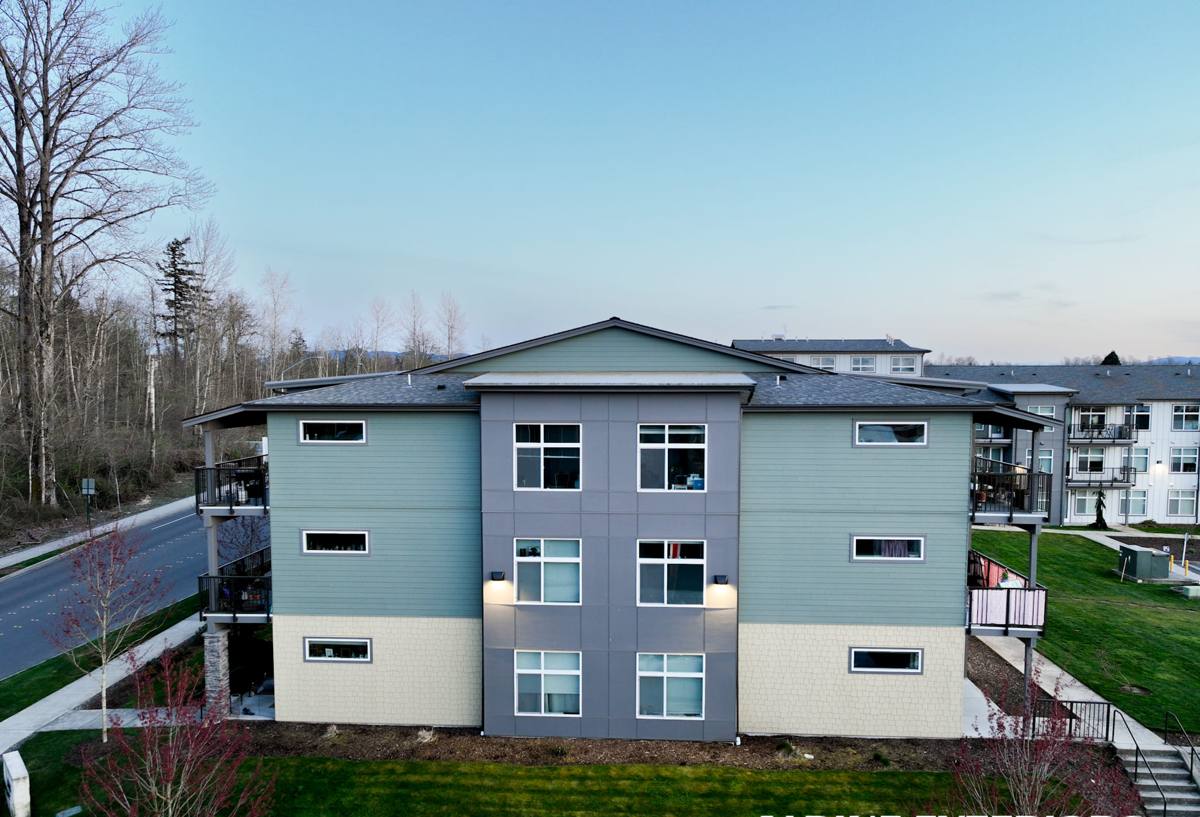
What Sehome's Climate Actually Does to Siding
Salt Air and Driving Rain
Proximity to the bay means airborne salt settles on exterior surfaces year-round, and it doesn't just sit there — it accelerates corrosion on fasteners, trim, and any metal flashing that isn't rated for coastal exposure. Combine that with driving rain that comes in sideways off the water during fall and winter storms, and you get a wall assembly that's constantly tested at every seam, joint, and penetration. Siding that isn't dimensionally stable, or that relies on paint film alone for water resistance, tends to show its age here faster than it would twenty miles inland.
The Long Moss Season
Whatcom County's moss season isn't really a season — for a lot of properties it's most of the year. Moss and algae need shade, moisture, and time, and Sehome's tree cover plus its rain totals give them all three. Moss holds water against a wall system far longer than open air ever would, which is exactly the condition that causes trapped-moisture problems: swelling, delamination, and paint failure in wood-based and OSB-backed siding products, and slow substrate breakdown behind panels that aren't sealed correctly at the edges.
What This Means for a Correct Job
A correct siding replacement in Sehome has to assume the wall will get wet repeatedly and needs to dry out fast and shed moss growth without staining or softening. That means water-resistive barrier detailing, house wrap integration, proper flashing at every window and door, and a rain-screen gap or drainage plane where the substrate calls for it — plus a siding material that doesn't absorb water into its core.
Why We Install Only James Hardie Fiber Cement
We standardized on James Hardie fiber cement siding for every replacement we do, including in Sehome, and we don't install vinyl, LP SmartSide, Cemplank, Allura, primed spruce, or cedar. That's not a marketing line — it's a decision built around what actually holds up in this climate.
- Non-combustible core: fiber cement doesn't feed a fire the way wood-based siding can, which matters as much for insurance considerations as it does for safety.
- Moisture-resistant by composition: Hardie's cement-based formulation doesn't swell, delaminate, or wick water the way engineered wood products can when a seam fails or moss holds moisture against the surface.
- Factory-applied ColorPlus finish: the color is baked on at the factory under controlled conditions, which resists fading and chipping far better than field-applied paint — a real advantage in a climate this wet, where field paint has less time to cure properly.
- HZ5 product engineering: Hardie's HZ5 line is engineered specifically for cold, wet, moisture-heavy climates like the Pacific Northwest, which is the right specification for Whatcom County.
- Strong transferable warranty: a long, transferable warranty backed by a large manufacturer gives homeowners real protection, and it transfers to a buyer if the home sells — a point worth mentioning to anyone near WWU with student-rental or resale turnover in mind.
We're upfront that other products have their place and their advocates. Vinyl is inexpensive and low-maintenance in mild climates; engineered wood siding can look good and install quickly. But in a neighborhood where salt air, driving rain, and moss are constants rather than exceptions, we've made a professional judgment that fiber cement's moisture behavior, fire performance, and finish durability are worth the difference in material cost. We'd rather turn down a lower-cost install than put something on a Sehome home that we don't think will hold up to this climate for the long haul.
What a Correct Siding Replacement Involves
Tear-Off and Substrate Inspection
Old siding comes off entirely so the sheathing underneath can be inspected. This is the step that reveals whether Sehome's moisture history has already caused hidden damage — soft sheathing, compromised framing, or failed old flashing — before new siding goes up over it. Covering a wet or damaged substrate with new siding just hides the problem; it doesn't fix it.
Water-Resistive Barrier and Flashing
A new weather-resistive barrier gets installed correctly lapped, and flashing is integrated at every window, door, and penetration. Given how much driving rain this area sees, flashing details are where most long-term leaks originate if they're rushed or skipped.
Rain-Screen or Drainage Consideration
Depending on the wall assembly, a drainage gap behind the siding gives any moisture that does get past the exterior a path to escape and dry, rather than sitting against the sheathing — a meaningful upgrade for a climate with this much sustained dampness.
Hardie Installation to Manufacturer Spec
Fiber cement performs the way it's engineered to only when it's installed to Hardie's specifications — correct fastener type and placement, proper clearances from grade and roofing, and correct joint treatment. Installed loosely or with shortcuts, even the best product underperforms.
Trim, Caulk, and Final Detailing
Trim and caulking at joints and transitions are finished last, closing off the points where wind-driven rain is most likely to intrude.
How Our Process Works
- Free on-site assessment — we walk the exterior, note problem areas, and check for signs of moisture damage or moss buildup already affecting the current siding.
- Written estimate — a clear scope and price range, with the reasoning behind any substrate repair we're recommending.
- Scheduling around Whatcom County weather — we plan install windows with realistic expectations for rain, since tear-off exposes the wall and timing matters here more than in drier climates.
- Tear-off, inspection, and repair — any compromised sheathing or framing gets addressed before new siding goes on, with photos and a straightforward explanation of what was found.
- Hardie installation to spec — installed by a crew trained on Hardie's requirements, not a generalized approach borrowed from other siding types.
- Final walkthrough — we review the finished work with the homeowner before calling the job complete.
Cost Factors for Sehome Siding Replacement
Every home is different, but the same handful of factors drive cost on most Sehome projects:
| Factor | Why It Matters Here |
|---|---|
| Substrate condition | Moisture-related sheathing repair is more common in older Sehome homes and adds labor and material cost once discovered during tear-off. |
| Home size and wall complexity | Dormers, bump-outs, and multiple stories add cutting, flashing, and labor time. |
| Trim and detail work | Older architectural styles common in the neighborhood often have more trim detail than a simple ranch profile. |
| Siding profile chosen | Hardie lap, shingle-style, and panel profiles carry different material and labor costs. |
| Access and site conditions | Mature trees, tight lots, and sloped yards — all common in Sehome — affect staging and scaffolding needs. |
We don't quote firm numbers without seeing the house, but we'll always walk through which of these factors apply to a specific property and why, so there are no surprises once work starts.
Signs Sehome Homeowners Should Watch For
- Soft or spongy spots when pressing on the siding, especially near the bottom courses or around windows
- Persistent moss or dark streaking that returns quickly after cleaning
- Paint that's bubbling, peeling, or chalking faster than expected
- Visible warping, cupping, or separation at seams and corners
- Rising energy bills that might point to compromised insulation behind failing siding
- Any musty smell along interior walls that share a wall line with visibly aging exterior siding
Catching these early usually means a smaller, less expensive project. Waiting usually means more of the wall assembly needs attention by the time we get there.
Why Hiring a Crew That Already Works Sehome Matters
Whatcom County covers a lot of different microclimates and building eras, and Sehome's mix of older housing stock near the bay isn't identical to a newer subdivision further inland. A crew that's done this work in the neighborhood before recognizes the typical construction details, has a realistic sense of how local weather affects scheduling, and isn't learning the area's quirks on your project. That familiarity translates into fewer mid-project surprises and a tighter, more accurate estimate up front.
If your Sehome home's siding is showing its age, or you're planning ahead before the wet season sets in, we're happy to take a look. Reach out for a free, no-pressure estimate — there's a form below to get started.