 Whatcom County
 Siding Repair Built for South Hill's Weather
South Hill homes sit close enough to the water and exposed enough to weather that siding takes a beating most inland neighborhoods never see. Between salt-laden air drifting up from the bay, driving rain that comes in sideways during winter storms, and a moss season that can stretch from October well into spring, Whatcom County exteriors age faster than the calendar suggests. A siding repair here isn't just patching a hole or replacing a cracked board — it's addressing what caused the damage in the first place, because if you don't, the same spot fails again in a year or two.
We work on South Hill and throughout Whatcom County regularly, which means we've seen how these specific conditions show up on real houses: the north-facing wall that never fully dries out, the trim board that wicks moisture at the miter joint, the lower courses that catch splash-back and grow moss faster than anything above eye level. Repair work done without that local context tends to treat symptoms instead of causes.
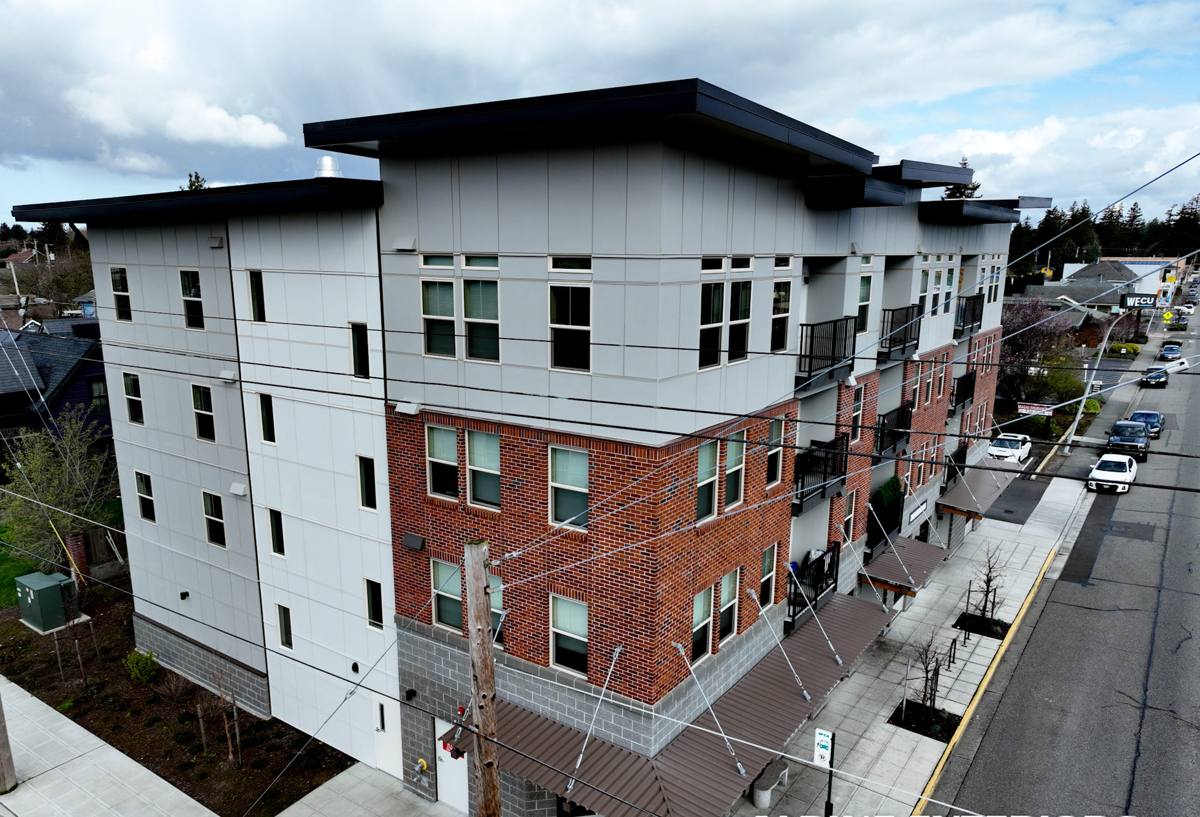
What Whatcom County Weather Does to Siding
Salt Air and Moisture
Proximity to Bellingham Bay and the broader Salish Sea means airborne salt is a real factor for South Hill homes, especially on higher or more exposed lots. Salt accelerates corrosion on fasteners, flashing, and any exposed metal, and it can degrade paint films faster than in drier inland climates. Siding that looks fine from the street can have fastener heads rusting behind the surface, which eventually shows up as staining or a popped board.
Driving Rain
Whatcom County storms often bring rain at an angle, not straight down, which pushes water into laps, joints, and seams that are designed to shed vertical water but weren't sealed or flashed correctly. Wind-driven rain is one of the most common reasons we find hidden moisture damage behind siding that appeared to be holding up fine on the surface.
Moss and Organic Growth
A long, damp moss season means anything that stays wet — a shaded wall, a spot with poor airflow, a horizontal ledge on trim — becomes a growth surface. Moss and algae hold moisture against the siding surface far longer than bare material would, which is a slow but steady contributor to rot, coating breakdown, and paint failure on wood-based products.
Signs Your South Hill Home Needs Siding Repair
- Soft, spongy, or crumbling siding when pressed, especially near the bottom courses or around windows
- Visible cracking, splitting, or buckling in individual boards or panels
- Paint that's peeling, bubbling, or has a chalky texture across large areas
- Dark staining streaks running down from seams, trim, or fastener locations
- Persistent moss or black algae growth that returns quickly after cleaning
- Gaps opening up at butt joints, corners, or where siding meets trim and flashing
- A musty smell or visible moisture on the interior side of an exterior wall
- Warping or waviness visible when you sight down the wall at a low angle
What a Correct Repair Actually Involves
A siding repair that holds up in this climate isn't just cutting out a bad section and nailing in a new piece. It starts with figuring out why that section failed. If the cause was a flashing gap, a missing kick-out, poor caulking, or a drainage plane that wasn't installed correctly behind the siding, replacing the visible board without fixing the underlying issue just buys you a short repeat cycle.
Our Repair Process
- Diagnose the cause, not just the symptom. We check behind the damaged area for water intrusion, deteriorated sheathing, compromised house wrap, or flashing problems before touching the siding itself.
- Assess the extent of hidden damage. Wood rot and moisture damage often extend further than what's visible from outside. We check adjacent boards, framing, and sheathing where warranted.
- Correct the water management first. Flashing, house wrap, caulking, and drainage details get fixed or upgraded before new siding goes on, so the repair doesn't fail for the same reason the original did.
- Match or replace with the right material. Where we're patching existing siding, we match as closely as possible. Where a section has recurring failures, we discuss whether a targeted section replacement in James Hardie fiber cement makes more sense long-term than repeatedly patching a failing material.
- Finish and seal correctly. Proper caulking, paint or factory finish touch-up, and fastener placement following manufacturer specs — details that determine whether the repair lasts five years or fifteen.
Repair vs. Replacement: How We Help You Decide
| Factor | Repair Likely Makes Sense | Replacement Worth Considering |
|---|---|---|
| Extent of damage | Isolated to one or two sections | Recurring across multiple walls |
| Underlying cause | One-time event (impact, minor flashing gap) | Systemic moisture or material breakdown |
| Material condition | Rest of the siding is sound | Widespread rot, warping, or coating failure |
| Material type | Durable material with a fixable flaw | Material prone to repeat moisture issues |
| Age of siding | Well within expected service life | Nearing or past typical lifespan |
We'll always tell you honestly which side of that table your home falls on. If a repair is the right call, we do the repair — we don't push a full replacement a home doesn't need.
Why We Only Install James Hardie When Replacement Is the Answer
When a repair scope grows into a section or full replacement, we install James Hardie fiber cement siding exclusively. We don't install vinyl, LP SmartSide, primed spruce, cedar, or other fiber cement brands. That's a deliberate standard, not a limitation of what we're capable of installing.
Hardie's HZ5 product line is engineered specifically for climates like Whatcom County's — wet, coastal, and prone to moisture cycling. It's non-combustible, resists moisture-driven swelling and rot in a way wood-based siding can't, and comes with a factory-applied ColorPlus finish that holds color far longer than field-applied paint has to in this weather. For salt-air exposure and constant damp cycles, those are the properties that matter most for long-term performance, not just initial appearance.
We're not going to tell you every other siding product is worthless — vinyl and engineered wood products have real uses and real strengths. But given what we consistently see fail on South Hill homes specifically, moisture behavior, coating durability, and long-term stability, Hardie is what we're willing to warranty and stand behind for full replacements in this area.
Why Hiring a Crew That Knows South Hill Matters
Siding repair mistakes are often invisible until months or years later. A crew unfamiliar with South Hill's specific exposure can easily miss things a local crew catches automatically: which walls take the worst wind-driven rain based on lot orientation, where moss accumulates fastest, which flashing details matter most given the salt air, and how aggressively to address moisture behind siding before closing it back up.
We've done repair and replacement work throughout Whatcom County, and that repetition matters. It's the difference between a repair that gets treated as a one-off patch job and one that accounts for why South Hill siding fails the way it does.
What to Expect When You Call Us
- An honest, in-person inspection of the damaged area and surrounding siding
- A clear explanation of what caused the damage, not just what's visibly wrong
- A straightforward recommendation — repair, section replacement, or full replacement — based on actual condition, not upsell pressure
- A written scope of work before anything starts, so you know exactly what's being done and why
- Correct water management and flashing details addressed as part of any repair, not skipped to save time
Maintaining Your Siding Between Repairs
A few habits go a long way toward stretching the life of your siding in this climate, whether it's freshly repaired or holding steady:
- Rinse moss and algae off gently at least once a year, ideally before it establishes a thick mat
- Keep gutters clear so overflow doesn't run down the siding face repeatedly
- Trim back vegetation that keeps a wall shaded and damp longer than the rest of the house
- Check caulking at trim joints and penetrations annually, and recaulk before gaps widen
- Walk the exterior after major storms and note any new cracking, staining, or loose sections early
If you're noticing any of the warning signs above, or you just want a straight answer on whether that section of siding needs a patch or something more, we're happy to take a look. Fill out the form below for a free, no-pressure estimate on your South Hill home.