 Whatcom County
 Siding Repair Built for Fairhaven's Waterfront Climate
Fairhaven sits close enough to Bellingham Bay that its homes deal with a different weather pattern than houses a few miles inland. Salt-laden air, wind-driven rain off the water, and long stretches of shade from mature trees and hillside terrain all add up to siding that ages faster and hides damage longer than homeowners expect. A repair job that works fine in a dry, open subdivision can fail within a season in Fairhaven if it doesn't account for that combination.
We work on siding throughout Whatcom County, but Fairhaven's older housing stock, tight lots, and proximity to the water mean repairs here need a slightly different eye. This page covers what actually goes wrong with siding in this part of Bellingham, how a correct repair is done, and what to look for when you're hiring someone to do it.
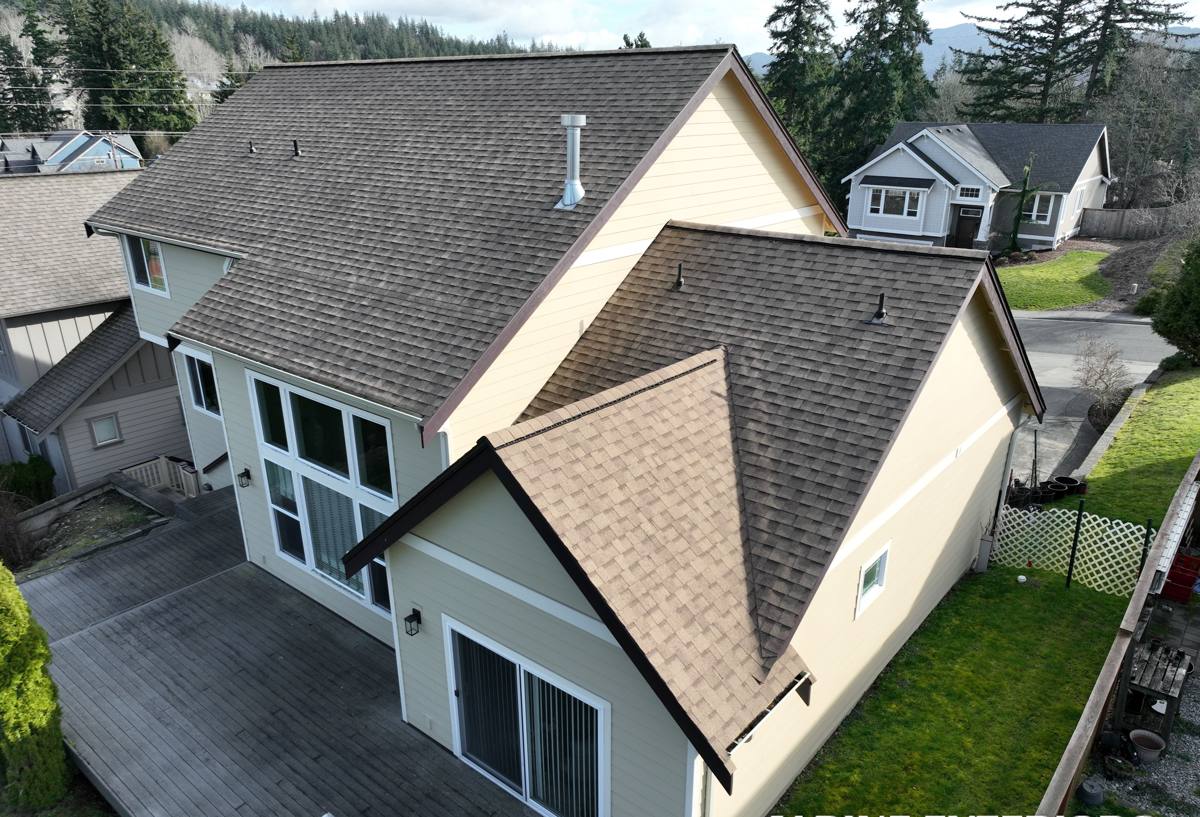
Why Siding Fails Faster Near the Water
Salt Air and Metal Fasteners
Airborne salt from the bay accelerates corrosion on anything metal — nail heads, flashing, trim fasteners, even some housewrap staples. Once a fastener starts rusting, it weakens its grip on the siding and can streak the surface with rust stains that look like a bigger problem than they are. In a lot of cases, the siding itself is fine; it's the fastener that failed first.
Driving Rain and Wind Exposure
Storms coming off the water don't just drop rain straight down — wind pushes it sideways into seams, laps, and butt joints that were never designed to take water head-on. Over years, that constant lateral pressure finds every weak point in caulking, flashing, and overlap gaps. Homes on more exposed sides of a lot tend to show wear years before the sheltered side does.
Moss, Shade, and Moisture Retention
Whatcom County's moss season runs long, and Fairhaven's tree cover and hillside shade make it worse in spots. Moss and algae hold moisture against the siding surface far longer than open sun would allow. On the wrong material, that sustained dampness leads to swelling, soft spots, and paint failure. Even on materials that resist moisture well, moss buildup traps organic debris in seams and accelerates dirt and mildew staining.
What We Look for During a Fairhaven Siding Inspection
Every repair call starts with a full inspection, not just a look at the spot the homeowner pointed out. Damage in one section is often a symptom of a moisture or flashing problem somewhere else on the wall.
- Soft, swollen, or delaminating panels — especially near ground level, decks, and roof-wall intersections
- Rust streaking or bleeding around fastener heads and metal trim
- Moss or algae buildup at seams, under eaves, and on north- and shaded-facing walls
- Cracked, missing, or shrunken caulk at butt joints, window trim, and corner boards
- Flashing that's rusted through, undersized, or missing above windows and doors
- Paint or finish failure — chalking, peeling, or bubbling — that points to moisture getting behind the surface
- Gaps or separation at panel overlaps that let wind-driven rain track inward
Repair vs. Replace: How We Make the Call
Not every damaged section needs full replacement, and not every "small" repair actually solves the problem. The honest answer depends on how far moisture has traveled behind the siding, not just what's visible on the surface.
| Situation | Typical Approach | Why |
|---|---|---|
| Isolated cracked or damaged panel, sheathing dry underneath | Cut out and replace the panel section | Localized damage with no hidden moisture trail behind it |
| Rusted fasteners, siding surface still sound | Remove and refasten with corrosion-resistant hardware | The siding isn't the problem — the fastener is |
| Failed caulking or flashing at a wall penetration | Re-flash and reseal the detail correctly | Stops the source of water intrusion before it spreads |
| Soft or swollen siding over a broad area, staining on sheathing | Wider section replacement, sometimes into adjacent bays | Moisture has already migrated past the visible damage |
| Repeated moss/algae staining with sound material underneath | Clean, treat, and address the shade/drainage cause | Cosmetic issue — replacing sound siding wouldn't fix the root cause |
We'll tell you plainly when a repair is enough and when it isn't. Patching over hidden moisture damage just to save a homeowner money up front usually costs more later, and we won't recommend that.
How a Correct Siding Repair Should Be Done
- Remove the damaged material carefully — cutting back further than the visible damage if there's any sign moisture has spread.
- Inspect the sheathing and housewrap underneath — any soft wood, staining, or torn housewrap gets addressed before new siding goes back on. Covering up a wet wall assembly is how small repairs turn into big ones.
- Correct the flashing and drainage detail — if water was getting behind the siding because of missing or undersized flashing, that gets fixed as part of the repair, not left as-is.
- Match the replacement material and profile — new sections should match the existing siding's exposure, profile, and finish as closely as possible so the repair doesn't stand out.
- Fasten with corrosion-resistant hardware — given Fairhaven's salt-air exposure, that detail matters more here than in most of the county.
- Seal and finish to spec — proper caulking at joints and trim, with attention to the seams that face prevailing wind and rain.
What This Means for Different Siding Materials
The repair approach — and how well a home holds up afterward — depends heavily on what's already on the wall.
Wood and Primed Spruce
Original wood siding on older Fairhaven homes can often be repaired, but it demands ongoing maintenance to keep ahead of moisture and rot, especially in shaded, moss-prone spots. Bare or primed wood that isn't factory-finished is particularly vulnerable to swelling and paint failure in this climate.
Vinyl
Vinyl repairs are usually straightforward to patch, but vinyl doesn't hold up as well to sustained salt air and can become brittle, faded, or warped over time, especially on sun- and wind-exposed elevations. It's also difficult to match older, sun-faded vinyl exactly with new panels.
Fiber Cement (James Hardie)
This is what we install and repair most confidently in this environment. Factory-finished fiber cement resists moisture absorption, doesn't feed mold or moss the way organic materials can, and holds its finish far longer under salt air and driving rain. When we do encounter fiber cement damage in Fairhaven, it's far more often an installation or flashing issue than a failure of the material itself.
Why a Fairhaven Repair Should Be a Job, Not a Patch
A siding repair that only addresses what's visible from the ground is a short-term fix. In a neighborhood with this much water exposure, the real value of hiring a crew that works Fairhaven regularly is knowing which details tend to fail here — which corners collect moss, which elevations take the worst of the wind-driven rain, which older flashing details are undersized by today's standards — and building the repair around that knowledge instead of guessing.
We also don't treat every repair as an opportunity to sell a full siding replacement. If a section can be properly repaired and will hold up, we say so. If the damage points to a bigger moisture problem, we explain exactly why and what we found, so the decision is yours to make with real information.
What to Ask Before Hiring a Siding Repair Crew
- Will you inspect beyond the damaged area to check for hidden moisture, or just patch what's visible?
- What fasteners and flashing materials do you use, and are they rated for coastal/salt-air exposure?
- Can you match the existing siding's profile and finish closely?
- What's your plan if you find soft sheathing or rot once the old siding is removed?
- Do you carry warranty coverage on the repair work itself, not just the materials?
Our Process for Fairhaven Repair Calls
We start with a walk-around inspection of the full exterior, not just the reported problem area, since siding issues in this climate rarely stay isolated. From there we explain what we found, whether it's a repair or a replacement situation, and give you a clear scope and price before any work starts. Repairs are scheduled around Whatcom County's weather windows, since siding work — like most exterior work here — goes better with a dry stretch to work in.
If you're dealing with soft siding, rust staining, moss buildup, or a spot that just doesn't look right, it's worth getting it looked at before the next wet season makes the problem bigger. Reach out for a free, no-pressure estimate — we'll tell you honestly what your siding needs and what it doesn't.