 Whatcom County
 Siding Installation in Cordata: What Whatcom County Weather Does to a House
Cordata sits in north Bellingham, close enough to Bellingham Bay that salt-laden air is a regular part of the weather, and far enough into Whatcom County's rain belt that siding here spends a good chunk of the year wet. That combination is harder on a home's exterior than most homeowners realize. Salt air accelerates corrosion on fasteners and trim. Driving rain, pushed sideways by wind off the water, finds every gap in flashing and caulk that a calmer climate would never expose. And the moss and algae season — which in this part of Whatcom County can run eight months or longer — keeps north- and west-facing walls damp long after a storm has passed.
None of that means siding installation in Cordata has to be a losing battle. It means the installation has to be done with this specific climate in mind, from the water-resistive barrier behind the siding to the material chosen to face it. A lot of siding failures we get called out to inspect aren't failures of the siding material itself — they're failures of installation that a milder, drier climate would have covered for years longer.
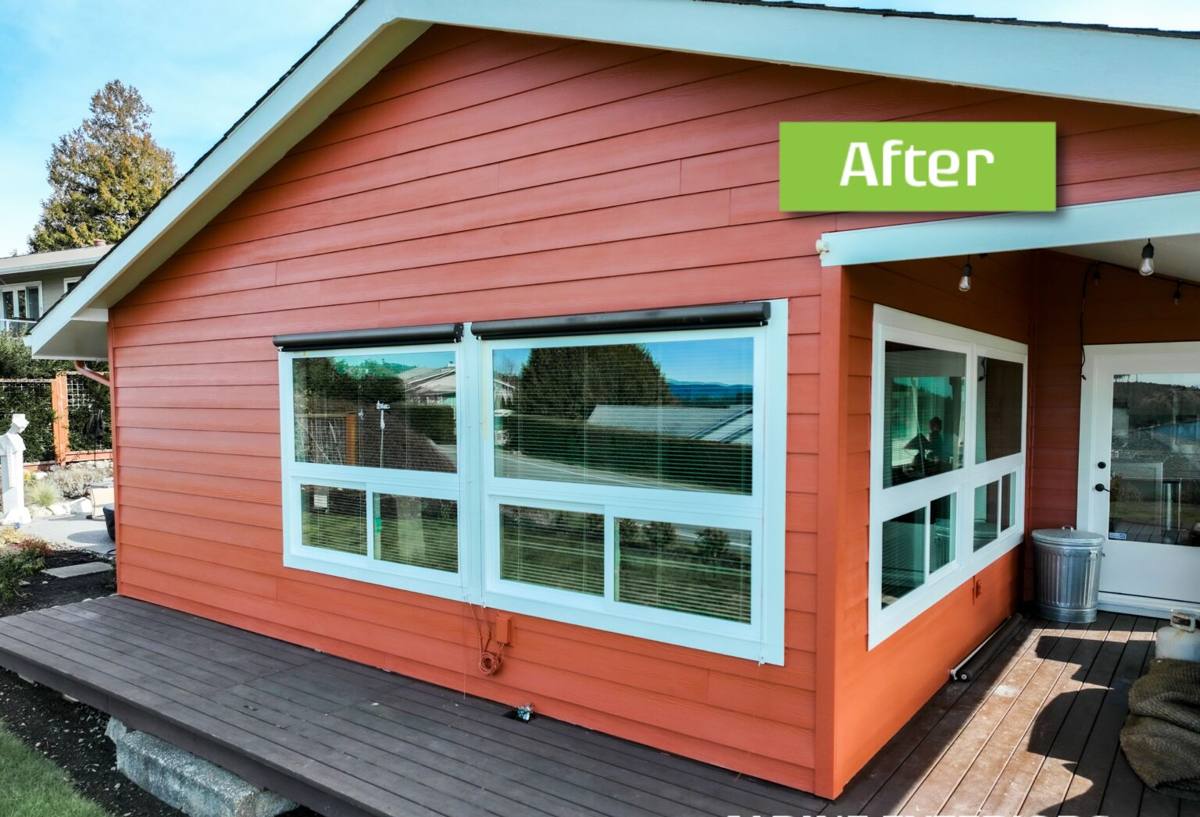
What a Correct Siding Installation Actually Involves
Siding installation is often sold as a cosmetic upgrade. In Whatcom County, it's really a water-management project with a finish layer on top. The visible siding is the last line of defense, not the only one. If the layers behind it aren't built correctly, new siding just delays the same problems.
Tear-Off and What's Underneath Matters More Than the New Siding
A proper job starts with full tear-off, not a re-side over existing material. That lets us inspect the sheathing for rot, soft spots, or trapped moisture that's been building behind old siding for years — common in older Cordata homes where the original weather barrier has degraded. Any damaged sheathing gets replaced before anything new goes up. Skipping this step is the single most common shortcut we see in cheap installation bids, and it's the one that causes the most expensive repairs down the line.
Flashing, Fasteners, and the Details That Fail First
Window and door flashing, kick-out flashing at roof-to-wall intersections, and properly lapped house wrap are what actually keep driving rain out — the siding just sheds the bulk of it. In a climate with salt air in the mix, fastener choice matters too: corrosion-resistant, manufacturer-approved fasteners installed at the correct depth and spacing, not whatever was on hand. We follow James Hardie's published fastening and clearance specs exactly, including the minimum gap between siding and grade, decks, and roof lines, because those clearances are what keep moisture from wicking into the bottom edge of the boards.
Why We Only Install James Hardie Fiber Cement in Cordata
We don't install LP SmartSide, vinyl, Cemplank, Allura, or primed spruce or cedar siding. Each of those products has a place in the market, and each has genuine strengths — vinyl is inexpensive and low-maintenance in mild climates, engineered wood products install quickly, cedar has a look some homeowners want. But every one of them asks a Whatcom County homeowner to take on a trade-off we're not willing to install and then stand behind: vinyl can warp and its seams are a weak point against driving rain; engineered wood and primed wood products depend on an intact paint film and careful field caulking to keep moisture out, and any breach in that film in a climate this wet leads to swelling and rot at the edges; cedar needs ongoing refinishing to hold up against moss and moisture. We standardized on James Hardie fiber cement because it's non-combustible, doesn't rot, and is engineered specifically for climates like this one.
Engineered for This Climate: HZ5 Product Line
James Hardie makes region-specific formulations under its HZ (HardieZone) system, and the Pacific Northwest falls under HZ5 — engineered for high moisture exposure and freeze-thaw cycling rather than the drier or hotter conditions other HZ lines are built for. That's not marketing language; the fiber cement formulation and moisture performance are tuned to the climate zone the home sits in.
ColorPlus Factory Finish vs. Field-Painted Siding
Most James Hardie siding we install goes on with the ColorPlus finish — a factory-applied, baked-on finish rather than paint applied on site after installation. That matters in a climate with this much rain and UV cycling: factory finishes are more consistent and more resistant to fading and moisture intrusion at the finish layer than field-applied paint, and they come with their own finish warranty separate from the product warranty. It also means less repainting over the life of the siding, which matters when a home is exposed to salt air that's hard on any painted surface.
Our Process for a Cordata Siding Installation
The process is the same whether the home is a block from Bellingham Bay or further inland in Cordata — we just adjust the details (fastener spec, drainage plane, trim treatment) to the specific exposure of that wall.
- On-site inspection and estimate. We look at the existing siding, sheathing condition where accessible, trim, and any problem areas — moss buildup, soft spots, gaps at windows — before we quote anything.
- Product and color selection. We walk through James Hardie's plank, shingle, and panel options and ColorPlus color range so the final look fits the home and the neighborhood.
- Tear-off and sheathing repair. Old siding comes off, sheathing is inspected and repaired as needed, and any hidden moisture damage is addressed before it's covered up again.
- Weather barrier and flashing. A new water-resistive barrier goes on correctly lapped, with flashing detailed at every penetration, window, and roofline intersection.
- Siding installation to manufacturer spec. Fastener type, spacing, and clearances follow James Hardie's published requirements — the same requirements that keep the product warranty valid.
- Final walkthrough and warranty registration. We go over the finished job with the homeowner and register the installation for the manufacturer's warranty coverage.
What Siding Installation Costs in Cordata
Every home is different, and we won't quote a number without seeing the house, but the factors that move the price are consistent. This is a general guide to what drives cost up or down, not a quote.
| Cost Factor | Why It Matters |
|---|---|
| Sheathing condition | Rot or moisture damage found during tear-off adds repair work before new siding can go on |
| Home size and wall complexity | More corners, dormers, and trim detail means more labor and material cutting |
| Siding profile chosen | Lap, shingle, and panel styles differ in material and labor cost |
| Color and finish | Factory ColorPlus finishes vs. field-painted trim affect both cost and long-term maintenance |
| Trim and accessory work | Fascia, soffit, and corner trim replacement is often bundled with a siding project |
| Access and site conditions | Lot slope, landscaping, and building height affect scaffolding and staging needs |
Signs Your Cordata Home Needs New Siding Now
Some warning signs are easy to see; others show up as a symptom somewhere else in the house before the siding itself looks obviously bad.
- Persistent moss or dark streaking on north- or west-facing walls that comes back within weeks of cleaning
- Soft or spongy spots when you press on the siding, especially near the bottom edge or around windows
- Paint that's peeling, bubbling, or won't hold a new coat
- Visible gaps, warping, or cupping in individual boards or panels
- Rising energy bills with no other explanation, which can point to a failing weather barrier behind the siding
- Interior signs like musty odors, peeling interior paint, or damp drywall near exterior walls
Why Hiring a Crew That Already Works Whatcom County Matters
Siding installation looks similar on paper everywhere in the country, but the details that make it hold up change with the climate. A crew that mostly works drier inland regions may not think twice about clearance gaps, flashing laps, or fastener corrosion resistance — details that don't cause visible problems for a few years in a dry climate, but show up fast in a place with Whatcom County's rain and salt air exposure. A crew that already works Cordata and the surrounding area knows which walls take the worst of the weather, which older homes tend to have hidden sheathing issues, and which installation details actually matter here versus in a manufacturer's generic spec sheet.
Caring for Your New Siding After Installation
James Hardie fiber cement is low-maintenance compared to wood or engineered wood alternatives, but "low-maintenance" doesn't mean "no maintenance," especially in a climate this wet.
- Rinse siding gently once or twice a year to keep moss and algae from building up, especially on shaded walls
- Keep gutters clean and downspouts directed away from the foundation so water isn't pooling against the bottom edge of the siding
- Trim back vegetation and landscaping so walls can dry out between rain events
- Inspect caulking around windows, doors, and trim annually and have gaps resealed before they let water in
- Address any impact damage or cracked boards promptly rather than waiting for a bigger repair
If you're weighing a siding project for a Cordata home, we're glad to come take a look and talk through what your house actually needs — no pressure, no generic estimate pulled from a spreadsheet. Fill out the form below and we'll set up a time to walk the property with you.