 Whatcom County
 Siding That Has to Work in Sehome's Climate
Sehome sits close enough to Bellingham Bay that salt-laden air is a constant factor on the exterior of every home, not an occasional nuisance. Combine that with Whatcom County's long stretch of driving rain each fall and winter, and a moss season that can run from October well into spring, and you have a set of conditions that punishes any siding material with a weak spot. Paint fades faster in salt air. Wood-based products swell, split, and feed moss and mildew when they stay damp for weeks at a time. Seams and fastener points that aren't detailed correctly become the entry point for the water that eventually rots sheathing behind the cladding.
This page is specifically about James Hardie fiber cement siding installed on homes in Sehome — what the climate demands, what a correct installation actually involves, and how our process is built around the conditions this neighborhood sees every year.
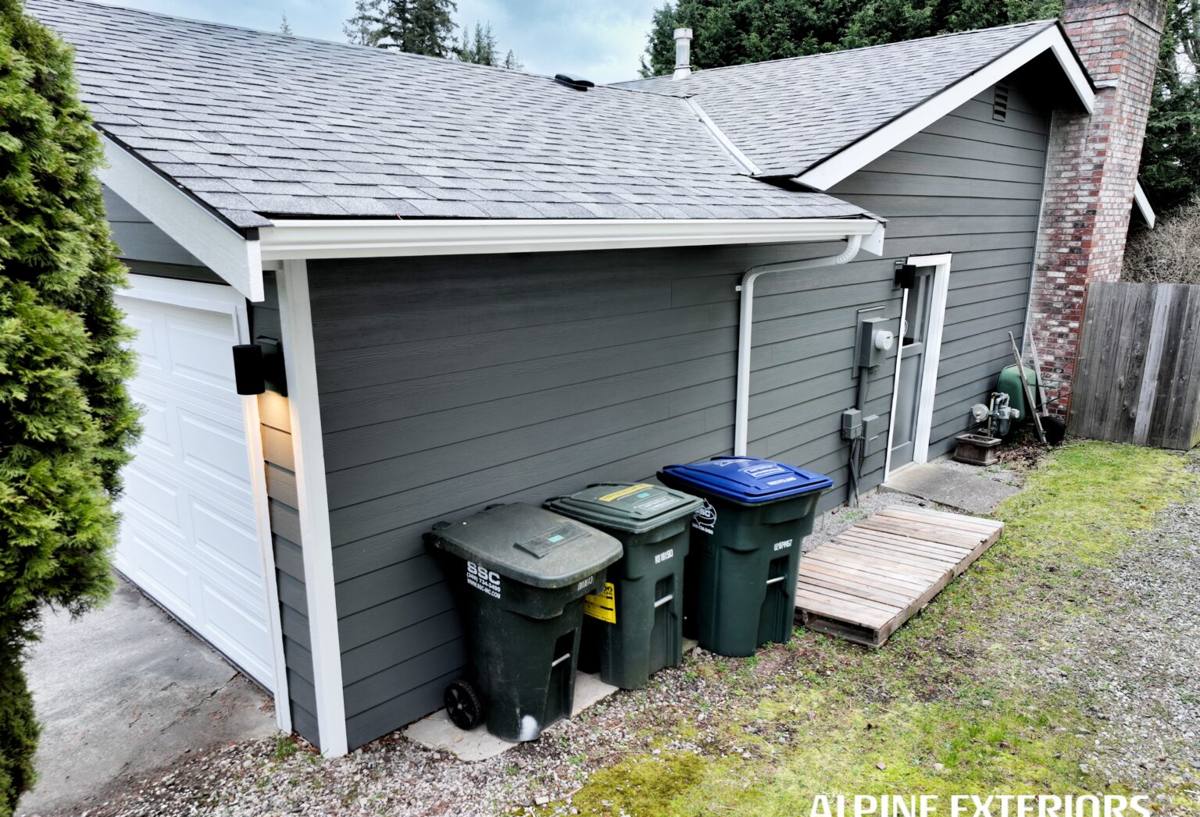
What Sehome's Weather Does to Siding Over Time
Salt Air and Coastal Moisture
Airborne salt accelerates the breakdown of many exterior coatings and can corrode fasteners and trim that aren't rated for coastal exposure. Siding systems with factory-applied, baked-on finishes hold up far better here than field-painted materials, because the finish isn't relying on a homeowner's repaint schedule to keep moisture and salt out of the substrate.
Driving Rain
Whatcom County storms frequently come in sideways off the water rather than straight down. That matters for siding because it puts real pressure on horizontal laps, butt joints, and anywhere trim meets field siding. A product and installation method that only performs well in gentle, vertical rain isn't enough for a Sehome exposure.
Moss and Sustained Dampness
Shaded lots, tree cover, and the region's extended wet season create ideal conditions for moss and algae to colonize any surface that stays damp. Organic materials — wood, some engineered wood products — give moss something to root into over time. Non-organic siding doesn't feed moss growth the same way, though it still needs proper drainage behind it and periodic cleaning to stay looking sharp.
Why We Only Install James Hardie
We standardized on James Hardie fiber cement siding for every home we work on, including here in Sehome, for reasons that come directly from what this climate does to a house over ten, twenty, and thirty years:
- Non-combustible core material — fiber cement doesn't feed a fire the way wood-based sidings can.
- ColorPlus factory finish — baked on in a controlled environment, which holds up better against salt air and UV than most field-applied paint jobs, and it's backed by its own finish warranty.
- Climate-engineered HZ product lines — Hardie formulates its HZ5 product for climates like ours, meaning the material itself is engineered for the moisture and temperature swings we actually get.
- Dimensional stability — fiber cement doesn't swell and contract with moisture the way wood and some engineered wood products do, which means fewer open joints and less caulk failure over time.
- Strong transferable warranty — one that holds value if a Sehome home changes hands, which matters in a market where buyers ask hard questions about exterior condition.
We don't install LP SmartSide, vinyl, Cemplank, Allura, primed spruce, or cedar. Each of those products has real strengths, but none of them combine non-combustibility, factory-cured finish durability, and long-term dimensional stability the way Hardie does — and in a climate that stresses siding as much as Sehome's does, that combination is what determines whether a job still looks good in fifteen years or needs early intervention.
What a Correct Hardie Installation Actually Involves
The material is only half the equation. Most siding failures we get called to diagnose — on any brand — trace back to installation shortcuts, not the product itself. On a Sehome home, correct installation means:
Water Management Behind the Siding
A proper weather-resistive barrier, correctly lapped and taped, installed before a single piece of siding goes up. Every penetration — hose bibs, electrical, vents — gets flashed so water sheds outward instead of tracking behind the cladding.
Clearances and Gaps
Hardie specifies minimum clearances from grade, roof lines, decks, and other abutting surfaces. Skipping these is one of the most common shortcuts we see on prior installs, and it's a direct path to trapped moisture at the bottom courses — exactly where driving rain and splash-back do the most damage.
Fastening and Fit
Correct fastener type, spacing, and placement, with no face-nailing where blind-nailing is called for, and no over-driven nails that crack the board's edge and create a moisture entry point.
Joint and Seam Treatment
Butt joints and trim transitions detailed to shed water rather than rely on caulk as the only defense — caulk is maintenance, not waterproofing, and treating it as the latter is how joints fail early in a wet climate like ours.
Our Process on a Sehome Job
| Step | What Happens |
|---|---|
| 1. Assessment | We look at existing siding condition, sheathing, trim, and any signs of past moisture intrusion before quoting anything. |
| 2. Tear-off and inspection | Old siding comes off and we inspect sheathing for rot or damage before it's covered back up — this is the point where hidden problems get caught, not after. |
| 3. Weather barrier install | House wrap or equivalent barrier installed and properly lapped, with all penetrations flashed. |
| 4. Hardie installation | Siding installed to manufacturer clearance and fastening specs, with attention to butt joints and trim transitions. |
| 5. Trim and caulk detailing | Trim, corners, and joints finished so water sheds away from the wall assembly. |
| 6. Final walkthrough | We walk the job with the homeowner before calling it done. |
Why Hiring a Crew That Already Works Sehome Matters
Siding installation isn't just about following a spec sheet — it's about applying that spec to the specific exposure a given home faces. A crew that regularly works in Sehome and the surrounding Whatcom County area already knows which elevations take the brunt of driving rain off the bay, which lots hold moisture longest under tree cover, and where moss tends to establish first on a north-facing wall. That local pattern recognition shows up in small decisions — extra attention to a particular corner detail, a slightly more conservative clearance at grade — that a crew unfamiliar with this specific climate might not think to prioritize.
It also matters for permitting and inspection. Local building department expectations and typical inspection points are things a crew that works here regularly already has a working relationship with, which keeps a project moving instead of stalling on avoidable back-and-forth.
Comparing Options for a Sehome Home
| Factor | James Hardie Fiber Cement | Vinyl | Wood / Engineered Wood |
|---|---|---|---|
| Salt air / UV resistance | Factory-cured ColorPlus finish, engineered for climate exposure | Can fade and become brittle over time | Relies on ongoing repainting or sealing |
| Moisture and moss resistance | Non-organic, dimensionally stable | Doesn't feed moss but can trap moisture behind panels if not vented properly | Organic material, more susceptible to moss and rot if detailing fails |
| Fire resistance | Non-combustible core | Combustible | Combustible |
| Long-term maintenance | Periodic cleaning, minimal repainting needed | Low maintenance but limited repair options when damaged | Regular repainting/sealing required |
Cost Factors Homeowners Should Understand
Every Sehome home is different, so we don't quote sight unseen, but the main variables that drive cost on a Hardie project are consistent:
| Factor | Why It Matters |
|---|---|
| Existing wall condition | Sheathing repair or rot remediation adds scope that isn't visible until tear-off. |
| Home size and complexity | More corners, trim details, and roof intersections mean more labor and material. |
| Product selection | Hardie lap siding, shingle-style panels, and board-and-batten carry different material and labor costs. |
| Color and finish | ColorPlus factory finishes versus primed-for-field-paint options affect both cost and long-term maintenance. |
| Access and site conditions | Tight lots, multi-story sections, and landscaping can affect labor time. |
Maintaining Hardie Siding in a Whatcom County Climate
Even a correctly installed, quality product benefits from basic upkeep in a climate this wet. A simple annual routine goes a long way:
- Rinse siding once or twice a year to remove salt residue, pollen, and organic buildup before it can stain the finish.
- Check caulked joints and trim transitions for cracking or separation, especially after the first winter in a new install.
- Keep gutters clear so overflow isn't running down the siding face and concentrating moisture at specific spots.
- Trim back vegetation and tree cover that keeps a wall section shaded and damp longer than the rest of the house.
- Watch north-facing and heavily shaded elevations for early moss growth and address it before it spreads.
If you're weighing siding options for a home in Sehome, we're happy to take a look and walk you through what correct James Hardie installation would involve on your specific house — no pressure, no obligation. Use the form below to request a free estimate.