 Whatcom County
 Why Siding Installation in Samish Is Its Own Job
Samish sits in that stretch of Whatcom County where marine air off the water, heavy seasonal rain, and shaded tree cover all combine against a house's exterior at once. That's a different combination than what a siding crew deals with on a dry, open lot ten miles inland. If you're planning a siding installation on a Samish home, the material and the install details both need to be chosen with that specific exposure in mind — not just whatever's cheapest at the yard or fastest to hang.
We install siding across Whatcom County, and Samish jobs get treated differently from the start. The moisture load is higher, the drying window between rain events is shorter, and moss pressure on north- and shade-facing walls is constant for much of the year. A siding job that ignores those facts looks fine for a season or two and then starts showing problems that are expensive to trace back to the install.
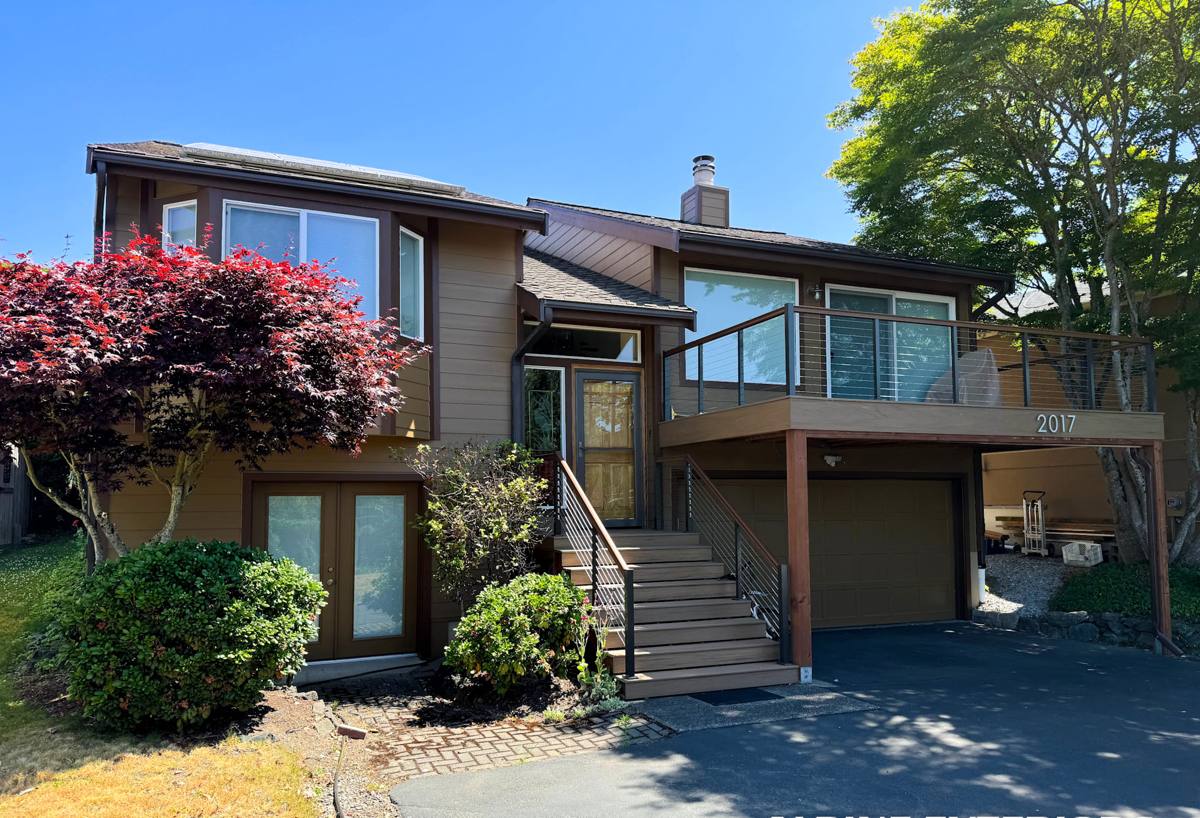
What the Local Climate Actually Does to Siding
Salt Air
Proximity to saltwater accelerates corrosion on any exposed metal — fasteners, flashing, trim edges — and it also degrades certain paint and coating systems faster than a standard inland exposure would predict. Siding, fasteners, and flashing all need to be selected and installed with that in mind, not treated as an afterthought.
Driving Rain
Whatcom County gets a lot of rain that doesn't fall straight down — wind-driven rain pushes moisture sideways and up under laps, around penetrations, and into any gap that isn't properly lapped, flashed, or sealed. A siding system that only handles vertical rainfall well isn't enough here; the water-management details behind and around the panels matter as much as the panels themselves.
The Long Moss Season
Shaded, tree-covered lots — common around Samish — stay damp longer after every rain event. That extended dampness is exactly what moss, algae, and mildew need to take hold on siding surfaces, especially on north-facing walls and anywhere overhangs are shallow. Some siding materials resist that growth far better than others, and surface prep and finish quality make a real difference too.
What a Correct Siding Installation Involves
Good siding is a system, not just a skin. The visible panels get the attention, but most of the actual performance — or failure — happens in the layers underneath. A correct install for a Samish home includes:
- A continuous weather-resistant barrier installed with proper overlaps and sealed penetrations
- A rainscreen gap or drainage plane so water that gets behind the siding can actually drain and the wall can dry out between rain events
- Properly flashed windows, doors, and any roof-to-wall transitions, with kick-out flashing where rooflines meet walls
- Correct fastener type, spacing, and penetration depth for the specific siding product being installed
- Proper clearance at the bottom of the siding above grade, decks, and roof lines so water and moss-prone debris don't sit against the material
- Caulking and sealant used only where the manufacturer specifies it — over-caulking can trap moisture just as easily as under-caulking lets it in
Skip any one of these and the siding itself can be a good product and still fail early. Most of the siding problems we get called out to inspect in Whatcom County trace back to something in this list, not to the panel material.
Why We Only Install James Hardie Fiber Cement
We standardized on James Hardie fiber cement siding for every home we work on, including in Samish, and it's a deliberate call rather than a brand preference. Fiber cement is non-combustible, dimensionally stable in wet-dry cycling, and holds a factory-applied ColorPlus finish that's engineered to resist fading and moisture intrusion better than field-applied paint on wood-based products. Hardie's HZ5 product line in particular is engineered for cold, wet, high-moisture climates — which is exactly what Samish sees for most of the year.
We don't install vinyl, LP SmartSide, primed spruce, cedar, or other fiber cement brands like Allura or Cemplank. Each of those products has real strengths, but none of them combine non-combustibility, factory-cured moisture resistance, and a strong transferable warranty the way Hardie does — and in a climate that stays damp as long as Samish does, that combination is what actually protects the house over decades, not just years.
Material Comparison for This Climate
| Material | Moisture/Moss Resistance | Salt Air Behavior | Finish Longevity |
|---|---|---|---|
| James Hardie Fiber Cement (HZ5) | Strong — dimensionally stable, engineered for wet climates | Handles well with proper fasteners/flashing | Factory ColorPlus finish, long warranty |
| Vinyl | Won't rot, but can trap moisture behind panels; prone to warping in temperature swings | Can become brittle faster near salt exposure | Color fades over time, not repaintable easily |
| LP SmartSide (engineered wood) | Vulnerable to moisture at cut edges and joints if not perfectly sealed | Edge sealing critical near salt air | Field finish wears faster than factory-cured systems |
| Cedar/Primed Spruce | Needs ongoing maintenance to resist moss, rot, and moisture | Salt air accelerates weathering | Repainting/staining required on a recurring cycle |
Our Samish Siding Installation Process
- On-site assessment — we look at sun/shade exposure, roofline transitions, existing moisture damage, and how exposed the home is to wind-driven rain and salt air.
- Tear-off and sheathing inspection — old siding comes off and we check the sheathing underneath for rot or existing moisture problems before anything new goes on.
- Weather barrier and drainage plane installation — a continuous barrier and rainscreen gap go in, sized and detailed for the amount of rain exposure the wall actually gets.
- Flashing at every penetration — windows, doors, vents, and roof-to-wall intersections all get flashed correctly, not just caulked.
- Hardie panel installation — installed to manufacturer fastening specs, with correct clearances above grade, decks, and rooflines.
- Final detailing and cleanup — trim, caulk joints (only where specified), and a walk-through so you understand what was done and why.
Signs Your Current Siding Is Already Losing to the Climate
- Persistent moss or black streaking on north-facing or shaded walls that comes back within weeks of cleaning
- Soft or spongy spots when you press on siding near the bottom edge, around windows, or below rooflines
- Visible warping, bubbling, or separation at seams and panel joints
- Paint or finish that's peeling or chalking faster than it should for its age
- Rusting fasteners or streaking below nail heads and trim
Any of these on a Samish home is worth a look before it spreads further into the wall assembly. Caught early, it's a siding repair. Left alone through another wet season, it often becomes a sheathing and framing repair.
What Drives Cost on a Samish Siding Job
| Factor | Why It Matters Here |
|---|---|
| Extent of hidden moisture damage | Shaded, damp lots common in Samish increase the odds of sheathing repair being needed once old siding is removed |
| Home size and wall complexity | More corners, dormers, and roof-wall intersections mean more flashing detail work |
| Existing siding removal | Multiple layers of old siding or trapped moisture behind it add tear-off time |
| Trim and accessory selection | Hardie trim, soffit, and fascia options affect material cost and installation time |
| Access and site conditions | Tree cover, slopes, and tight lot lines around Samish properties can affect staging and labor time |
We give straightforward, itemized estimates rather than vague ranges — you'll know what's driving the number before you commit to anything.
Why It Matters That We Already Work in Samish
A crew that already installs siding around Samish and the rest of Whatcom County isn't guessing at how this climate behaves — we've seen how moss builds on shaded walls here, how driving rain finds gaps that a drier region's install standards would miss, and how salt air chews through the wrong fastener choice over a few winters. That local pattern recognition shows up in the details: where we add extra flashing attention, how we handle drainage planes, and which fastener and trim choices we won't cut corners on.
It also means straightforward accountability. We're not a crew passing through from out of the area — we're available for the warranty conversation, the follow-up question, and the occasional adjustment a house needs after its first real wet season with new siding.
Maintenance After Installation
Correctly installed Hardie siding is low-maintenance, not no-maintenance. A short annual routine keeps it performing the way it's designed to in this climate:
- Rinse off accumulated moss, algae, or debris on shaded walls before it gets a foothold
- Keep gutters and downspouts clear so water isn't sheeting down wall surfaces
- Trim back vegetation and tree cover that keeps walls damp longer than they need to be
- Check caulking at trim and penetrations periodically and touch up if it's cracking or pulling away
- Address any impact damage or chipped finish promptly so moisture can't get behind the panel
If your Samish home needs new siding — or you just want an honest read on whether what's on the walls now is holding up — we're happy to come take a look. The estimate is free, there's no pressure, and you'll get a straight answer about what your home actually needs.