 Whatcom County
 Fiber Cement Siding Built for the Samish Area's Weather
Homes in and around Samish deal with a specific combination of punishment: salt-laden air drifting in off the water, driving rain that comes sideways during winter storms, and a long, damp moss season that can stretch from October well into spring. Siding here doesn't fail because it's old — it fails because it was never matched to this climate in the first place. We install James Hardie fiber cement siding exclusively in this area because it's one of the few claddings that holds up to all three of those stresses at once without constant babysitting.
This page is about that one job, done right, in this one area. Not a general overview of siding materials — a straight answer on what a Samish-area home actually needs from its siding, what correct installation looks like here, and why the crew doing the work matters as much as the product going up.
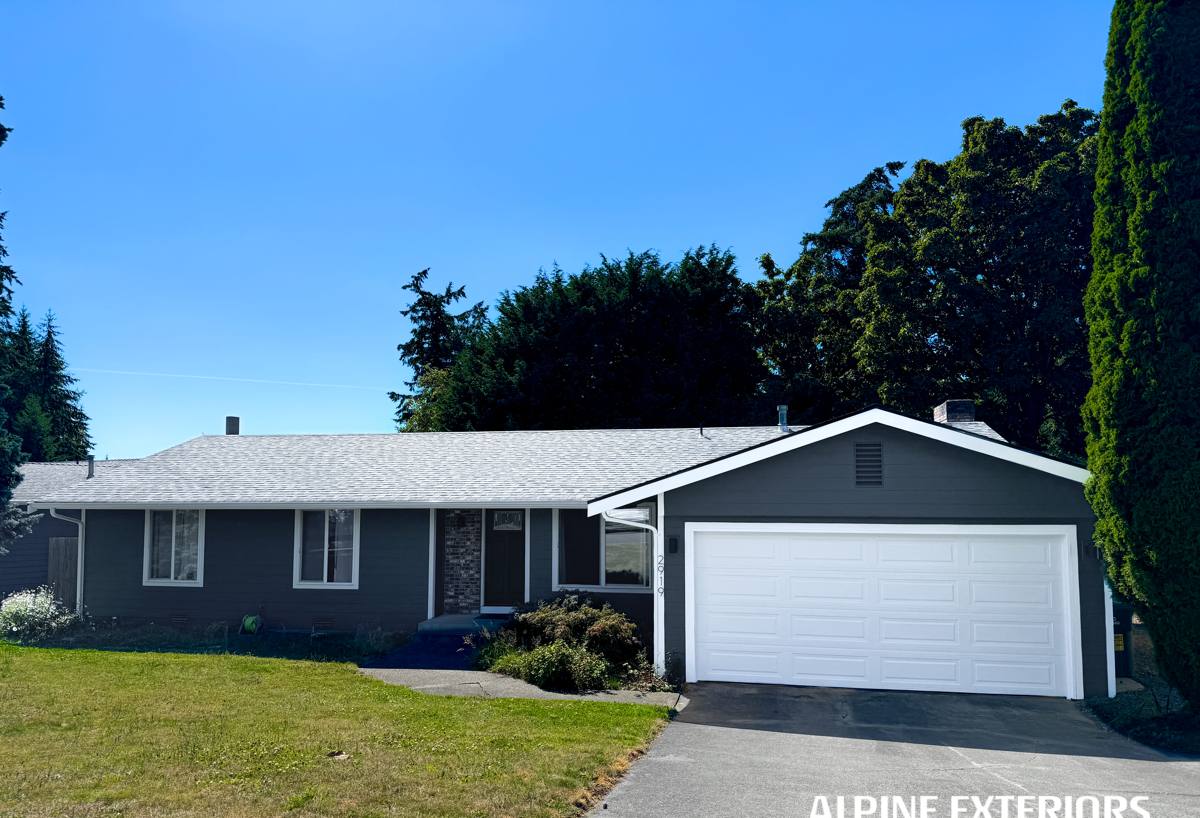
What Samish's Climate Actually Does to Siding
Salt Air
Proximity to Puget Sound and Bellingham Bay means airborne salt is a constant, low-grade corrosive presence. It accelerates fastener corrosion, degrades cheap paint finishes faster than inland exposure would, and works its way into any seam or crack that isn't properly sealed. Siding that isn't engineered with a factory finish built to resist this kind of exposure will chalk, fade, and streak years ahead of schedule.
Driving Rain
Whatcom County storms don't just drop rain straight down — wind pushes it sideways into wall assemblies, especially on west- and south-facing elevations that catch weather off the water. That means water management at every joint, seam, and penetration is not optional. A siding job that looks fine on a calm day can still be letting wind-driven rain behind the cladding during a real storm if the flashing and lap details weren't done correctly.
Moss Season
The extended damp period that defines a Pacific Northwest fall through spring is exactly the environment moss and algae need to take hold. Wood-based and some engineered wood siding products absorb moisture and give organic growth something to root into. Fiber cement doesn't feed moss the way wood or wood-composite products do, but it still needs correct clearances, drainage, and ventilation behind it to keep moisture from lingering against the wall.
Why We Install Only James Hardie in This Area
We don't install LP SmartSide, vinyl, Cemplank, Allura, primed spruce, or cedar. That's not a marketing position — it's a standard we hold because of what we've seen these products need to perform correctly over time, especially in a climate like this one.
- Non-combustible core: Hardie's fiber cement composition doesn't burn, unlike wood-based and engineered wood sidings — a meaningful difference during regional wildfire smoke seasons and general fire risk.
- ColorPlus factory finish: Baked-on, not field-applied, so it resists the fading and chalking that salt air and UV exposure accelerate on site-painted products.
- HZ5 and HZ10 engineering: Hardie's climate-specific product lines are formulated for moisture and freeze-thaw cycling rather than being a one-size-fits-all product shipped to every region.
- Moisture behavior: Fiber cement doesn't swell, rot, or delaminate the way wood-based products can when repeatedly saturated — a real factor during an eight-month wet season.
- Transferable warranty: A meaningful, documented warranty structure that holds up if a homeowner sells within the coverage period.
Vinyl and other budget options aren't without merit — they're inexpensive and easy to source. But vinyl expands and contracts significantly with temperature swings, can crack in cold snaps, and doesn't offer the impact resistance or fire performance fiber cement does. LP SmartSide and similar engineered wood products perform well in some climates, but their long-term moisture tolerance is a harder sell in an environment with this much sustained dampness. We'd rather install one product correctly, every time, than juggle five products with five different failure modes.
What a Correct Fiber Cement Job Involves
Fiber cement siding is only as good as the assembly behind it. The board itself resists moisture well, but a poorly detailed installation can still let water into the wall cavity — and once that happens, the siding gets blamed for a problem that was actually a flashing or clearance failure.
The details that matter most here
- A weather-resistant barrier installed and lapped correctly, shingle-style, so water is always directed outward and down
- Rainscreen or furring strips where conditions call for it, to let the wall assembly drain and dry rather than trapping moisture against the sheathing
- Correct minimum clearance between the bottom of the siding and grade, decks, patios, and roof lines — a common corner-cutting point that causes wicking and rot at the base
- Stainless steel or hot-dip galvanized fasteners driven at the correct depth and spacing, since salt air will find and exploit under-driven or corroding nails over time
- Proper flashing and kick-out details at every window, door, and roof-to-wall intersection, aimed specifically at the wind-driven rain this area sees
- Factory-cut and factory-primed edges wherever possible, with field-cut edges properly sealed to keep raw fiber cement from absorbing moisture
Skipping any one of these doesn't show up on day one. It shows up two or three winters later, after enough wind-driven storms and enough sustained dampness have found the gap.
Our Process for a Samish-Area Job
1. Assessment
We walk the exterior, check the current siding and the wall assembly behind it where visible, and look specifically at drainage paths, existing moisture damage, and how the home is oriented relative to prevailing wind and rain.
2. Product and Line Selection
We recommend the specific Hardie product and HZ line suited to the home's exposure — a south-facing wall catching direct weather off the water may call for different detailing than a sheltered elevation.
3. Prep and Water Management
Old siding comes off, the sheathing is inspected for hidden rot or moisture damage, and the weather-resistant barrier and drainage plane are installed before a single board of new siding goes up.
4. Installation to Manufacturer Spec
Fastener type, spacing, clearances, and flashing details are followed to Hardie's published installation requirements — not shortcuts, not "close enough." This is also what keeps the manufacturer warranty valid.
5. Final Walkthrough
We review the completed work with the homeowner, including where flashing and clearances were addressed, so there's a clear record of what was done and why.
Cost Factors for This Job in This Area
| Factor | Why It Matters Here |
|---|---|
| Home size and wall complexity | More corners, gables, and penetrations mean more flashing detail work, which takes time to do correctly in a wind-driven-rain climate |
| Current wall condition | Hidden moisture damage behind old siding, more likely after years of sustained damp exposure, adds repair scope before new siding goes on |
| Product line (HZ5 vs. HZ10) | Climate-matched lines cost more upfront but are engineered for this region's moisture and freeze-thaw exposure |
| ColorPlus vs. field-painted finish | Factory finish costs more initially but resists the fading and chalking salt air accelerates on site-applied paint |
| Rainscreen/drainage detailing | Added labor and material, but often the difference between siding that lasts and siding that traps moisture |
| Access and site conditions | Steep lots, mature landscaping, or tight setbacks near the water can add labor time |
We give straightforward, itemized estimates rather than one flat number, so homeowners can see exactly what's driving the cost and where the money is going toward long-term performance rather than just labor.
Why a Crew That Already Works This Area Matters
A contractor who only occasionally works Whatcom County's coastal microclimates is guessing at details a local crew already knows cold — how far wind-driven rain actually pushes water up a wall on an exposed elevation, which orientations need extra flashing attention, and how long moss season really runs in a given year. That local knowledge shows up in the small decisions made on the job, not in anything a homeowner would think to ask about upfront.
Before hiring anyone for a fiber cement job here, it's worth asking:
- Are you James Hardie certified or factory-trained, and can you show it?
- What fastener type and clearance spec will you use, and why?
- Will you install a rainscreen or drainage plane, or nail directly to the barrier?
- How do you handle flashing at windows, doors, and roof-to-wall intersections?
- What does your warranty cover, and is it transferable if the home sells?
- Can you point to other fiber cement work you've done in this specific area?
If a contractor can't answer these clearly and specifically, that's worth noticing before any siding goes up.
Get a Straight Answer for Your Home
If your Samish-area home's siding is showing chalking, staining, soft spots, or moss buildup that keeps coming back no matter how often it's cleaned, it's worth having someone look at what's actually happening behind the surface before deciding on a fix. We'll walk the exterior, tell you honestly what we see, and if fiber cement siding is the right call, explain exactly what correct installation for your home and exposure would involve — no pressure, no inflated scope. Reach out below for a free estimate.