 Whatcom County
 Deck Replacement for Samish Homes
If you live in the Samish area of Whatcom County and your deck has started to feel soft underfoot, gap at the boards, or grow a permanent green film no matter how often you scrub it, you're not imagining things. Decks here take a beating that decks in drier parts of the country never see. Between the salt-tinged air, the long stretches of driving rain, and a moss season that can run from October clear into May, a deck that was built without those conditions in mind starts failing years before it should.
This page is about one job, done right, in one area: full deck replacement for Samish homes. Not a quick patch, not a fresh coat of stain over rot — an honest look at what your deck needs, and a rebuild that's actually suited to where it sits.
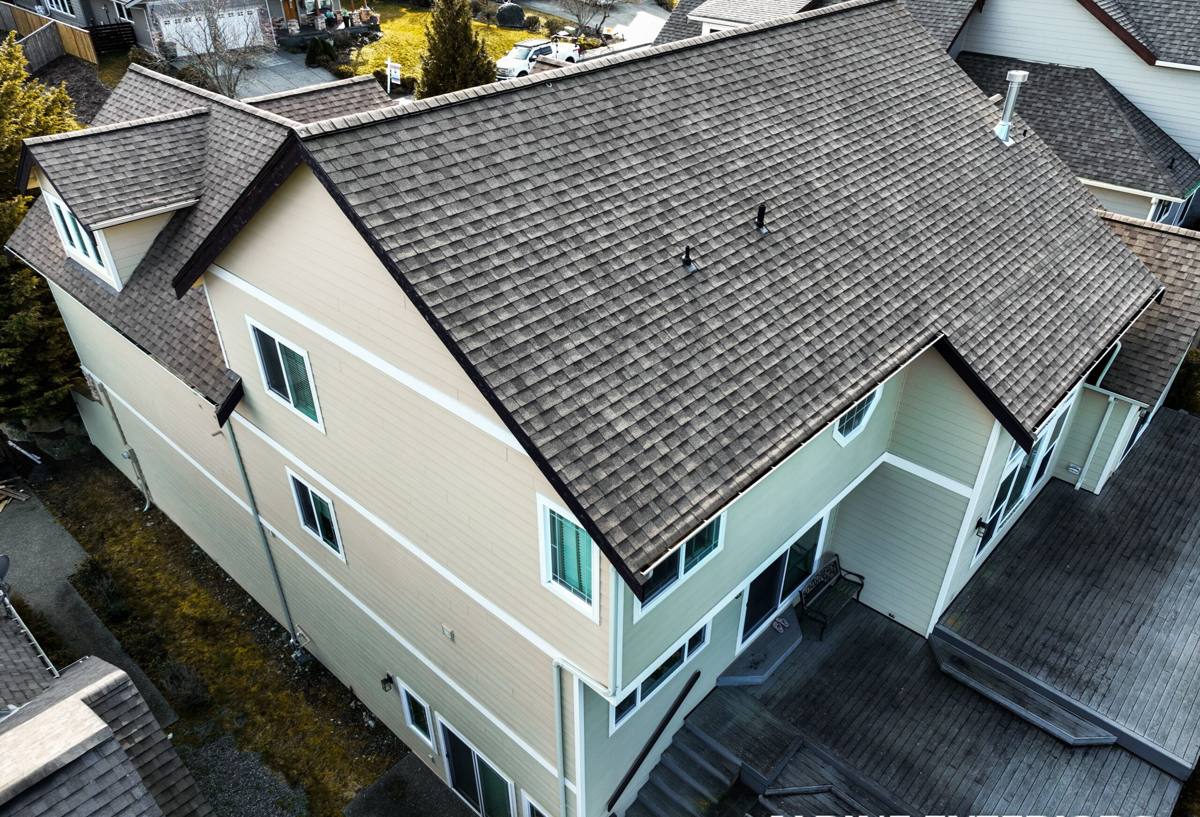
Why Decks Wear Out Faster Here
Salt Air and Metal Fasteners
Whatcom County's proximity to Bellingham Bay and the broader Salish Sea means airborne salt reaches inland further than most homeowners expect. Salt air accelerates corrosion in standard fasteners, joist hangers, and railing hardware. Once a fastener starts rusting, it weakens from the inside — often long before any visible staining shows up on the surface. A deck built with the wrong-grade hardware can look fine for years while its structural connections quietly fail.
Driving Rain and Water Intrusion
Our rain doesn't just fall straight down — wind-driven rain gets pushed sideways into ledger boards, under railing posts, and into any gap where flashing was skipped or done poorly. Over time, that moisture works into end grain, fastener holes, and the ledger connection where the deck meets the house — one of the most common failure points we find on older decks in this region.
The Long Moss Season
Moss and algae need shade, moisture, and time — and Whatcom County gives them all three for most of the year. On horizontal deck surfaces, moss holds water against the wood surface long after a dry day elsewhere would have let it evaporate. That constant dampness is what actually causes rot; the moss itself is just the visible symptom.
Repair or Replace? Reading the Signs
Not every tired-looking deck needs a full replacement, but in Samish's climate, cosmetic problems are often standing in for structural ones. Here's how we tell the difference on a walkthrough.
- Soft or spongy decking boards, especially near the house or along the outer rim — usually rot, not just wear
- Rust streaks below joist hangers or fastener heads — a sign hardware is failing, not just staining the wood
- Gaps opening up between boards that weren't there when the deck was newer
- Persistent moss or dark staining that returns within weeks of cleaning
- Railing posts that wiggle or flex when pushed — often a sign the post base or blocking has rotted
- Visible daylight or gaps at the ledger board where the deck attaches to the house
- A deck older than 15–20 years that has never had the substructure inspected
If it's one board or one section, repair usually makes sense. If the ledger connection, multiple joists, or the footings are compromised, replacement is the honest recommendation — patching a failing structure just delays the real cost and adds risk.
What a Correct Deck Replacement Actually Involves
A deck replacement done right is a structural project first and a finish project second. The parts nobody sees are the parts that determine whether the deck lasts 10 years or 30.
Ledger and Flashing
The ledger board — where the deck attaches to the house — is the single most important connection on the entire structure, and it's the place we see the most water damage in this climate. A correct ledger installation uses proper flashing that directs water away from the house framing, not just caulk covering a gap. This is also where we check for hidden rot in the rim joist behind the siding, which is common on older homes.
Footings and Framing
Footings need to sit below frost depth and bear on undisturbed, stable soil — something that matters on the varied soils found around Whatcom County. Undersized or shifting footings are a leading cause of decks that develop a noticeable bounce or lean over time. Joists, beams, and posts get sized to the actual load and span, not just whatever matched the old deck.
Fastener and Hardware Grade
Given the salt air, we use corrosion-resistant, code-rated hardware and fasteners rated for exterior and ground-contact use, not standard interior-grade hardware that will start rusting within a few seasons.
Drainage and Airflow
Water needs somewhere to go. That means correct board spacing, joist spacing that allows air circulation underneath, and grading or drainage solutions so water doesn't pool under the deck and feed rot or moss growth from below.
Choosing a Decking Material for Samish's Climate
There's no single "best" decking material — there's a best fit for your budget, maintenance appetite, and how much moss and moisture exposure your specific lot gets. Here's an honest comparison of the main options we install.
| Material | Moisture Behavior | Moss Resistance | Maintenance |
|---|---|---|---|
| Pressure-treated wood | Absorbs and releases moisture; can cup or check if not sealed regularly | Needs regular cleaning to prevent moss buildup | Annual cleaning and re-staining/sealing |
| Cedar | Naturally moisture- and rot-resistant, but still an organic material | Better than treated wood but still needs upkeep | Periodic oiling or sealing to keep appearance |
| Composite decking | Doesn't absorb water the way wood does; won't rot | Can still grow surface moss/algae if shaded and damp; cleans off easily | Occasional washing, no staining or sealing |
| PVC decking | Fully moisture-resistant, no organic material to break down | Lowest moss retention of the group | Lowest — mostly just occasional washing |
We don't push one product line over another as a rule — we walk you through the real trade-offs. Wood costs less up front but asks for consistent annual maintenance to hold up against our rain and moss season. Composite and PVC cost more initially but shift that burden away from yearly upkeep, which matters a lot for homeowners who don't want a recurring maintenance chore.
Our Deck Replacement Process
- On-site assessment — we inspect the ledger, framing, footings, and substructure, not just the surface boards, and tell you honestly what's failing and what isn't.
- Plan and permitting — most deck replacements in Whatcom County require a building permit; we handle that process and build to current code, including guard rail height and baluster spacing requirements.
- Demo and disposal — full removal of the old structure down to what's being reused, if anything, and responsible disposal.
- Structural rebuild — footings, framing, ledger, and flashing done to code, sized for the actual deck you're building.
- Decking, railing, and finish — installed per manufacturer specs, with attention to fastener spacing and drainage.
- Final walkthrough — we go over the finished deck with you, including what maintenance (if any) it needs going forward.
Why a Local Samish Crew Matters
Deck-building fundamentals are the same everywhere, but the details that make a deck last in Whatcom County are specific to this region. A crew that regularly works Samish and the surrounding areas already knows which fastener grades hold up against the salt air, how far wind-driven rain typically pushes under a poorly flashed ledger, and how much shade and moisture a given lot orientation usually gets during moss season. That's not something you can fully substitute with a generic install — it's built from doing this work, in this weather, repeatedly.
Being local also means we're reachable after the job is done. If a question comes up in year two or year five about how the deck is holding up, you're not calling a crew that came through once and moved on.
What Drives the Cost of a Deck Replacement
| Factor | How It Affects Cost |
|---|---|
| Deck size and shape | Larger decks and complex shapes (multiple levels, angles) require more material and labor |
| Substructure condition | Rotted framing, failed footings, or ledger damage add repair scope beyond the visible deck |
| Decking material | Pressure-treated wood costs less upfront; composite and PVC cost more but reduce long-term maintenance |
| Railing style | Basic wood or metal railing vs. glass panels or custom designs shifts cost significantly |
| Height and access | Elevated decks need more substantial framing, stairs, and sometimes engineering review |
| Permitting requirements | Structural changes, electrical for lighting, or larger footprints may require additional permit steps |
We give honest, itemized estimates rather than a single vague number, so you can see exactly where the cost is going and make informed decisions about where to spend and where to save.
Keeping a New Deck in Good Shape Through Moss Season
A properly built deck is only half the equation — a little seasonal attention keeps it performing the way it should for years.
- Sweep leaves and debris off the deck surface regularly in fall to prevent trapped moisture
- Rinse off moss and algae growth before it has a chance to establish, rather than waiting until it's thick
- Check that gaps between boards stay clear so water can drain through rather than pool
- Inspect railing posts and stair connections once a year for any looseness
- For wood decks, plan on cleaning and resealing on the schedule your material calls for — skipping a year compounds moisture damage
- Keep gutters and downspouts near the deck clear so runoff isn't dumping extra water onto or under the structure
Get a Straightforward Estimate
If your deck in the Samish area is showing its age, or you just want a second opinion on whether it needs repair or full replacement, we're glad to take a look. We'll give you a clear, no-pressure estimate based on what we actually find — no upsell, no guesswork. Use the form below to get started.