 Whatcom County
 Custom Decks Built for Samish's Coastal Climate
Samish sits close enough to the water that homeowners deal with a specific combination most inland decks never see: salt-laden air, wind-driven rain that gets pushed sideways under eaves and railings, and long stretches of gray, damp weather that keep every horizontal surface wet for days at a time. A deck built here has to handle all three at once, year after year, without the wood, fasteners, or footings quietly failing underneath a coat of paint or stain that still looks fine on the surface.
We build and repair decks throughout Whatcom County, and Samish properties get a specific set of decisions applied to them — fastener grade, ledger flashing detail, gap spacing, and drainage — that a generic deck spec from a drier climate simply doesn't account for. This page walks through what that actually means for your project.
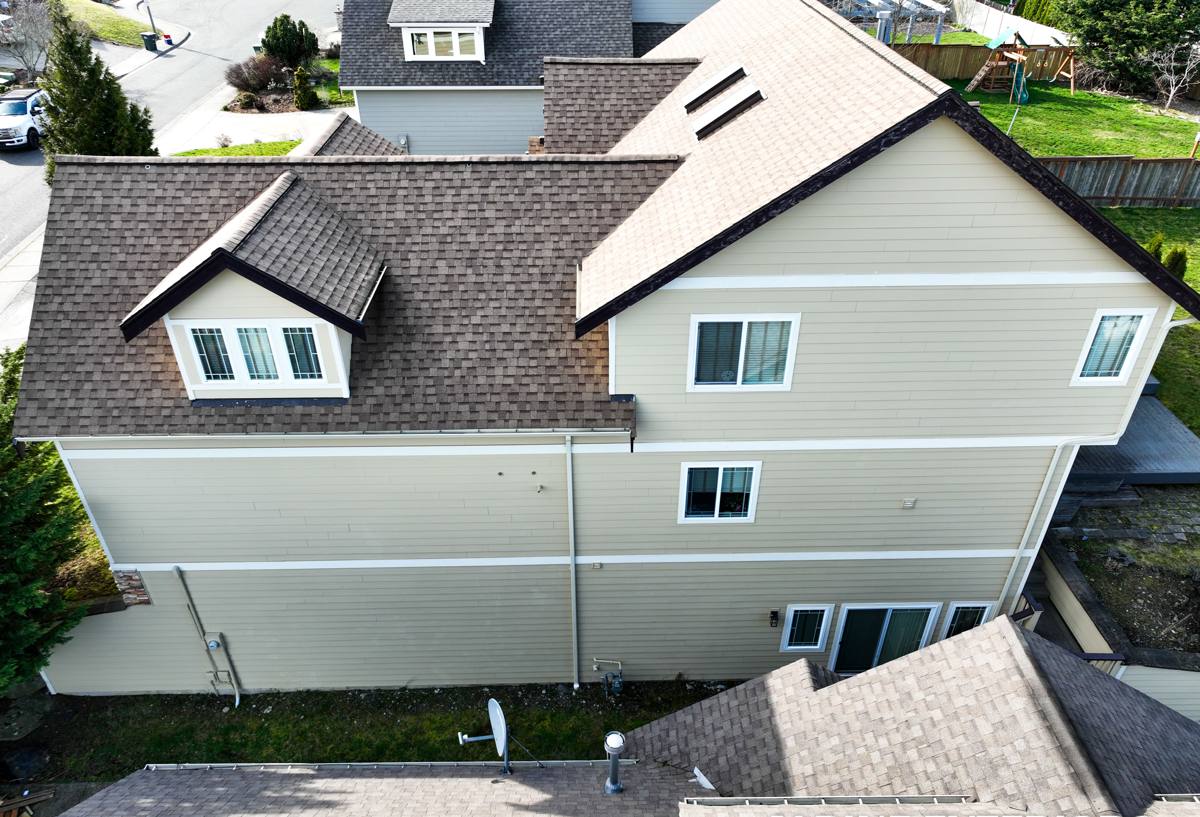
What Samish's Climate Does to a Deck Over Time
Salt Air and Metal Fatigue
Proximity to salt water accelerates corrosion on anything metal — screws, joist hangers, bolts, and railing hardware. Standard electro-galvanized fasteners can start showing surface rust within a couple of seasons in a salt-exposed location, and once corrosion starts on a structural fastener, it's working from the inside of the wood outward, which means you don't see it until it's already a problem. This is the single most common failure point we find on older decks near the water: the decking boards still look fine, but the hardware holding the frame together has degraded.
Driving Rain and Hidden Moisture
Whatcom County rain doesn't always fall straight down. Wind pushes it under rail caps, into board gaps, and behind ledger boards where the deck attaches to the house. Wood that dries slowly because it's shaded, tight to the ground, or poorly ventilated underneath will hold moisture for days after a storm passes. That sustained dampness is what actually causes rot — it's rarely a single soaking, it's water that never fully leaves.
Moss and Surface Buildup
Long wet seasons with limited direct sun let moss and algae establish on deck surfaces, especially in shaded corners, under furniture, and on north-facing sections. Beyond looking bad, moss holds moisture against the board surface and makes the deck genuinely slick — a safety issue on stairs and near entry points, not just a cosmetic one.
What a Correctly Built Deck Looks Like Here
None of the climate issues above are unusual or unsolvable — they're just things a deck has to be designed for, not discovered the hard way after five years. Here's what we build into every Samish project:
- Stainless or high-grade coated structural fasteners and joist hangers rated for coastal/corrosive exposure, not standard interior-grade hardware
- Proper ledger board flashing where the deck meets the house, with a drainage gap so water sheds away from the siding rather than pooling against it
- Board spacing set for drainage and airflow, not just appearance — tight gaps look clean on day one but trap moisture for years
- Joist and beam spacing sized for the actual span and load, not the minimum the material allows
- Adequate under-deck clearance and ventilation so the frame can actually dry out between rain events
- Footings set below frost depth and sized for local soil conditions, not a generic minimum
- Railing systems rated to current code, with connections that won't loosen from seasonal wood movement
Skipping any one of these doesn't show up immediately. It shows up in year three or four, as soft spots near the ledger, rust streaks running down from fastener heads, or a railing post that's developed some give when you lean on it.
Choosing Decking Material for a Samish Property
There's no single "best" decking material — there's a best material for your budget, sun exposure, and how much maintenance you actually want to do. Here's how the common options hold up specifically against salt air, rain, and moss:
| Material | Moisture / Rot Resistance | Moss Resistance | Maintenance | Typical Lifespan Here |
|---|---|---|---|---|
| Pressure-treated wood | Good if sealed and re-sealed on schedule | Needs regular cleaning | Annual cleaning + stain/seal every 2-3 years | 15-20 years with upkeep |
| Cedar | Naturally decent, but surface finish wears | Needs regular cleaning | Similar to treated wood, higher cost | 15-20 years with upkeep |
| Composite decking | Excellent — won't rot or absorb water | Still needs occasional washing, but doesn't hold moisture in the board itself | Periodic washing, no staining/sealing | 25-30+ years |
| PVC decking | Excellent — fully moisture-proof board | Smooth surface sheds moss buildup more easily | Lowest maintenance of the group | 25-30+ years |
We don't push one material on every job. Wood decks done right, with the correct fasteners and maintenance schedule, perform well here and cost less upfront. Composite and PVC cost more initially but remove the sealing/staining cycle entirely, which matters if you don't want a recurring maintenance task on a rainy-season deck. We'll walk through the honest trade-offs for your specific site — sun exposure, budget, and how the deck will actually be used — rather than defaulting to whatever's easiest to install.
Framing and Structure: Where Most Deck Failures Actually Start
Homeowners tend to focus on the decking boards because that's what's visible, but the structure underneath — ledger, joists, beams, posts, and footings — is what determines whether the deck is actually safe and long-lived. In a climate like Samish's, the frame is under more moisture stress than the surface most of the time, because it's shaded, closer to the ground, and slower to dry.
We check and correctly detail these areas on every project, whether it's new construction or a rebuild:
- Ledger board attachment and flashing — the number one source of hidden rot on deck-to-house connections
- Joist hanger corrosion resistance and correct nailing/screwing pattern (not just "close enough")
- Beam sizing for actual span and expected load, not a minimum-code guess
- Post base connections that keep wood off standing water and away from direct soil contact
- Footing depth and diameter appropriate to local frost and soil conditions
Our Process for a Samish Deck Project
1. On-Site Assessment
We look at sun exposure, drainage patterns around the site, how close you are to salt exposure, and what the existing structure (if any) looks like underneath. This tells us what hardware grade and drainage detailing the job actually needs.
2. Honest Material and Design Conversation
We walk through wood versus composite versus PVC in plain terms — cost, maintenance, and expected lifespan for your specific site — and design the layout, railing style, and stair placement around how you'll use the space.
3. Permitting
Most new decks and significant rebuilds in Whatcom County require a permit. We handle that process and build to current code, including railing height and guard spacing requirements.
4. Demolition and Structural Work (if applicable)
On a rebuild, we assess what's salvageable versus what needs to be replaced — often the footings and some framing are fine even when the decking and railings aren't.
5. Construction
Framing first, with corrosion-resistant hardware and proper ledger flashing, then decking, then railings and stairs, with attention to drainage and gap spacing throughout.
6. Final Walkthrough
We go over the finished deck with you, including what maintenance schedule (if any) your chosen material needs.
Maintenance Checklist for Samish Deck Owners
Whatever material you choose, a small amount of seasonal attention prevents most of the problems this climate causes:
- Sweep debris and standing leaves off the deck surface regularly, especially in fall
- Clean moss and algae buildup at least once a year, more often in shaded areas
- Check railing posts and stair connections annually for any looseness
- Inspect visible fasteners for early rust streaking
- Keep gutters and downspouts near the deck clear so water isn't dumping directly onto or under it
- For wood decks, re-seal or re-stain on the schedule your product recommends — don't wait until it visibly fails
- Confirm underneath the deck stays ventilated — don't stack storage tight against the framing
Why Hire a Crew That Already Works in Samish
A deck builder unfamiliar with this specific stretch of Whatcom County can still build a structurally sound deck on paper — but "sound on paper" and "built for salt air, driving rain, and a long moss season" aren't the same thing. We've seen what happens when standard fasteners go into a salt-exposed location, when ledger flashing gets skipped because "it doesn't usually rain that hard," and when board spacing gets tightened up for looks without accounting for drainage. Those decisions don't fail on day one. They fail quietly, a few years in, after the crew that made them is long gone.
Working locally also means we understand permitting requirements for the county, know what soil and drainage conditions to expect on a given lot, and can give you a realistic maintenance expectation instead of a generic manufacturer pamphlet.
Get a Free Estimate
If you're planning a new deck or need to figure out whether an existing one is still sound, we're happy to take a look and give you an honest, no-pressure assessment. Fill out the form below and we'll set up a time to walk the site with you.