 Whatcom County
 Cordata Roofs Deal With Weather Most Warranties Don't Plan For
Cordata sits close enough to Bellingham Bay and the Salish Sea that salt-laden air is a constant presence, even on days that feel calm. Combine that with the driving, sideways rain that Whatcom County gets through fall and winter, and a moss season that can run eight months out of the year, and you have a roofing environment that's harder on materials than the national averages printed on most shingle warranties. A roof that would last three decades in a dry inland climate often shows real wear in Cordata well before that mark, especially on north-facing slopes and anywhere shade keeps a surface damp longer than it should be.
None of that means Cordata homes need exotic solutions. It means the basics — ventilation, flashing, underlayment, and material choice — have to be done correctly, not just adequately, because there's less margin for shortcuts here than in a milder climate.
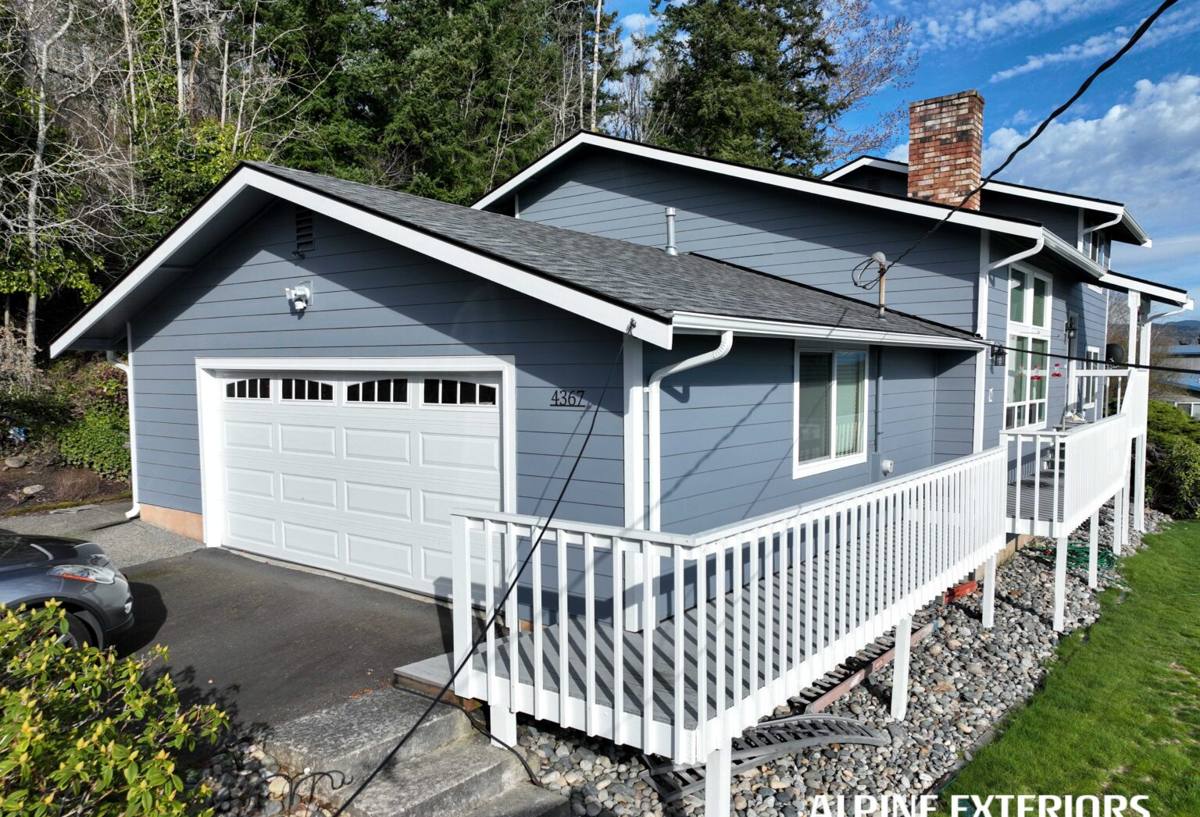
How to Tell a Cordata Roof Needs Replacement, Not Another Repair
Repair makes sense when the problem is isolated: a cracked pipe boot, a few lifted shingles after a windstorm, a flashing detail that was never sealed right. Replacement becomes the honest answer when the damage is systemic. Signs we look for on Whatcom County homes include:
- Granule loss heavy enough that you can see bare asphalt on multiple slopes, not just one exposed edge
- Moss that's rooted into the shingle surface rather than sitting loosely on top — that means it's already breaking down the mat underneath
- Soft or spongy spots when walking the roof, which usually points to a compromised deck, not just a surface issue
- Daylight or staining visible in the attic along the ridge or valleys
- A roof original to a home built more than 20-25 years ago that has never been re-roofed, even if it "looks okay" from the ground
- Multiple past repairs in different areas — a pattern that usually means the material itself is at the end of its service life
If a roof is showing two or three of these at once, patching one area just moves the next failure a year or two down the road. We'll tell you plainly if that's the case, and we'll also tell you when it isn't — a roof with one bad valley and otherwise sound material doesn't need a full tear-off just because it's convenient to sell one.
What a Correct Roof Replacement Actually Involves
Tear-off and deck inspection
Every full replacement starts with removing the old roofing down to the deck. This is the step that gets skipped by crews cutting corners with a layover, and it's also the only point where anyone can actually see the condition of the sheathing underneath. In this climate, we routinely find soft or delaminated plywood around old flashing failures or plumbing penetrations — spots that look fine from above but have been absorbing moisture for years. Any compromised decking gets replaced before anything new goes down; building over rot just hides the problem for another owner to find later.
Underlayment and moisture barriers
Given how much wind-driven rain Whatcom County sees, underlayment matters more here than in drier regions. A synthetic underlayment across the full roof, with self-adhered ice-and-water barrier at eaves, valleys, and around penetrations, gives the deck a second line of defense if wind ever pushes water up under the primary roofing surface. This is one of the few areas where spending a bit more up front genuinely reduces the odds of a callback.
Flashing details
Most roof leaks in this region trace back to flashing, not the field of the roof itself. Step flashing at wall intersections, proper counter-flashing, and correctly lapped valley metal all need to be installed in the right order relative to the roofing material — not just caulked and hoped for. Caulk is a maintenance item, not a substitute for correct flashing sequence.
Ventilation
Balanced intake and exhaust ventilation keeps the underside of the deck dry and helps prevent the ice-dam-adjacent moss and moisture problems common on shaded, north-facing roofs in Cordata. A roof that's replaced without addressing inadequate or blocked ventilation is starting its clock with a disadvantage already built in.
Material Options for Cordata Homes
There's no single "correct" material for every house — it depends on the roof's pitch, the home's exposure, and what the homeowner wants long-term. Here's how the common options actually compare in this specific climate:
| Material | Moss/moisture behavior | Typical lifespan here | Trade-offs |
|---|---|---|---|
| Architectural asphalt shingle | Good with proper ventilation; needs periodic moss treatment | 20-30 years | Best value, widest color range, straightforward repairs later |
| Standing seam metal | Excellent — moss struggles to root on a smooth metal surface | 40-50+ years | Higher upfront cost; requires an experienced installer for proper seaming and flashing |
| Synthetic/composite shake | Good moisture resistance, more consistent than natural wood | 30-40 years | Mid-to-upper cost; gives a cedar look without the maintenance burden of real wood shakes |
| Cedar shake (natural) | Attractive but moss and moisture-prone without diligent upkeep | Variable, heavily maintenance-dependent | We'll install it if a homeowner wants the look, but we're upfront that it demands more attention in this climate than the alternatives |
We don't push one product on every job. We'll walk through what fits your roof's pitch, sun exposure, and budget, and explain the honest trade-offs rather than just steering you toward whatever has the best margin.
Our Process From Estimate to Cleanup
- On-site assessment — we walk the roof and the attic, not just look from the ground, and photograph problem areas so you can see what we're seeing.
- Written estimate — a clear scope with material options, so you're comparing apples to apples if you're getting more than one quote.
- Scheduling around weather — in Whatcom County, timing a tear-off matters; we plan around forecasted rain windows rather than exposing an open deck to the elements.
- Tear-off, deck repair, and installation — done in a single continuous sequence whenever possible, so the deck isn't left exposed overnight.
- Cleanup and magnetic sweep — the yard and driveway get cleared of debris and stray fasteners before we consider the job done.
- Final walkthrough — we go over the finished roof with you before we call it complete.
Moss, Salt Air, and What Happens After Installation
A new roof in Cordata isn't maintenance-free just because it's new. Moss spores travel on the wind and will settle on any roof surface eventually, especially on shaded slopes near mature trees, which are common throughout this neighborhood. Salt air accelerates corrosion on unprotected metal fasteners and flashing over time, which is why we use fasteners and flashing rated for coastal exposure rather than standard-grade hardware. Simple habits extend the life of any roof out here: keeping gutters clear so water doesn't back up under the roof edge, trimming back branches that keep a section of roof shaded and damp, and having moss treated or gently removed before it takes hold rather than after it's already growing into the surface.
What Drives the Cost of a Roof Replacement
Every roof is different, so we don't quote sight unseen — but the main factors that move the price are consistent from job to job:
- Total roof area and number of facets, valleys, and penetrations (chimneys, vents, skylights)
- Roof pitch and accessibility — steep or high roofs take longer and require more safety setup
- Condition of the existing deck — hidden rot found during tear-off adds material and labor
- Material selected — asphalt, metal, and synthetic products all carry different price points
- Underlayment and flashing upgrades beyond code minimum
- Ventilation corrections if the current system is inadequate
- Disposal and hauling for tear-off debris
Broadly, a full asphalt shingle replacement on an average Cordata home tends to fall in the mid-five-figure range, with metal roofing running higher due to material and installation labor. Your actual number depends entirely on the roof in front of us — which is why the walkthrough matters more than a phone estimate.
Why It Matters That We Already Work in Cordata
A crew that already works this neighborhood knows which streets sit in more shade and see moss faster, which lots catch the harder wind off the bay, and what the local permitting and inspection process actually looks like — no learning curve, no guesswork. That familiarity translates into fewer surprises during the job and a more accurate estimate from the first visit, because we're not estimating a generic house — we're estimating a Cordata house, in Whatcom County's specific weather, with everything that implies.
If your roof is showing its age or you just want an honest read on how much life is left in it, we're happy to take a look. Fill out the form below for a free, no-pressure estimate — we'll tell you what we find, plainly.