 Whatcom County
 Roof Repair Built for South Hill's Weather, Not Just Any Roof
South Hill homes take a specific kind of beating. You're close enough to the water to deal with salt-laden air working into metal fasteners and flashing, and far enough into Whatcom County's wet season that moss gets months at a time to dig into shaded slopes before anyone notices. Add driving rain that comes in sideways during winter storms, and a roof here fails in different places and for different reasons than a roof in a drier inland climate. A repair that doesn't account for that is a repair you'll be paying for again in two or three years.
This page is about roof repair specifically — patching, resealing, replacing damaged sections, and restoring flashing and ventilation — not a full tear-off and replacement. Most roofs that are otherwise sound don't need to be replaced; they need the right sections fixed correctly, with materials and detailing that match what the rest of the roof is doing.
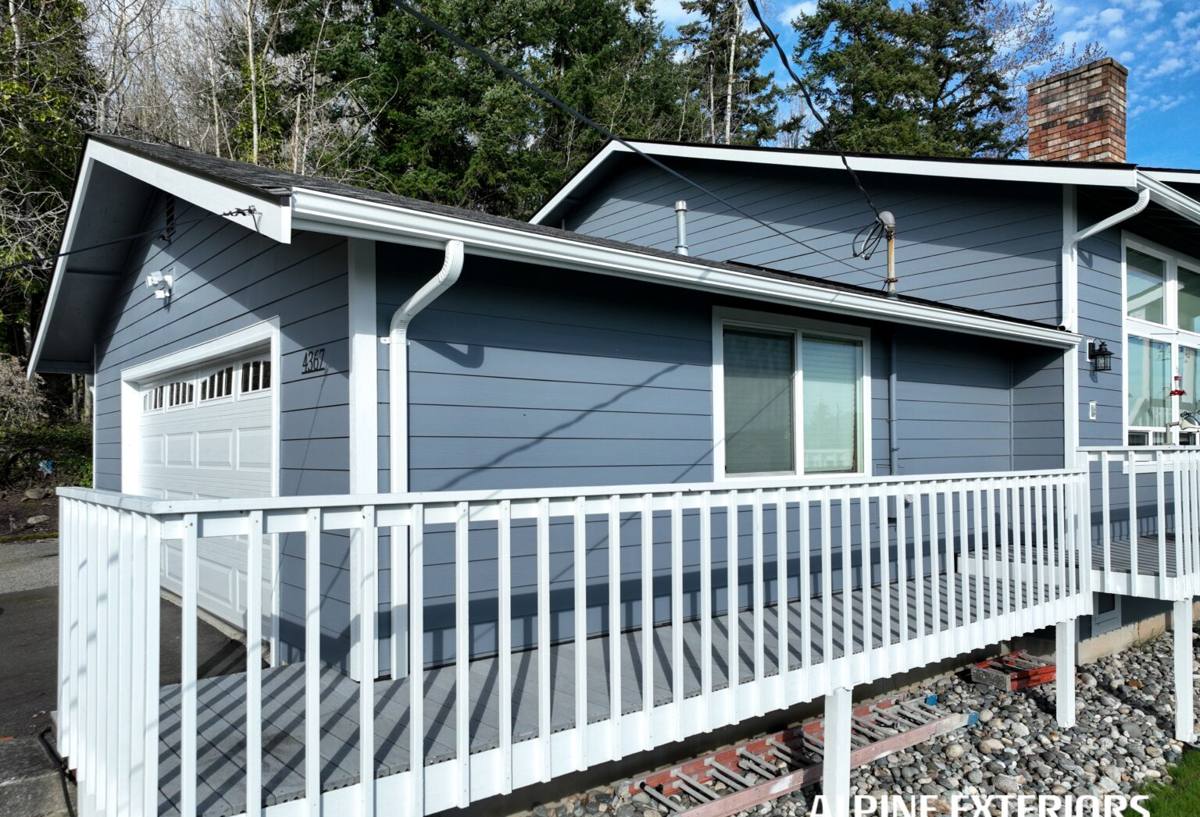
Signs Your South Hill Roof Needs Repair
Roof problems in this climate rarely announce themselves with a dramatic leak on day one. They show up as small, easy-to-miss signals first.
- Dark streaking or thick moss growth on north-facing or shaded slopes
- Granules collecting in gutters or at the base of downspouts
- Curling, cupping, or cracked shingles, especially on slopes that get the most wind exposure
- Soft or spongy spots when walking the roof (a sign of trapped moisture in the decking below)
- Rust staining or lifted edges around metal flashing at chimneys, skylights, and roof-to-wall transitions
- Water stains on interior ceilings, especially near exterior walls or plumbing vents
- Daylight visible through the attic at roof penetrations or ridge vents
- Nail pops or fasteners backing out of shingles or ridge caps
Any one of these on its own might be minor. Two or three together, especially combined with the roof's age, usually means it's worth a proper inspection before the next round of storms.
Why Moss and Moisture Cause More Damage Here Than Elsewhere
Whatcom County's long wet season means shaded roof sections can stay damp for weeks at a stretch, and moss thrives in exactly that condition. The problem isn't just cosmetic. Moss holds water against the shingle surface longer than the shingle is designed to tolerate, which accelerates granule loss and, over time, lets moisture work under shingle edges and into the decking. Once that happens, you're not dealing with a surface issue anymore — you're dealing with rot, and rot repair costs a lot more than a moss treatment would have.
The salt air adds a second layer to this. Metal components — flashing, fasteners, gutter hangers, ridge vents — corrode faster near the water than they do further inland. A flashing detail that would last fifteen years in a dry inland climate can show pitting and failure well before that here. That's why we treat flashing condition as a primary inspection point on every South Hill roof repair, not an afterthought.
What a Correct Roof Repair Actually Involves
Diagnosis Before Anything Gets Touched
A repair is only as good as the diagnosis behind it. Water rarely shows up on the ceiling directly below where it entered the roof — it travels along rafters, sheathing, and underlayment before it drips. That means a repair crew that patches the spot above the ceiling stain without tracing the actual entry point is likely to miss the real problem. A correct diagnosis means getting on the roof, checking the attic from the inside where accessible, and confirming where water is actually getting in before any materials come off.
Matching Materials, Not Just Covering the Damage
Shingle color, profile, and even granule composition change from manufacturing run to manufacturing run. A patch using the wrong shingle style stands out, but more importantly, mismatched materials can behave differently in wind and rain than the surrounding roof, creating a new weak point right at the repair edge. Where an exact match isn't available, we look at blending options — pulling shingles from a less visible slope, for example — rather than leaving an obvious mismatched patch on a street-facing roof plane.
Flashing and Moisture Detailing
Most roof leaks that keep coming back, even after a shingle repair, trace back to flashing — around chimneys, skylights, dormers, and wherever two roof planes meet. Flashing has to be lapped correctly with the underlayment and shingle courses so water sheds over it in every direction, not just where it looks neat from the ground. This is the part of a repair that's invisible once it's done right, and it's also the part that gets rushed on a cheap repair.
Ventilation and Decking Condition
A repair that only addresses the visible surface but ignores poor attic ventilation is treating a symptom. Trapped moisture in an under-ventilated attic accelerates decking rot from underneath, which no amount of surface shingle work will fix. Where we find soft decking during a repair, we replace that section rather than fastening new shingles over compromised plywood — it costs more up front but it's the difference between a repair that lasts and one that fails again within a couple of seasons.
Our Roof Repair Process
1. Inspection and Honest Assessment
We walk the roof (weather permitting) and check the attic where accessible, looking at flashing, decking, ventilation, and overall shingle condition — not just the specific spot you called about. If the issue is isolated, we'll say so. If we find signs the roof is nearing the end of its useful life, we'll tell you that too, rather than layering repairs onto a roof that's better served by replacement.
2. A Clear, Written Estimate
You get a scope of work and a price before anything starts — what's being repaired, what materials are being used, and why. No vague line items.
3. The Repair Itself
We remove and replace only what needs to come off, re-flash any compromised transitions, address decking issues if we find them, and match materials as closely as the situation allows.
4. Cleanup and Walkthrough
Job site is cleaned of debris and old materials, and we walk you through what was done before we consider the job finished.
Repair vs. Replacement: What Actually Drives the Decision
| Factor | Leans Toward Repair | Leans Toward Replacement |
|---|---|---|
| Roof age | Under 15-20 years (asphalt) | Approaching or past manufacturer's expected lifespan |
| Extent of damage | Isolated to one slope or feature | Widespread granule loss, curling across multiple slopes |
| Decking condition | Solid, dry decking under damaged shingles | Soft, rotted, or repeatedly wet decking in multiple areas |
| Flashing condition | Isolated corrosion or lifting | Widespread rust or failure at multiple penetrations |
| Moss/algae history | Treated early, limited spread | Long-term untreated growth with visible granule loss |
| Leak pattern | Single, traceable source | Multiple unrelated leak points |
These are general guidelines, not hard rules — a well-built roof at year 18 can still be a good repair candidate, and a poorly ventilated roof at year 10 can already need more than a patch. This is exactly why the inspection step matters more than a phone estimate ever could.
Roofing Materials and How They Affect a Repair
| Material | Repair Considerations in This Climate |
|---|---|
| Asphalt shingle | Most common; moss and granule loss are the main concerns, matching color/profile is usually straightforward on newer roofs |
| Metal roofing | Long-lasting, but fastener corrosion near salt air needs to be checked; seam and flashing repairs require matching profile and finish |
| Cedar shake | Higher maintenance burden in a wet climate — needs consistent airflow underneath to avoid trapped moisture; repairs require sourcing compatible shake stock |
| Flat/low-slope membrane | Common on additions or porches; seam integrity and ponding water are the primary repair triggers |
We work with whatever's already on your roof rather than pushing a preferred product. If your existing roofing material has a maintenance pattern worth knowing about — cedar's need for ventilation, for example — we'll walk you through the trade-offs honestly rather than assuming you want to switch materials mid-repair.
Why It Matters That We Already Work in South Hill
A crew that repairs roofs across a wide, varied service area learns to spot patterns that a one-off inspection can miss. We know which roof orientations in this area tend to hold moss longest through the wet season, which flashing details tend to corrode first given the salt air, and roughly how a given roof age and material combination tends to be holding up around here. That local pattern recognition doesn't replace an individual inspection, but it means we're not guessing — we're starting from a working knowledge of how roofs in this specific climate actually age.
It also means faster response. Storm damage doesn't wait for a convenient afternoon, and being established locally means we can typically get out to look at storm or leak damage sooner than a crew traveling in from further away.
Maintenance Between Repairs
A repair extends a roof's life, but a few habits extend it further and reduce how often repairs are needed.
- Clear gutters and downspouts before the wet season ramps up so water isn't backing up under the roof edge
- Have moss treated or removed before it spreads across a full slope, not after
- Trim back overhanging branches that keep roof sections shaded and slow to dry
- Check attic ventilation periodically — blocked soffit or ridge vents trap moisture even on a sound roof
- Walk the roofline visually after major windstorms for lifted shingles or displaced flashing
- Address small leaks immediately rather than waiting to see if they get worse
Get a Straightforward Look at Your Roof
If you're seeing moss, granule loss, a stain on the ceiling, or you just want a second opinion before winter storms roll through, we're glad to take a look. We'll give you an honest read on what's actually going on and what it would take to fix it — no pressure, no upsell. Use the form below to request a free estimate.