 Whatcom County
 Roof Repair in Ferndale: Working With a Coastal, Wet-Season Climate
Roofs in Ferndale take a specific kind of beating. Salt-tinged air moving in off the water accelerates corrosion on fasteners, flashing, and any exposed metal. Wind-driven rain doesn't just fall on a roof, it gets pushed sideways under shingles, around penetrations, and into any gap that a straight-down rain would never reach. And a moss season that can stretch across most of the year keeps organic growth working at roofing materials long after a drier climate would have given the roof a break. None of that means Ferndale roofs are doomed, but it does mean repair work has to account for how this climate actually behaves, not just patch what's visibly broken and move on.
We do roof repair across Whatcom County, and Ferndale's mix of coastal exposure and open, lower-lying terrain shapes how we approach every job here. A repair that would hold up fine in a drier, more sheltered location can fail here specifically because it wasn't built to handle sideways rain or sustained moisture against the roof deck.
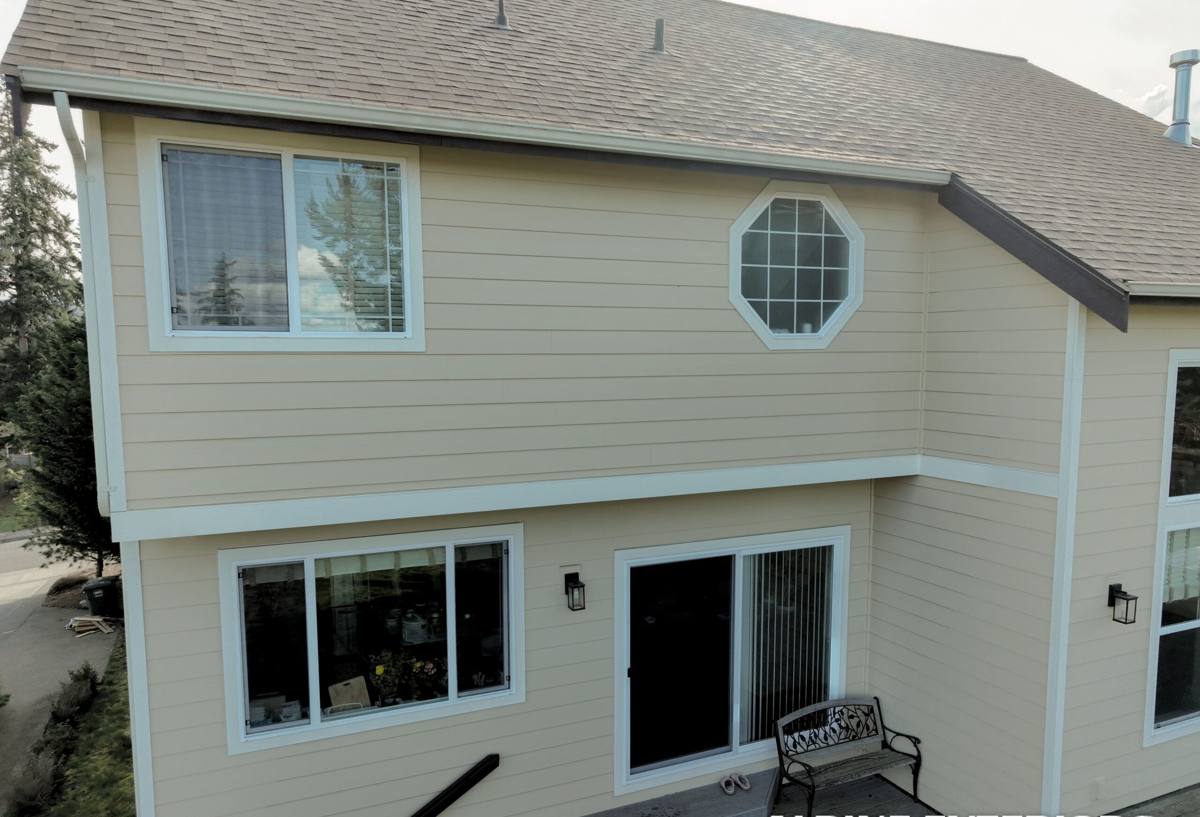
What Whatcom County's Climate Does to a Ferndale Roof
Salt Air and Fastener Corrosion
Even homes set back from the immediate shoreline get a steady dose of salt-laden air. Over time that salt works on nail heads, flashing seams, and any exposed metal fastener, corroding them faster than you'd see inland. A roof leak that traces back to a single corroded fastener or a flashing seam that's rusted through is one of the more common issues we find on service calls in this part of the county, and it's rarely visible from the ground.
Wind-Driven Rain
Rain here rarely falls straight down. Wind pushes it sideways into roof valleys, under shingle tabs, around chimney and vent flashing, and into any lap joint that isn't sealed for lateral water pressure. A roofing detail that would be adequate in a calm, dry climate can still leak here because water is finding its way in from an angle the original installation didn't account for.
A Long Moss Season
Mild temperatures, consistent moisture, and plenty of shade add up to a moss and moisture-retention season that runs long across Whatcom County, and Ferndale is no exception. Moss holds water against roofing material, works its root structure under shingle edges, and can lift tabs enough to let wind-driven rain underneath. Left alone, it doesn't just look bad, it actively shortens the life of the roof surface it's growing on.
Freeze-Thaw and Temperature Swings
Whatcom County doesn't see extreme cold most winters, but it does see enough freeze-thaw cycling, especially on north-facing or shaded roof planes, that trapped moisture matters. Water that gets under a shingle or into a flashing seam and then freezes can expand joints and gaps that were only hairline cracks before, turning a minor issue into an active leak over a single winter.
Common Roof Problems We See on Ferndale Homes
Most of the repair calls we run in Ferndale trace back to a handful of recurring issues, usually made worse by how long they went unnoticed before a leak showed up indoors.
- Cracked, curled, or missing shingles after wind events
- Moss and organic growth lifting shingle edges, especially on shaded or north-facing slopes
- Corroded or improperly lapped flashing around chimneys, vents, and skylights
- Clogged or damaged gutters causing water to back up under the roof edge
- Soft spots or sagging in the roof deck from long-term moisture intrusion
- Nail pops and fastener corrosion allowing water to track under the roofing surface
- Valley leaks where two roof planes meet and water volume concentrates
Any one of these can look minor from the ground and still be actively letting water into the attic or wall assembly. That's part of why we recommend a proper inspection rather than guessing at scope from a photo or a homeowner's description alone.
What a Correct Roof Repair Actually Involves
A roof repair that holds up in this climate is more than swapping out a few damaged shingles. It starts with finding the actual source of the leak, which isn't always where the water shows up inside the house, since water can travel along the deck or framing before it drips somewhere visible. From there, a correct repair means:
- Removing and replacing damaged roofing material back to solid, dry decking, not just covering over it
- Checking the roof deck itself for soft spots or rot before replacing the surface layer
- Re-flashing chimneys, vents, and skylights with corrosion-resistant materials suited to salt air exposure
- Re-establishing correct shingle laps and fastening patterns so wind-driven rain sheds properly
- Clearing moss and treating the surface to slow regrowth, rather than just cleaning what's visible
- Confirming gutters and roof edges are directing water away from the fascia and wall assembly below
Skipping any of those steps is one of the more common ways a repair looks fine for a season or two and then fails again, usually in the same spot.
Repair or Replace: How We Make That Call
Not every roof problem in Ferndale needs a full replacement, and not every leak is fixable with a spot repair. We look at the age and general condition of the roofing material, how widespread the damage is, and whether the underlying deck is still sound. A roof with isolated damage on an otherwise healthy surface is usually a good repair candidate. A roof with recurring leaks in multiple areas, widespread moss damage, or a deck showing soft spots in more than one location is often past the point where repair is the honest recommendation.
| Factor | Favors Repair | Favors Replacement |
|---|---|---|
| Roof age | Well within expected material lifespan | At or past the manufacturer's expected service life |
| Damage location | Isolated to one area or slope | Spread across multiple slopes or valleys |
| Deck condition | Solid, no soft spots found | Soft spots, rot, or sagging present |
| Leak history | First occurrence or a known, single cause | Recurring leaks in different spots over time |
| Moss/organic damage | Surface growth, shingles still intact underneath | Growth has lifted or degraded shingle material |
We'll walk you through where your roof falls on that spectrum and give you a straight recommendation, not the most expensive option by default.
Our Roof Repair Process
1. Inspection and Diagnosis
We start by getting on the roof, not just looking at it from the ground. That means checking the deck condition, flashing, fastener condition, and any moss or organic buildup, along with tracing suspected leaks back to their actual source rather than the point where water became visible indoors.
2. A Clear, Written Scope
Once we know what's actually going on, we explain what needs to happen and why, in plain terms. If the roof is a good repair candidate, we'll say so. If it isn't, we'll explain the reasoning rather than defaulting to the bigger job.
3. The Repair Itself
We remove damaged material back to sound decking, address the moisture source directly, and rebuild the affected area with correct flashing, fastening, and shingle lap detail for this climate, not a generic patch.
4. Cleanup and Walkthrough
We clear debris, including moss and old material, and walk the completed repair with you so you know exactly what was done and what to watch for going forward.
Maintenance That Extends the Life of a Ferndale Roof
Between repairs, a few habits make a real difference in how long a roof lasts in this climate. None of them are complicated, but they're easy to let slide until a leak forces the issue.
- Keep gutters and downspouts clear so water isn't backing up under the roof edge
- Have moss treated or removed before it has a chance to lift shingle edges
- Trim back overhanging branches that keep roof sections shaded and slow to dry
- Get a roof looked at after major wind events, even if nothing looks wrong from the ground
- Address small leaks early, before they have a chance to reach the deck or framing
Roofing Alongside Siding, Windows, and Decks
A roof rarely fails in complete isolation from the rest of the exterior. A leaking valley can show up as water staining on siding well below the roofline, and a poorly flashed roof-to-wall transition can send moisture into a wall assembly that gets blamed on the siding instead of the roof. Because we handle roofing, siding, windows, and decks, we can look at a Ferndale home as one connected system and find where water is actually getting in, rather than treating each surface as a separate problem.
Why a Local Crew Matters for Roof Repair
A crew that works Whatcom County roofs year-round sees how salt air, wind-driven rain, and moss actually play out over a full wet season, not just how a shingle performs on a spec sheet. That experience shapes real decisions on repair day, like where extra flashing attention pays off, which roof orientations hold moisture longest, and which shortcuts reliably lead to a callback. Ferndale's coastal exposure and open terrain mean those details aren't identical to every inland Whatcom County town, and a crew with local repair history accounts for that instead of applying the same fix everywhere.
Get a Free, No-Pressure Roof Estimate
If your Ferndale home has a leak, storm damage, or a roof that's simply due for an honest look, we're glad to take a look and tell you straight what we find. Reach out using the form below to schedule a free estimate, no pressure and no upsell script.