 Whatcom County
 Why Barkley Roofs Wear on a Different Schedule
Roofs in Barkley don't fail the way roofs do in drier parts of the country. The combination of moist Pacific air, salt carried inland off the water, and long stretches of overcast, drizzly weather changes how every roofing material ages. Whatcom County doesn't get the kind of violent hailstorms or extreme heat cycling that stress a roof suddenly. Instead, the damage here is slow and cumulative — organic growth, trapped moisture, and small failures that go unnoticed until they've been leaking into the attic for months.
That matters for repair work specifically. A roof repair in a dry climate is often about patching physical damage — a branch strike, a torn shingle. In this area, a huge share of repair calls are about moisture that found a way in through a seam, a nail hole, or aging flashing that was fine when it was installed but has since lost its seal. Diagnosing that correctly takes more than looking at the surface.
What "Roof Repair" Actually Covers
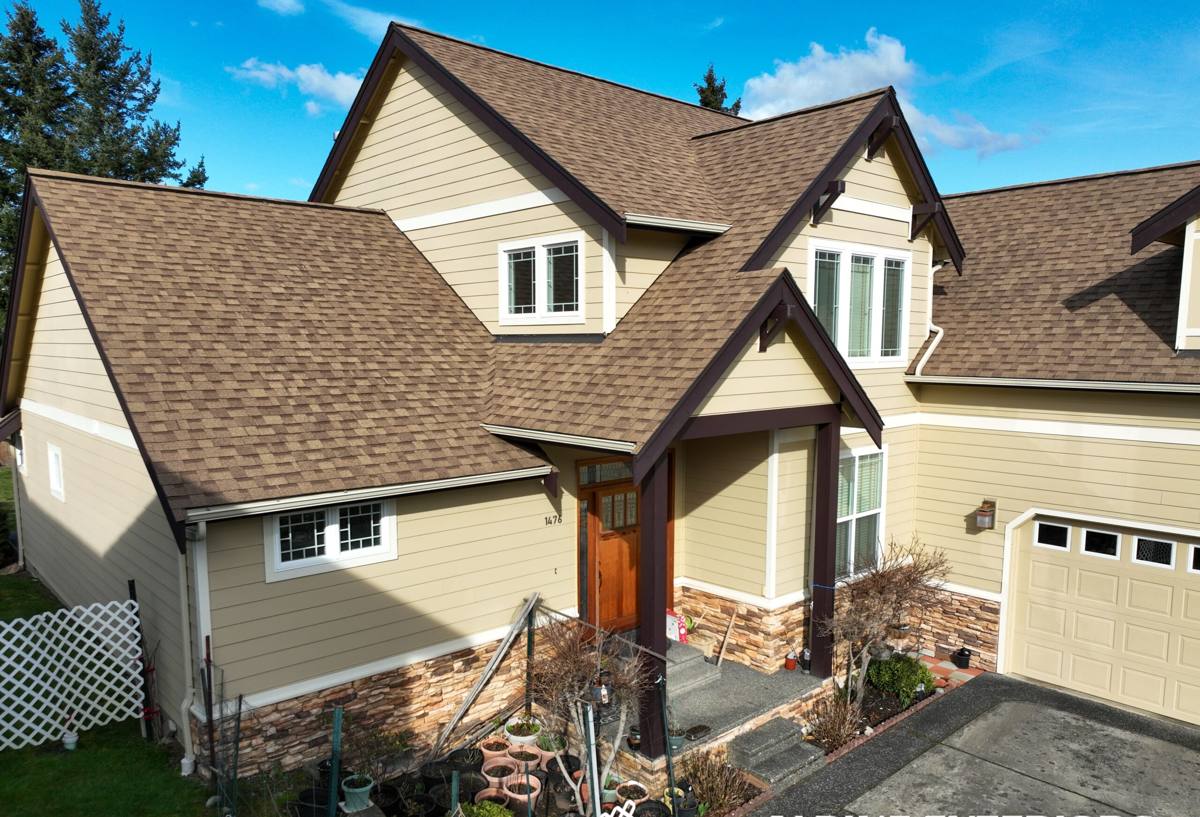
Homeowners often use "repair" loosely, but the work falls into a few distinct categories, and knowing which one you actually need saves money and prevents surprises.
Spot repairs
Replacing a handful of damaged shingles, resealing a vent boot, or fixing a small area of lifted flashing. This is appropriate when the surrounding roof is still sound and the damage is localized.
Section repairs
A larger portion of the roof — often a valley, a dormer, or an area shaded by trees — has failed while the rest of the roof is fine. This usually involves pulling more material than the visible damage suggests, because moisture travels sideways under shingles before it shows up as a stain inside.
Repair vs. replacement judgment calls
If a roof is old enough that multiple areas are failing independently, patching one spot is often a short-term fix. Part of doing this job honestly is telling a homeowner when a repair is the right call and when it's just delaying an inevitable replacement.
Signs a Barkley Roof Needs a Look
Because so much damage here starts hidden, it helps to know what to watch for before it becomes an interior problem.
- Dark streaking or green-black growth on shingles, especially on north-facing slopes that stay shaded and damp longer
- Granules collecting in gutters or at downspout outlets, a sign shingles are wearing thin
- Soft or spongy spots when walking the roof, which usually means decking underneath has absorbed moisture
- Daylight visible through the attic roof deck, or damp insulation near the eaves
- Curling, cracking, or lifted shingle edges, particularly where wind has caught a corner during a storm
- Rust streaks or gaps around flashing at chimneys, skylights, and roof-to-wall transitions
- Ceiling stains that appear or grow after a stretch of heavy rain rather than right after a storm
Moss and the Long Wet Season
Moss deserves its own section because it's the single biggest driver of avoidable roof damage in this part of Washington. Whatcom County's wet season runs long, and shaded, tree-covered lots — common throughout Barkley — give moss and moss-adjacent algae exactly the conditions they need: consistent moisture and limited direct sun to dry things out between rains.
The problem isn't just cosmetic. Moss growing under shingle tabs lifts them slightly, breaking the seal that keeps wind-driven rain out. As it grows, it holds water against the shingle surface far longer than the shingle was designed to tolerate, which accelerates granule loss and shortens the roof's remaining life. By the time moss is visible from the ground, it's often already established at the shingle edges where it does the most damage.
A repair that removes visible moss without addressing why it grew back there — poor airflow, overhanging branches, a persistently shaded slope — tends to need repeating within a season or two. Part of a correct repair is identifying that root cause, not just cleaning the surface.
Salt Air's Quieter Effect
Being closer to the water, homes in this area also deal with salt-laden air, which speeds up corrosion on exposed metal — flashing, fasteners, gutter hardware. Steel fasteners that would last decades inland can start showing rust streaks and weakening well before the surrounding shingles wear out. When we're repairing flashing or fasteners here, corrosion resistance matters more than it would on a similar roof further from the coast.
What a Correct Repair Involves
A repair done right addresses both the visible damage and the underlying cause. That generally means:
| Step | What it involves | Why it matters here |
|---|---|---|
| Inspection | Checking beyond the obvious damage point, including attic side if accessible | Moisture in this climate travels before it shows |
| Decking check | Confirming the wood underneath is dry and structurally sound | Wet decking under a "fixed" shingle just fails again |
| Flashing review | Inspecting seals at valleys, walls, chimneys, and vents | Most leaks start at transitions, not open field shingle |
| Material match | Sourcing shingles or components close to the existing roof's age and style | Reduces visible patchwork and uneven aging |
| Root-cause fix | Addressing shade, ventilation, or drainage issues driving the damage | Prevents the same repair from recurring in a year |
Cost Factors, Honestly
Every roof and situation is different, so we won't quote a number without seeing the roof. But the general drivers of repair cost are consistent:
- Size and location of the damage — a single accessible slope costs less to reach and repair than a steep valley or an area over a bay window
- Decking condition — if plywood underneath needs replacing, that adds material and labor beyond the shingle work itself
- Shingle age and availability — matching a 15-year-old shingle color and profile can take longer to source than a newer, common style
- Roof pitch and access — steeper roofs require more safety setup and time
- Underlying cause — a repair that also needs a ventilation fix or branch removal to prevent recurrence costs more upfront but less over time
As a rough sense of scale, a small spot repair is typically a modest, contained cost, while a larger section repair involving decking replacement runs meaningfully higher. We'll always walk through where your job falls on that range before starting.
How We Approach a Repair Job
- On-site assessment. We inspect the roof surface and, where possible, the attic side to see if moisture has already traveled further than it appears from outside.
- Clear explanation. We tell you what we found, what's causing it, and what the realistic options are — repair, larger section repair, or a conversation about replacement if that's genuinely the better value.
- Written estimate. No verbal-only pricing. You get a clear scope before any work starts.
- The repair itself. We remove and replace only what's actually compromised, check decking underneath, and reseal or replace flashing as needed.
- Follow-up notes. If the cause was moss, shade, or drainage, we tell you what to watch for or maintain going forward so the same spot doesn't fail again next wet season.
Why a Crew That Already Works Barkley Matters
Roofing companies that mostly work drier regions sometimes underestimate how much moisture management matters here, or how aggressively moss needs to be handled versus just removed. A crew that regularly works in Whatcom County knows which roof orientations in this area tend to hold moss longest, which flashing details tend to fail first under sustained coastal humidity, and how long materials realistically last under these specific conditions — not generic manufacturer estimates written for a national market.
There's also a practical scheduling benefit. Roof repairs in a wet climate are time-sensitive — an exposed section during a multi-day rain event can turn a simple repair into a bigger one. A local crew can respond faster and plan around the actual weather pattern rather than a forecast written for a different region.
What We Won't Do
We won't seal over a wet deck, patch shingles onto rotten plywood, or paint over moss without removing the growth and its cause. Those shortcuts look fine for a season and then cost more to fix properly later. Our standard is to only close up a roof section once we're confident what's underneath is dry and sound — even if that means the job takes a bit longer or costs a bit more than a quick patch.
If you're seeing early signs of trouble on a Barkley roof — moss buildup, granule loss, or a stain that shows up after heavy rain — it's worth having it looked at before the next wet stretch. We offer free, no-pressure estimates and will tell you honestly whether you need a repair, a bigger fix, or nothing at all yet. Use the form below to get started.