 Whatcom County
 Why South Hill Roofs Wear Differently Than Roofs Inland
South Hill sits up on a rise with a mix of mature tree cover and open exposure toward Bellingham Bay, and that combination puts a specific kind of stress on a roof. Salt-laden air moving off the water accelerates corrosion on exposed metal — fasteners, flashing, vents, gutter hardware — faster than you'd see on a roof twenty miles inland. At the same time, the tree canopy that gives South Hill its character also means constant shade on north- and east-facing roof planes, which is exactly where moss and moisture-loving growth take hold first.
Add Whatcom County's long wet season — months of driving rain broken up by only brief dry stretches — and you get roofs that stay damp longer than the manufacturer's install specs really account for. A shingle rated for a "normal" climate can still underperform here if the underlayment, ventilation, and flashing details aren't upgraded to match what this specific hill actually deals with every winter.
None of this means South Hill homes need exotic materials. It means the installation details that get skipped on a rushed job — the ones invisible once the roof is finished — are the ones that determine whether you're dealing with moss and leaks in five years or twenty-five.
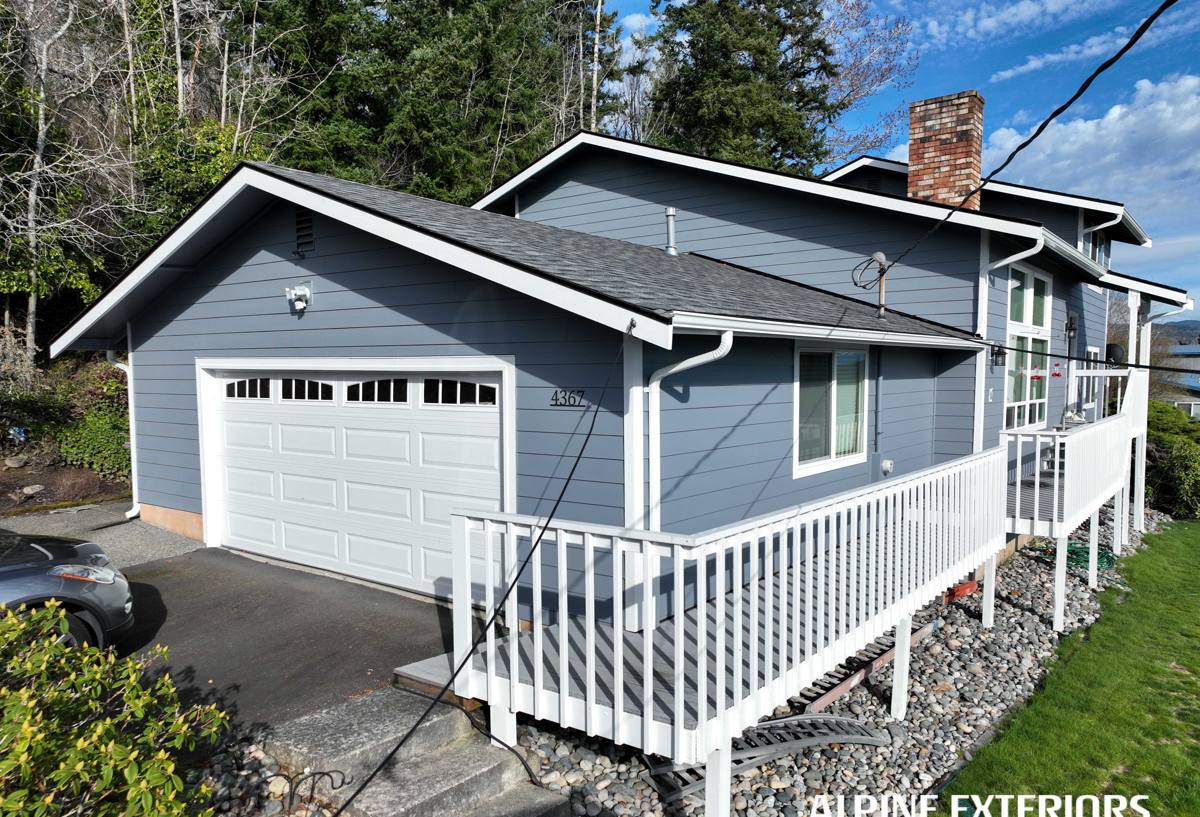
What a Correct Installation Actually Involves Here
Underlayment and Water Barrier
In a climate with this much sustained rain, synthetic underlayment with a fully sealed ice-and-water membrane along eaves, valleys, and any low-slope transitions isn't an upgrade — it's the baseline we install to. Felt paper alone doesn't hold up to the number of wet-dry cycles a South Hill roof sees in a typical winter.
Flashing That Accounts for Salt Exposure
Around chimneys, skylights, and wall-to-roof transitions, we favor corrosion-resistant flashing metals and fastener coatings suited to coastal-influenced air rather than the bare minimum a code inspector would sign off on. Cheap, uncoated fasteners are one of the first things we see fail on tear-offs in this area — usually years before the shingles themselves are due for replacement.
Ventilation Sized for Shade and Moisture
A shaded roof stays cooler and wetter longer after rain than an open, sunny one. That changes the ventilation math. Balanced intake and exhaust venting matters more here than in drier, sunnier parts of the county, because it's what actually dries the deck out between storms instead of trapping moisture against the sheathing.
Deck Inspection, Not Assumption
We don't assume the decking underneath is sound just because the shingles on top look fine. Trapped moisture under moss growth can quietly rot sheathing for years before it shows on the surface. Every tear-off includes a deck inspection before a single new shingle goes down.
Choosing a Roofing Material for South Hill's Conditions
There's no single "best" roofing material for every home — it depends on the roof's shade exposure, slope, budget, and how the house is used. Here's how the common options actually perform under South Hill's specific mix of salt air, shade, and rain.
| Material | Performance in Salt Air & Rain | Moss Resistance | Where We'd Recommend It |
|---|---|---|---|
| Architectural asphalt shingle | Good, with quality underlayment and flashing | Moderate — improves with algae/moss-resistant granules | Most South Hill homes; best value-to-durability balance |
| Standing seam metal | Excellent when fasteners/finish are marine-rated | High — sheds moss more easily due to slick surface | Heavily shaded lots or steep, hard-to-maintain roofs |
| Cedar shake | Requires diligent upstream maintenance in this rainfall | Low without regular treatment | Homes prioritizing historic character over low maintenance |
| Synthetic composite | Good corrosion resistance (no exposed metal surface) | Moderate to high depending on product line | Homeowners wanting shake appearance with less upkeep |
We don't install cedar shake as a rule on heavily shaded South Hill lots — not because the material is bad, but because the maintenance schedule needed to keep it moss-free and watertight in this much shade and rain is more than most homeowners want to commit to. We'll always tell you honestly which option fits your specific roof rather than steering you toward whatever's easiest for us to install.
Our New Roof Installation Process
- On-site assessment: we walk the roof, check attic ventilation, look at flashing points, and note shade patterns and moss history specific to your lot.
- Written scope and material selection: you get a clear, itemized plan — no vague "roof replacement" line item — so you know exactly what's being upgraded and why.
- Tear-off and deck inspection: old roofing comes off down to the deck, and we inspect and replace any soft or water-damaged sheathing before moving forward.
- Water barrier and flashing installation: ice-and-water membrane at vulnerable points, then new flashing sized and coated for this climate.
- Ventilation correction: intake and exhaust venting are balanced to the home's actual shade exposure, not just code minimums.
- Roofing material installation: installed to manufacturer spec plus the local details above — fastener pattern, nailing height, and sealing at every penetration.
- Final walkthrough: we review the finished roof with you, including where the moss and debris are most likely to collect and what to watch for going forward.
What We Commonly Find on South Hill Tear-Offs
After enough roofs in this specific neighborhood, patterns show up. These are the issues we see most often when we pull off an aging roof:
- Moss roots that have lifted shingle edges on shaded north-facing slopes, letting water track underneath
- Corroded or undersized flashing around chimneys and skylights that was never upgraded from the original build
- Compressed or blocked ridge and soffit vents, often painted over or stuffed with insulation during a prior remodel
- Soft or delaminated decking under areas with heavy, long-term moss buildup
- Gutters and downspouts undersized for the volume of runoff this area's storms actually produce
Finding these during a planned installation is straightforward. Finding them mid-storm, as an active leak, is a much more expensive and stressful way to learn about them.
What Affects the Cost of a New Roof Here
Every roof is priced individually after an on-site look, but the same handful of factors move the number up or down on most South Hill homes:
| Factor | Why It Matters Here |
|---|---|
| Roof slope and complexity | Steeper, multi-plane roofs common on older South Hill homes take longer to safely tear off and re-flash |
| Existing moss/moisture damage | Deck repair or replacement adds material and labor beyond a straightforward tear-off |
| Material choice | Metal and synthetic composites cost more upfront than asphalt but reduce moss and corrosion maintenance |
| Ventilation upgrades needed | Adding or correcting intake/exhaust venting is easiest to do during a full replacement |
| Flashing and penetration count | Chimneys, skylights, and multiple roof valleys each add flashing work |
As a rough starting point, most straightforward asphalt shingle replacements on a typical single-family South Hill roof land in the mid-five-figure range, with metal or complex, multi-plane roofs running higher. Anything more specific than that really does depend on what we find on your roof, which is why we walk every job in person before quoting.
Keeping a New Roof Performing After We Leave
A correctly installed roof still needs a little seasonal attention in a climate like this. A few habits go a long way:
- Clear moss and debris from shaded roof sections at least once a year, ideally before the wet season sets in
- Check and clear gutters and downspouts each fall so heavy rain has somewhere to go
- Trim back overhanging branches to reduce shade and debris drop on north-facing slopes
- Have flashing and fastener points visually checked every couple of years, especially after strong wind events
- Address any small leak or stain immediately rather than waiting for the next dry season
We're happy to walk homeowners through what to look for themselves, since most of this is simple to check without getting on the roof.
Permits, Warranty, and What "Local Crew" Really Means
A full roof replacement in Whatcom County typically requires a building permit, and we handle that process as part of the job rather than leaving it to the homeowner. On warranty, it's worth understanding there are two separate layers: the manufacturer's material warranty and our workmanship warranty covering the installation itself. We'll explain both in plain terms before you sign anything, including what voids each one.
"Local crew" isn't a marketing line for us — it means the same people who show up for your estimate are the ones on your roof, and they've already worked on homes dealing with the exact same shade patterns, salt exposure, and moss cycles yours does. That familiarity shows up in small decisions on the job — where to add an extra course of ice-and-water membrane, which vents actually need upgrading — that a crew unfamiliar with this specific hill might not think to make.
Why It Matters Who Installs Your Roof
A new roof is only as good as its weakest detail, and in a climate this wet, that weak detail is usually invisible until it fails — a flashing seam, a blocked vent, an underlayment gap at a valley. Hiring a crew that already understands South Hill's specific combination of shade, salt air, and sustained rain means those details get handled right the first time, not discovered during the next big storm.
If you're planning a new roof for a South Hill home, we're glad to come take a look and give you a straightforward, no-pressure estimate — use the form below to get started.