 Whatcom County
 Why Ferndale Roofs Wear Differently Than Roofs Inland
Ferndale sits close enough to Bellingham Bay and the Salish Sea that salt-laden air is a real factor in how a roof ages here, not just an afterthought. Add in Whatcom County's long stretch of wet months, where driving rain comes in sideways off marine storms, and a moss season that can run eight or nine months out of the year, and you have a climate that is genuinely harder on a roof than what you'd find on the dry side of the state. None of this means Ferndale homes need exotic materials or gimmicks. It means the installation details that get skipped in easier climates — flashing, ventilation, underlayment choice, fastener corrosion resistance — actually matter here, every time, on every job.
A roof that's installed correctly for Ferndale conditions and one that's installed to a generic national spec can look identical the day it's finished. The difference shows up five, ten, and fifteen years later, in the form of moss colonies lifting shingles, rust streaking down from fasteners, or soft spots where wind-driven rain worked its way under a valley that wasn't detailed for this kind of weather.
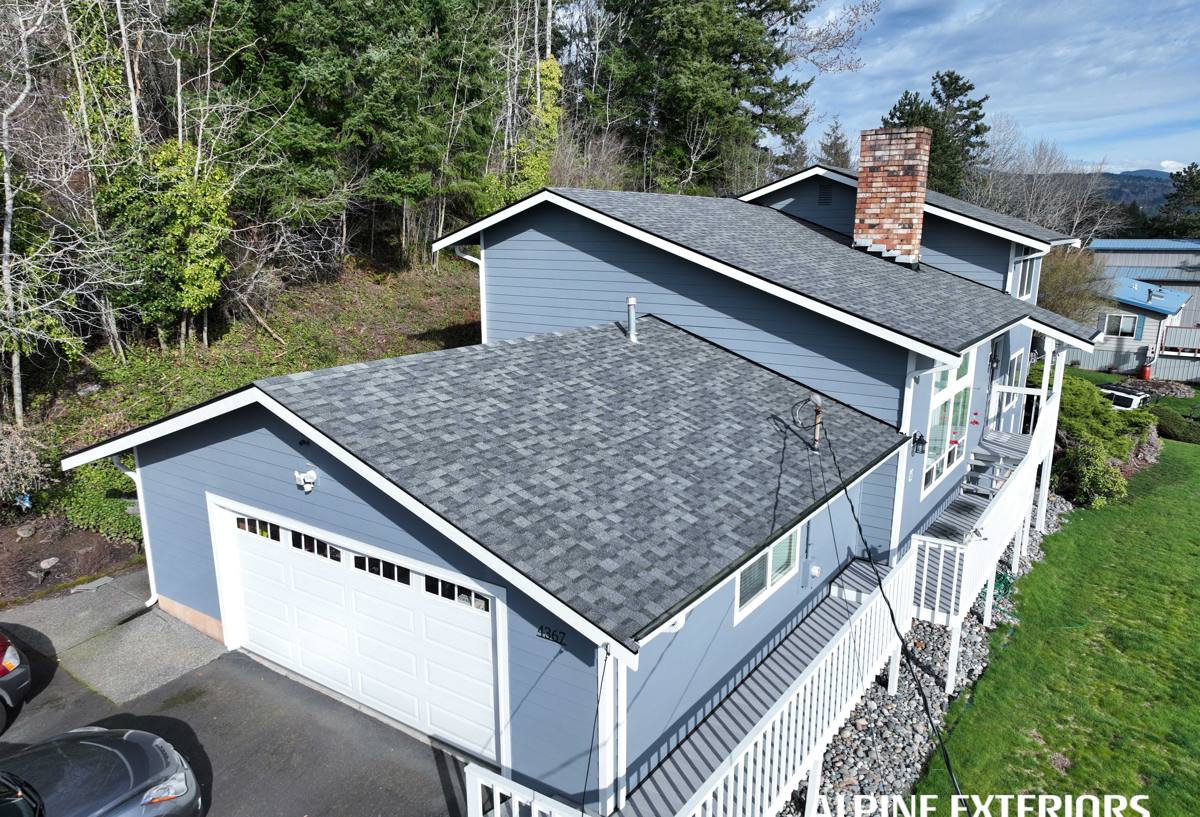
Signs a Ferndale Roof Needs Full Replacement, Not Just Repair
Not every roof problem calls for a full tear-off. But there are signals that patch repairs are just delaying an inevitable full installation, and it's worth being honest about the difference before spending money on either one.
- Granule loss heavy enough that you're finding grit in gutters and downspouts every time it rains
- Moss that has spread past the ridge and north-facing slopes into full sun-exposed areas of the roof
- Shingles that are cupping, curling, or cracking across multiple sections rather than one isolated area
- Daylight visible through the roof deck from the attic, or damp insulation after a wind-driven storm
- A roof already at or past 20-25 years old for asphalt shingle, even if it "looks fine" from the ground
- Multiple past repairs in different spots, which usually means the underlying materials are failing broadly
If a roof is showing two or more of these, a licensed contractor should be doing a full inspection before you spend more money chasing leaks one at a time.
Repair vs. Replace: The Honest Version
A single damaged section after a windstorm, isolated flashing failure around one vent, or a chimney leak on an otherwise sound roof are usually repair situations. Widespread granule loss, moss undermining shingles across the field, or a roof already near the end of its rated life are replacement situations. We'll tell you honestly which category your roof falls into rather than defaulting to the bigger job.
What a Correct New Roof Installation Actually Involves
Tear-Off and Deck Inspection
Every proper installation starts with removing the old roofing down to the deck, not layering over it. This is the only way to actually see what's underneath — soft or rotted decking, especially common where moss has been holding moisture against the roof for years, has to be found and replaced before anything new goes down. Covering over a compromised deck is one of the most common corners cut in this trade, and it guarantees problems later.
Underlayment and Water Barrier
Given how much driving rain Whatcom County sees, underlayment choice matters more here than in drier parts of the state. Synthetic underlayment with proper lap and fastening, plus self-adhering ice-and-water barrier at eaves, valleys, and any low-slope transitions, gives the roof a real second line of defense if wind-driven rain ever gets under the primary roofing material.
Flashing at Every Penetration
Chimneys, skylights, vent pipes, and roof-to-wall transitions are where the overwhelming majority of leaks originate — not in the open field of the roof. Correctly formed and properly lapped step flashing, counter-flashing, and pipe boots, installed so water always sheds downhill over the layer below it, is non-negotiable in a climate that gets this much sustained rain.
Ventilation Balance
Intake at the eaves and exhaust at the ridge need to be balanced so moist attic air actually moves out instead of condensing against the underside of the deck. Poor ventilation is a major contributor to premature deck rot and to the kind of trapped moisture that helps moss and algae get a foothold from underneath as well as above.
Material Installation to Spec
Fastener count, nail placement, and exposure lines all have to follow the manufacturer's actual installation instructions for the specific product, wind zone, and roof pitch — not a shortcut version. This is also where warranty coverage is won or lost, since most manufacturer warranties are void if installation didn't meet their published requirements.
Roofing Material Options for Whatcom County Conditions
There's no single "best" roofing material for every home — it depends on budget, roof pitch, architectural style, and how much long-term maintenance you want to take on. Here's how the common options actually perform under Ferndale's salt air, rain, and moss pressure.
| Material | Moss/Algae Resistance | Salt Air Durability | Typical Lifespan | Maintenance Level |
|---|---|---|---|---|
| Architectural asphalt shingle (standard) | Moderate — benefits from algae-resistant granules | Good with corrosion-resistant fasteners | 20-30 years | Moderate — periodic moss treatment recommended |
| Asphalt shingle with algae-resistant (AR) granules | Better — copper/zinc granules slow growth | Good | 25-30 years | Lower than standard shingle |
| Standing seam metal | Strong — smooth surface sheds moss more easily | Very good with coastal-rated coatings and fasteners | 40-50+ years | Low |
| Composite/synthetic shake | Good — doesn't absorb moisture like wood shake | Good | 30-50 years | Low to moderate |
| Cedar shake (untreated) | Poor in this climate without regular treatment | Moderate — needs vigilant maintenance near salt air | 20-30 years with upkeep | High |
We don't install untreated wood shake as a first recommendation in this climate. It's not that the material is bad — it's that the maintenance burden to keep it from holding moisture and hosting moss in a Whatcom County winter is significant, and most homeowners underestimate it going in. We'd rather set that expectation honestly upfront than sell a product that turns into ongoing work nobody signed up for.
Fasteners and Flashing Metal: The Detail Most Roofs Get Wrong Near the Coast
Standard electro-galvanized fasteners and flashing can corrode faster than expected within a few miles of salt water. For Ferndale installations, we use corrosion-resistant fastener and flashing options rated for coastal exposure. It's a small line-item difference in material cost that prevents rust streaking, weakened fastener holding power, and premature flashing failure years down the road — exactly the kind of detail that separates a roof built for this specific location from one built to a generic spec sheet.
Our Installation Process
- On-site inspection and honest assessment of whether repair or full replacement is the right call
- Written estimate covering materials, scope, ventilation plan, and timeline — no surprise add-ons buried in fine print
- Permitting handled before work begins, as required locally
- Full tear-off, deck inspection, and any necessary deck repair or replacement
- Underlayment, ice-and-water barrier, and flashing installed at every penetration and transition
- New roofing material installed to manufacturer spec, with ventilation balanced at intake and exhaust
- Final walkthrough and cleanup, including magnetic sweep for stray fasteners
Why It Matters to Hire a Crew That Already Works Ferndale
A contractor who works this area regularly already knows which details actually matter here — the fastener corrosion issue, the moss pressure on north-facing and shaded slopes, how wind-driven rain behaves during a marine storm coming off the Sound. That's not something you can fully substitute with a generic checklist. It also means faster response if a storm causes damage, familiarity with local permitting, and a crew that isn't learning the region's quirks on your roof for the first time.
We also stand behind installations with clear workmanship coverage in addition to manufacturer material warranties, so you know who to call if something isn't right — not just a claims number for a product manufacturer states away.
Between Installations: Keeping a New Roof Performing
A correctly installed roof still benefits from basic upkeep in this climate. A little attention goes a long way toward hitting the full lifespan a material is rated for.
- Clear gutters and downspouts at least twice a year so water isn't backing up under eaves
- Have moss treated or removed before it spreads past the ridge line, not after
- Trim back overhanging branches that keep shaded roof areas damp longer after rain
- Schedule a visual inspection after any major windstorm
- Address small flashing or sealant issues immediately rather than waiting for a leak to show up inside
Get a Straight Answer on Your Ferndale Roof
If you're not sure whether your roof needs a repair or a full replacement, or you just want a straight assessment of what condition it's actually in, we're happy to take a look. Reach out for a free, no-pressure estimate using the form below — we'll tell you what we actually see, not just what sells the bigger job.