 Whatcom County
 New-Construction Windows in Lynden: Getting It Right the First Time
New-construction window installation is a different job than swapping out an old window in a finished wall. On a new build, the window goes in before the siding, sometimes before the interior is even framed out, and it has to integrate correctly with the house's water-resistive barrier (WRB), flashing, and structural rough opening. Get that sequence wrong and you won't see the problem for a year or two — until moisture finds its way behind the cladding. In Lynden, where winters bring long stretches of steady rain and where moss and mildew can colonize any surface that stays damp too long, that margin for error is thinner than it looks.
We install new-construction windows for builders, remodelers, and homeowners working on additions or full rebuilds throughout Lynden and the surrounding Whatcom County farmland. The work is straightforward when it's done in order and sloppy when it isn't — there's not much in between.
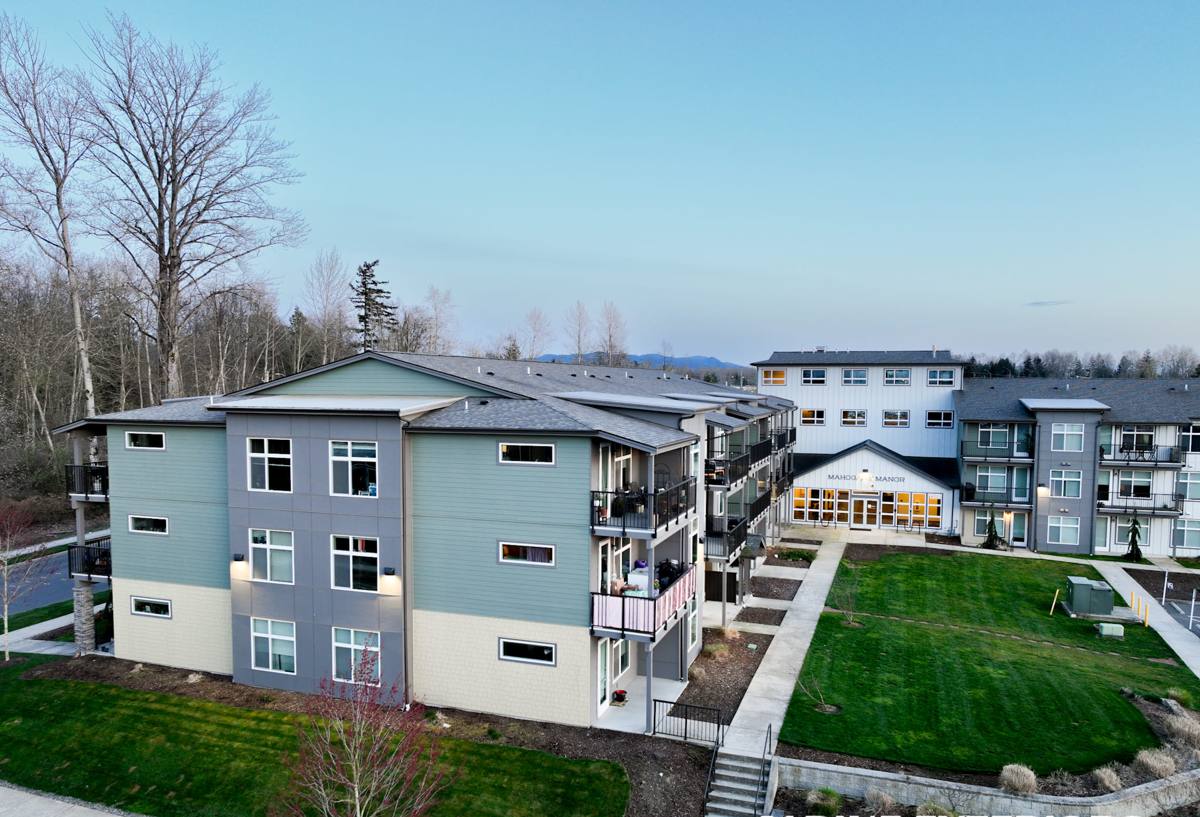
What Lynden's Climate Actually Does to a Window Opening
Lynden sits inland from the Salish Sea, but it's still squarely in Whatcom County's marine west coast climate — meaning wet, mild winters with wind-driven rain that doesn't just fall straight down, it gets pushed sideways into wall assemblies. A few things matter specifically for window work here:
- Driving rain pressurizes wall openings during storms, which is exactly when a poorly lapped flashing detail fails. Water doesn't need a big gap — it needs the wrong sequence of layers.
- A long moss and mildew season means any assembly that holds moisture against wood framing or trim will grow something on it, and eventually rot it, given the number of consistently damp months we get here.
- Salt-tinged marine air moving inland off the Sound accelerates corrosion on hardware, screws, and lower-grade cladding fasteners over the years, even at Lynden's distance from the water.
- Temperature swings between damp winter mornings and warmer summer afternoons stress sealants and caulk joints, which is why the sealant used at the window flange matters as much as the window itself.
None of this means Lynden needs exotic materials. It means the ordinary details — sill pans, flashing laps, sealant placement — have to be done correctly every time, because the climate won't forgive shortcuts the way a drier region might.
What a Correct New-Construction Window Install Actually Involves
The Rough Opening and Sill Pan
Before a window ever goes in, the rough opening needs to be square, correctly sized, and protected at the sill with a sloped or flashed pan that directs any water that gets past the window back out to the exterior — not down into the wall cavity. This is the single most common point of failure we see corrected on other people's work: a flat or unflashed sill that turns the bottom of the window into a bathtub during a hard rain.
Weather-Resistive Barrier Integration
The house wrap or WRB has to be cut and lapped around the opening in a specific order — sill first, then the window flange over the sill wrap, then jamb flashing over the side flanges, then head flashing last, lapped over the top of the WRB above the window. Shingle-style, top piece always overlapping the one below it, so water sheds outward and down no matter which direction the wind is pushing rain. Reverse that order anywhere in the sequence and you've built a funnel instead of a barrier.
Fastening, Shimming, and Insulation
The window needs to be shimmed plumb, level, and square at the fastening points — not just tacked in wherever the rough opening allows — so it operates correctly for its lifespan and doesn't rack or bind. The gap between the window frame and rough opening gets insulated (typically with low-expansion foam or backer rod, depending on the window) rather than packed solid, which can bow vinyl frames.
Sealant and Exterior Trim
A compatible, paintable exterior sealant goes at the final trim-to-siding joints — not as a substitute for correct flashing, but as the last line of defense against wind-driven rain at the surface. We match sealant chemistry to the cladding material rather than grabbing whatever caulk tube is closest.
Choosing Window Frame Material for a Whatcom County Build
| Frame Material | How It Handles Lynden's Climate | Maintenance | General Cost Position |
|---|---|---|---|
| Vinyl | Good moisture resistance, won't rot; performs well in sustained damp weather | Low — occasional cleaning | Most affordable |
| Fiberglass | Very stable through temperature swings, strong resistance to warping and moisture | Low | Mid to upper-mid |
| Wood-clad | Attractive interior wood look with an exterior-facing clad shell; clad layer must be fully intact to protect the wood beneath | Moderate — clad seams and any exposed wood need periodic inspection | Highest |
| Aluminum | Strong and slim-profile, but conducts cold and can condense in our damp winters unless thermally broken | Low, but watch fasteners for corrosion over time | Mid |
We don't push one material as universally "best" — we size the choice to the build. A budget-focused spec home and a high-end custom build in the same Lynden subdivision can reasonably land on different frame materials, and that's a legitimate call for the builder or homeowner to make, not us.
Energy Performance: Meeting Washington's Code Without Overpaying for It
Washington's state energy code sets minimum U-factor requirements for new-construction glazing, and those minimums exist for a reason in a climate like ours — a poorly rated window loses heat steadily through our long, mild-but-chilly winters, not in a few dramatic cold snaps. For most Lynden builds, we're specifying:
- A U-factor that meets or beats the current Washington State Energy Code requirement for the compliance path the builder is using (prescriptive vs. performance).
- A moderate solar heat gain coefficient (SHGC) — Whatcom County doesn't have the intense summer sun load of eastern Washington, so we're not chasing extreme SHGC reduction the way a desert-climate build would.
- NFRC-labeled products so the ratings are verifiable, not just a manufacturer's marketing claim.
Overspending on performance glass a Lynden home doesn't need is as much a mistake as underspending on a window that barely clears code. We spec to the actual climate and the actual code requirement, not to whichever number sounds most impressive on a spec sheet.
How Our New-Construction Process Works
- Plan review. We look at the window schedule, rough opening sizes, and wall assembly (siding type, WRB, sheathing) before ordering anything.
- Product selection. We walk the builder or homeowner through frame material, glazing package, and hardware options sized to the project's budget and the local climate — not a one-size pitch.
- Lead time coordination. New-construction windows are often custom-sized and ordered weeks ahead. We work backward from the framing schedule so windows arrive when the opening is ready, not before or after.
- Installation. Sill pan, WRB lapping, shimming, fastening, and insulation done in the correct sequence, coordinated with whoever is installing siding next so the flashing laps end up in the right order relative to the cladding.
- Final check. Every window gets operated, checked for square and even reveal, and inspected for sealant coverage before we sign off.
Why It Matters to Hire a Crew That Already Works Lynden
A window installer who mainly works drier inland climates can do technically fine work and still get the sequence wrong for a place like Lynden, because the consequences of a shortcut don't show up as fast somewhere with less rain. Crews who work Whatcom County new-construction regularly have already seen what our wet season does to a badly flashed opening, know which local suppliers stock the frame materials and sizes that actually move here, and are used to coordinating with the siding and framing trades on the same jobsite timeline. That local repetition is what keeps a new-construction window install boring in the best sense — no surprises, no callbacks, no water stains showing up on year-two drywall.
A Quick Checklist Before You Sign Off on a Window Install
- Is there a sloped or flashed sill pan under every window, not just a flat rough sill?
- Is the WRB lapped shingle-style — sill, then jambs, then head — with no reverse laps?
- Are windows shimmed plumb, level, and square, not just nailed to whatever the opening allows?
- Is the gap insulation low-expansion foam or backer rod, not rigid foam packed in solid?
- Does the glazing package meet current Washington State Energy Code U-factor requirements?
- Is the exterior sealant compatible with both the window frame and the cladding material going on next?
If you're building or adding on in Lynden and want the window package handled by a crew that treats flashing sequence as seriously as the glass itself, we're happy to take a look at your plans and give you a straightforward, no-pressure estimate — just fill out the form below.